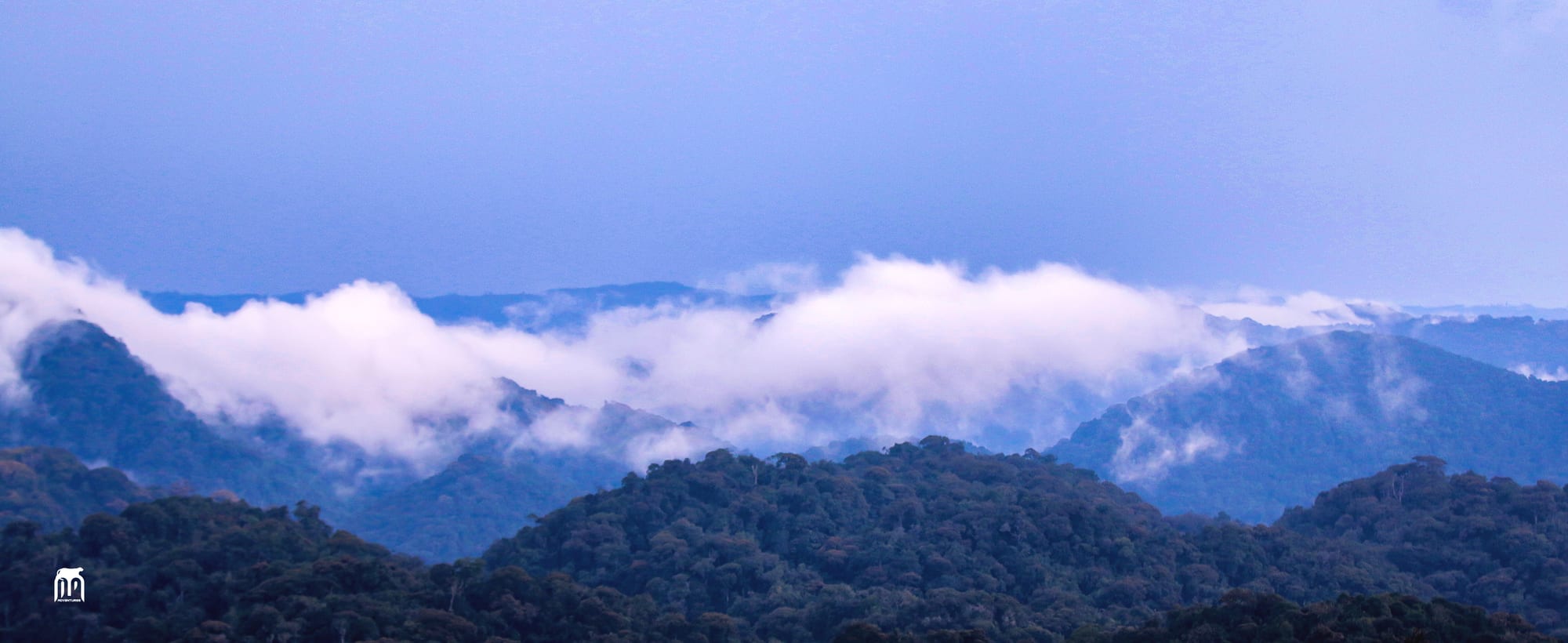
Row upon row of steep, densely forested green ridges receding into mist, with clouds breaking after rain

Rwanda

The montane rainforest of Nyungwe National Park in southwest Rwanda, one of the largest and oldest tropical forests in East Africa. (Dpiskho / Wikimedia Commons · CC BY-SA 4.0)

A small, mountainous, densely populated country in the African Great Lakes — the "land of a thousand hills" — that rebuilt from the 1994 genocide against the Tutsi into one of the continent's most orderly and fastest-growing states, under the tight rule of Paul Kagame.

Explore Rwanda

History

The precolonial kingdom of Rwanda was a centralised monarchy in which Hutu, Tutsi, and Twa were fluid social categories tied to farming, cattle, and the forest, with intermarriage and movement between them. German and then Belgian colonial rule hardened these into rigid racial classifications, complete with ethnic identity cards, and favoured the Tutsi minority as administrators before switching to back Hutu majoritarianism near independence. The 1959 "Hutu Revolution" brought violence against Tutsi, the abolition of the monarchy, and the flight of hundreds of thousands of Tutsi into exile. Independence in 1962 established a Hutu-dominated republic marked by periodic anti-Tutsi pogroms and systematic discrimination.

In 1990 the Rwandan Patriotic Front, an army of Tutsi exiles led by Paul Kagame, invaded from Uganda, starting a civil war, while extremist "Hutu Power" ideology, hate radio, and militias prepared for mass killing. After the president's plane was shot down on 6 April 1994, the genocide against the Tutsi began: over roughly 100 days, an estimated 800,000 to more than a million people — the great majority Tutsi, along with moderate Hutu — were murdered, mostly by machete, by militias, soldiers, and neighbours, while the international community failed to intervene.

The RPF fought its way to victory by mid-July, ending the genocide; some two million Hutu, including many perpetrators, fled into what is now the Democratic Republic of Congo, triggering Rwanda's repeated interventions there — from the wars that overthrew Mobutu and killed millions to the present-day backing of the M23 rebellion, which seized the eastern Congolese cities of Goma and Bukavu in early 2025. Three decades under Paul Kagame — president since 2000, re-elected with implausible margins — have brought a remarkable recovery in stability, growth, health, education, low corruption, and women's political representation, alongside tight authoritarian control, no meaningful opposition or free press, and the harassment of critics at home and abroad.

  • Rwanda: The Thousand Hills A small, dense, mountainous kingdom in the heart of Africa — colonial rule that hardened ethnic labels into identity cards, cycles of violence after independence, the 1994 genocide against the Tutsi, and a tightly controlled recovery

Culture & Customs

Rwandan culture is bound together by a single language and by a strong tradition of oral poetry, proverb, and the intore warrior dance, with its towering grass headdresses and stamping rhythm. Cattle carry deep symbolic value — in gifts, poetry, and the graceful long-horned "inyambo" herds — and geometric cow-dung imigongo painting and finely woven agaseke peace baskets are signature crafts.

Since 1994 the state has actively promoted a shared "Rwandan" identity over ethnic labels, and public life is shaped by an ethic of order and collective effort: umuganda, a morning of compulsory community work on the last Saturday of each month, and the gacaca community courts that tried the mass of genocide cases in the 2000s.

The genocide is central to national memory, commemorated each April as Kwibuka, "remembrance", and Rwanda presents itself as a country that chose reconciliation and self-reliance. Kigali's cleanliness — a plastic-bag ban, tidy streets, car-free days — is a deliberate point of national pride.

Daily Life

Rwanda is one of the most densely populated countries in Africa, and most people farm tiny, terraced plots in the hills — coffee, tea, bananas, beans, and sweet potato — with land pressure a defining constraint. Kigali, spread over several ridges, is orderly, safe, and growing fast as a hub for conferences, services, and start-ups, part of a drive to move the economy from agriculture toward tourism, technology, and logistics.

Health and education have improved dramatically since 1994 — near-universal community health insurance, sharp falls in child mortality — and women hold more than 60 per cent of parliamentary seats, the highest share in the world.

The flip side is pervasive control: a single dominant party, no independent media, extensive surveillance, and citizens who are guarded about politics. The war in eastern Congo, in which Rwanda is deeply implicated, is a constant presence on the western border.

Food

Rwandan food is plain, starchy, and vegetable-heavy, built on the produce of the hills. The staples are ubugali (a stiff cassava or maize porridge), cooked green bananas, beans, sweet potato, cassava, and potato, often stewed together with greens such as isombe, cassava leaves pounded with groundnut, into a filling one-pot meal.

Grilled goat brochettes with a spiced tomato-and-onion relish, eaten with grilled bananas and a cold Primus or Mützig beer, are the classic evening out. Fried pork (akabenz) is popular, and Lake Kivu supplies tiny fried sambaza fish and grilled tilapia.

The colonial legacy is a strong café culture around Rwandan specialty coffee and tea, both grown for export, and milk is culturally important, drunk fermented as ikivuguto. For most people the everyday meal is a mid-day buffet of rice, beans, plantain, and a little stew.

  • Rwanda: Food and the National Dish Grilled meat skewers and a plate built from beans, plantain and sweet potato, from a country of terraced hills and small family farms

Attractions & Natural Wonders

Volcanoes National Park in the northwest, on the slopes of the Virunga chain, is Rwanda's flagship: home to a third of the world's remaining mountain gorillas, tracked on strictly limited permits, along with golden monkeys, the Dian Fossey research site, and volcano climbs up Bisoke and Karisimbi. Nyungwe National Park in the southwest is one of Africa's largest montane rainforests, with chimpanzee tracking, a canopy walkway, and thirteen primate species.

Akagera National Park in the east has been restored to a full Big Five savannah reserve, with lions and rhino reintroduced, at far lower prices than the gorillas. Lake Kivu, along the western border, offers a string of relaxed lakeside towns — Rubavu, Kibuye, and Rusizi — with beaches, boat trips, and the hilly Congo Nile Trail running its length.

Kigali itself has the Kigali Genocide Memorial, where more than 250,000 victims are buried and the history is told with great care, along with craft cooperatives and a lively arts and food scene. The southern town of Huye has the country's best ethnographic museum, and the King's Palace at Nyanza reconstructs the precolonial court, complete with sacred long-horned cattle.

  • Rwanda: Five Attractions and Natural Wonders Mountain gorillas tracked through volcanic rainforest, a memorial that confronts one of the 20th century's worst atrocities directly, and a canopy walkway suspended above ancient rainforest older than the Amazon

Planning basics

Budget

Rwanda runs from cheap to very expensive. Local guesthouses, buses, and buffet lunches cost little; Kigali's hotels are mid-range and up; and the gorilla-trekking permit alone is USD 1,500, a deliberate high-end pricing. Nyungwe and Akagera are far cheaper wildlife options.

Daily Budget Midrange
USD 120–300 (mid-range hotel, restaurants, a car with driver, Akagera or Nyungwe park fees)
Daily Budget Shoestring
USD 35–65 (guesthouse, local eateries, coaches and city buses) — before any park fees

Book gorilla permits months ahead through the Rwanda Development Board; if the price is the obstacle, Uganda offers gorillas for less, and Rwanda's chimps and savannah wildlife are far cheaper.

Visa Requirements

Rwanda offers a visa on arrival or e-visa to all nationalities for a 30-day stay, and citizens of several African and other countries enter visa-free. A single East Africa Tourist Visa covers Rwanda, Uganda, and Kenya. Yellow fever vaccination is required if arriving from an endemic country.

Typical Validity
30 days on arrival or e-visa, for all nationalities

Safety

Rwanda is one of the safest countries in Africa for visitors, with very low crime and a visible, disciplined police presence. The key caveats are the western border with the Democratic Republic of Congo — governments advise against travel to the immediate border areas around Rubavu and Rusizi because of the conflict in eastern DRC, which worsened sharply in early 2025 — and the country's authoritarian politics.

Politics
Avoid public criticism of the government, be cautious discussing ethnicity and the genocide, and do not photograph officials, military, police, or the airport

Check current advice before travelling in the far west, take malaria precautions in the lower east and at Lake Kivu, and prepare for cold, wet, steep conditions on gorilla and volcano treks.

Climate

Mild for the tropics because of the altitude — most inhabited areas sit between 1,000 and 2,500 metres and stay around 15–27°C year-round, cooler and often misty in the western mountains. There are two rainy seasons, roughly March–May and October–December, and two drier spells, with June–September the main dry season.

Kigali
15–27°C year-round
Mountains
Cool and wet; the gorilla forests can be 5–15°C and muddy

Transportation

Kigali International Airport is the hub, with RwandAir connecting across Africa. There is no passenger rail. Roads are among the best in the region — smooth tarmac on the main routes, though winding through the hills, so journeys take longer than the distance suggests. Comfortable coaches and shared minibuses link the towns; Kigali has metered moto-taxis, city buses, and ride-hailing.

Hire a car with a driver for the parks; for Lake Kivu and the volcanoes, the roads west from Kigali are good but slow.

Best Time to Visit

June to September, the long dry season, is best for gorilla and chimp trekking, Akagera safari, and hiking, with clearer skies and firmer trails; December to February is a shorter dry window. The genocide commemoration period, Kwibuka, begins on 7 April and continues quietly for 100 days — visitors should be aware of it.

Events
Kwita Izina gorilla-naming ceremony (usually September); Kwibuka commemoration (from 7 April); Liberation Day (4 July)

Currency

The currency is the Rwandan franc (RWF). Cards are accepted at Kigali hotels, better restaurants, and supermarkets; carry cash elsewhere. Mobile money is widely used, and Kigali's moto-taxis are metered by app.

Symbol
FRw
Currency Code
RWF — Rwandan franc

Language

Kinyarwanda is the national language, spoken by virtually the entire population — one of the few African countries with a single shared indigenous language. English is co-official and, since 2008, the medium of instruction, part of a shift away from France toward the Anglophone and East African world; French remains widely understood, and Swahili, made official in 2017, is used in trade.

Also Official
English, French, Swahili
National Language
Kinyarwanda