History · Rwanda
Rwanda: The Thousand Hills
A small, dense, mountainous kingdom in the heart of Africa — colonial rule that hardened ethnic labels into identity cards, cycles of violence after independence, the 1994 genocide against the Tutsi, and a tightly controlled recovery
By Worldlore Editorial · 19 September 2026
A small country with a heavy history
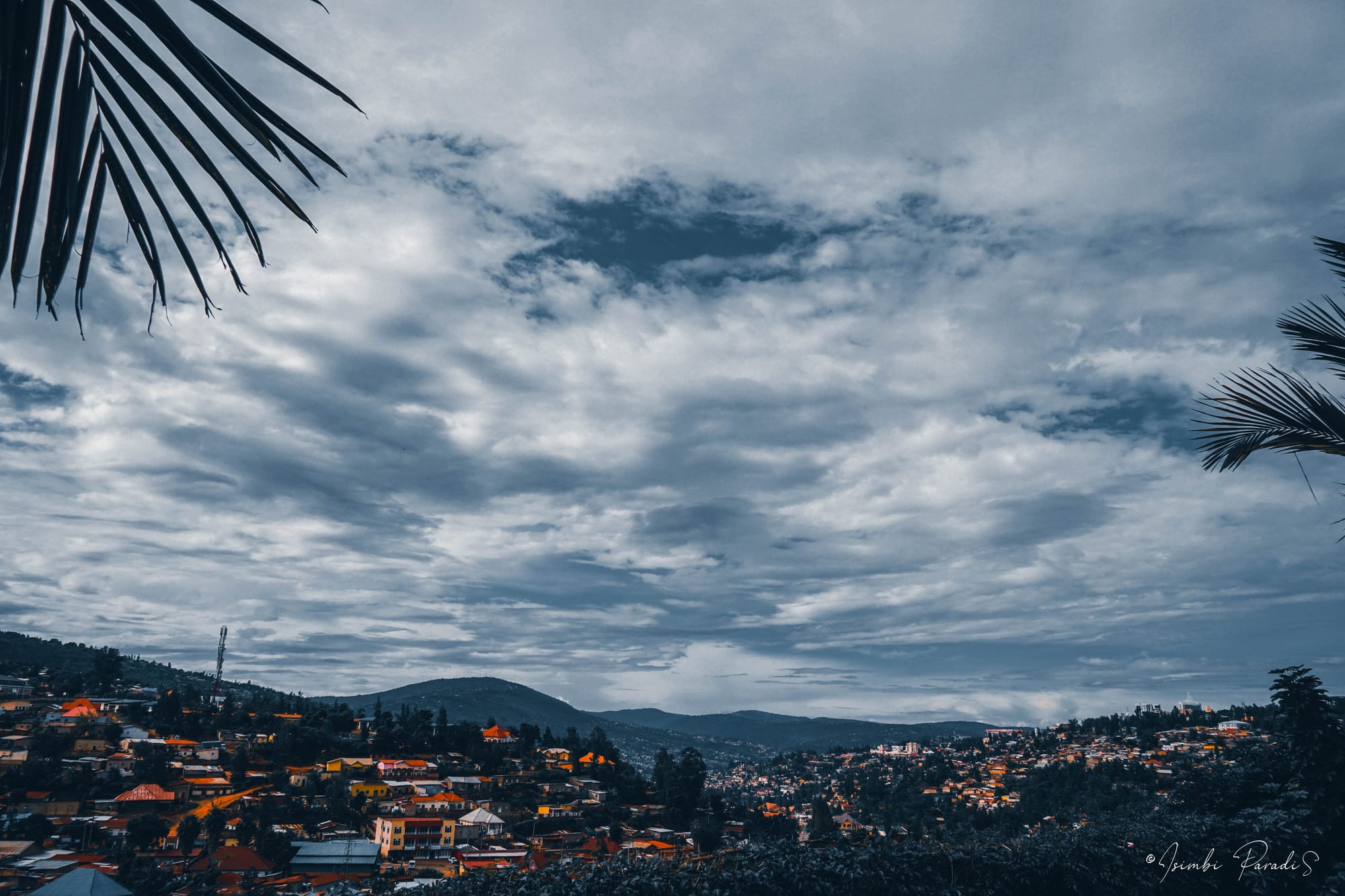
Rwanda is a compact, hilly country in the African Great Lakes region, about 14 million people packed onto its ridges and terraced slopes at one of the highest rural population densities on the continent. Its people share one language, Kinyarwanda, one religion in the main (Christianity over an older cosmology), and a common culture — and yet the country's modern history has been dominated by the division between Hutu and Tutsi, categories whose meaning has shifted over time and which colonial rule turned into fixed, documented identities. That fixation culminated in the 1994 genocide.
A short history
- to 1890s
The kingdom
A centralised monarchy under a Tutsi mwami; Hutu, Tutsi and Twa as social categories.
- 1897
German rule
Rwanda is added to German East Africa, governed through the king.
- 1916–1962
Belgian rule
Belgium tightens indirect rule; 1933 identity cards fix ethnicity.
- 1959
The revolution
Hutu uprising; the monarchy falls; Tutsi flee in large numbers.
- 1962
Independence
A Hutu-led republic under Grégoire Kayibanda.
- 1973
Habyarimana's coup
A one-party state; recurring anti-Tutsi violence.
- 1990
Civil war
The Tutsi-exile RPF invades from Uganda.
- 1994
The genocide
About 800,000 Tutsi and moderate Hutu killed in roughly 100 days.
- 1994–
The RPF state
Paul Kagame's movement takes power and still governs.
Kingdom and categories
Precolonial Rwanda was a kingdom that expanded from a core in the centre of the country, ruled by a mwami (king) from a lineage considered Tutsi, with a court, a standing military organisation, and cattle-clientship ties binding people together. "Tutsi" and "Hutu" referred broadly to a distinction associated with cattle-owning and cultivation and with proximity to power; the categories had some fluidity, and "Twa" denoted a small group of forest-origin potters and hunters. The scholarly debate is about how rigid or porous these categories were before colonialism — but there is broad agreement that colonial rule made them far harder.
Colonial rule
Germany claimed Rwanda in the 1880s and ruled it lightly through the existing monarchy. After the First World War, Belgium took over under a League of Nations mandate and governed far more intrusively. Belgian administrators and Catholic missionaries, influenced by contemporary racial theory, treated the Tutsi as a naturally superior "Hamitic" ruling caste and favoured them in education, administration and chieftaincies. In 1933 a census assigned every Rwandan a permanent ethnic label recorded on an identity card — a document that would later help killers identify victims. Resentment among the Hutu majority built through the 1950s.
Revolution, republic, and cycles of violence
As decolonisation approached, Belgium and the Church shifted support to the Hutu majority. In 1959 a Hutu uprising — the "Social Revolution" — overthrew the monarchy amid violence that drove tens of thousands of Tutsi into exile in neighbouring countries. Rwanda became an independent republic in 1962 under Grégoire Kayibanda, defining itself as a Hutu state; Tutsi guerrilla raids by exiles were met with reprisal massacres of Tutsi inside Rwanda. Juvénal Habyarimana seized power in 1973 and ran a one-party state that was relatively stable and aid-favoured but institutionalised anti-Tutsi discrimination through quotas.
The war and the genocide
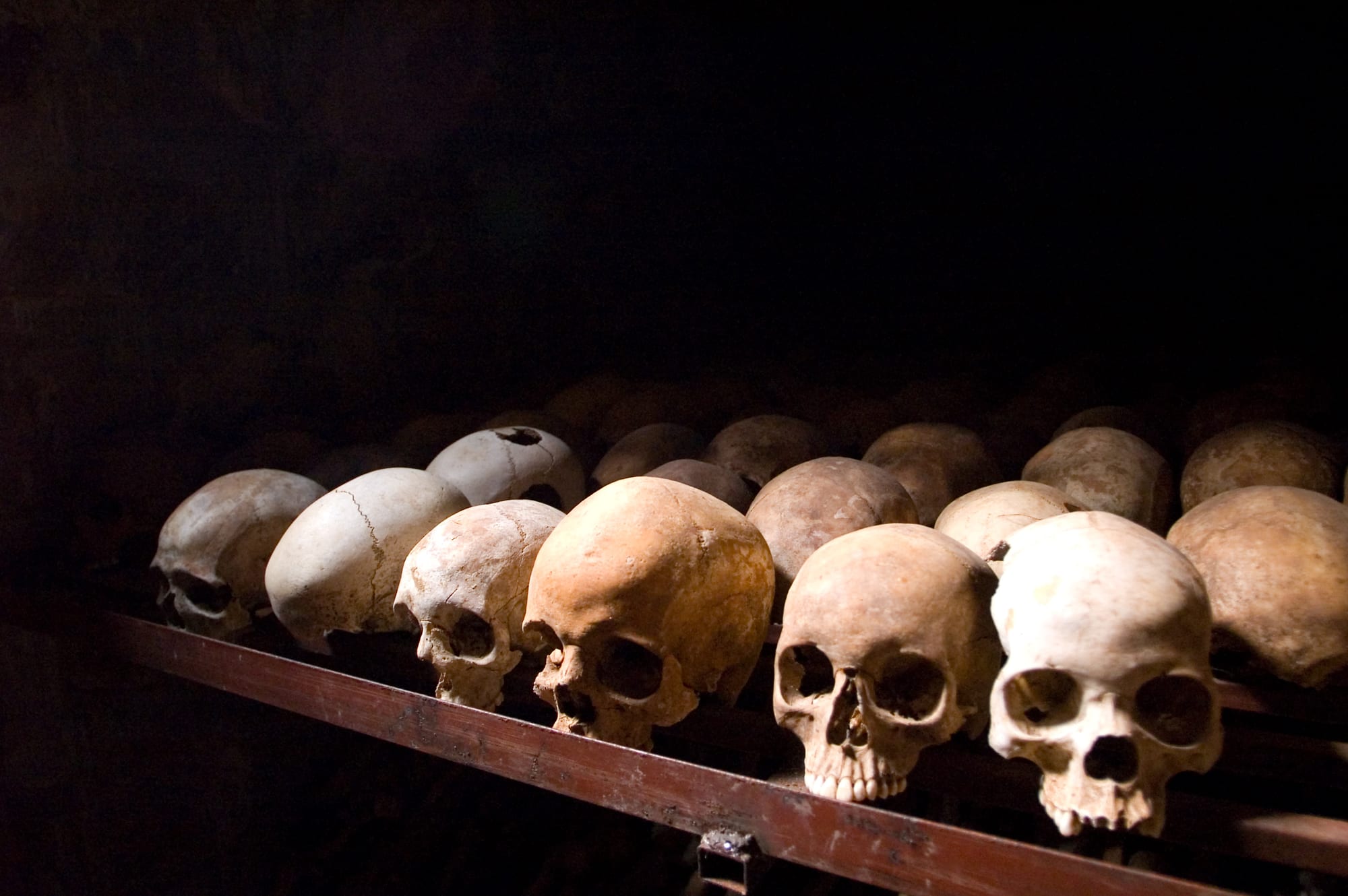
In 1990 the Rwandan Patriotic Front (RPF), formed by Tutsi exiles in Uganda, invaded northern Rwanda, beginning a civil war. A 1993 peace agreement (the Arusha Accords) provided for power-sharing and a UN monitoring force. On 6 April 1994 Habyarimana's plane was shot down over Kigali — by whom remains disputed — and within hours a coordinated campaign of extermination began. Over roughly 100 days, soldiers, the Interahamwe militia and mobilised civilians killed an estimated 800,000 people, overwhelmingly Tutsi, along with Hutu who opposed the killing. Radio broadcasts incited and directed the massacres. The UN force was reduced rather than reinforced, and no outside power intervened to stop it. The genocide ended in July 1994 when the RPF defeated the government army and took Kigali, sending some two million Hutu — including many génocidaires — fleeing into Zaire and Tanzania.
The RPF state
The RPF has governed Rwanda since 1994, with Paul Kagame as the dominant figure and president since 2000. The government abolished ethnic identity in law, promoting a single Rwandan identity, and prosecuted genocide cases through community "gacaca" courts alongside an international tribunal. It has delivered rapid economic growth, sharp falls in poverty and child mortality, low corruption, and a rebuilt capital that is widely praised. Critics — human-rights groups, exiled opponents, and some Western governments — say this has come with tight political control: constrained opposition and press, disputed elections with implausibly high margins, a constitutional change in 2015 allowing Kagame to rule potentially until 2034, and allegations of the killing of dissidents abroad. Rwanda has also intervened militarily in the neighbouring Democratic Republic of the Congo, backing armed groups there, which it partly justifies by reference to genocide fugitives.
What Rwanda carries
Rwanda's tragedy was built over a century: a fluid social distinction hardened by colonial rule into a racial hierarchy and then an ID-card fact, inverted at independence, and weaponised in 1994 into one of the fastest genocides in recorded history. The state that emerged has staked its legitimacy on never allowing that to recur, and on visible development — and on a degree of control that its supporters call the price of stability and its critics call a new authoritarianism.