Rolling green plateau country with rocky outcrops and scattered trees under a hazy sky

Guinea

The Fouta Djalon highlands of central Guinea, source of three major West African rivers. (Maarten van der Bent / Wikimedia Commons · CC BY-SA 2.0)

A West African country with enormous mineral wealth and the highland "water tower" that feeds the Niger, Senegal, and Gambia rivers — long misruled, and under military government since a 2021 coup.

Explore Guinea

History

The Upper Guinea highlands were part of the medieval Mali Empire, and the Fouta Djalon became, in the eighteenth century, one of West Africa's early Islamic states, a Fula theocracy of learning and cattle. France conquered the region in the late nineteenth century after prolonged resistance led by Samori Touré, and ruled it as French Guinea.

In 1958 Guinea was the only French colony to vote "no" in de Gaulle's referendum on a French Community, choosing immediate independence under Ahmed Sékou Touré. France withdrew abruptly and punitively, stripping the country of equipment and records. Sékou Touré built a paranoid one-party socialist state; tens of thousands died in the Camp Boiro detention centre and up to a quarter of the population fled into exile before his death in 1984.

A second long-serving strongman, Lansana Conté, ruled from 1984 to 2008. A 2008 coup was followed by a 2009 stadium massacre of opposition protesters by the junta. Alpha Condé won the country's first genuinely competitive election in 2010 but engineered a disputed third term in 2020, and in September 2021 the military, led by Mamady Doumbouya, seized power and has governed since under a promised transition. Despite holding the world's largest bauxite reserves and vast iron ore, Guinea remains very poor.

  • Guinea: The Country That Said No The water tower of West Africa and the world's richest store of bauxite — an Islamic highland state, the one colony to reject de Gaulle's offer in 1958, and decades of dictatorship since

Culture & Customs

Guinea's main peoples are the Fula (Peul) of the Fouta Djalon, the Maninka (Malinké) of Upper Guinea, the Susu of the coast, and a cluster of smaller peoples in the southeastern "forest region." Most Guineans are Muslim, with Christian and traditional-religion minorities concentrated in the forest.

The country has a rich griot tradition — hereditary musicians and oral historians of the Mande world — and produced some of Africa's most celebrated post-independence bands, such as Bembeya Jazz National, along with kora and balafon masters and the guitarist and singer Mory Kanté. The state ballet and orchestras were a showcase of Sékou Touré's cultural nationalism.

Social life runs on the extended family, respect for elders and religious teachers, long greetings, and hospitality to guests, with tea poured in rounds a common ritual of welcome.

Daily Life

Conakry, a crowded, humid city strung along a narrow peninsula, holds a large share of the population and most formal jobs. The rest of the country is rural: Fula herders and gardeners in the cool highlands, Maninka farmers on the savanna plains, rice growers on the coast, and coffee and cola farmers in the forest.

The economy is dominated by mining — Guinea supplies a large share of the world's bauxite, mostly to China, and is developing the enormous Simandou iron-ore deposit — yet the wealth has done little for most people, and infrastructure, electricity, and public services are weak. Agriculture, informal trade, and remittances sustain most households.

Guinea was also the origin of the 2013–16 West African Ebola epidemic, which began in a forest-region village and killed thousands before it was contained. Daily life outside the mining zones follows the single rainy season, the market, the mosque, and the farming calendar.

Food

Guinean cooking is West African and rice-based. Plain rice is eaten with a sauce — groundnut (mafé), leafy sauce feuille, palm-oil, or okra — usually with fish or a little meat. Riz gras, rice cooked in a rich tomato-and-oil sauce with vegetables, is a common festive dish.

Fonio, a tiny highland grain, is a Fouta Djalon speciality, steamed like couscous; cassava, plantain, and sweet potato feature in the forest region. Grilled fish and brochettes, and bean or wheat fritters, are the street foods of Conakry.

Ginger juice, bissap (hibiscus), and sweet strong tea are the everyday drinks, along with the local Skol beer where alcohol is sold. Mangoes, pineapples, and oranges are abundant in season.

Attractions & Natural Wonders

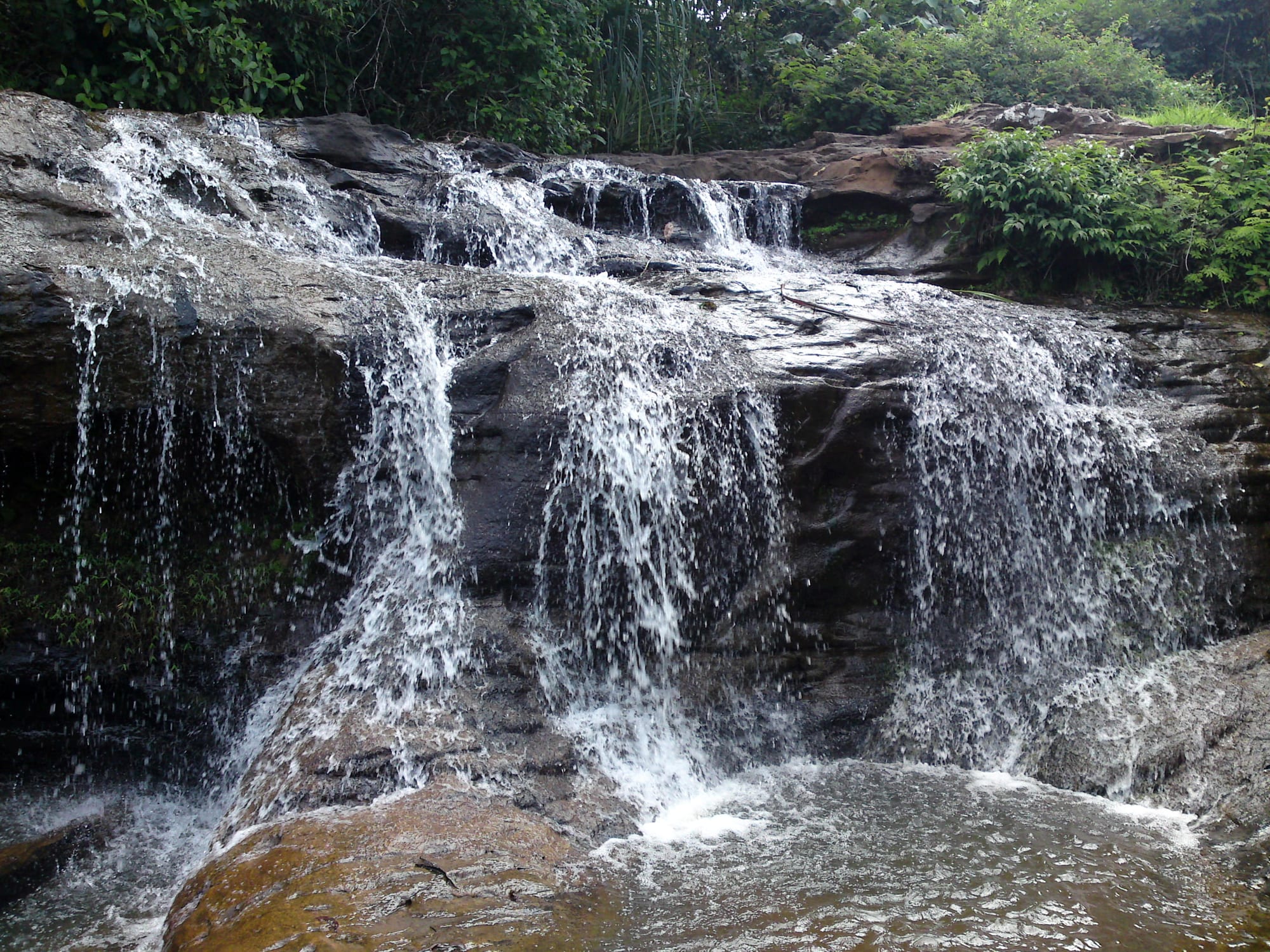
Guinea's scenery is its main draw for the few travellers who reach it. The Fouta Djalon highlands, cool and green, offer some of West Africa's best hiking: plateaus and escarpments around Doucki and Dalaba, the Kambadaga and Ditinn falls, the "Dame de Mali" rock face, and Fula villages amid gardens and orange groves.

Off Conakry, the Îles de Los — Kassa, Room, and Fotoba — are a quick boat trip to palm-fringed beaches once used by the British as a base and, briefly, a place of exile. In the far southeast, the Mount Nimba reserve, a UNESCO World Heritage Site shared with Côte d'Ivoire and Liberia, protects a forested massif full of endemic species, though iron-ore interest threatens it.

Upper Guinea has the old caravan and empire history of Kankan and the sources of the Niger near Faranah, and the forest region around Nzérékoré keeps mask societies and sacred forests. For most visitors, though, Guinea is a country to travel through with patience rather than a developed destination.

  • Guinea: Eight Attractions and Natural Wonders The green highland "water tower of West Africa" — sandstone plateaus and canyons, thundering waterfalls, old French hill stations, and a chain of islands off a chaotic capital

Planning basics

Budget

Guinea is inexpensive but has almost no tourism infrastructure. A hired 4x4 with driver is usually essential for the highlands, and Conakry's few business hotels are the main cost. Cash is essential; ATMs are limited to Conakry and a handful of larger towns and often unreliable.

Source
Limited recent traveller data — verify against a current source.
Daily Budget Midrange
USD 70–150 (Conakry hotel, hired car with driver, guide)
Daily Budget Shoestring
USD 25–45 (basic hotel, local food, shared bush taxis)

Carry euros to exchange; keep small notes for bush taxis and checkpoints, which are frequent.

Source: Limited recent traveller data — verify against a current source.

Visa Requirements

A visa is required for most nationalities. Guinea operates an e-visa portal: apply online in advance and receive an approval to present on arrival at Conakry airport. A yellow fever vaccination certificate is mandatory.

Typical Validity
Usually up to 90 days, single or multiple entry

Complete the e-visa application before travelling; arriving without it is difficult.

Safety

Guinea has been politically unstable, with a 2021 military coup, a promised but delayed transition, and protests that have been met with force and internet shutdowns. Street crime — muggings, phone theft, and robbery — occurs in Conakry, especially after dark, and roadblocks and checkpoints are common. Border regions with Mali, Côte d'Ivoire, and Liberia are sensitive.

Source
US Department of State, UK FCDO, and French diplomatic advisories — check for the latest wording.

Avoid political demonstrations, don't photograph government, military, or the airport, use arranged transport at night in Conakry, and check current advice before travelling near the borders.

Source: US Department of State, UK FCDO, and French diplomatic advisories — check for the latest wording.

Climate

Tropical, with a single, heavy rainy season and a dry season. Conakry is one of the wettest capital cities in the world in the rains (roughly May to November). The dry season, December to April, includes the dusty Harmattan haze early on and building heat later.

Dry Season
December–April, hazy then hot
Rainy Season
May–November, torrential; roads and tracks deteriorate badly

Transportation

Conakry's Gbessia (Ahmed Sékou Touré) International Airport is the gateway. A freight railway serves the mining regions; there is no useful passenger rail. Travel is by bush taxi and minibus on a road network that ranges from a few paved highways to badly rutted tracks, or by hired 4x4 with driver.

Journeys take far longer than the distances suggest, especially into the Fouta Djalon and the forest region.

Best Time to Visit

November to February, the cooler part of the dry season, for the most passable roads and the best walking in the Fouta Djalon, when the waterfalls still have flow from the recent rains. Avoid the peak of the rains, when much of the interior is hard to reach.

Currency

The currency is the Guinean franc (GNF). It has lost value over the years, so large denominations are common and prices run into the tens of thousands. It cannot be obtained abroad.

Symbol
FG
Cash To Bring
Euros, to exchange in Conakry
Currency Code
GNF — Guinean franc

Language

French is the official language, used in government, schooling, and the media. The main Indigenous languages are Pular (Fula), spoken across the Fouta Djalon; Maninka (Malinké), in Upper Guinea; and Susu, around Conakry and the coast. English is rarely spoken.

English
Very limited
Official Language
French
Main Local Languages
Pular (Fula), Maninka, Susu