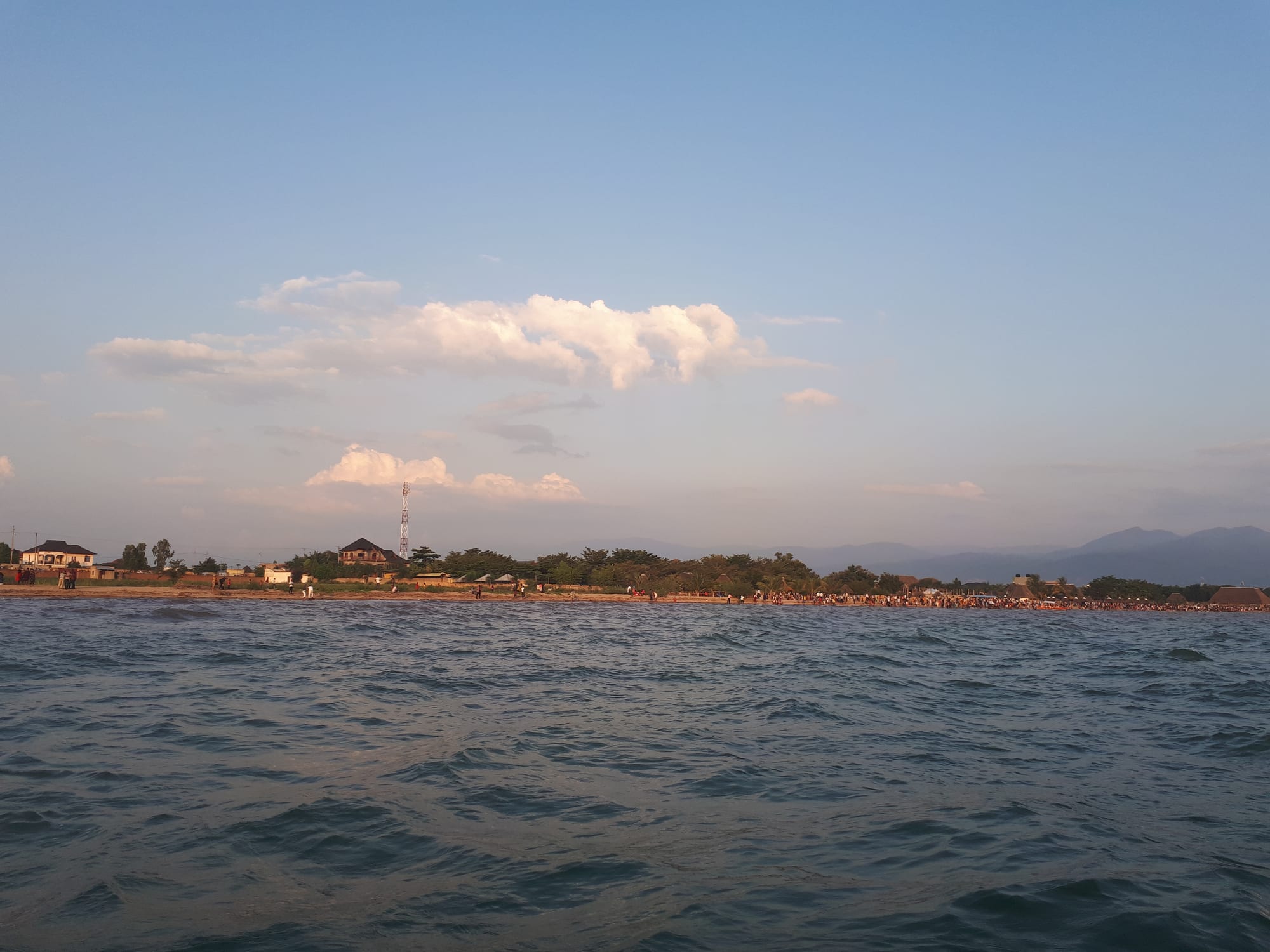
A calm bay of Lake Tanganyika with green hills falling to the shore and a scattering of boats on the water

Burundi

The shore of Lake Tanganyika in Burundi — one of the world's deepest and oldest lakes, shared with three neighbours. (NsabaNsaba / Wikimedia Commons · CC BY-SA 4.0)

A small, densely populated country of hills and tea plantations in the African Great Lakes region, on the shore of Lake Tanganyika — among the world's poorest, and slowly emerging from years of political crisis.

Explore Burundi

History

Burundi grew from a kingdom established by at least the seventeenth century, ruled by a mwami (king) and structured around cattle, clientship, and the broad social categories of Hutu, Tutsi, and the smaller Twa. Unusually in the region, the kingdom survived the colonial period largely intact, first under German and then, after the First World War, Belgian administration, governed together with neighbouring Rwanda as Ruanda-Urundi.

Independence came in 1962 as a monarchy, which was overthrown in 1966. The decades that followed were scarred by episodes of mass political violence between Hutu and Tutsi, including large-scale killings in 1972 and 1993. The assassination of the first democratically elected president in 1993 triggered a civil war that lasted until 2005 and killed an estimated 300,000 people.

A power-sharing settlement and elections brought a fragile peace, but in 2015 President Pierre Nkurunziza's decision to seek a disputed third term set off a new crisis, with protests, a failed coup, a harsh crackdown, and a wave of refugees. Nkurunziza died in 2020; his successor, Évariste Ndayishimiye, has eased some tensions while keeping firm political control. The seat of government was moved to the central city of Gitega in 2019.

  • Burundi: The Kingdom and the Divide An old monarchy in the hills of Central Africa, a Belgian colony, and an independence overshadowed by cycles of massacre between Hutu and Tutsi

Culture & Customs

Burundi is one of the few African countries built around a single language, Kirundi, spoken across the whole population, which gives it a strong shared identity despite its history of division. Most people are Christian, Catholic or Protestant, with traditional beliefs alongside and a small Muslim minority.

The country's most famous cultural expression is the ritual drumming of the abatimbo, the "royal drummers," who play tall wooden drums in a rotating ensemble with choreographed leaps and were once tied to royal ceremony. The practice is inscribed on UNESCO's heritage list, and performing it is regulated by the state.

Cattle carry deep symbolic weight — in greetings, blessings, and proverbs — and social life runs on the extended family, the hill community, and respect for elders. Amstel and banana beer feature at gatherings, along with long, formal exchanges of good wishes.

Daily Life

Burundi is one of the most densely populated countries in Africa and one of the poorest in the world. The great majority of people live on scattered hillside farms rather than in villages, growing bananas, beans, cassava, sweet potato, and — for cash — coffee and tea, which are the main exports.

Bujumbura, on the northeast shore of Lake Tanganyika, is the largest city and economic centre; Gitega, in the cooler central highlands, is now the political capital. Electricity and fuel shortages are common, and years of crisis, aid cuts, and currency problems have kept the economy under severe strain.

Life is rural, hard, and closely tied to the land and the rains. The dry season brings the coffee and tea harvests; the wet season, planting. Football and church are the main organised social activities.

Food

Burundian food is simple and starch-heavy. The staples are cooking bananas and plantains, beans, cassava, sweet potato, maize, and ugali, a stiff maize or cassava porridge, eaten with a sauce of beans or greens and, when affordable, a little meat or fish.

Mukeke and ndagala, fish from Lake Tanganyika — the latter tiny and often dried — are the prized proteins near the lake and in Bujumbura. Brochettes and grilled goat accompany a drink in town.

Coffee is the great export but is drunk less at home than sold; banana beer (urwarwa) and sorghum beer are the traditional social drinks, shared in some areas through long straws from a communal pot.

  • Burundi: Food and the National Dish Beans and plantain as the everyday meal in a country said to eat more beans per person than almost anywhere else, fish from one of Africa's great lakes, and banana beer with a ceremonial role

Attractions & Natural Wonders

Burundi's appeal is scenery rather than built sights, and tourism is minimal. Lake Tanganyika — one of the deepest and oldest lakes on Earth — has beaches south of Bujumbura at Saga and Rumonge, with clear water, hippos and crocodiles in places, and boats to Tanzania and the DR Congo.

Inland, the country is a landscape of steep green hills, tea estates, and eucalyptus, cool and quiet. Near Gitega, a spot marked as the "southernmost source of the Nile" draws the occasional visitor, along with the Karera Falls and the Nyakazu fault, a dramatic rift escarpment in the southeast.

The Rusizi National Park, at the delta where the Rusizi river meets the lake near Bujumbura, protects hippos, sitatunga antelope, and birdlife, and Kibira National Park in the northwest is montane rainforest continuous with Rwanda's Nyungwe, home to chimpanzees and monkeys.

  • Burundi: Six Attractions and Natural Wonders Sandy beaches on one of the world's deepest lakes, hippos in a river-mouth reserve, a curtain of waterfalls on the eastern plateau, and mountain rainforest along the Congo-Nile divide

Planning basics

Budget

Burundi is inexpensive, but there is very little tourism infrastructure outside Bujumbura and Gitega, and a hired vehicle with driver is usually needed. Cash is essential; the official and unofficial exchange rates for the Burundian franc have diverged sharply, and hard currency is scarce in the banking system.

Source
Limited recent traveller data — verify against a current source.
Daily Budget Midrange
USD 70–140 (better hotel in Bujumbura, hired car with driver)
Daily Budget Shoestring
USD 30–50 (basic hotel, local food, shared transport)

Bring US dollars in cash, in good condition; changing money can be difficult and rates unfavourable.

Source: Limited recent traveller data — verify against a current source.

Visa Requirements

A visa is required for most nationalities. A visa on arrival has been available at Bujumbura airport, and an e-visa system has operated, but the rules change often and have been tightened at times. A yellow fever vaccination certificate is required.

Typical Validity
30 days, single or multiple entry

Confirm the current visa procedure with a Burundian mission shortly before travelling.

Safety

Burundi has been calmer since the acute crisis of 2015, but the political situation remains tightly controlled, and several governments advise caution or against non-essential travel. Petty crime occurs in Bujumbura, and there have been incidents near the borders with the DR Congo and in rural areas. Armed groups operate across the Congolese border to the west.

Source
US Department of State and UK FCDO travel advisories — check for the latest wording.

Avoid political gatherings and any photography of government buildings, the airport, or military and police. Check your government's current advisory, and keep away from the western border zone.

Source: US Department of State and UK FCDO travel advisories — check for the latest wording.

Climate

A tropical highland climate moderated by altitude. Most of the country sits above 1,500 metres and is mild year-round. There is a long dry season from about June to September and a wet season the rest of the year, with a shorter dry spell around January or February. The Lake Tanganyika shore is hotter and more humid.

Highlands
pleasant, roughly 20–27°C by day, cool nights
Lakeshore
hot and humid, around 28–32°C

Transportation

Bujumbura's international airport has limited regional connections. There is no railway. Travel between towns is by minibus, shared taxi, or hired car on a mostly paved but winding road network; the road along Lake Tanganyika and up to Gitega are the main routes. Boats cross the lake to Tanzania and the DR Congo.

Distances are short but hilly roads are slow; a hired car with a local driver is the practical choice.

Best Time to Visit

The long dry season, June to September, has the most reliable weather and the best road conditions. The short dry spell in January and February is a second window. The heavy rains can make unpaved roads impassable.

Currency

The currency is the Burundian franc (BIF). It is a cash economy, hard currency is in short supply, and the gap between official and street exchange rates is wide.

Symbol
FBu
Cash To Bring
US dollars, newer notes
Currency Code
BIF — Burundian franc

Language

Kirundi is the national language, spoken by almost everyone. French is widely used in government and education, and English was added as an official language and is taught in schools, though less commonly spoken. Swahili is used in trade and around Bujumbura.

English
Limited in practice
Lingua Franca
Kirundi; Swahili in commerce
Official Languages
Kirundi, French, English