💰 Budget
Afghanistan is inexpensive by almost any measure, but it runs on cash. The banking system has been severely disrupted since 2021, foreign cards and ATMs are effectively unusable, and travellers bring US dollars to exchange for afghanis locally.
- Source
- Traveller reports and exchange-rate observation, 2023–2024 — verify against a current source.
- Tea Or Bread
- under USD 0.50
- Plate Of Palaw
- USD 1–3
- Daily Budget Midrange
- USD 40–80 (private room, hired car with driver)
- Daily Budget Shoestring
- USD 15–30 (basic guesthouse, local food, shared transport)
Carry clean, newer US dollar bills; worn or pre-2013 notes are often refused. Change only what you need and keep small afghani notes for daily spending.
Source: Traveller reports and exchange-rate observation, 2023–2024 — verify against a current source.
✈️ Visa Requirements
A visa is required for essentially all nationalities. Since 2021 they are issued by missions of the Taliban administration (the Islamic Emirate), and both the process and the list of functioning consulates change frequently. Some overland travellers report obtaining visas in Pakistan or Tajikistan; e-visa and on-arrival schemes have been announced but are not reliably in force.
- Typical Validity
- 30 days, single entry
Confirm the current situation directly with a functioning Afghan consulate shortly before travel. Requirements, fees, and which embassies are operating are not stable.
🛡️ Safety
This is the decisive planning fact for Afghanistan. As of 2024 the United States, the United Kingdom, Australia, Canada, and most other governments advise against all travel, cite risks of terrorism, kidnapping, and wrongful detention, and have no embassy able to provide consular help. Landmine and unexploded-ordnance contamination is among the worst in the world and is a serious hazard off paved surfaces.
- Source
- US Department of State, UK FCDO, and Australian DFAT travel advisories — check for the latest wording.
- Women Travellers
- Taliban decrees heavily restrict women's movement, dress, and access to public life; women report being unable to travel without a male guardian and being turned away from some sites. This materially changes what a visit looks like for women.
Worldlore covers Afghanistan so it can be understood, not to encourage travel there now. Anyone considering a visit should read their government's current advisory in full.
Source: US Department of State, UK FCDO, and Australian DFAT travel advisories — check for the latest wording.
🌦️ Climate
A dry continental climate shaped by altitude. Summers are hot in the lowlands and around Kabul; winters are cold, and mountain passes and the central highlands see heavy snow that closes roads from roughly November to April.
- Rainfall
- low; most falls as winter and spring snow
- Kabul Summer
- warm days near 32°C, cool nights
- Kabul Winter
- often below freezing, snow
🚆 Transportation
There is no passenger rail network. Travel is by road — shared taxis and minibuses between cities, or a hired 4x4 with a driver, which is how most visitors move around. Domestic flights link Kabul with Herat, Mazar-i-Sharif, and Kandahar.
- Roads
- Paved between major cities; rough and seasonal elsewhere
- Main Hub
- Hamid Karzai International Airport, Kabul
Distances are slow. Kabul–Bamiyan is a full day by road.
📅 Best Time to Visit
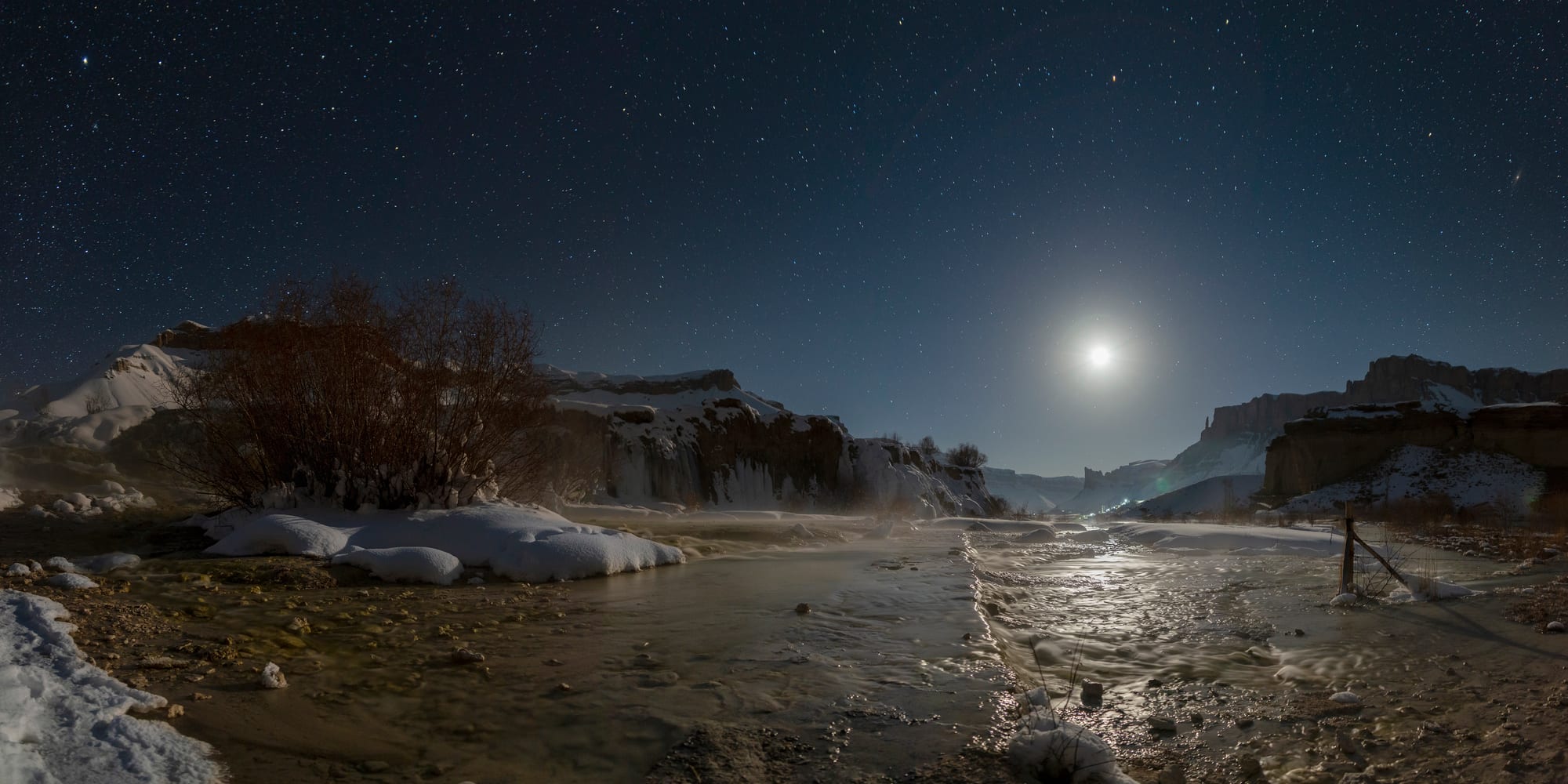
Spring (April–May) and early autumn (September–October) offer the most settled weather and open mountain roads. Band-e Amir and the Bamiyan Valley are best from late spring to early autumn; the Wakhan Corridor trekking season is short, roughly July to September.
- Avoid
- Deep winter for mountain travel; peak summer heat in Kandahar and the south.
- Ramadan Note
- During Ramadan, daytime eating and services are limited.
💱 Currency
The currency is the Afghani (AFN). It is a cash economy; expect no card payments and no working international ATMs.
- Symbol
- ؋
- Cash To Bring
- US dollars (newer, unmarked bills)
- Currency Code
- AFN — Afghani
💬 Language
Two official languages, both widely used in government and media. Dari (Afghan Persian) is the common language between groups, especially in the north and west; Pashto is dominant in the south and east. Many other languages are spoken, including Uzbek, Turkmen, Balochi, and Pashai.
- English
- Limited, mostly in Kabul and among younger and educated people
- Lingua Franca
- Dari
- Official Languages
- Dari (Farsi), Pashto