Food · Afghanistan
Afghanistan: Food and the National Dish
Kabuli pulao, steamed dumplings under garlicky yoghurt, bread the length of your arm, and a kitchen built where Persia, Central Asia and India meet
By Worldlore Editorial · 16 September 2026
A kitchen at the crossroads
Afghanistan has been a thoroughfare for as long as there have been trade routes, and its food shows every set of footprints. From Persia to the west come rice cooked with saffron and cardamom, sweet-and-sour meat, and a love of dried fruit in savoury dishes. From the Central Asian steppe to the north come dumplings and noodles and grilled meat. From the Indian subcontinent to the south-east come warm spices and fried snacks, though with far less chilli heat. Held together by mountains and a shared religion, these strands have settled into a cuisine that is aromatic rather than fiery, built on rice, wheat bread and lamb, and organised around the obligation to feed a guest generously.
The national dish: Kabuli pulao
Kabuli pulao — also written qabili palau — is the dish Afghans name first. It is a mound of long-grain rice, steamed until each grain is separate, cooked with lamb and its stock so the rice turns golden-brown, and finished with a tangle of fried julienned carrots and raisins on top, sometimes with slivered almonds or pistachios.
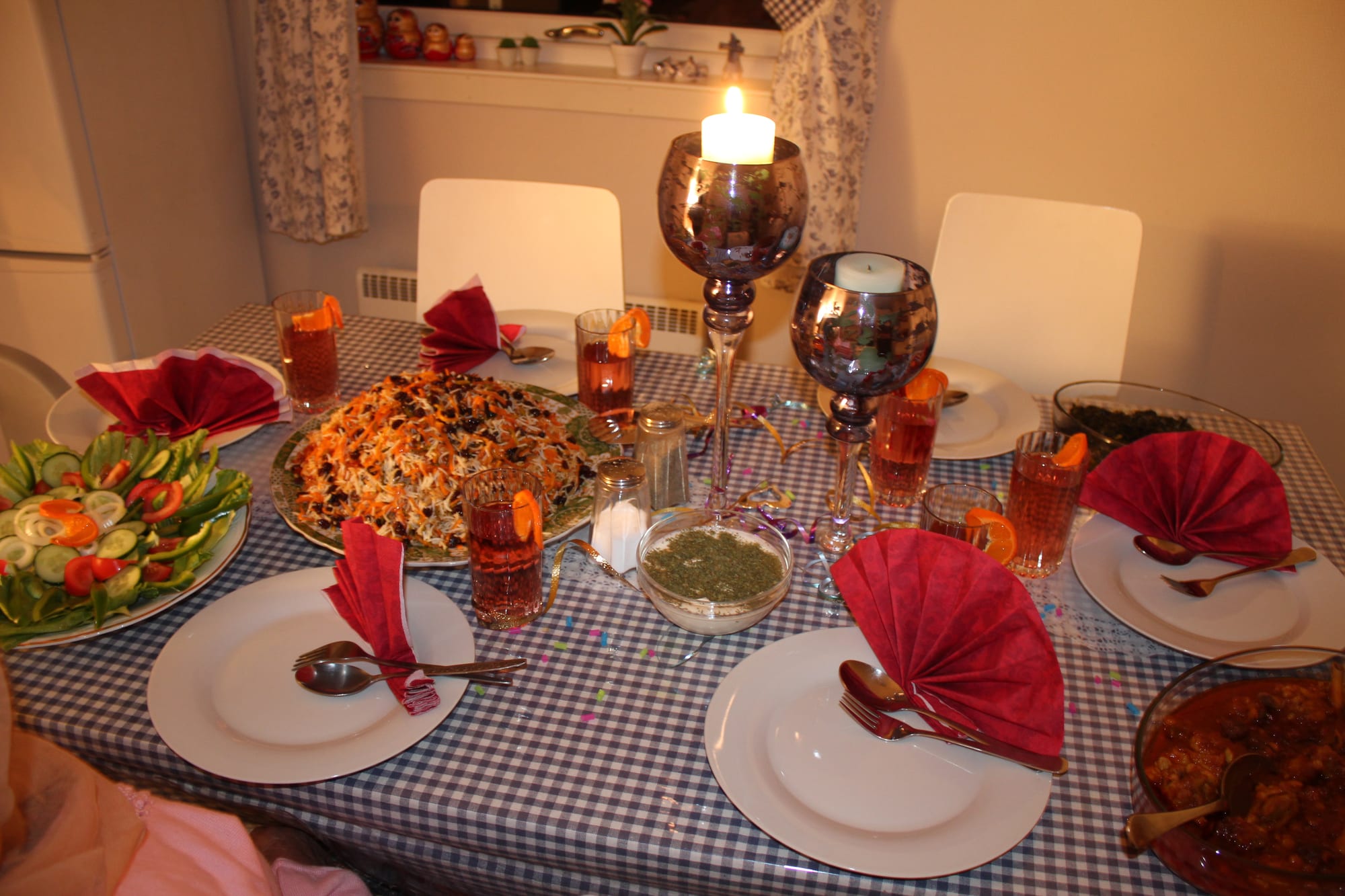
The name is usually explained as "the pulao of the capable" — a dish for people who could afford meat and the time to cook it, and so the thing you make to honour someone. It is the centrepiece of weddings, of the feast at the end of Ramadan, and of any meal where a guest is being taken seriously; the carrots and raisins are the sign that trouble has been taken. Every cook has a version, and families argue about whose is best in the way other families argue about roast dinners. It is almost always eaten from a shared platter, with a spoon or with the right hand.
What an Afghan kitchen runs on
Two staples carry every meal: rice and bread. Rice comes either as palaw — cooked with meat, stock and spices until coloured — or as chalow, plain white rice steamed with a little oil and served alongside a stew. Bread is naan, baked against the wall of a clay oven and bought fresh twice a day. Around them the everyday ingredients are lamb and mutton, chicken, onions in quantity, tomatoes, spinach, okra, aubergine, split peas and chickpeas.
The seasoning is gentle and fragrant. Cardamom, cumin, coriander seed, black pepper and cinnamon do most of the work, with saffron and rosewater for special dishes and fresh coriander and dill by the handful. Dairy is central and usually soured: chaka, a thick drained yoghurt beaten with garlic and dried mint, is spooned over dumplings and rice, and qurut, hard dried balls of salted yoghurt, is soaked and pounded into a sharp sauce, especially in the central highlands. Dried fruit and nuts — raisins, apricots, mulberries, almonds, pistachios, walnuts — are eaten by the bowlful with tea and stirred into rice and sweets.
Two small things sharpen the plate. Chutney — most often a bright green paste of coriander, green chilli, garlic and a little vinegar or pomegranate — is put out with rice, dumplings and fried food. And torshi, vegetables pickled hard and sour in vinegar, is kept through the winter and served in small amounts against rich meat dishes. Neither adds much heat; both add the tang the cooking leans on instead.
How the food got this way
The base layer is Persian. For centuries the Afghan lands were the eastern edge of the Persian cultural world, and the court food of Herat and Kabul followed Iranian lines: rice pilafs, meat braised with fruit, delicate sweets. The Turkic and Mongol movements through Central Asia added the dumpling family — mantu and ashak are cousins of the manti found from Turkey to Korea — along with noodles and a strong grilling tradition. Trade with India — and two centuries in which Kabul and the Mughal empire were closely tied — brought potatoes, tea, warm spice blends and deep-fried snacks such as pakora and the sticky coil of jalebi.
Geography did the rest. Afghanistan grows little on its dry plains without irrigation, but its river valleys and the underground channels called karez feed orchards that have supplied Asia with fruit for a very long time: grapes and raisins above all, then apricots, almonds, pomegranates and melons. For centuries these travelled the caravan roads dried and packed, and they still shape the cooking, which reaches for a handful of raisins or a spoon of pomegranate where another cuisine might reach for sugar or lemon.
One date organises the year: Nowruz, the Persian new year at the spring equinox on 21 March, which Afghanistan keeps as a major holiday. Its foods are specific — haft mewa, a compote of seven dried fruits and nuts soaked until the syrup turns fragrant, and samanak, a sweet paste of sprouted wheat that women cook overnight in turns, singing, while it thickens.
From Herat to Kandahar
The dishes above are mostly the food of Kabul, which has set the national menu. Away from the capital the accents change. Herat, on the Iranian border, cooks closest to Persia — more herbs, more saffron (the western provinces are now Afghanistan's saffron-growing centre), lighter stews. Kandahar and the south-east are Pashtun country: more grilled meat, more chilli, wok-fried karahi, and the orchards that make Kandahari pomegranates and figs famous. The northern cities around Mazar-i-Sharif lean Central Asian, with Uzbek and Turkmen noodle and dumpling dishes and the melons the region is known for across Asia. In the central highlands, Hazara cooking is leaner and colder-climate, built on potato, wheat and qurut. Those differences are where the region pages pick up.
Dishes to know
Five to recognise anywhere in the country (regional specialities are covered on the region pages):
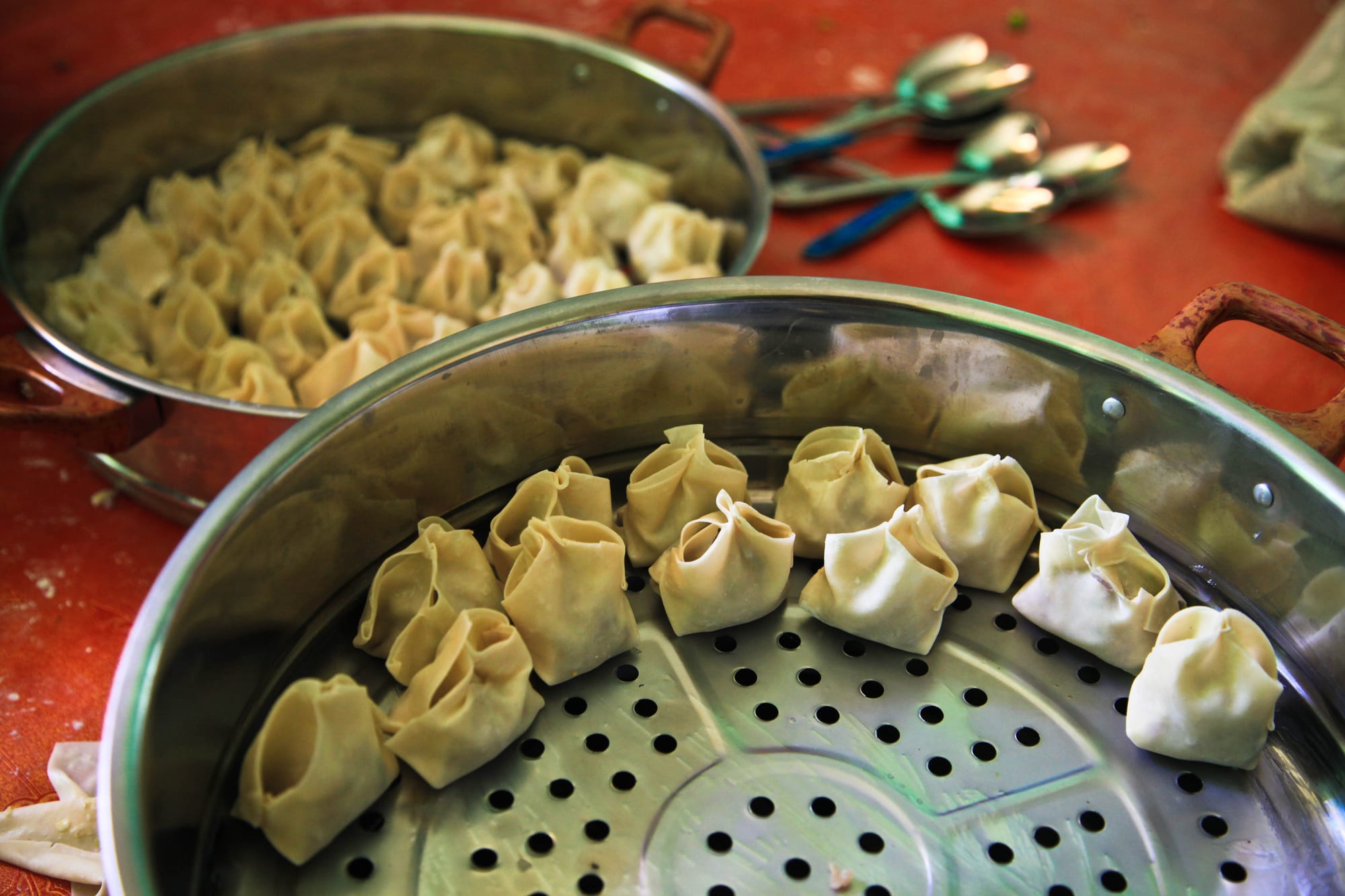
- Mantu — steamed dumplings filled with spiced minced beef or lamb and a lot of
onion, topped with garlicky chaka yoghurt, a tomato and yellow split-pea sauce, and dried mint.
- Ashak — the same idea with a filling of gandana, an Afghan chive or leek; the
dumplings are boiled rather than steamed, then dressed the same way. A Kabul speciality.
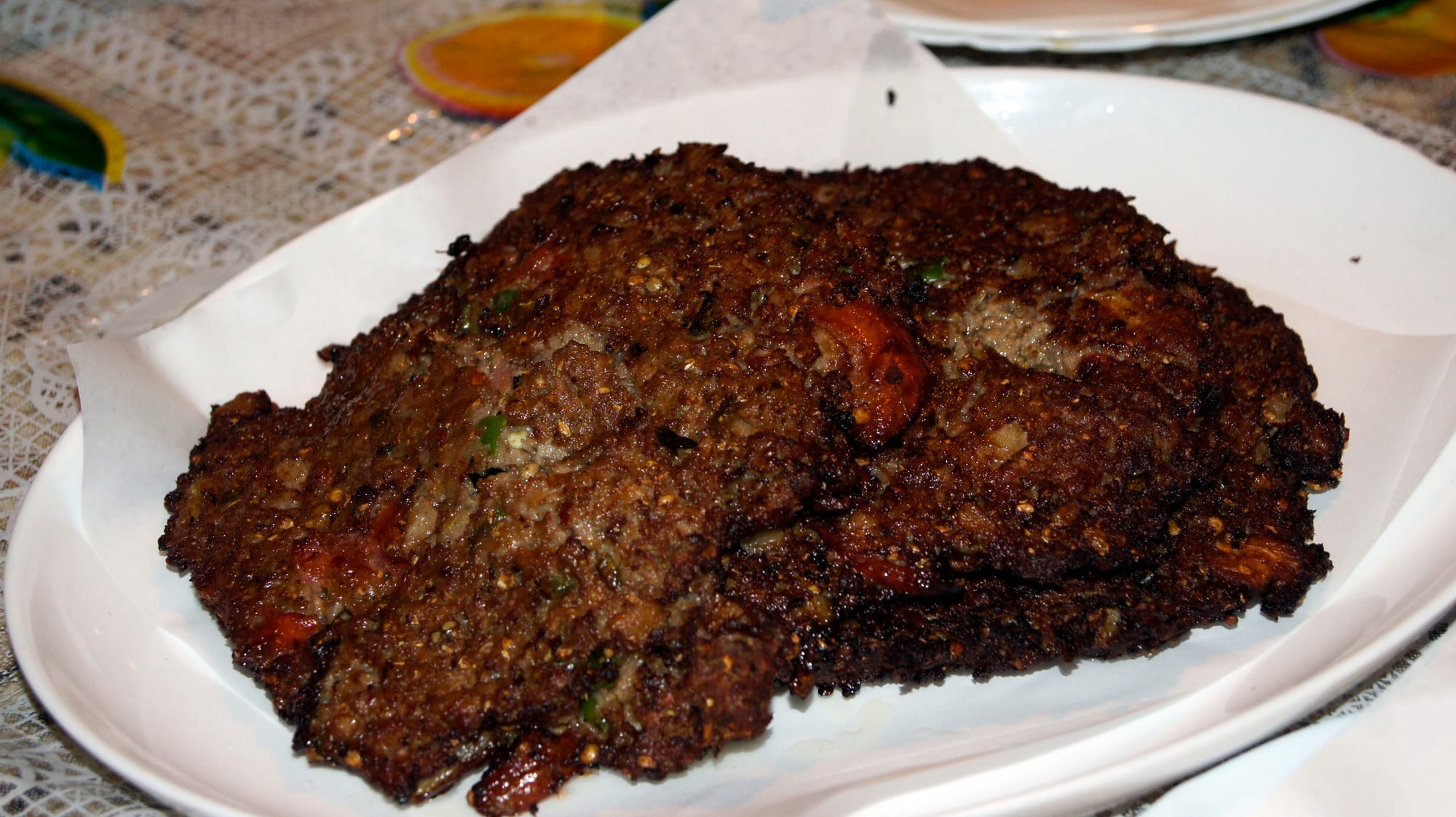
- Chapli kebab — a wide, flat, craggy patty of minced meat mixed with onion,
tomato, green chilli and coriander seed, shallow-fried and eaten with naan. A Pashtun dish of the east and south.
- Bolani — a thin flatbread folded over mashed potato, leek or pumpkin and
griddled until crisp, served with yoghurt. Street food, and a Ramadan staple.
- Qorma — the everyday stew: onions browned slowly, then meat and tomato and
often split peas or a vegetable such as spinach, ladled over plain chalow rice.
Beyond these, look for shorwa, a plain lamb-and-vegetable soup with bread torn into the bowl; sabzi, a dark spinach stew; kofta, meatballs in tomato sauce; and a whole family of syrup-soaked pastries and the cardamom milk pudding firni for dessert.
Kebabs in general are street and teahouse food rather than home cooking: skewers of lamb (sikh kebab), cubes of fatty lamb (chopan kebab), and minced kofta kebab, cooked over charcoal and served on or with naan, with raw onion and a shake of dried grapes-and-sumac seasoning.
Bread and the table
Naan is on the cloth at every meal and doubles as a scoop and a plate. It is bought, not baked at home: the neighbourhood nānwāī turns out long ridged flatbreads all day from a tandoor, and someone is sent for fresh ones before lunch and dinner.
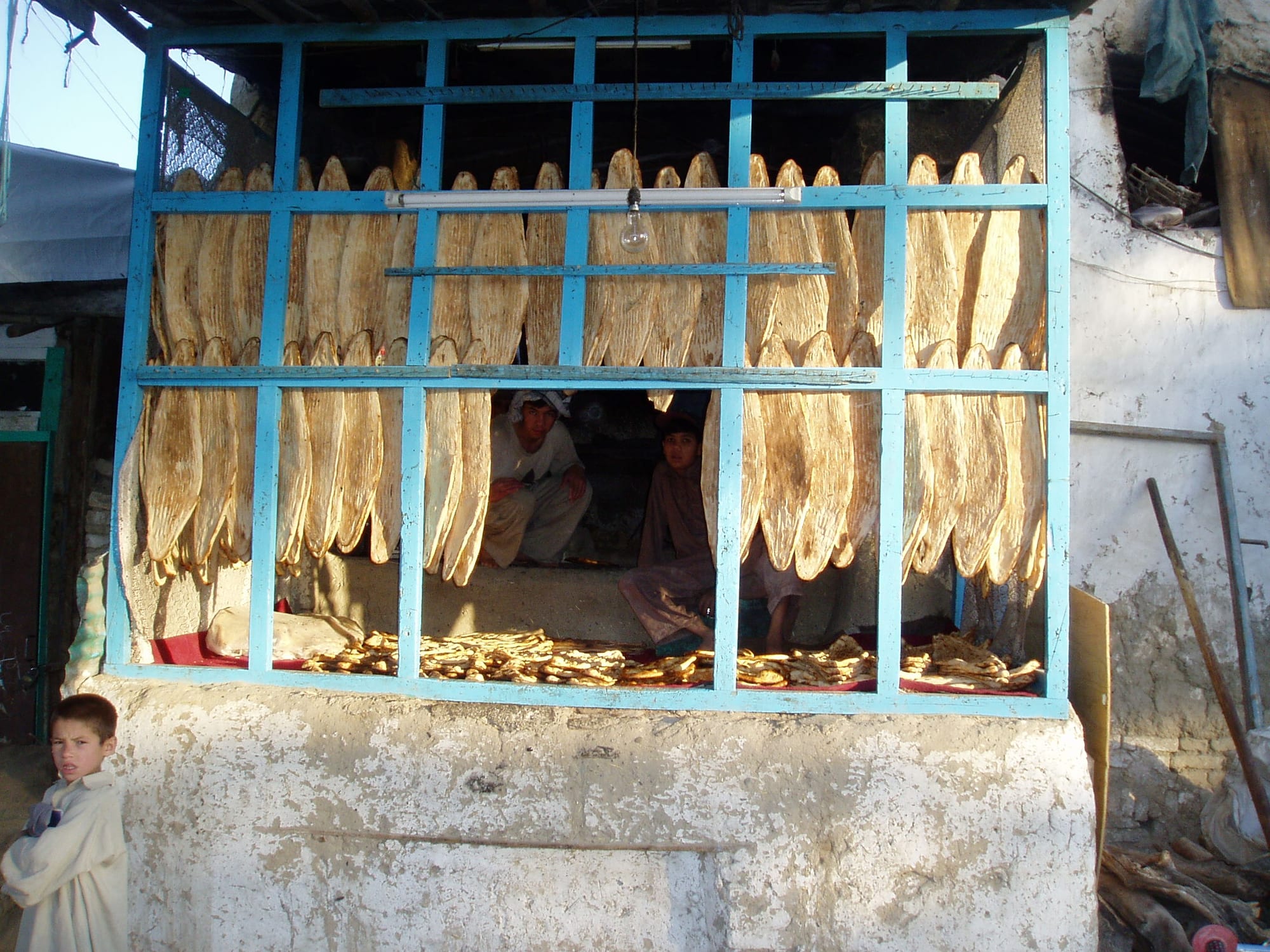
Meals are eaten sitting on the floor around a dastarkhan, the cloth the food is laid on, with the dishes shared and the rice served from a communal platter. You eat with the right hand or a spoon, tearing bread to pick up meat and sauce. Hospitality is close to sacred: a guest is given the best of everything and the most meat, tea is refilled without asking, and it is normal for a household to serve visitors a spread it would not cook for itself. During Ramadan the fast is broken with dates, bolani and fried snacks before the main meal; Nowruz and the two Eids each bring their own dishes.
Tea and other drinks
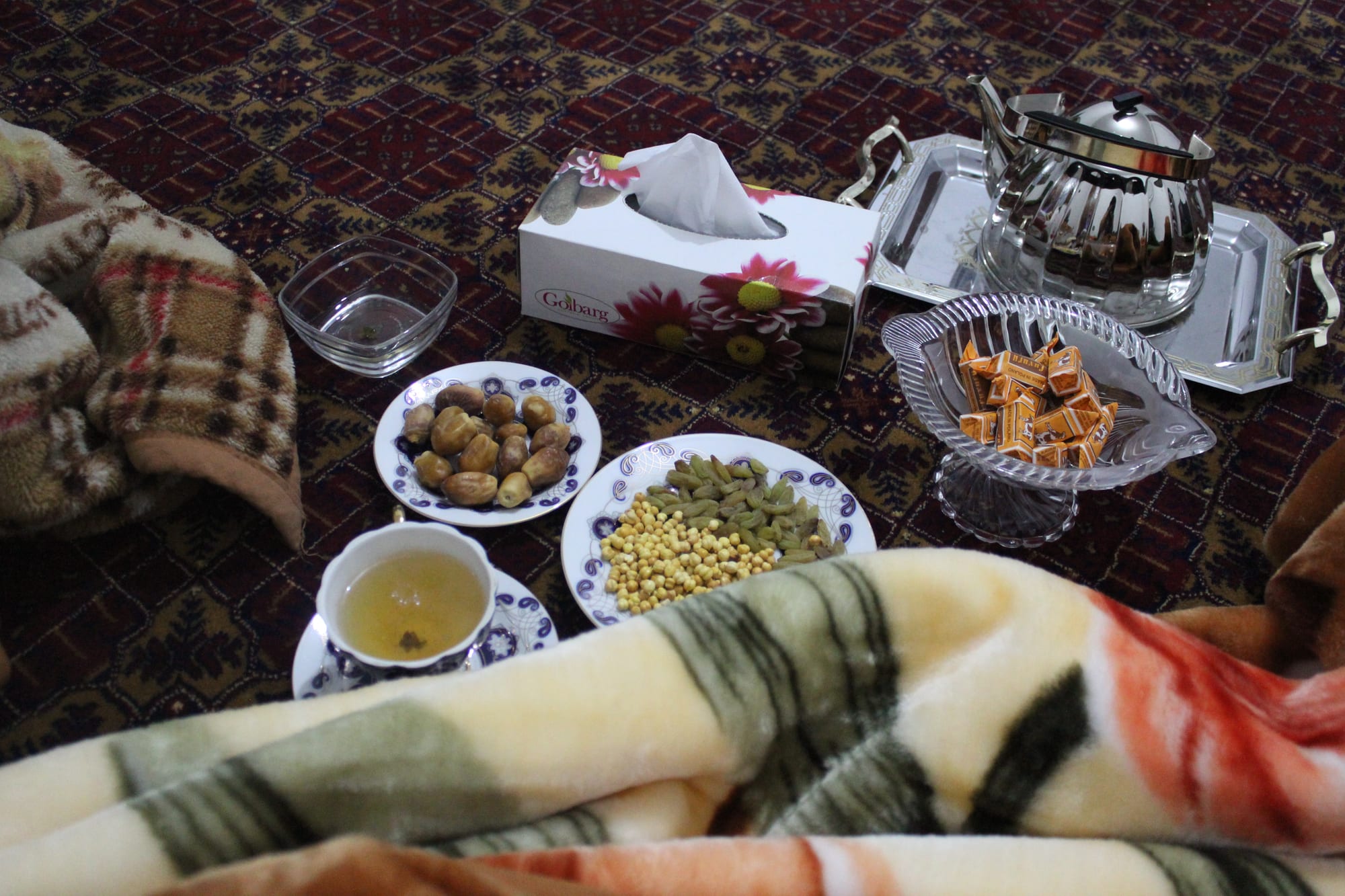
Tea — chai — is constant. The north and Kabul lean towards black tea, the south towards green; both are often scented with cardamom and drunk with a lump of rock sugar or a sugared almond held in the cheek. A pot is the standard welcome, the standard close to a meal, and the standard setting for any conversation that matters. On the road it is served in the chaikhana, the teahouse, where a large brass samovar keeps water on the boil, travellers eat a plate of pulao or kebab, and people rest through the heat of the day on carpeted platforms.
The main cold drink is dogh, yoghurt thinned with water and salted, flavoured with dried mint and sometimes cucumber, drunk in summer with heavy rice dishes. Fresh pomegranate and other fruit juices appear in season. Afghanistan is a Muslim country where the production and sale of alcohol are illegal, so it plays no part in eating out.
Eating as a traveller
Vegetarians can eat well enough around the edges — bolani, vegetable ashak, sabzi, salads, chickpea dishes and bread — but the default is meat, and rice and soups are usually built on meat stock, so it is worth asking. All meat is halal and pork is absent. Tap water is not safe to drink; stick to bottled or boiled. Street food is good and cheap: bolani, kebabs, pakora, and jalebi fried to order. And Afghan fruit deserves its reputation — melons, grapes, mulberries, pomegranates and apricots, fresh in season and dried the rest of the year.
What to take from the table
Afghan food is welcoming rather than showy: a big plate of rice, good bread, a sharp spoonful of yoghurt, and endless tea. The best of it happens on the floor around a shared cloth, and if you are invited to eat in someone's home you will be given more, and better, than you expected.