History
The Guianas were home to Arawak and Carib peoples when Europeans arrived. After brief English settlement, the territory passed to the Dutch in 1667 (traded, in effect, for New Amsterdam — later New York). The Dutch built a brutal sugar-, coffee-, and cotton-plantation economy worked by enslaved Africans, whose death rate was so high that constant new arrivals were needed. Many escaped into the forest and formed independent Maroon societies — the Ndyuka, Saramaka, and others — who fought the colony to a standstill and won treaties recognising their autonomy in the 1760s.
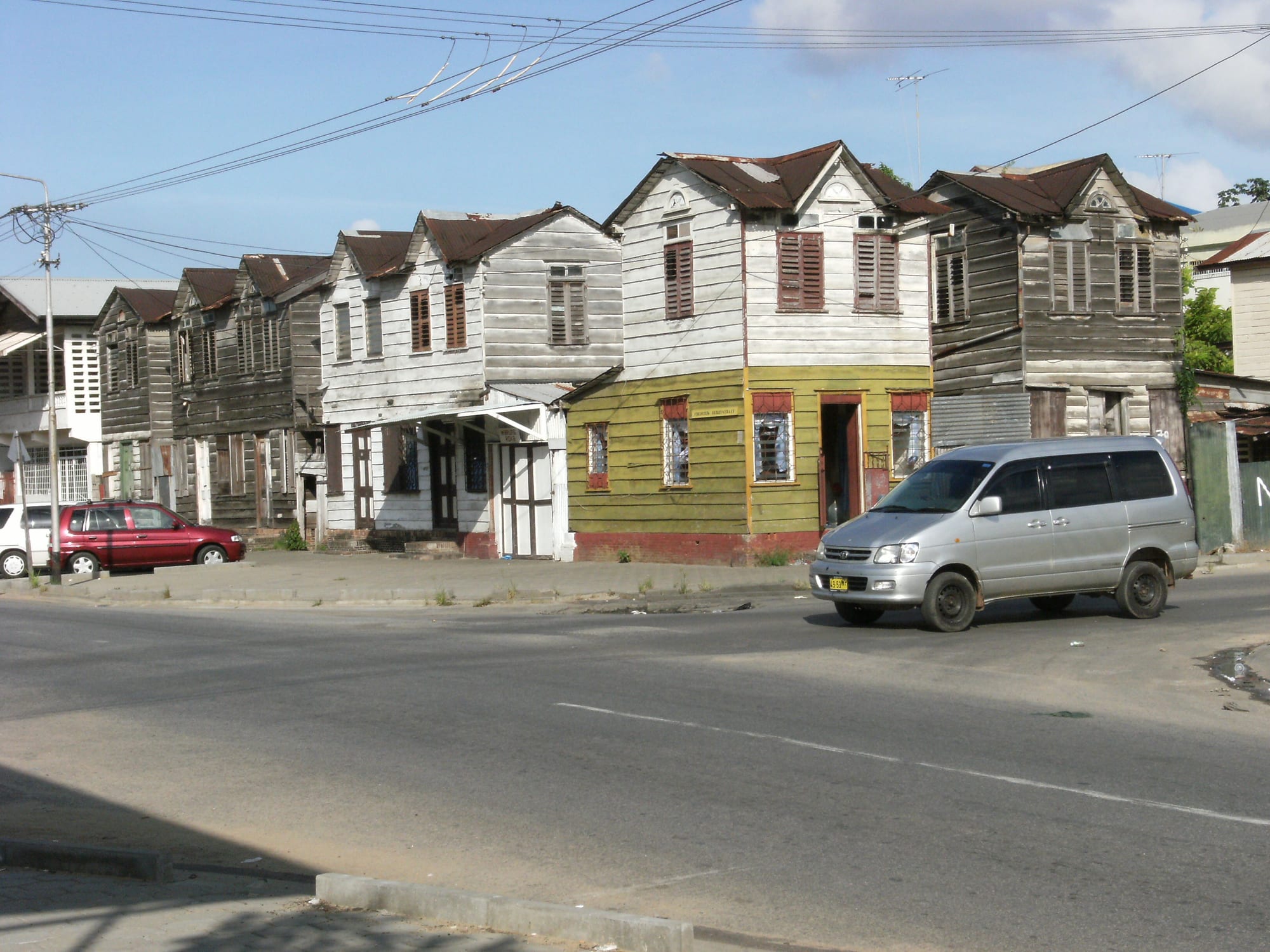
Slavery was abolished in 1863, though with a further ten years of forced "apprenticeship". To replace plantation labour the Dutch brought indentured workers from British India (from 1873) and from Java in the Netherlands East Indies (from 1890), which is why Suriname today has large Hindustani and Javanese populations.
Suriname became independent from the Netherlands in 1975; around a third of the population emigrated to the Netherlands around independence and after. A 1980 military coup brought Dési Bouterse to power; the 1982 "December murders" of 15 opponents and a 1986–92 interior war against Maroon rebels marked the era. Democracy returned in the 1990s, but Bouterse won the presidency in 2010 and 2015 even as he was convicted, in 2019, over the December murders. He lost power in 2020 and died in 2024 while a fugitive. Offshore oil discoveries now promise a major economic shift.
- Suriname: The Plantation Colony That Stayed Diverse — A slice of Guiana rainforest that the Dutch took from the English in exchange for New York — a brutal sugar colony whose escaped slaves built lasting Maroon nations, and a small country where Hindus, Javanese, Creoles, Maroons and Indigenous peoples share power uneasily