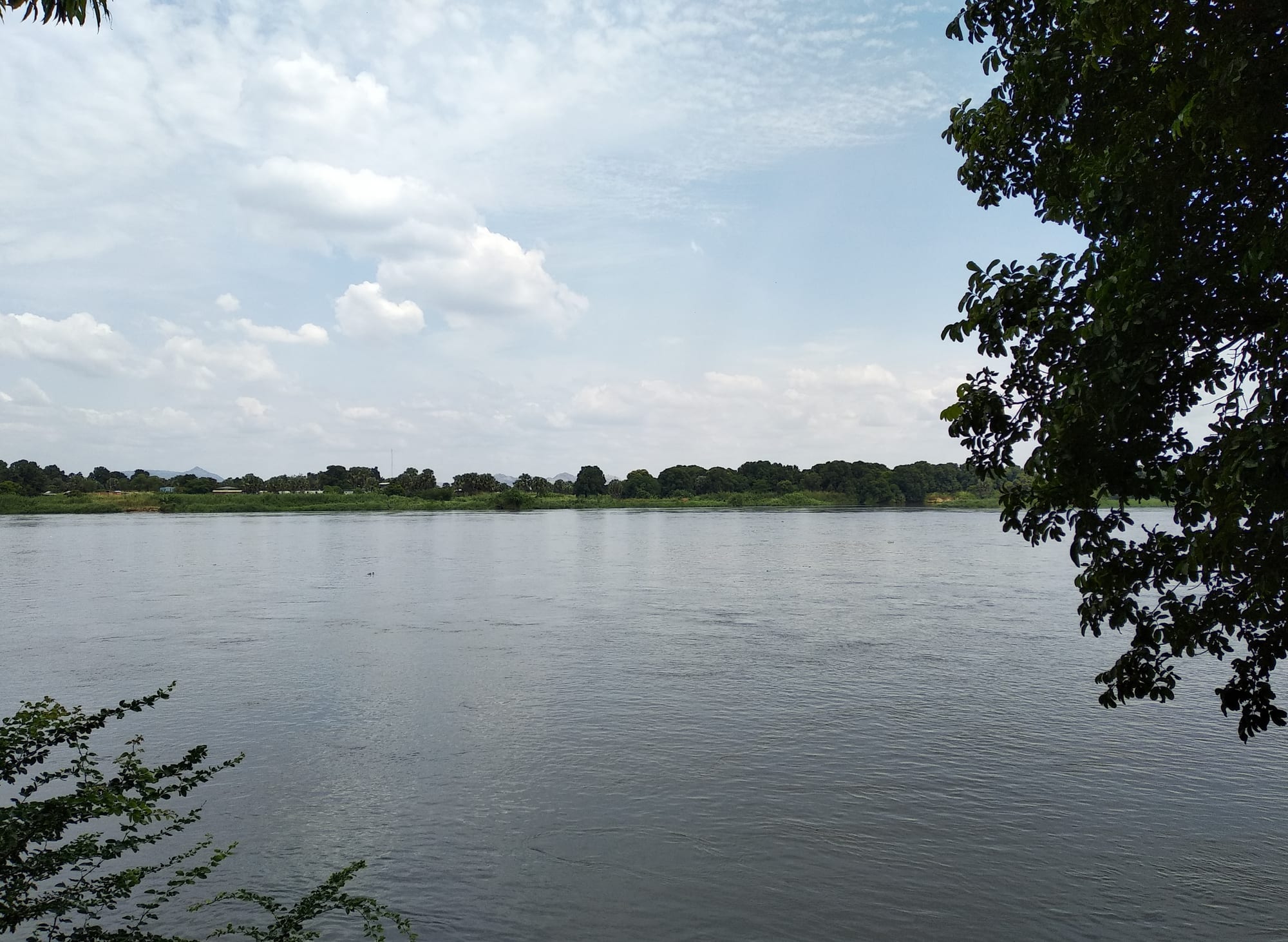
A broad, calm river curving between green banks under a wide sky, with scattered boats near the near shore

South Sudan

The White Nile at Juba, the small riverside capital and the country's main gateway. (Umar sheriff habibullah / Wikimedia Commons · CC BY-SA 4.0)

The world's youngest country, independent from Sudan in 2011 after Africa's longest civil war — oil-rich but among the poorest and least developed places on Earth, and pushed back toward conflict by a power struggle at the top. This page is written to explain the country, not to encourage travel to it — most governments advise against all travel.

Explore South Sudan

History

The peoples of the south — Nilotic groups such as the Dinka, Nuer, and Shilluk, and many others — long resisted incorporation by powers to the north, and nineteenth-century slave raiding from the Nile deepened the divide. Under British-Egyptian rule Sudan's south was administered separately and left undeveloped. When Sudan became independent in 1956, southern fears of domination by Khartoum triggered the First Sudanese Civil War (1955–72).

A second, longer war began in 1983, led by John Garang's Sudan People's Liberation Movement/Army against the northern government, and killed an estimated two million people before the Comprehensive Peace Agreement of 2005 granted the south autonomy and the promise of a referendum. In January 2011 almost 99 per cent of southern voters chose to secede, and the Republic of South Sudan became independent on 9 July 2011.

Peace did not hold. In December 2013 a political rupture between President Salva Kiir, a Dinka, and his former deputy Riek Machar, a Nuer, spiralled into a civil war marked by ethnic massacres, mass displacement, and localised famine. A 2018 agreement created a fragile unity government, but promised elections have been repeatedly postponed, fighting has flared in several regions, and in 2025 Machar was again placed under house arrest as the deal frayed. The country is also sheltering hundreds of thousands of people who have fled the war in Sudan since 2023.

  • South Sudan: The Newest Country The world's youngest state, born in 2011 after Africa's longest civil war — and plunged within two years into a war of its own, between the leaders who had won independence together

Culture & Customs

South Sudan has around sixty ethnic groups, the Dinka and Nuer the largest. Cattle are at the centre of life for the pastoralist peoples: they are wealth, bride-price, a subject of praise poetry, a source of personal names, and a cause of raids and feuds. Young men live for stretches in cattle camps, decorate themselves with ash and ochre, and compose songs to favourite oxen.

Christianity, brought by missions, is widespread and often blended with traditional belief; there is a Muslim minority, especially in towns. Scarification marking initiation or group identity was once common and is now declining. Community wrestling is a major sport, drawing large crowds for matches between villages or sections in the dry season.

Loyalties to clan, section, and region are strong, kinship obligations are binding, and elders and chiefs retain real authority in local disputes.

Daily Life

Around eleven to twelve million people live in South Sudan, the great majority rural and dependent on cattle, sorghum farming, and fishing along the Nile and its swamps. Oil provides almost all state revenue but little reaches ordinary people; rates of literacy, schooling, electrification, and paved roads are among the lowest anywhere.

Displacement is a constant fact of life: millions are refugees in neighbouring countries or internally displaced, humanitarian aid sustains a large share of the population, and repeated, prolonged flooding has driven people from their land and drowned herds and crops.

Juba, on the White Nile, is the only substantial town — a fast-grown administrative centre of markets, aid compounds, and unpaved streets — and the hub through which almost all movement, goods, and money flow.

Food

The staple is sorghum, and to a lesser extent millet, ground and cooked into a stiff porridge (asida) or the thin fermented flatbread kisra, eaten with stews of okra, beans, groundnut, dried fish, or meat. Fish from the Nile and the Sudd, fresh or sun-dried, is a mainstay in riverine areas.

Milk is important where cattle are kept, but meat is reserved for occasions, since live animals are too valuable to slaughter casually. In the towns, Sudanese and Ethiopian-influenced dishes, ful (stewed beans), and grilled meat are common, along with imported rice and bread.

Strong sweet tea and spiced coffee are drunk throughout the day. Beer, both local brews and bottled, is available in Juba, but alcohol is limited elsewhere.

Attractions & Natural Wonders

For ordinary travellers the country is effectively off-limits, but its natural assets are remarkable. The Sudd, formed where the White Nile spreads into one of the world's largest wetlands, is a vast maze of channels, papyrus, and floating islands, rich in birdlife including the shoebill.

Boma and Bandingilo National Parks, on the eastern plains, host one of the largest land-mammal migrations on Earth — aerial surveys have counted many hundreds of thousands, and possibly millions, of white-eared kob, tiang, and Mongalla gazelle moving with the seasons, a spectacle compared to the Serengeti but almost entirely unvisited.

Nimule National Park near the Ugandan border protects elephants and hippos along the Nile, and the river itself, the town of Juba, and the hills of the Imatong range in the far south round out a list of sights that at present exist mainly on paper, for lack of security and infrastructure.

  • South Sudan: Five Attractions and Natural Wonders Cattle camps where herders coat themselves in ash and sleep beside their animals, one of the largest land mammal migrations on earth only recently confirmed at scale, and a vast wetland the size of a small country, described here for reference amid a fragile post-conflict transition

Planning basics

Budget

There is no tourist economy. Juba is expensive because demand from aid workers and officials has pushed up the price of basic hotel rooms and meals far above the regional norm. Any travel outside the capital requires chartered flights or armed convoys, at a cost that puts it beyond ordinary visitors.

Daily Budget Note
Juba: often USD 150–300/day for a modest room, meals, and a driver, before any security or flights

Assume everything must be arranged privately and paid in US dollars cash, and that moving beyond Juba means chartering aircraft.

Visa Requirements

All visitors need a visa, obtained in advance from a South Sudanese embassy, usually with a letter of invitation from a host organisation. Internal movement permits are needed to travel between states, and a separate permit is required to take photographs.

Typical Validity
About 30 days, single entry, arranged before arrival

Arrange the visa, a sponsoring host, internal travel permits, and a photography permit before you go; carry printed copies at all times.

Safety

Most governments advise against all travel. The risks include armed conflict and its resurgence, inter-communal violence and cattle raiding, banditry and roadblocks, carjacking, crime in Juba, and land mines. Kidnapping of foreigners has occurred, and aid workers have been killed. Medical facilities are minimal and casevac cover is essential.

Health
Malaria year-round; frequent cholera, measles, and hepatitis E outbreaks; Hepatitis and yellow-fever vaccination needed; nearest reliable hospitals are in Nairobi

Follow your government's travel advice; if present for work, move only with a security plan, keep to Juba where possible, and maintain evacuation insurance and communications.

Climate

Tropical. A long rainy season runs roughly April to November, heaviest from July to September, when large areas flood and roads become impassable. The hot dry season, December to March, sees temperatures climb toward 40°C in the north of the country.

Dry Season
December–March, very hot
Wet Season
April–November (peak Jul–Sep), widespread flooding

Transportation

Juba International Airport has regional flights to Nairobi, Addis Ababa, Entebbe, and Cairo. Paved roads barely exist outside Juba, some routes are mined or controlled by armed groups, and the rainy season closes many for months. The UN and aid agencies operate most internal flights; river transport on the Nile is slow and irregular.

Fly in and out of Juba, and do not attempt overland travel between states without vetted security and current route advice.

Best Time to Visit

The dry months from December to March are the only practical time to move around, and roughly when the Boma–Bandingilo antelope migration is most visible. Security conditions, not the calendar, determine whether travel is possible at all.

Events
Independence Day (9 July); Christmas and Easter; Eid; local wrestling tournaments between communities in the dry season

Currency

The South Sudanese pound has lost most of its value and continues to slide. The economy runs on US dollars in cash; card payments and working ATMs are almost nonexistent. Change money through trusted contacts, not the street.

Symbol
£
Currency Code
SSP — South Sudanese pound (US dollars cash in practice)

Language

English is the official language, chosen at independence to mark a break with Arabic-speaking Khartoum. Juba Arabic, a simplified Arabic creole, is the common spoken language in towns. Dinka, Nuer, Bari, Zande, and dozens of other languages are spoken; literacy rates are among the world's lowest.

Lingua Franca
Juba Arabic
Official Language
English