A small Caribbean harbour town of low buildings along a bay, hills behind and boats moored in calm water under a bright sky

Saint-Martin

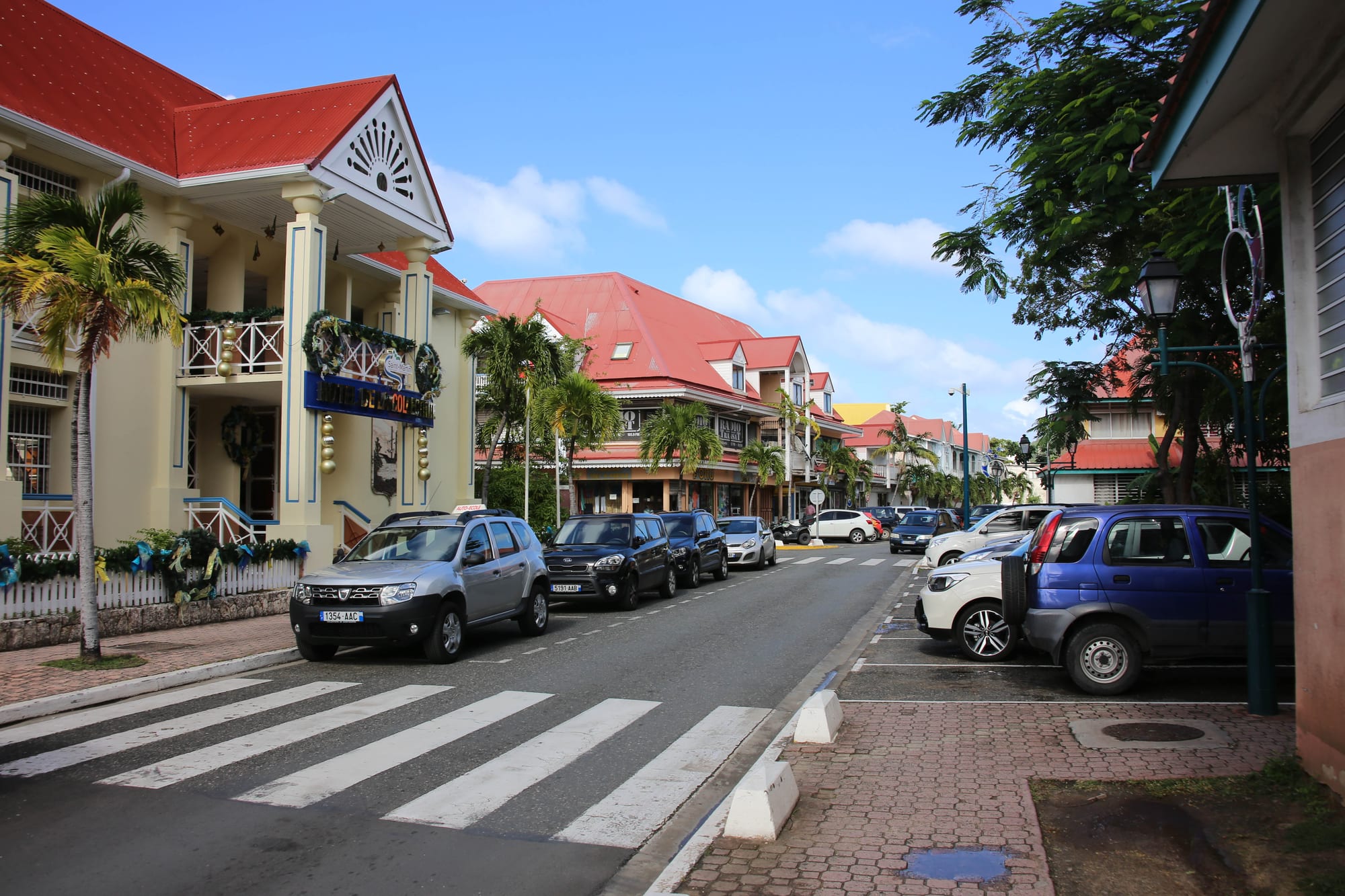
Marigot, the capital of the French side, on its lagoon-side bay beneath the ruined hilltop Fort Louis. (Paul Sableman / Wikimedia Commons · CC BY 2.0)

The northern, French side of a small Caribbean island shared with Dutch Sint Maarten — an overseas collectivity of France since 2007, quieter and less commercial than the Dutch half, with long beaches, the capital at Marigot, and a still-visible recovery from Hurricane Irma.

Explore Saint-Martin

History

The island's shared story — the Arawak and Kalinago inhabitants, Columbus's 1493 naming, the 1648 Treaty of Concordia that split it between France and the Netherlands, the salt pans and small plantations worked by enslaved Africans, abolition on the French side in 1848, and the mid-twentieth-century tourism boom — is set out on the Sint Maarten page. Saint Martin/Sint Maarten remains the smallest inhabited landmass in the world divided between two nations.

The French side was long governed as part of Guadeloupe, far to the south. In 2003 its residents voted to separate, and in 2007 Saint-Martin — together with Saint-Barthélemy — became its own French overseas collectivity, with an elected territorial council and a degree of fiscal autonomy, while remaining part of France and the European Union and keeping the euro.

In September 2017 Hurricane Irma, a Category 5 storm, struck the island head-on, causing severe damage and several deaths on the French side, wrecking homes, schools, and the electricity network. Reconstruction, funded and directed from Paris, has been slow and politically contentious, and parts of the territory still show the scars.

  • Saint-Martin: Half an Island The French northern half of the smallest landmass shared by two nations — a salt-and-sugar colony divided with the Dutch since 1648, governed for centuries from Guadeloupe, made its own French collectivity in 2007, and flattened by Hurricane Irma in 2017

Culture & Customs

French is the language of administration and schooling, but English is the island's common tongue, reflecting a population drawn from across the Caribbean — a large share of Haitian, Dominican, and wider West Indian origin, alongside metropolitan French residents. Society is predominantly Christian.

Carnival on the French side runs before Lent, while the Dutch side holds its own after Easter, and Saint-Martin's Day on 11 November is marked on both halves of the island. Grand Case has a strong reputation for food, and the roadside lolos — barbecue shacks that grill over half-drums — are a local institution.

Daily Life

About 32,000 people live on the French side, most within a short drive of Marigot, the capital, on the lagoon. As French and EU citizens, many move to mainland France or Guadeloupe for study and work. The economy is almost entirely tourism — stopover visitors, villas, day-trippers from the Dutch side and its cruise port, and yachting in the shared Simpson Bay Lagoon — supported by French public spending and welfare.

There is no immigration control on the island's internal border, only a sign and a change in road markings, so daily life flows freely between the two halves. The cost of living is high, nearly everything is imported, and the recovery from Irma is still shaping neighbourhoods and services.

Food

The French side is the island's dining draw. Grand Case, a single street of bistros and grills along its beach, has long billed itself as the "gastronomic capital of the Caribbean", while its lolos — open-air shacks grilling ribs, chicken, snapper, and lobster — are cheaper and just as loved. Creole cooking (accras, colombo curry, boudin, féroce of avocado and saltfish), fresh seafood, and French cheese, charcuterie, and wine fill out the table. Local rums and the guavaberry liqueur shared with the Dutch side are the usual drinks.

Attractions & Natural Wonders

The French side has the island's best-known beaches: the long, beach-club-lined Orient Bay, with a naturist section at its southern end; quieter Happy Bay and Friar's Bay, reached on foot; and the sheltered family beach at Anse Marcel. Boats run to the tiny nature-reserve island of Pinel and to Green Cay and Tintamarre for snorkelling.

Marigot has a waterfront market on Wednesdays and Saturdays, the ruined hilltop Fort Louis with a view over the lagoon and across to Anguilla, and a small heritage museum. Pic Paradis, the island's 424-metre high point, sits on the French side, with rainforest trails and the Loterie Farm zip lines, pools, and activity park below it. The Butterfly Farm and diving on the reefs and the Proselyte wreck round out the list, and the French-side Carnival and the Grand Case street evenings are the main events.

  • Saint Martin: Five Attractions and Natural Wonders A single small island split between two countries with no border checkpoint at all, a bay of gourmet restaurants known as the culinary capital of the Caribbean, and a hilltop viewpoint taking in both nations at once

Planning basics

Budget

Expensive, though generally better value than the Dutch resort strip. The villas and Orient Bay hotels are dear, but Grand Case and the French side have decent guesthouses and apartments, and the roadside lolo barbecue shacks and supermarkets cut food costs sharply.

Daily Budget Midrange
USD 200–420 (hotel, restaurants, car hire, a boat trip to Pinel or Tintamarre)
Daily Budget Shoestring
USD 80–140 (guesthouse or apartment, lolo and supermarket food, bus or shared car)

Stay in Grand Case or the hills above it, eat at the Grand Case lolos, and hire a car — the whole island is drivable and there is no border checkpoint.

Visa Requirements

Saint-Martin is part of France and the EU (as an outermost region) but sits outside the Schengen Area, with its own entry practice, and there is no border with Dutch Sint Maarten. Citizens of the EU, UK, US, Canada, and many others enter visa-free for up to 90 days.

Typical Stay
Up to 90 days visa-free for most Western passports

You can move freely between the French and Dutch halves once on the island; complete the Dutch-side online arrival card if you fly into Princess Juliana.

Safety

Saint-Martin has a higher crime rate than many Caribbean islands, with robberies and break-ins to cars and villas, concentrated away from the main beaches and worse after dark; petty theft on the sand is common. Some infrastructure is still patched after Irma, and the island is fully within the hurricane belt. Strong currents run on some Atlantic-facing beaches.

Health
Tap water is desalinated and safe; dengue and other mosquito-borne illnesses occur; the sun is intense

Don't leave valuables in cars or on the beach, avoid unlit areas at night, use repellent, and watch the forecast carefully in hurricane season.

Climate

Tropical, hot and humid, around 28–31°C, cooled by the trade wind. The drier season runs December to April; June to November is wetter and hotter and is the Atlantic hurricane season — Hurricane Irma struck in September 2017.

Dry Season
December–April
Wet Season
June–November (hurricane season)

Transportation

Most visitors arrive through Princess Juliana International Airport on the Dutch side, a major regional hub; the small Grand Case–Espérance airport on the French side handles inter-island flights. A hire car is the easiest way around the whole island — there is no checkpoint between the French and Dutch halves, only a sign and a change in road markings — with buses on the main roads and water taxis in the lagoon.

Hire a car at the airport; you can drive freely across the whole island regardless of which side you land on.

Best Time to Visit

December to April for dry, sunny weather and the French-side Carnival. May and November are quieter shoulder months. The hurricane risk peaks from August to October.

Events
The French-side Carnival before Lent; Saint-Martin's Day (11 November), marking the island's division, celebrated on both sides; the 'Mardis de Grand Case' street food-and-music evenings in season

Currency

The euro is the official currency, though US dollars are widely accepted, often at a poor rate. Cards are standard; carry some cash for the lolos and small shops.

Symbol
Currency Code
EUR — euro (US dollars widely accepted)

Language

French is the official language, used in government and schools, but English is the island's everyday lingua franca, reflecting a population drawn from across the Caribbean. Spanish, Haitian Creole, and Papiamento are widely spoken among the migrant workforce.

Lingua Franca
English
Official Language
French