💰 Budget
There is no hotel. Visitors stay in islanders' homes on a set daily "home-stay" tariff arranged in advance, plus a per-person landing fee. The overwhelming cost is the voyage — flights to Tahiti, a flight to Mangareva, and the passenger ship.
- Daily Budget Note
- Modest home-stay and landing fees; the cost is almost entirely getting there and back
Apply to the Pitcairn Islands Office early; the quarterly ship and the home-stay must both be confirmed before you go.
✈️ Visa Requirements
Everyone needs a licence to land, applied for well in advance from the Pitcairn Islands Office, with confirmed home-stay accommodation, a confirmed berth on a vessel both ways, sufficient funds, and comprehensive medical and evacuation insurance. Stays are built around the ship's schedule — often a few days, or around two weeks.
- Typical Stay
- Set by the ship's schedule (roughly quarterly); a few days or about two weeks
There is no way to visit on spec — the licence, the ship, and the home-stay are all arranged months ahead through the Pitcairn Islands Office.
🛡️ Safety
Crime against visitors is not a concern, though the island's recent history includes the 2004 sexual-abuse convictions, which visitors are sometimes aware of. The real hazards are the sea and the landing — Bounty Bay is exposed and the longboat transfer can be rough or cancelled — along with the steep, slippery tracks (the climb from the bay is called the "Hill of Difficulty") and the isolation, with only a small clinic and no quick evacuation.
- Health
- No tropical disease risk; the concern is that advanced care is days away by sea
Carry comprehensive medical and evacuation insurance, follow islanders' guidance on the boat transfer and the tracks, and accept that the swell can delay or prevent landing.
🌦️ Climate
Subtropical and mild, moderated by the ocean, at around 19–28°C. It is warmer and wetter from November to March and cooler and drier from April to October. The island lies well south of the main cyclone belt but takes heavy Pacific swells.
- Cool Dry
- April–October
- Warm Wet
- November–March
🚆 Transportation
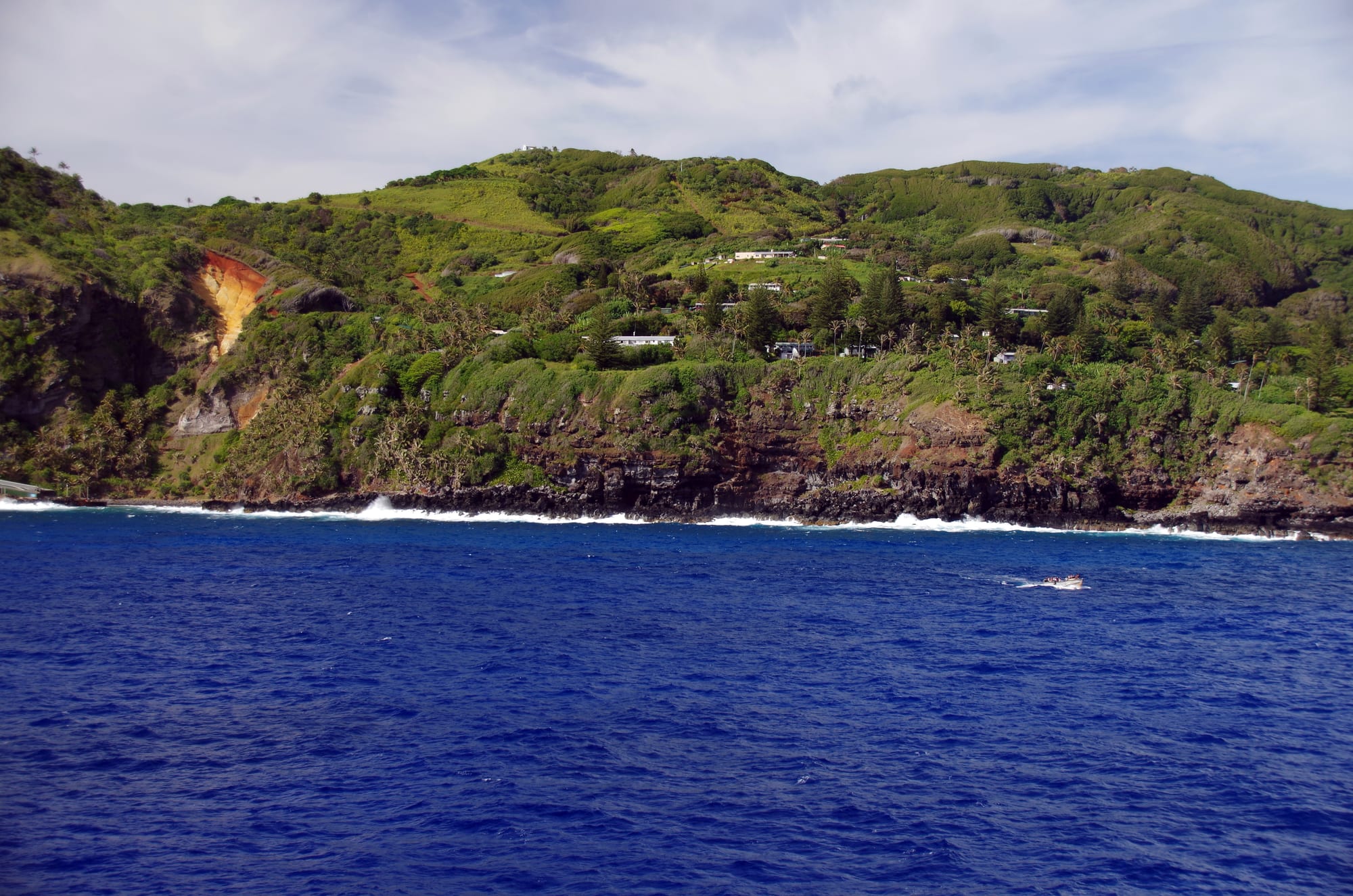
There is no airport. Access is via Tahiti, then a flight to Mangareva in the Gambier Islands of French Polynesia, then about 32 hours by the territory's passenger and cargo ship, which sails roughly every three months. The ship anchors offshore and passengers transfer to the island by longboat through the surf at Bounty Bay. Occasional expedition cruises also call. On the island, quad bikes and walking cover the steep dirt tracks.
Plan the whole trip around one ship sailing; a missed connection can mean a three-month wait.
📅 Best Time to Visit
April to October is drier and a little cooler. In practice the quarterly passenger-vessel schedule from Mangareva, and the sea state at Bounty Bay, decide when a visit is even possible.
- Events
- Bounty Day (23 January), re-enacting the burning of the ship; the arrival of each supply voyage, which is an island event in itself
💱 Currency
The New Zealand dollar. It is a cash economy — bring New Zealand dollars, as there is no bank and no ATM.
- Symbol
- $
- Currency Code
- NZD — New Zealand dollar
💬 Language
English is the official language. Pitkern, a creole of eighteenth-century English and Tahitian, is spoken alongside it within the community.
- Also Spoken
- Pitkern (English–Tahitian creole)
- Official Language
- English