History · Pitcairn Islands
Pitcairn Islands: The Mutineers' Refuge
The last British territory in the Pacific — a hidden island settled by the mutineers of HMS Bounty and the Tahitians they brought with them, and now the least populous jurisdiction on Earth
By Worldlore Editorial · 19 September 2026
The smallest jurisdiction on Earth
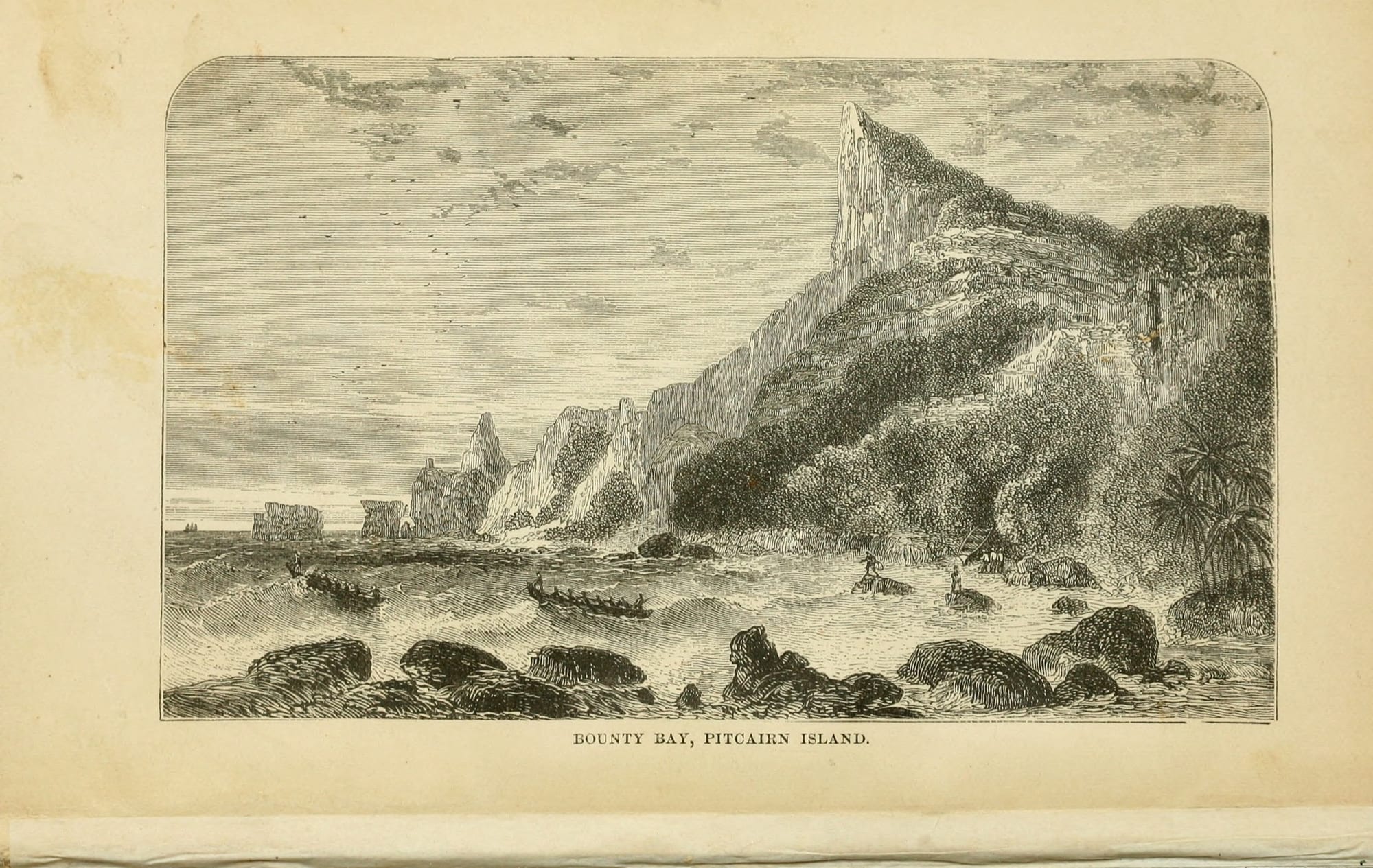
The Pitcairn group is four islands in the middle of the South Pacific — only one, Pitcairn itself, inhabited — and it is a British Overseas Territory with a population of around 35, the smallest of any polity in the world. Everyone there descends from a single event: the 1789 mutiny aboard HMS Bounty, after which nine British sailors and a group of Tahitian men and women hid on this uncharted island and were not found for eighteen years. The islanders still bear the mutineers' surnames and speak Pitkern, a blend of 18th-century English and Tahitian.
A short history
- c. 1000–1500 CE
Polynesian occupation
Islanders live on Pitcairn, then abandon it.
- 1767
European sighting
A British ship names the island for the midshipman who spotted it.
- 1789
The mutiny
Fletcher Christian and others seize HMS Bounty from William Bligh.
- 1790
Settlement
Nine mutineers and about 18 Tahitians land and burn the ship.
- 1808
Rediscovery
An American sealer finds one surviving mutineer and many children.
- 1831, 1856
Relocations
The community is moved to Tahiti, then Norfolk Island; some return.
- 1838
British territory
Pitcairn is formally taken under the Crown.
- 1886
Adventism
The island converts to Seventh-day Adventism.
- 2004
The trials
Six men are convicted of sexual offences after a British investigation.
Occupied, then empty
Archaeology — stone tools, petroglyphs, burial sites — shows that Polynesians lived on Pitcairn and nearby Henderson Island for several centuries in the second millennium, trading with Mangareva, before the settlements failed and the islands were left uninhabited. The Bounty's people found no one there. When Pitcairn was sighted by a British naval expedition in 1767, it was recorded in the wrong position on the charts — which is precisely why it made such a good hiding place.
The mutiny and the settlement
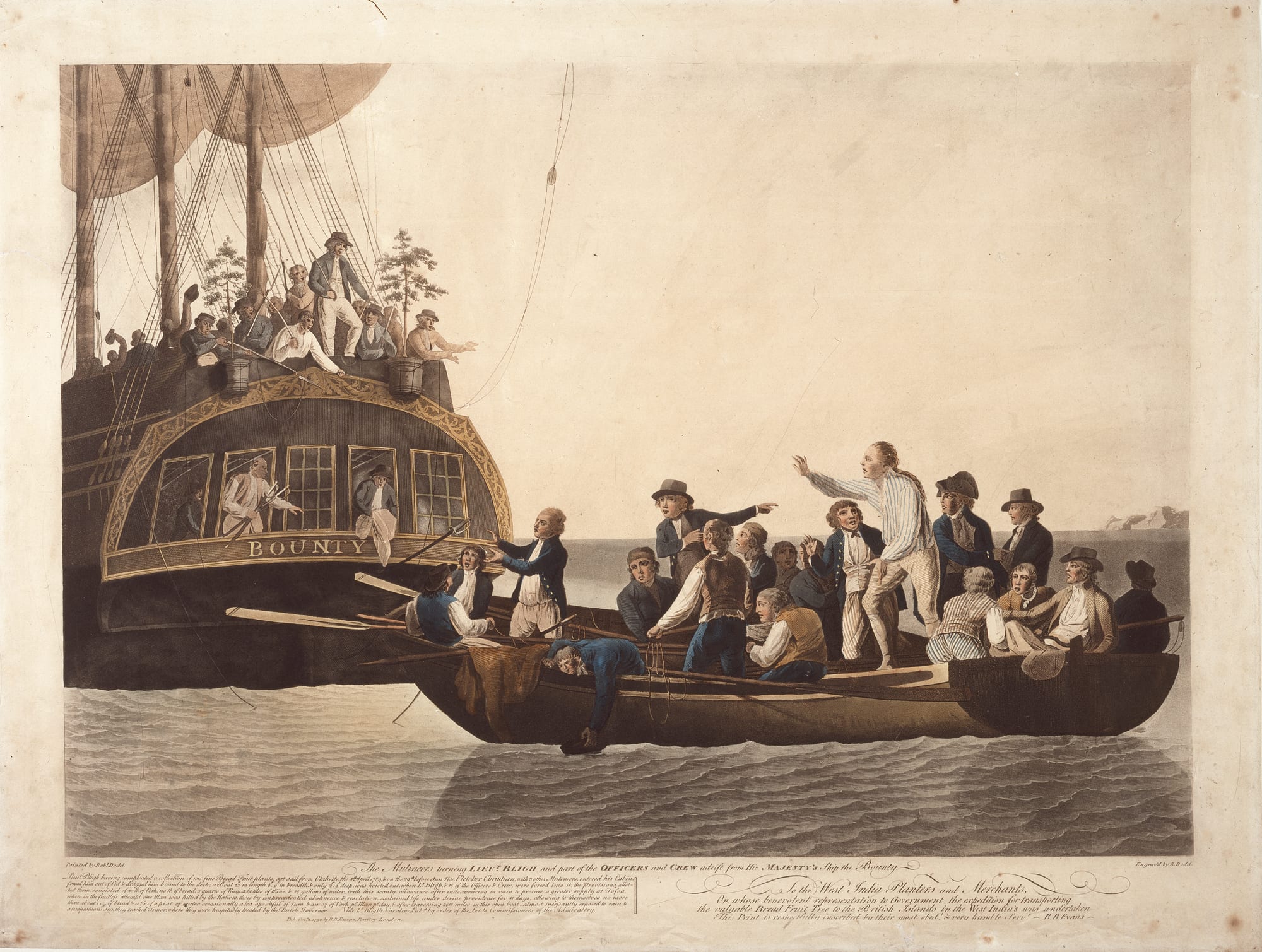
HMS Bounty had been sent to Tahiti to collect breadfruit plants for transplanting to the West Indies. On the return voyage in April 1789, master's mate Fletcher Christian led a mutiny against Lieutenant William Bligh, setting Bligh and 18 loyal men adrift in an open boat — a voyage of nearly 6,700 kilometres they astonishingly survived. Christian's party, after a failed stay on Tubuai, took on Tahitian companions — mostly women, and some men who may have been coerced — and searched for somewhere the Royal Navy would never look. They landed on Pitcairn in January 1790 and destroyed the ship.
Eden and its collapse
The colony's first years were murderous. Tension over the unequal division of land and women between the Europeans and the Polynesian men erupted in killing: within a decade most of the adult men, including Christian, were dead by violence, and one mutineer had drunk himself to death on a homemade still. By 1800 only one adult male remained — John Adams — living with ten women and 23 children. Adams turned to the Bible, imposed a strict Christian regime, and by the time an American ship stumbled on the island in 1808 the community was famously pious and orderly, a story that delighted the Victorian public.
A managed territory
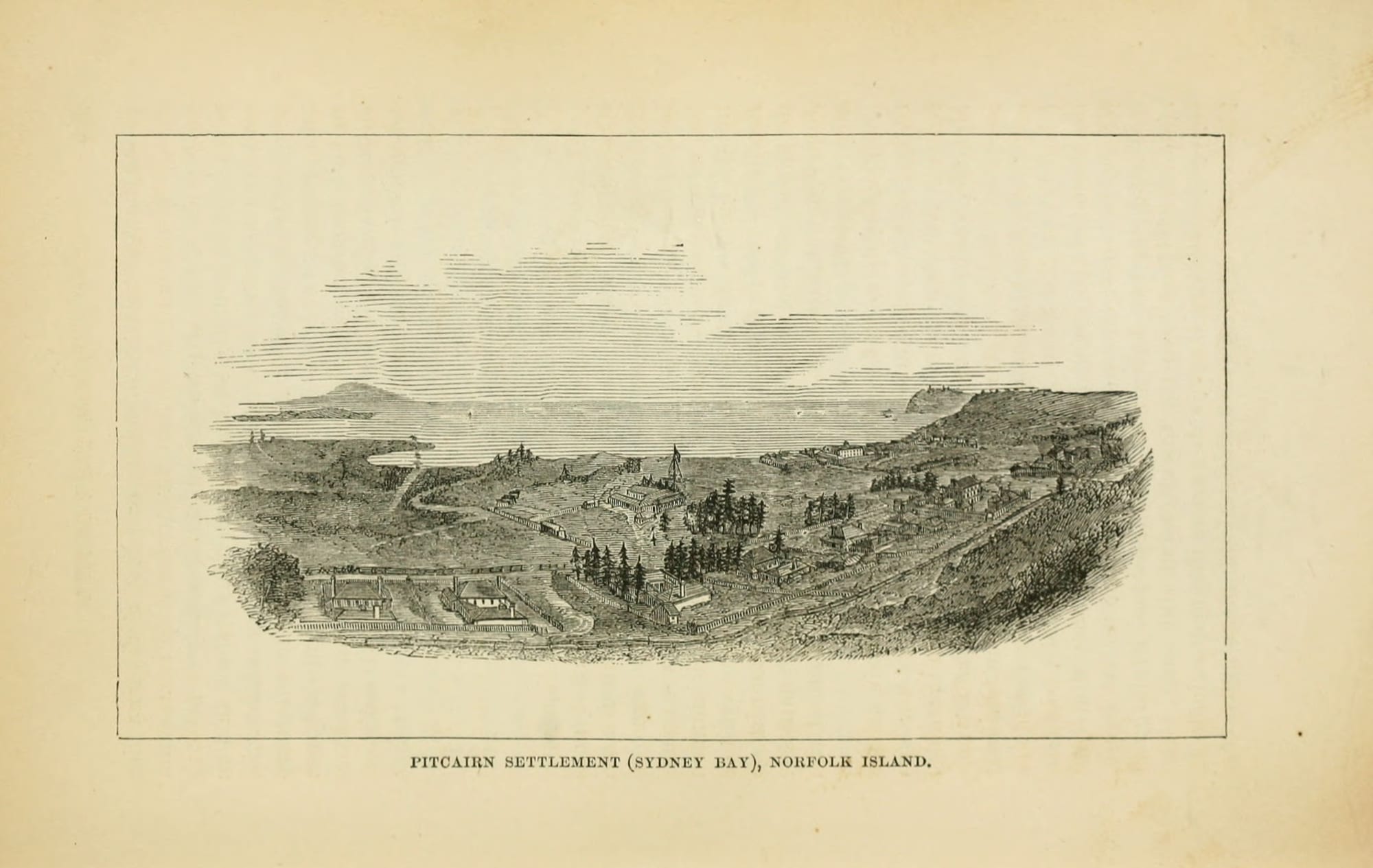
Britain took Pitcairn under the Crown in 1838 — giving it, in the process, one of the first constitutions anywhere to let women vote. Overpopulation led to two mass relocations: to Tahiti in 1831 (a failure, ended by disease) and to Norfolk Island in 1856, after which some families returned. The island converted en masse to Seventh-day Adventism in 1886, which still shapes daily life. Administered for most of the 20th century by the British High Commissioner in New Zealand, Pitcairn lived on subsistence farming, fishing, the sale of postage stamps and carved curios to passing ships, and remittances.
The trials, and decline
In the late 1990s a British police investigation uncovered a long pattern of sexual abuse of underage girls on the island. In 2004, in trials held on Pitcairn under British law, with judges and lawyers flown in, six men — a large share of the adult male population, including the mayor — were convicted; several served sentences in a prison built for the purpose. The cases exposed deep problems in so tiny and isolated a community and strained its relationship with Britain. The population, already falling, has continued to shrink and age; the territory now actively seeks new settlers, so far with little success.
What Pitcairn carries
Pitcairn exists because of a crime at sea and the need to hide from its consequences, and its whole history has been shaped by extreme isolation — the violence of the first years, the relocations, the religious revival, and the abuse cases that isolation helped conceal. It is a functioning British territory with a council and a school, and it may not have enough people to remain one for much longer.