A calm, clear lake meeting a sandy shore fringed with palms and low green hills under a wide sky

Malawi

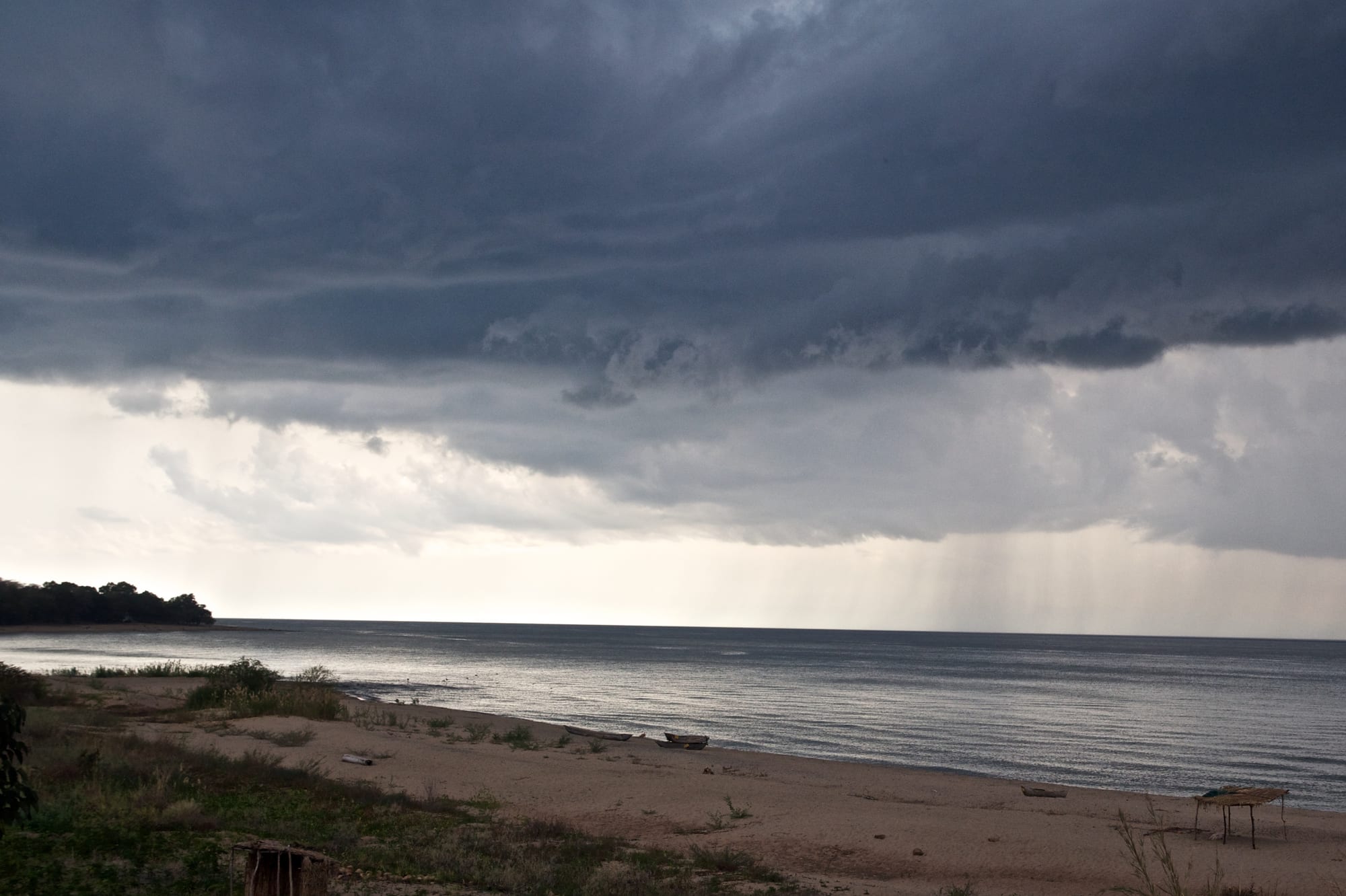
The shore of Lake Malawi, which fills much of the Rift Valley here and holds more fish species than any other lake in the world. (Ludger Heide / Wikimedia Commons · CC BY-SA 2.0)

A small, densely populated country in southeastern Africa wrapped around a vast Rift Valley lake — the "Warm Heart of Africa," poor and largely rural, with clear freshwater, highland massifs, and a scattering of restored wildlife reserves.

Explore Malawi

History

The region was crossed by long-distance and Arab-Swahili slave and ivory routes in the nineteenth century, and the missionary-explorer David Livingstone's reports after he reached the lake in 1859 spurred Scottish missions — Livingstonia and Blantyre, named for his birthplace — and, in 1891, the British protectorate of Nyasaland. The 1915 Chilembwe uprising was an early revolt against colonial rule.

Nyasaland was briefly yoked into the white-settler-dominated Central African Federation with the Rhodesias (1953–63), which fuelled nationalism. Independence came in 1964 under Hastings Kamuzu Banda, who made himself "President for Life" and ran one of Africa's most rigid personality-cult dictatorships for three decades — a one-party state with a strict dress and censorship code and, unusually, open relations with apartheid South Africa.

Multiparty democracy returned in 1994. Politics since has been competitive but dogged by corruption scandals and disputed elections — most strikingly in 2020, when the Constitutional Court annulled the previous year's presidential result over irregularities and ordered a re-run, which the incumbent then lost, one of very few such reversals in Africa. The economy remains heavily agricultural and aid-dependent, and vulnerable to weather and to the price of tobacco.

  • Malawi: The Lake and the Warm Heart A country shaped by its great lake and by the East African slave trade — Livingstone's missionaries, a British labour-reserve colony, the 30-year dictatorship of Hastings Banda, and a durable if poor democracy

Culture & Customs

Malawi's population is overwhelmingly Bantu — the Chewa the largest group, along with the Yao, Tumbuka, Lomwe, and Ngoni — and Christianity is the dominant religion (Catholic, Presbyterian, Anglican, and a large Pentecostal presence), with a significant Muslim minority among the Yao on the lakeshore, and traditional beliefs woven through both.

The signature cultural tradition is the Gule Wamkulu, the "great dance" of the Chewa Nyau secret society, in which masked and costumed dancers embodying spirits and animals perform at funerals, initiations, and installations — a UNESCO-listed tradition. The Tumbuka vimbuza healing dance in the north is also on the list. Wood carving, pottery, and basketry are widespread crafts.

Malawians' widely earned reputation for friendliness gives the country its tourism tagline, the "Warm Heart of Africa," and daily social life runs on the extended family, the church, and the village.

Daily Life

Malawi packs around 21 million people into a small area, making it one of the more densely populated countries in Africa and one of the poorest in the world. The administrative capital, Lilongwe, is a planned city that replaced Zomba in 1975; Blantyre is the older commercial hub; and most people live in rural villages, farming maize and tobacco on small plots.

The economy leans heavily on tobacco, which is by far the largest export, along with tea grown on estates in the south, sugar, and legumes, and on foreign aid. Recurrent shortages of foreign exchange and fuel, high inflation, repeated devaluations, and disasters like Cyclone Freddy in 2023 have made recent years hard.

Daily life follows the farming seasons, the church calendar, the lakeshore fishing, and the minibus to town, with the single rainy season shaping everything.

Food

Malawian cooking centres on nsima, a stiff maize porridge eaten by hand with a relish (ndiwo) of beans, pumpkin leaves, or a small amount of meat or fish. Along the lake, chambo (a prized tilapia) and the tiny usipa are grilled, fried, or dried and are the everyday protein.

Mkhwani (pumpkin leaves in groundnut sauce), thelele (okra), beans, and sweet potato and cassava fill out rural meals, and mice — literally, roasted field mice on a skewer, sold at the roadside in some areas — is a delicacy that surprises visitors. Mandasi (fried dough) and roasted maize are common snacks.

Thobwa, a lightly fermented maize or millet drink, and chibuku, a commercial sorghum "opaque" beer, are the traditional drinks; Kuche Kuche and Carlsberg (brewed in Blantyre) are the lagers; and Malawi grows its own tea and coffee.

  • Malawi: Food and the National Dish A firm maize porridge eaten with a prized lake fish, in a landlocked country whose enormous freshwater lake supplies much of its protein

Attractions & Natural Wonders

Lake Malawi is the centrepiece — clear, freshwater, and home to more fish species than any other lake in the world, almost all endemic cichlids, which makes it a superb and cheap place to snorkel and dive. The main bases are Cape Maclear (Chembe village, in a UNESCO-listed national park, backpacker-friendly), Nkhata Bay on the northern shore, Senga Bay near Lilongwe, and the more upmarket Chintheche and Likoma Island, the last with an improbably large cathedral.

Inland, Mount Mulanje in the far south is a dramatic granite massif rising to Sapitwa, the highest peak in Central Africa, laced with trails and huts among the rare Mulanje cedar. The Zomba Plateau above the old capital is a drivable highland of pine forest, viewpoints, and waterfalls. Nyika National Park in the north is a high, rolling grassland — almost Scottish in feel — with antelope, zebra, one of Africa's densest leopard populations, and wildflowers.

For classic wildlife, Liwonde National Park along the Shire River, fenced and restocked by African Parks, has elephant, hippo, crocodile, reintroduced lion and cheetah, and excellent birding on boat and game drives, and Majete Wildlife Reserve is now a Big Five destination. The tea estates around Thyolo and Mulanje and the mission history at Livingstonia complete the picture.

  • Malawi: Seven Attractions and Natural Wonders The 'Warm Heart of Africa' — a freshwater sea with more fish species than any lake on earth, elephants back after decades of poaching, and a jagged massif rising straight off the plain

Planning basics

Budget

Malawi is inexpensive. Backpacker lodges and campsites on the lakeshore, local "nsima" eateries, and minibuses cost little; the private wildlife reserves and their lodges are the main splurge. Cash is essential outside the cities; carry extra US dollars, as fuel and foreign-currency shortages recur.

Daily Budget Midrange
USD 70–160 (guesthouse or lodge, a hired car, park fees, a boat trip)
Daily Budget Shoestring
USD 25–45 (backpacker lodge, local food, minibuses)

Keep the fuel tank full and carry spare US dollars; shortages can strand you or force poor exchange rates.

Visa Requirements

Most nationalities need a visa, available as an e-visa online or on arrival at the airports and main land borders, typically for 30 days and extendable. A yellow fever certificate is required if arriving from a risk country.

Typical Validity
30 days, e-visa or visa on arrival, extendable

Apply for the e-visa ahead where possible; on-arrival queues and payment can be slow.

Safety

Malawi is one of the more relaxed and safer countries in the region for visitors, but petty theft and bag-snatching occur in Lilongwe and Blantyre and at busy bus stations, opportunistic theft from beach chalets and vehicles happens on the lakeshore, and there have been occasional muggings of walkers on isolated paths, including on the Zomba Plateau.

Source
US Department of State and UK FCDO travel advisories — check for the latest wording.

Use guides on remote walks, don't walk after dark, lock valuables away, take malaria prophylaxis, and treat bilharzia and sudden lake squalls as real risks.

Source: US Department of State and UK FCDO travel advisories — check for the latest wording.

Climate

Subtropical, moderated by altitude. A cool, dry season (May–August, with chilly highland nights), a hot, dry build-up (September–October), and a warm, wet season (November–April) with the rains and, at its end, a risk of cyclones and flooding in the south. The lake is warm enough to swim year-round.

Dry Season
May–October, the main travel window
Wet Season
November–April, green, with heavy rain and possible cyclones in the south

Transportation

Lilongwe and Blantyre have the main airports. There is little useful passenger rail. Minibuses and shared taxis cover the roads cheaply but slowly and with a poor safety record; a hired car or a small-group overland trip is the comfortable way to link the lakeshore and the reserves. A slow lake ferry, the Ilala, connects lakeside towns and Likoma Island.

The Ilala ferry is an experience in itself but often runs late or is out of service; check before relying on it.

Best Time to Visit

May to October for reliable dry weather, good road access, and wildlife concentrating at water in Liwonde and Majete late in the dry season. Nyika's wildflowers peak in the rains, and the lake is pleasant most of the year.

Currency

The currency is the Malawian kwacha (MWK), which has been devalued repeatedly, so prices in kwacha change quickly. US dollars are useful for lodges and larger payments. ATMs are in the cities and larger towns.

Symbol
MK
Cash To Bring
US dollars, in cash
Currency Code
MWK — Malawian kwacha

Language

Chichewa and English are both official. Chichewa is the national lingua franca, spoken by most of the country; other regional languages include Chitumbuka in the north and Chiyao along the lakeshore. English is used in government, secondary education, and business and is widely understood in towns and tourism.

English
Widely spoken in towns and the tourism trade
Official Languages
Chichewa, English