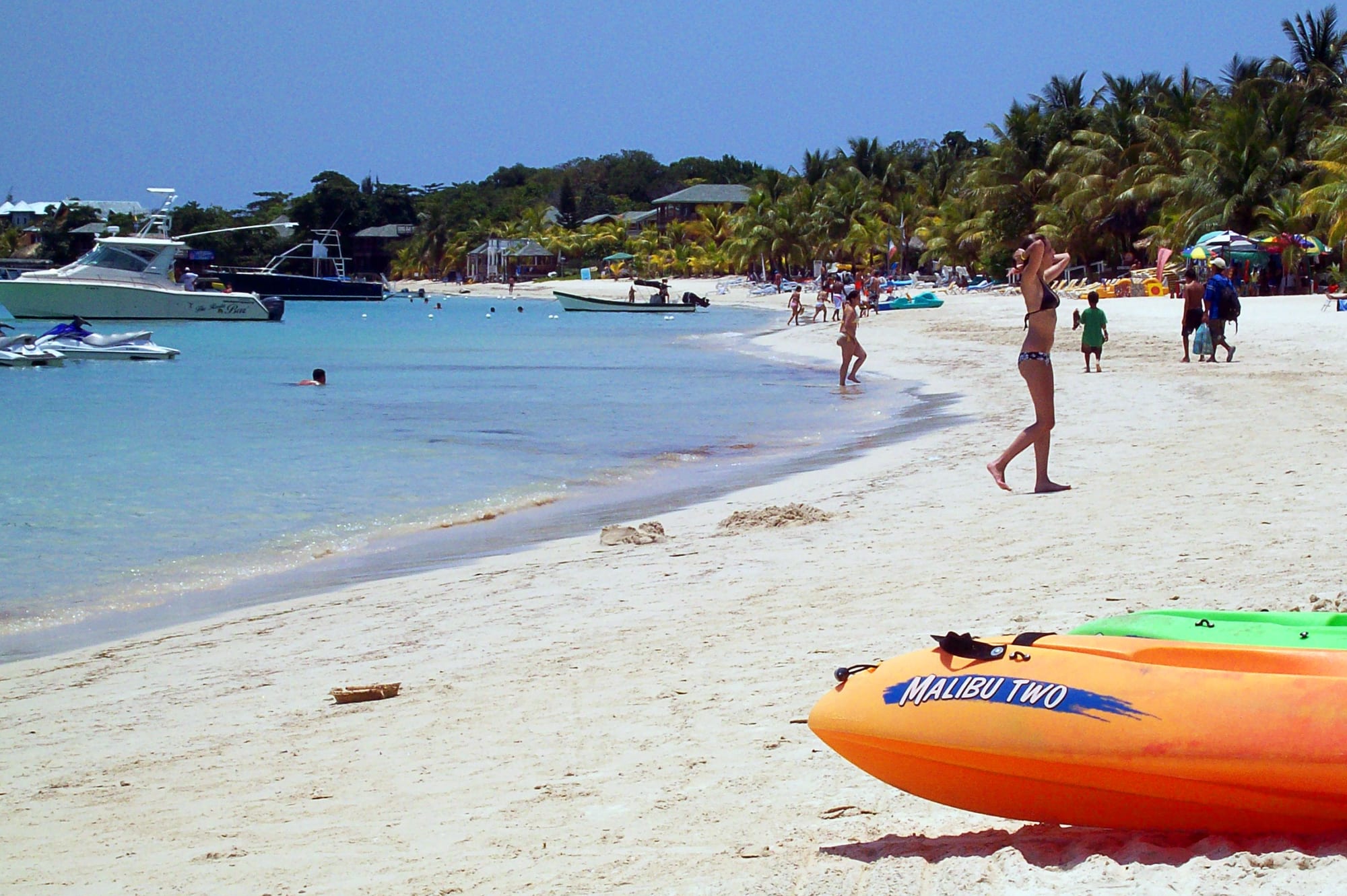
A curve of white-sand beach backed by palms, with turquoise shallows and a reef line offshore under a bright sky

Honduras

West Bay Beach on Roatán, largest of the Bay Islands, on the Mesoamerican Barrier Reef off Honduras's Caribbean coast. (Adalberto Hernández Vega / Wikimedia Commons · CC BY 2.0)

A mountainous Central American country with a long Caribbean coast and a short Pacific one — home to the great Maya city of Copán, the cheap-diving Bay Islands on the world's second-largest reef, and a hard recent history of violence and hurricanes.

Explore Honduras

History

The western highlands were the southeastern edge of the Maya world, and Copán, near the Guatemalan border, was a Classic-period city renowned for the artistry of its carved stelae and its Hieroglyphic Stairway, the longest Maya text known. Elsewhere, peoples such as the Lenca — whose leader Lempira resisted the Spanish and gave his name to the currency — held the interior.

Spanish conquest in the 1520s and 1530s was drawn by silver, mined around Tegucigalpa. Colonial Honduras was a poor, thinly settled part of the Captaincy General of Guatemala. Independence came in 1821, followed by the short-lived Central American federation and then a separate republic marked by chronic coups and foreign meddling.

From the late nineteenth century, US fruit companies — United Fruit and Standard Fruit — built railways, ports, and banana plantations on the north coast and wielded enormous political power; the term "banana republic" was coined for Honduras. In the 1980s the country served as a base for US-backed Contra forces fighting Nicaragua's government. A 2009 coup removed President Manuel Zelaya; the years that followed brought a surge in gang and drug violence and mass migration north. In 2021 Xiomara Castro, Zelaya's wife, was elected the country's first woman president.

  • Honduras: The Original Banana Republic A mountainous Central American country where the Maya built Copán, US fruit companies ran the state, the Cold War made it a base, and a 2009 coup set the pattern for the crisis that followed

Culture & Customs

Honduras is mostly mestizo and Spanish-speaking, Catholic with a large and growing evangelical minority, and culturally Central American, shaped by maize, the Catholic feast calendar, and — on the north coast — the banana and railway history. Football is close to a national passion; the 1969 "Football War" with El Salvador, though really about migration and land, was sparked by World Cup qualifiers.

The Caribbean coast is culturally distinct. The Garífuna — descendants of Carib and African people exiled from St Vincent in 1797 — have towns from Trujillo to Masca, with their own language, drumming, and punta dance, recognised by UNESCO. The Bay Islands, settled by English, Scots, and Cayman Islanders, are English-speaking, Protestant, and seafaring in character.

Craft traditions include Lenca pottery from the western highlands and the mahogany and junco-palm work of the interior. Family and community networks, and ties to relatives who have migrated to the United States, structure much of daily life.

Daily Life

Tegucigalpa, the capital, sits in a bowl of hills in the centre; San Pedro Sula, in the hot northern lowlands, is the industrial and commercial hub. Most Hondurans, though, live in smaller towns and in the countryside, farming coffee in the highlands — Honduras is one of the world's larger coffee exporters — and staple grains, and working the banana, palm-oil, and shrimp operations of the coast.

The economy also leans on textile maquilas near San Pedro Sula, on tourism (concentrated on the Bay Islands and Copán), and heavily on remittances from the large Honduran population in the United States. Poverty and under-employment are widespread, and gang extortion of small businesses and transport has been a crushing burden, easing somewhat under recent security measures.

Daily life follows the comedor lunch, the market, the church, the rapidito, and, on the coast, the fishing boats and the tourist ferries.

Food

Honduran food is Central American with a strong Caribbean streak. The everyday meal is the plato típico: rice, refried beans, a piece of grilled or fried meat, fried plantain, tajadas (plantain chips), cream, and cuajada cheese, with tortillas — often thick, hand-patted ones in the west.

The signature snack is the baleada: a warm flour tortilla folded over refried beans, crumbled cheese, and cream, with add-ons of avocado, egg, or meat. On the Caribbean coast, the Garífuna specialities are machuca (mashed plantain with a coconut fish soup) and tapado, a rich seafood-and-coconut stew, and sopa de caracol, conch soup, is a north-coast favourite.

Coffee from the western highlands is excellent, though the best is exported; horchata, tamarindo, and fresh fruit licuados are the everyday drinks, along with Salva Vida and Port Royal beer.

  • Honduras: Food and the National Dish A folded flour tortilla stuffed with beans, cheese and cream, eaten everywhere from street carts to breakfast tables, in a country whose coffee quietly rivals its more famous neighbours'

Attractions & Natural Wonders

Copán, in the far west, is the country's cultural centrepiece: a compact Maya site of stelae, altars, a ball court, the Hieroglyphic Stairway, and a tunnelled acropolis, with a good sculpture museum and a relaxed town, Copán Ruinas, beside it. Nearby are hot springs, a bird park, and coffee farms.

The Bay Islands — Roatán, Utila, and Guanaja — sit on the Mesoamerican Barrier Reef, the second-largest reef system in the world. Utila is a long-standing budget diving hub with a good chance of whale sharks; Roatán is more developed, with resorts, a cruise port, and dolphin and reef excursions; Guanaja is the quietest.

On the mainland, La Ceiba is the gateway to whitewater rafting on the Río Cangrejal and the cloud forest of Pico Bonito National Park. The Lago de Yojoa area has birdwatching, waterfalls, and a craft-beer scene. Deep in the eastern Mosquitia, the Río Plátano Biosphere Reserve — a vast, roadless expanse of rainforest, wetland, and Indigenous communities, and a UNESCO World Heritage Site — is one of the wildest places in Central America, reached only by small plane and boat.

Planning basics

Budget

Honduras is inexpensive. Local comedores, "rapiditos" (minibuses), and simple hotels cost little; the Bay Islands are pricier, though Utila is a long-standing budget dive destination. Cash dominates outside the islands and the cities; carry small notes.

Dive Course
Utila is among the cheapest places in the world for an open-water certification
Daily Budget Midrange
USD 60–120 (hotel, some flights, restaurants, tours and diving)
Daily Budget Shoestring
USD 25–45 (guesthouse, comedor food, minibuses)

Visa Requirements

Citizens of the EU, the UK, the US, Canada, Australia, and most of Latin America enter visa-free for up to 90 days. Honduras is part of the "CA-4" agreement with Guatemala, El Salvador, and Nicaragua, so the 90 days are shared across all four countries.

Typical Stay
90 days across the CA-4 region, visa-free, for most Western passports

Safety

Honduras has had one of the highest homicide rates in the world, driven by gangs (MS-13 and Barrio 18) and drug trafficking, and San Pedro Sula and parts of Tegucigalpa remain dangerous. Rates have fallen from their peak, and the main tourist areas — Roatán, Utila, Copán, and the Lago de Yojoa area — are much safer, with petty theft and opportunistic robbery the usual risks.

Source
US Department of State and UK FCDO travel advisories — check for the latest wording.

Avoid San Pedro Sula and Tegucigalpa neighbourhoods, don't travel by road at night, use registered taxis or hotel transfers, and stick to established routes and operators.

Source: US Department of State and UK FCDO travel advisories — check for the latest wording.

Climate

Tropical, varying with altitude. The Caribbean coast and the Bay Islands are hot and humid year-round with rain possible in any month; the central highlands (Tegucigalpa, the coffee country) are cooler and drier; the Pacific south is hot with a clear dry season. The Atlantic hurricane season runs June to November.

Caribbean
hot and humid; wettest roughly September–January
Highlands
cooler, 18–28°C, dry season November–April

Transportation

San Pedro Sula and Tegucigalpa have the main airports, with Roatán a third international gateway. Domestic flights and a ferry link the mainland (La Ceiba) with Roatán and Utila. Long-distance coaches connect the main cities; local minibuses ("rapiditos") are cheap but crowded; a rental car suits Copán and the west.

Fly or take the ferry to the Bay Islands; travel between the main cities by daytime coach rather than driving at night.

Best Time to Visit

December to April for the drier season in the highlands and Pacific south, and generally good conditions on the islands. Bay Islands diving is good year-round; whale sharks pass Utila mainly February to April and August to October. Watch the hurricane forecasts from August onward.

Currency

The currency is the Honduran lempira (HNL), named for an Indigenous resistance leader. US dollars are accepted on the Bay Islands and by some hotels and operators.

Cards
Accepted on the Bay Islands and in the cities; cash needed elsewhere
Symbol
L
Currency Code
HNL — Honduran lempira

Language

Spanish is the official language and the everyday language of most Hondurans. English (in an Antillean-Creole form) is widely spoken on the Bay Islands, a legacy of British settlement. Garífuna is spoken along the Caribbean coast, and several Indigenous languages — Miskito, Tawahka, Pech, Tol — survive in the east and interior.

Bay Islands
English (Creole) widely spoken
Official Language
Spanish