History · Honduras
Honduras: The Original Banana Republic
A mountainous Central American country where the Maya built Copán, US fruit companies ran the state, the Cold War made it a base, and a 2009 coup set the pattern for the crisis that followed
By Worldlore Editorial · 19 September 2026
A weak state in a hard neighbourhood
Honduras is a rugged country in the middle of Central America, with coasts on both the Caribbean and the Pacific and about 10.5 million people. Its history is one of a persistently weak state — poor, unstable, and repeatedly shaped from outside: first by the fruit companies that gave the world the phrase "banana republic," then by the United States during the Cold War, and, since a 2009 coup, by drug traffickers and gangs.
A short history
- 5th–9th centuries CE
Copán
A major Maya city flourishes in the west.
- 1502
Columbus
Reaches the Caribbean coast on his last voyage.
- 1537–1538
Lempira
The Lenca leader's revolt against the Spanish is crushed.
- 1821
Independence
From Spain, then within a Central American federation.
- 1870s–1920s
The banana enclave
US companies build plantations and control the state.
- 1980s
The Contra base
Honduras becomes the US staging ground against Nicaragua.
- 1998
Hurricane Mitch
Thousands killed; the country set back years.
- 2009
The coup
President Zelaya is removed by the military.
- 2010s
The violence peak
Honduras has the world's highest murder rate.
Copán, conquest, and neglect
Western Honduras held Copán, one of the most artistically accomplished cities of the Classic Maya. Elsewhere the Lenca were the dominant people, and their leader Lempira led a hard revolt against the Spanish in 1537–38. Spanish Honduras became a minor silver-mining and cattle province of the Captaincy General of Guatemala, while the Caribbean "Mosquito Coast" stayed largely outside Spanish control, a British sphere of logwood cutters and the allied Miskito kingdom.
After independence in 1821, Honduras produced Francisco Morazán, the leading figure of the short-lived Central American federation, and then spent the 19th century in poverty and near-permanent civil conflict, saddled with a fraudulent London railway loan that left it bankrupt with barely any track laid.
The fruit companies
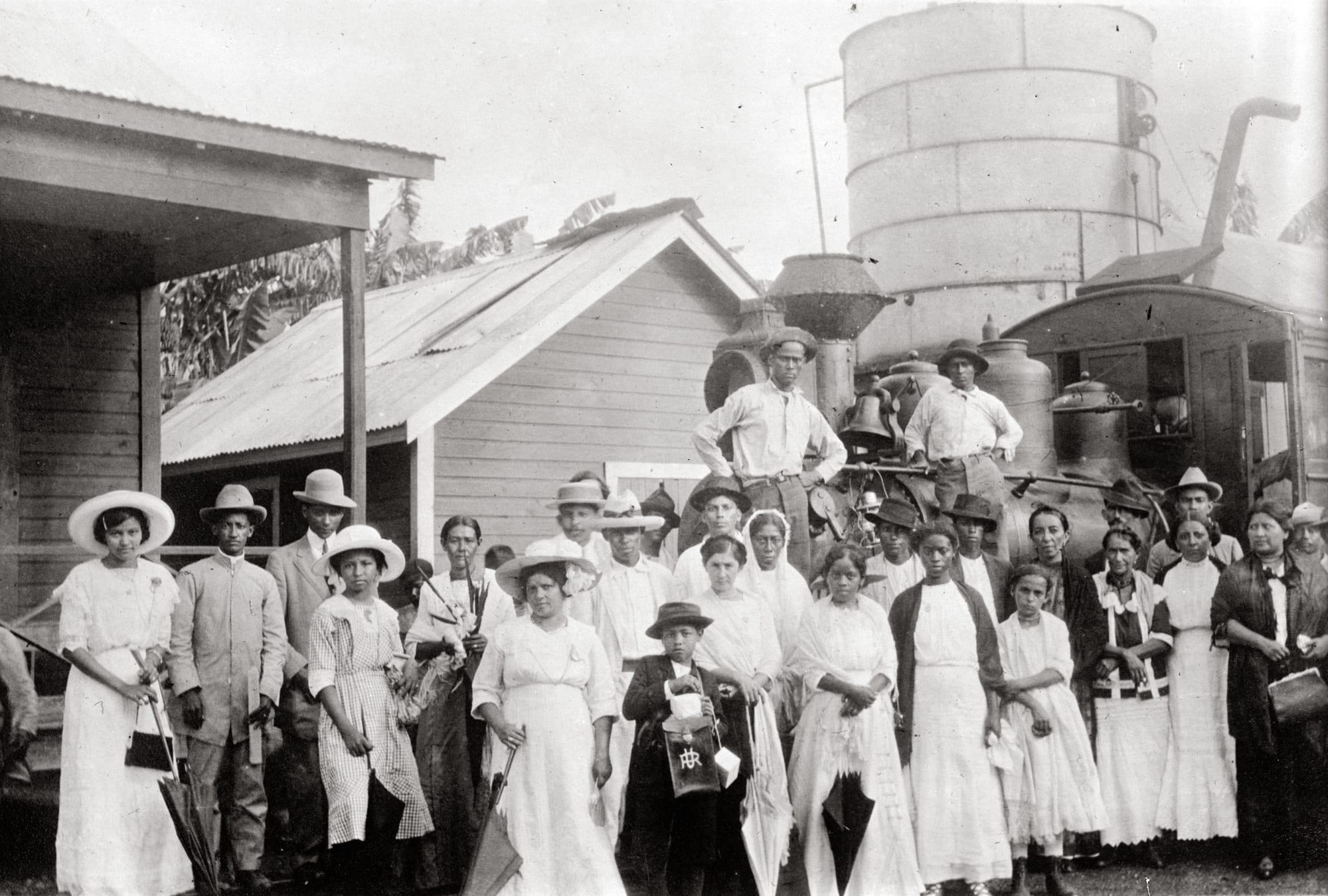
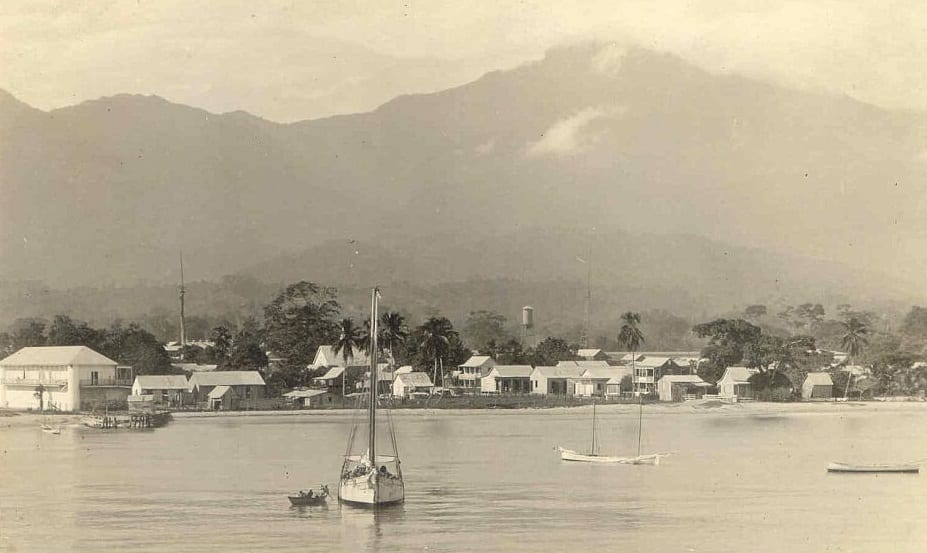
From the 1870s, US companies developed banana plantations along the north coast, and by the 1920s bananas were around 80 per cent of exports. United Fruit and Standard Fruit owned the railways, ports, land and utilities, and effectively chose governments; the writer O. Henry coined "banana republic" while living in Honduras in the 1890s. US Marines landed repeatedly to protect the companies' interests.
The base
Reformist military governments in the 1950s–70s carried out more land reform than elsewhere in Central America, which is one reason Honduras avoided a full civil war in the 1980s. Instead it became the regional platform for US policy: the Nicaraguan Contras were based and supplied from Honduran soil, Salvadoran officers trained there, and a large US base was built at Soto Cano. In exchange, and behind a civilian façade, the Honduran army ran its own dirty war through the death squad Battalion 3-16. Elected civilian government returned in 1982.
Coup and collapse
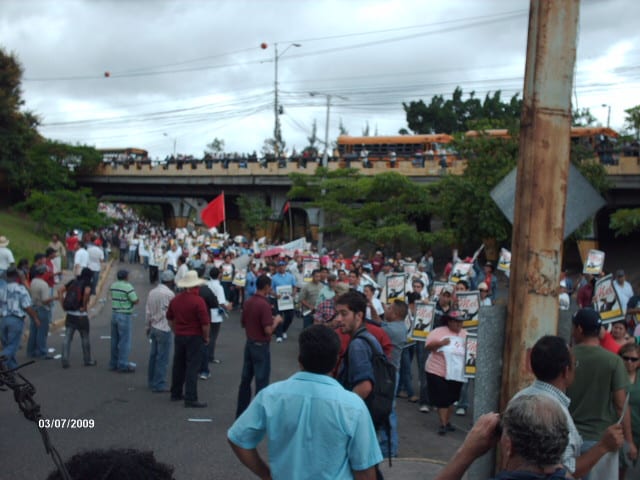
Hurricane Mitch killed thousands and devastated the country in 1998. A decade later, in June 2009, the military arrested President Manuel Zelaya — a Liberal who had shifted left and joined Venezuela's regional bloc — and flew him out of the country in his pyjamas, over a disputed plan to poll voters on rewriting the constitution.
For much of the 2010s Honduras had the highest homicide rate in the world, driven by gangs, the cocaine trade and state complicity.
President Juan Orlando Hernández won a disputed re-election in 2017 after his own appointed court lifted the ban on second terms — the very issue used to justify the coup against Zelaya. After leaving office he was extradited to the United States and convicted in 2024 of large-scale cocaine trafficking. In 2021 Zelaya's wife, Xiomara Castro, was elected president, the first woman to hold the office.
What Honduras carries
Honduras has rarely been in charge of its own direction. The fruit companies ran it for the first half of the 20th century; the United States used it as a base in the second; and since 2009 the state itself has been captured, at the top, by the drug trade it was supposed to police. Copán aside, the country's history is a long study in how a weak state gets governed by whoever finds it useful.