💰 Budget
Angola is expensive for what you get, and Luanda has long ranked among the costliest cities in the world for foreign visitors, mostly because of accommodation. The kwanza has lost most of its value over the past decade, which helps those spending hard currency but makes prices unpredictable. Cards work in Luanda hotels; cash is needed elsewhere.
- Source
- Traveller and expatriate cost reports, 2022–2024 — verify against a current source.
- Daily Budget Midrange
- USD 150–300 (business-standard hotel, car hire or domestic flights, restaurants)
- Daily Budget Shoestring
- USD 70–120 (hard to do; simple guesthouse, local food, shared transport)
Book Luanda accommodation ahead — cheap beds barely exist — and carry US dollars to change as you go.
Source: Traveller and expatriate cost reports, 2022–2024 — verify against a current source.
✈️ Visa Requirements
Angola was once one of the hardest countries in Africa to enter, but since 2018 many nationalities can get a tourist visa on arrival or an e-visa in advance, typically for 30 days. A yellow fever vaccination certificate is required.
- Typical Validity
- 30 days for tourism; e-visa or visa on arrival for many passports
Confirm your nationality's status on the official e-visa portal, and carry the yellow fever certificate.
🛡️ Safety
Crime is the main concern, especially in Luanda: street robbery, carjacking, and theft are common, and visitors are advised not to walk after dark or display valuables. Police checkpoints may seek bribes. Landmines still restrict some rural areas despite years of clearance, and the Cabinda exclave has a long-running low-level separatist insurgency.
- Source
- US Department of State and UK FCDO travel advisories — check for the latest wording.
- Photography
- Photographing government buildings, the presidential palace, airports, and military sites is prohibited.
Use hotel or arranged transport in Luanda, avoid overland travel in and around Cabinda, and stay on cleared tracks in former conflict provinces.
Source: US Department of State and UK FCDO travel advisories — check for the latest wording.
🌦️ Climate
Tropical, with a cool, dry season known as the cacimbo from about May to September and a hot, humid rainy season from October to April. The north and interior are wetter and greener; the south and the coast are arid, and the Namibe region is true desert.
- Luanda
- hot and humid; rainy season Nov–Apr, drier and slightly cooler May–Sep
- Highlands
- cooler year-round; Lubango and the Huíla plateau can be chilly at night in the dry season
- South Coast
- desert; very little rain, cool ocean air
🚆 Transportation
Three colonial-era railways have been rebuilt, the most useful being the Benguela Railway from the port of Lobito inland toward the Congolese border. For long distances most people fly on TAAG or another domestic carrier. Cities are served by blue-and-white candongueiro minibus taxis; intercity roads are much improved but still variable.
- Roads
- Main corridors rebuilt and paved; secondary roads rough, worse in the rains
- Main Hub
- Dr. António Agostinho Neto International Airport, Luanda
Distances are large and Luanda traffic is severe — allow far more time than the map suggests.
📅 Best Time to Visit
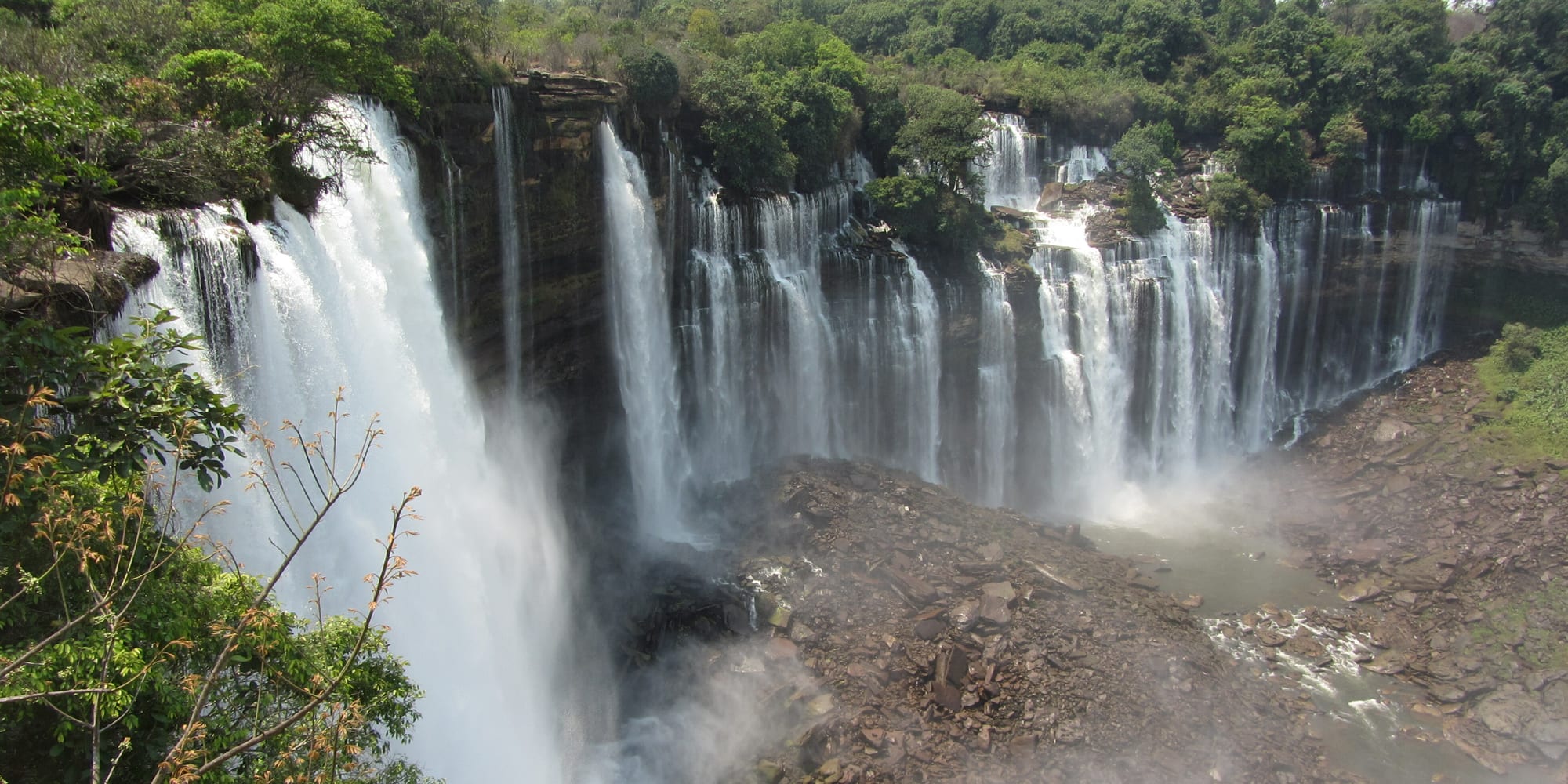
The dry season, roughly June to September, is the time to go: less rain, firmer roads, easier wildlife viewing in Kissama, and comfortable temperatures on the highlands. The rainy season brings the waterfalls to full force but makes upcountry travel harder.
- Avoid
- The peak of the rains (Feb–Mar) for road trips into Malanje or the interior.
💱 Currency
The currency is the Angolan kwanza (AOA). It has devalued sharply and repeatedly, so quoted prices in kwanza date quickly; think in US dollars and expect the rate to move.
- Symbol
- Kz
- Cash To Bring
- US dollars, to change locally
- Currency Code
- AOA — Angolan kwanza
💬 Language
Portuguese is the official language and is spoken by most of the population, especially in the cities, often as a first language. Alongside it are several Bantu languages — Umbundu is the most widely spoken, followed by Kimbundu and Kikongo.
- English
- Limited, mostly in the oil industry and top-end hotels
- Other Languages
- Umbundu, Kimbundu, Kikongo, Chokwe and others
- Official Language
- Portuguese