History · Angola
Angola: From the Kingdom of Kongo to the Oil Coast
African kingdoms, four centuries at the centre of the Atlantic slave trade, a war of independence, and a longer civil war
By Worldlore Editorial · 19 September 2026
The land and its kingdoms
Angola is a large country — 1.25 million square kilometres, twice the size of France — with a short Atlantic coastline, a separate oil-rich enclave at Cabinda north of the Congo River, and a high interior plateau that rises behind a narrow coastal plain. Bantu-speaking farmers and metalworkers settled the region over the past two thousand years, absorbing earlier hunter-gatherer populations, and by the 15th century several substantial states had formed: the Kingdom of Kongo in the north, the Mbundu kingdoms of Ndongo and Matamba along the Kwanza River, and Lunda and Ovimbundu polities further inland. The name of the country comes from ngola, the title of the ruler of Ndongo.
A short history
- from c. 500 CE
Bantu states
Farming societies spread; by the 1400s, kingdoms including Kongo, Ndongo and Matamba.
- 1483
The Portuguese arrive
Diogo Cão reaches the mouth of the Congo River.
- 1491
Kongo turns Catholic
King Nzinga a Nkuwu is baptised; his son Afonso I builds a Christian kingdom.
- 1575–1576
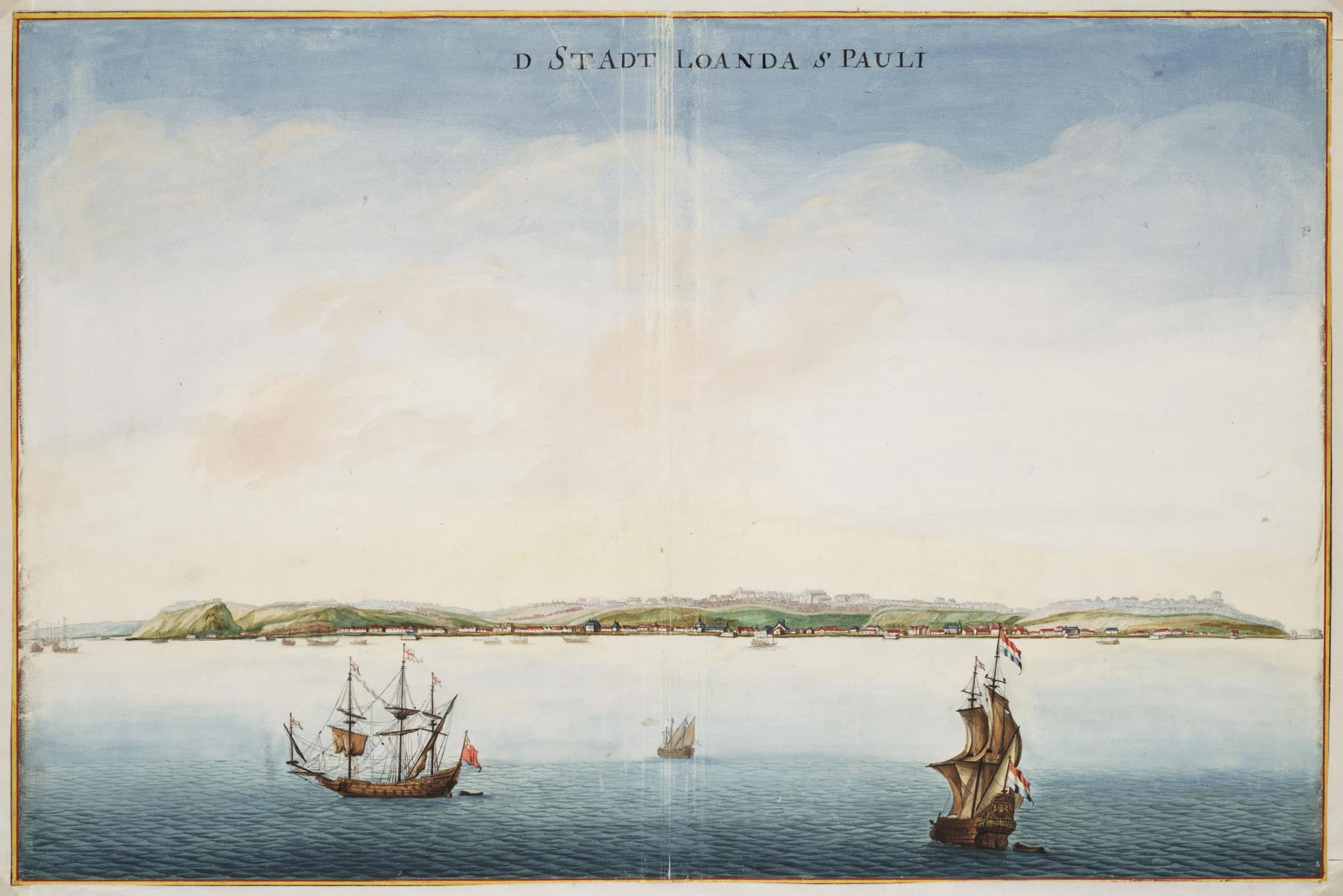
Luanda founded
Portugal establishes a base and begins decades of war against Ndongo.
- 1624–1663
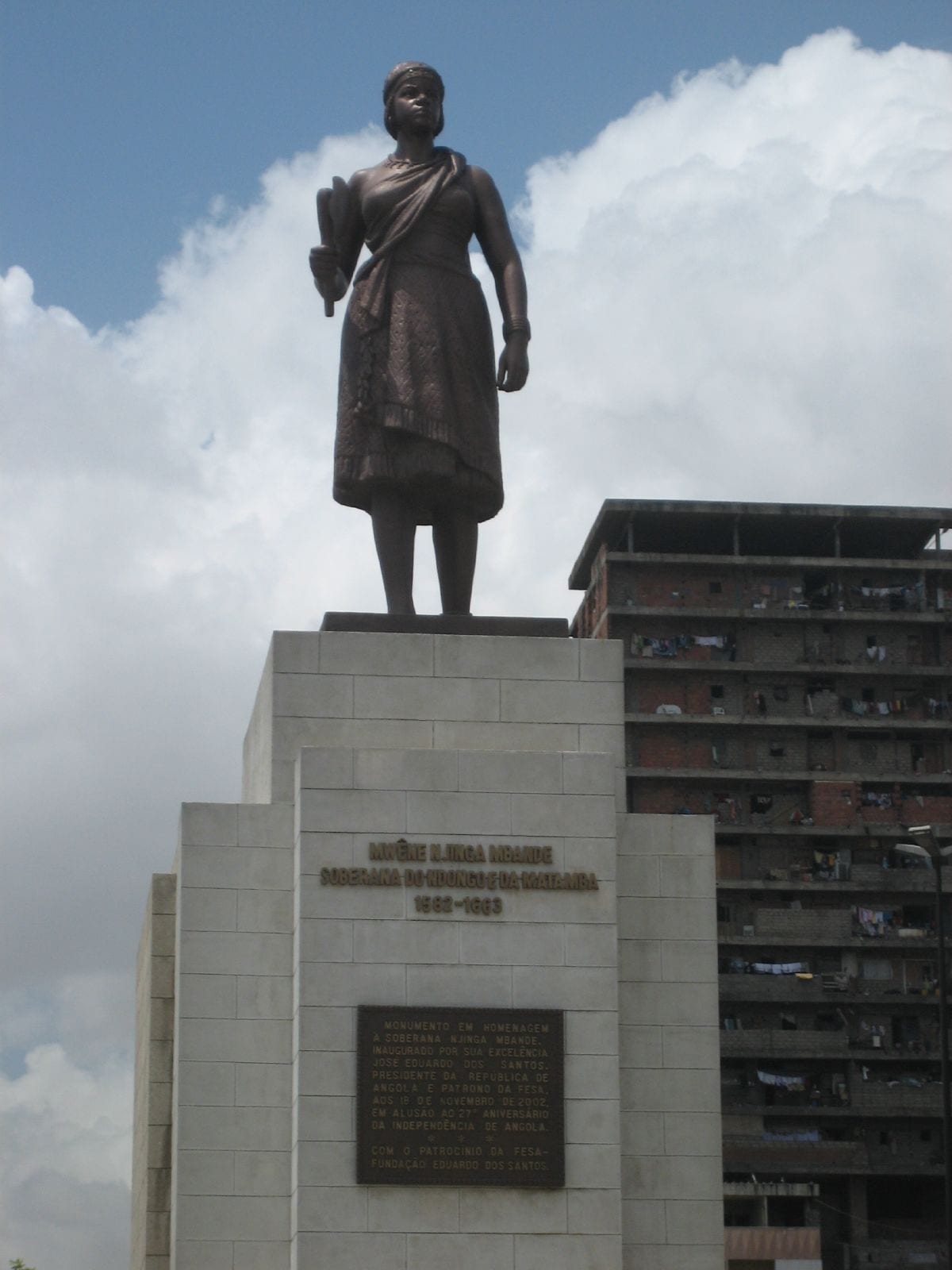
Queen Njinga
The ruler of Ndongo and Matamba resists the Portuguese for nearly 40 years.
- 1665
Battle of Mbwila
Portugal defeats Kongo; the kingdom breaks into civil war.
- 16th–19th c.
The slave coast
Close to six million people are shipped from Angolan ports, most of them to Brazil.
- 1880s–1920s
Conquest of the interior
Portugal occupies the hinterland after the Berlin Conference; forced labour replaces slavery.
- 1961–1974
War of independence
Three rival movements — MPLA, FNLA and UNITA — fight Portuguese rule.
- 11 November 1975
Independence
The MPLA proclaims a republic in Luanda; civil war begins at once.
- 2002
The war ends
The death of the UNITA leader Jonas Savimbi brings a ceasefire after 27 years.
The Kingdom of Kongo
When Portuguese caravels reached the Congo estuary in 1483, they found a centralised kingdom of perhaps half a million people, with a capital at Mbanza Kongo, a system of provinces and appointed governors, and a currency of nzimbu shells. The Kongo court took quickly to the newcomers. King Nzinga a Nkuwu was baptised in 1491, and his son Afonso I, who ruled for more than three decades from around 1509, made Catholicism the religion of the state, learned to read and write Portuguese, corresponded with Lisbon and Rome, and saw his own son Henrique consecrated as a bishop in 1518.
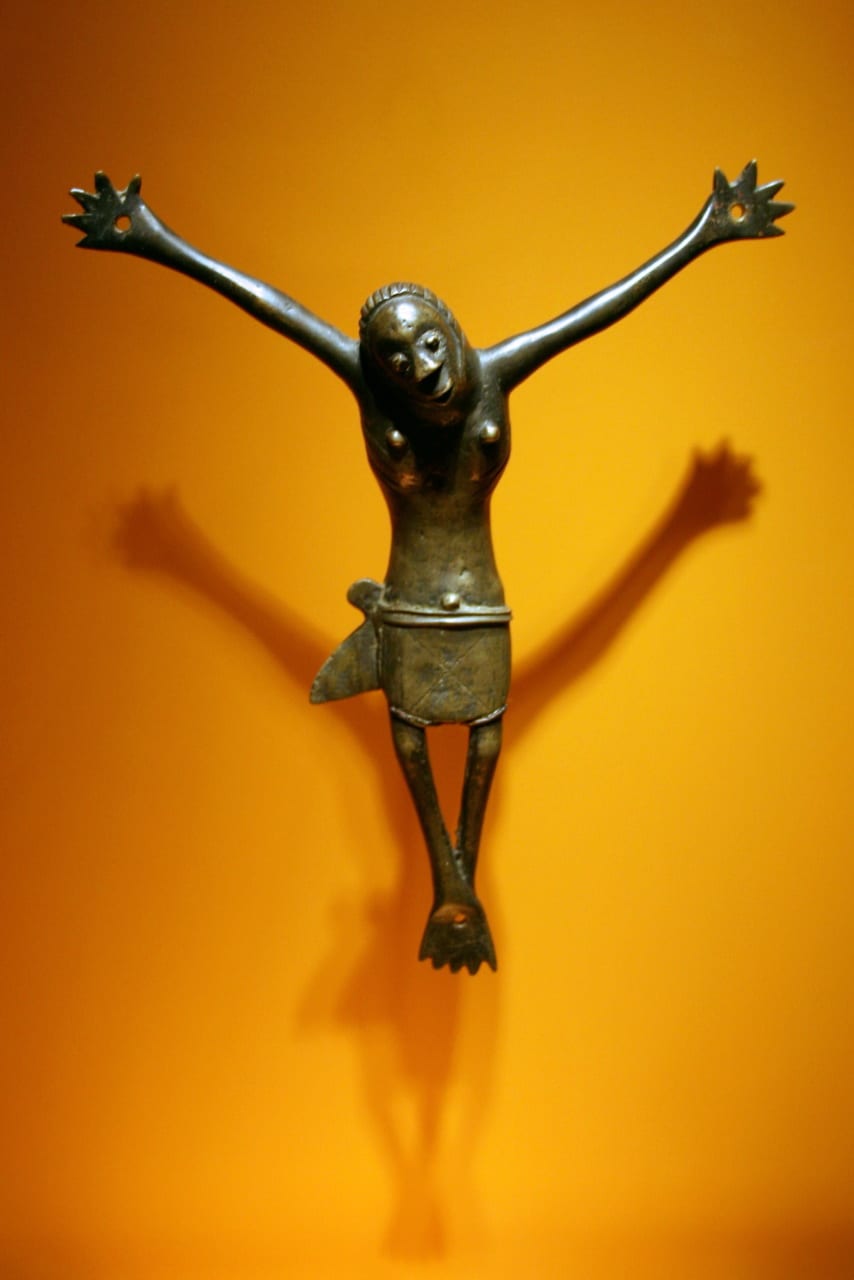
The relationship curdled over one thing: people. Portuguese traders on the coast and the nearby island of São Tomé wanted enslaved labourers, and their demand set off raiding and kidnapping that Afonso could not control. In a series of letters to the king of Portugal in the 1520s he complained that the trade was depopulating his country and that even members of noble families were being seized and shipped out. The letters changed nothing.
Ndongo, the Portuguese, and Queen Njinga
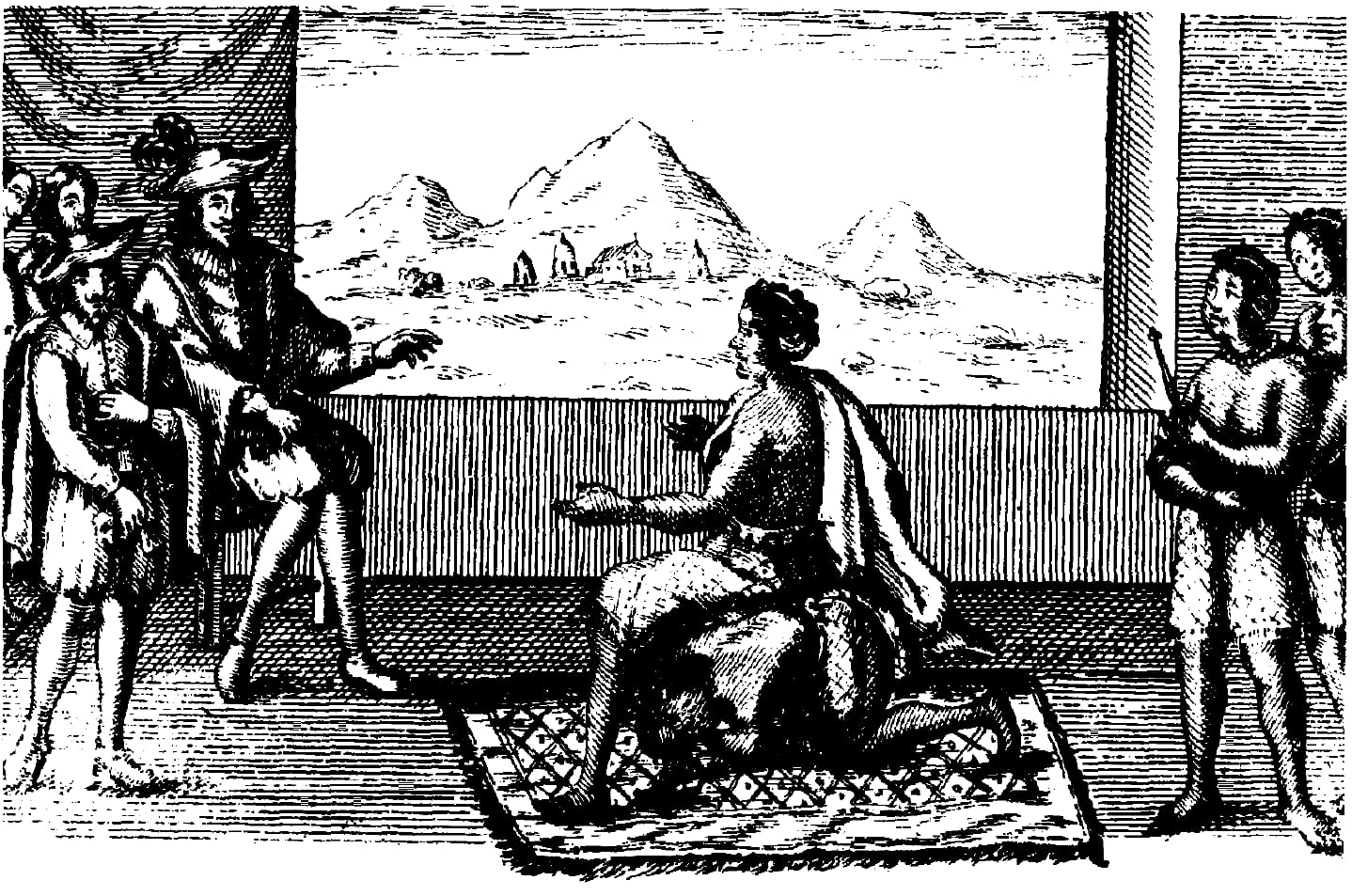
In 1575 Portugal planted a permanent base at Luanda and began pushing up the Kwanza River into the kingdom of Ndongo. The wars that followed lasted, on and off, for a century, and produced the figure who dominates Angolan history before the 20th century: Njinga Mbande, who became ruler of Ndongo in 1624 and went on to conquer the neighbouring kingdom of Matamba. For nearly 40 years she fought, negotiated and manoeuvred against the Portuguese — converting to Christianity, taking the baptismal name Ana de Sousa, and allying with the Dutch when they seized Luanda from Portugal between 1641 and 1648. She was never defeated, and died in her eighties in 1663.
Njinga and her country
Portugal recovered Luanda in 1648 with a fleet sent from Brazil, and in 1665 it broke the other great regional power. At the Battle of Mbwila a Portuguese force defeated the army of Kongo and killed and beheaded its king. Kongo did not disappear, but it dissolved into decades of civil war between rival royal houses and never recovered as a unified state.
The slave coast
For roughly three centuries, Angola's main export was human beings. By the best modern estimates, close to six million people were carried off through Angolan ports — Luanda above all, and Benguela to the south after it was founded in 1617 — making West Central Africa the single largest source region of the entire Atlantic slave trade. The overwhelming majority were shipped to Brazil, and the two territories were bound together so tightly that the fleet which retook Luanda in 1648 came from Rio de Janeiro. The trade was run through African and Afro-Portuguese middlemen who marched captives to the coast from wars and raids deep in the interior; Portugal's own territory, for most of this period, was little more than the coastal towns, a string of forts, and the lower Kwanza valley.
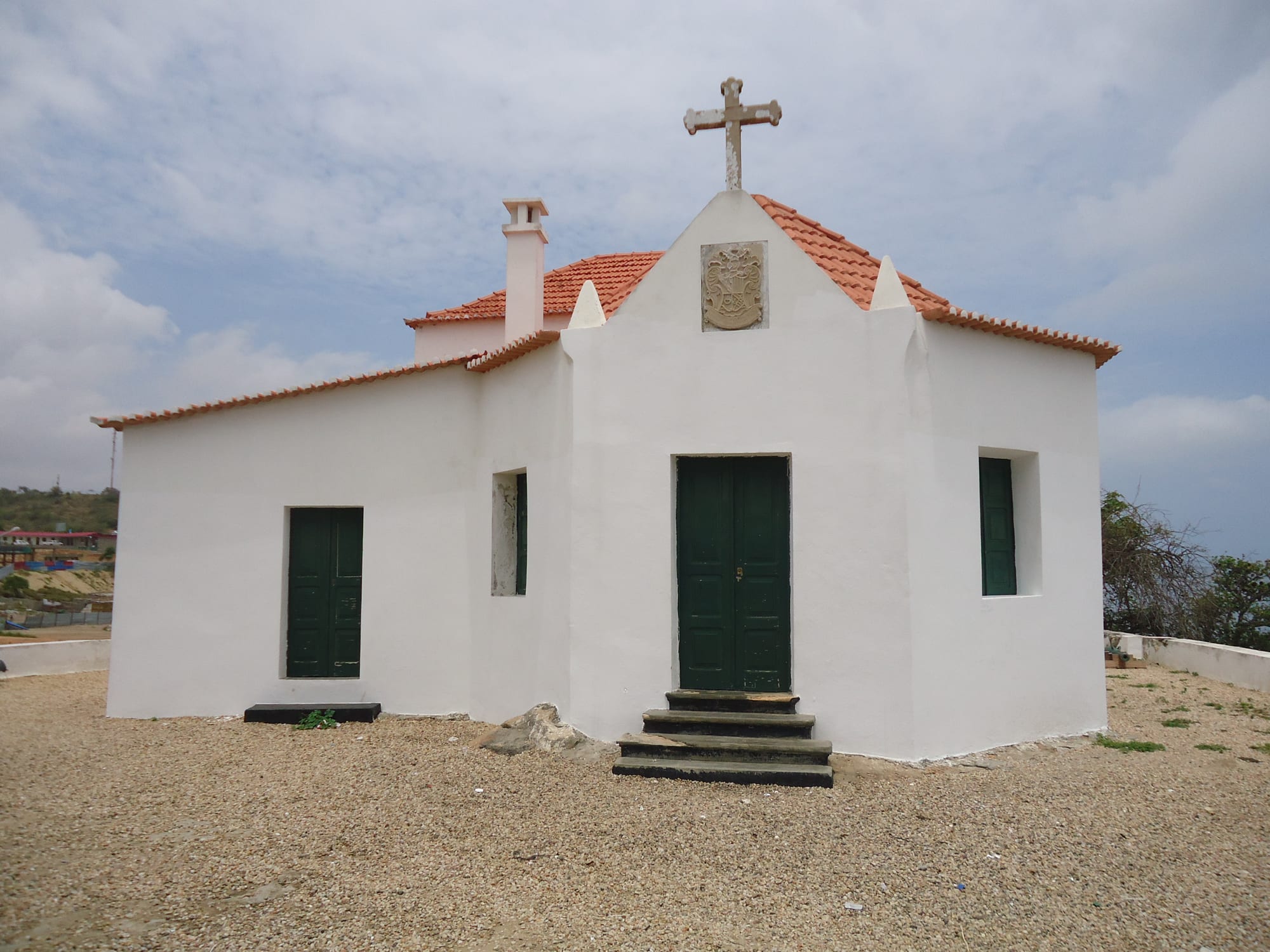
The Atlantic trade was suppressed in the middle of the 19th century, mainly because Brazil stopped importing captives in 1850. Portugal turned instead to "legitimate" commerce in rubber, wax and ivory, and — under pressure from the Berlin Conference of 1884–85, which required colonial powers to actually occupy what they claimed — to conquering the interior it had never ruled.
Conquest, forced labour, and settlement
The campaigns of "pacification" ran from the 1880s into the 1920s, against the remnants of Kongo, the Ovimbundu kingdoms of the central highlands, the Dembos north of Luanda, and the Kwanyama of the far south, whose king Mandume died resisting in 1917. Slavery had been abolished on paper, but it was replaced by a system of compulsory contract labour — chibalo — under which Angolans could be forced to work on plantations, roads and railways for little or no pay, and which lasted, in practice, until the 1960s.
Under the dictatorship of António Salazar, in power in Portugal from the early 1930s, Angola was rebranded an "overseas province" and opened to large-scale white settlement. The European population grew from around 44,000 in 1940 to roughly 335,000 by the early 1970s. Coffee plantations spread across the north, the Diamang company mined diamonds in the north-east, and in 1968 the first offshore oil began to flow off Cabinda. A rigid colour bar kept almost all Angolans out of skilled jobs and political life.
The war of independence
Three nationalist movements emerged in the 1950s and 1960s, and their differences of region, ideology and leadership would shape the next 40 years. The MPLA, formed in 1956, was Marxist, strongest in Luanda and among the Mbundu and the mixed-race intelligentsia, and backed by the Soviet bloc. The FNLA, led by Holden Roberto, drew on the Bakongo of the north and was supported by neighbouring Zaire and the United States. UNITA, founded by Jonas Savimbi in 1966, was based among the Ovimbundu of the central highlands.
The war began in 1961 — with an assault on prisons in Luanda in February, attributed to the MPLA, and a large rising in the northern coffee districts in March, linked to the FNLA. Both were met with ferocious reprisals in which tens of thousands of Africans were killed. For the next 13 years Portugal fought a bush war on three fronts, tying down a large conscript army, until the soldiers' own discontent helped bring down the dictatorship at home.
Independence and civil war
Portugal's Carnation Revolution of April 1974 ended the empire almost overnight. An agreement signed at Alvor in January 1975 set up a transitional government shared by all three movements, and it collapsed within months into open war between them. Every outside power picked a side: South African and Zairean columns drove on Luanda from south and north, while Cuban troops and Soviet weapons arrived to hold it for the MPLA. On 11 November 1975 the MPLA proclaimed the People's Republic of Angola under the poet Agostinho Neto, while the FNLA and UNITA declared a rival government inland.
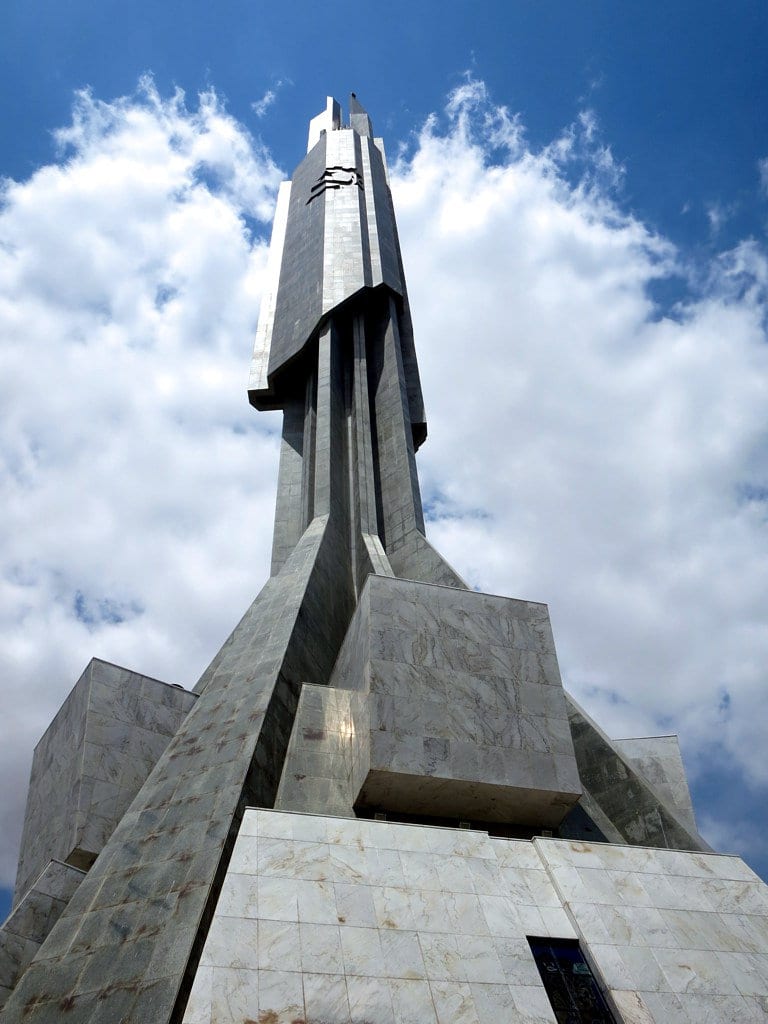
The fighting never fully stopped for 27 years. Neto died in 1979 and was succeeded by José Eduardo dos Santos, who would rule for 38 years. A peace deal and multi-party elections in 1992 failed when Savimbi rejected the result and returned to war; the worst years for civilians were 1992–94 and 1998–2002. At least half a million people died over the course of the civil war, millions were displaced, and the country was left among the most heavily land-mined on earth.
The oil years
The war ended only when Savimbi was killed in a firefight in the eastern province of Moxico in February 2002; a ceasefire followed six weeks later. Peace plus offshore oil then made Angola, for a decade, one of the fastest-growing economies in the world, at times pumping more crude than any country in Africa. Chinese loans repayable in oil paid for roads, railways and housing.
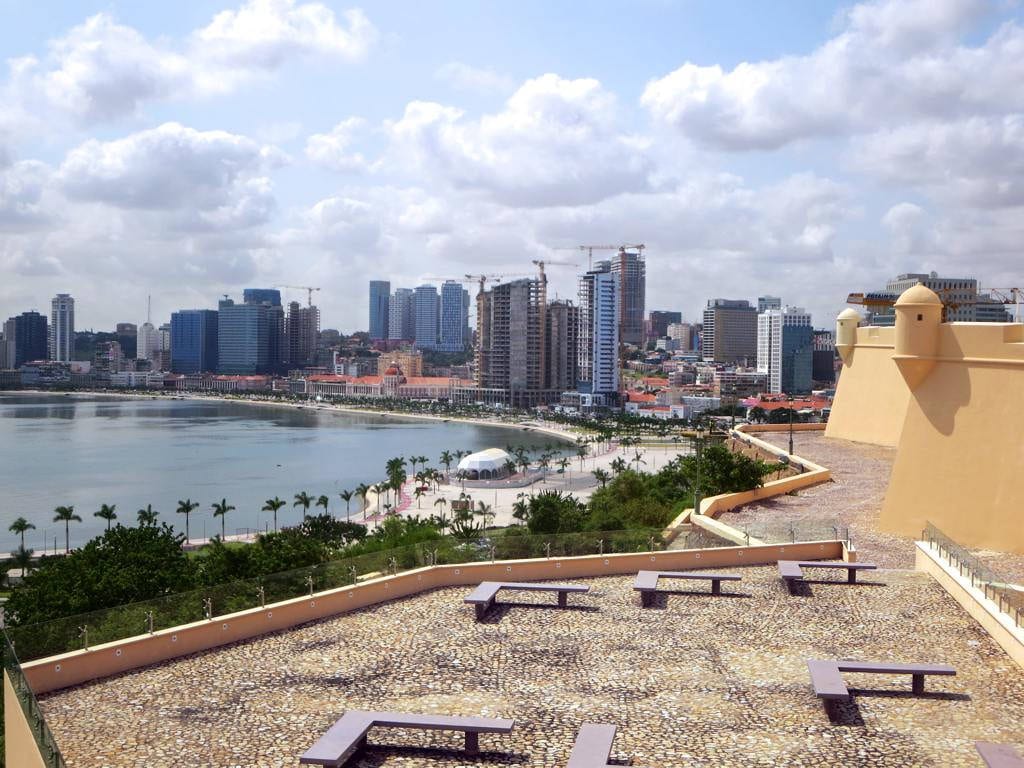
The wealth pooled around the ruling MPLA and the family of the president; his daughter Isabel dos Santos was described as the richest woman in Africa before her assets were frozen in a corruption investigation. Dos Santos finally stepped down in 2017, and his successor, João Lourenço, opened cases against members of the old president's circle while keeping the party in power.
What Angola carries
The deepest mark on Angola was left before any of its modern borders existed, by the three centuries in which it was the Atlantic world's main source of enslaved people — a history written into the country's demography and into the culture of Brazil. On top of that sit a nation forged in two long wars, an economy that still rises and falls with the price of a barrel of oil, and the old kingdoms of Kongo, Ndongo and Matamba, whose rulers — Afonso, Njinga — are now the names on Angola's streets and banknotes.