History · Wallis and Futuna
Wallis and Futuna: The Kingdoms Under France
Three small Polynesian kingdoms in the western Pacific — converted wholesale by a French missionary in the 1840s, made a protectorate, and the only French territory where traditional monarchs still hold official power alongside the Republic
By Worldlore Editorial · 19 September 2026
Three kingdoms, one territory
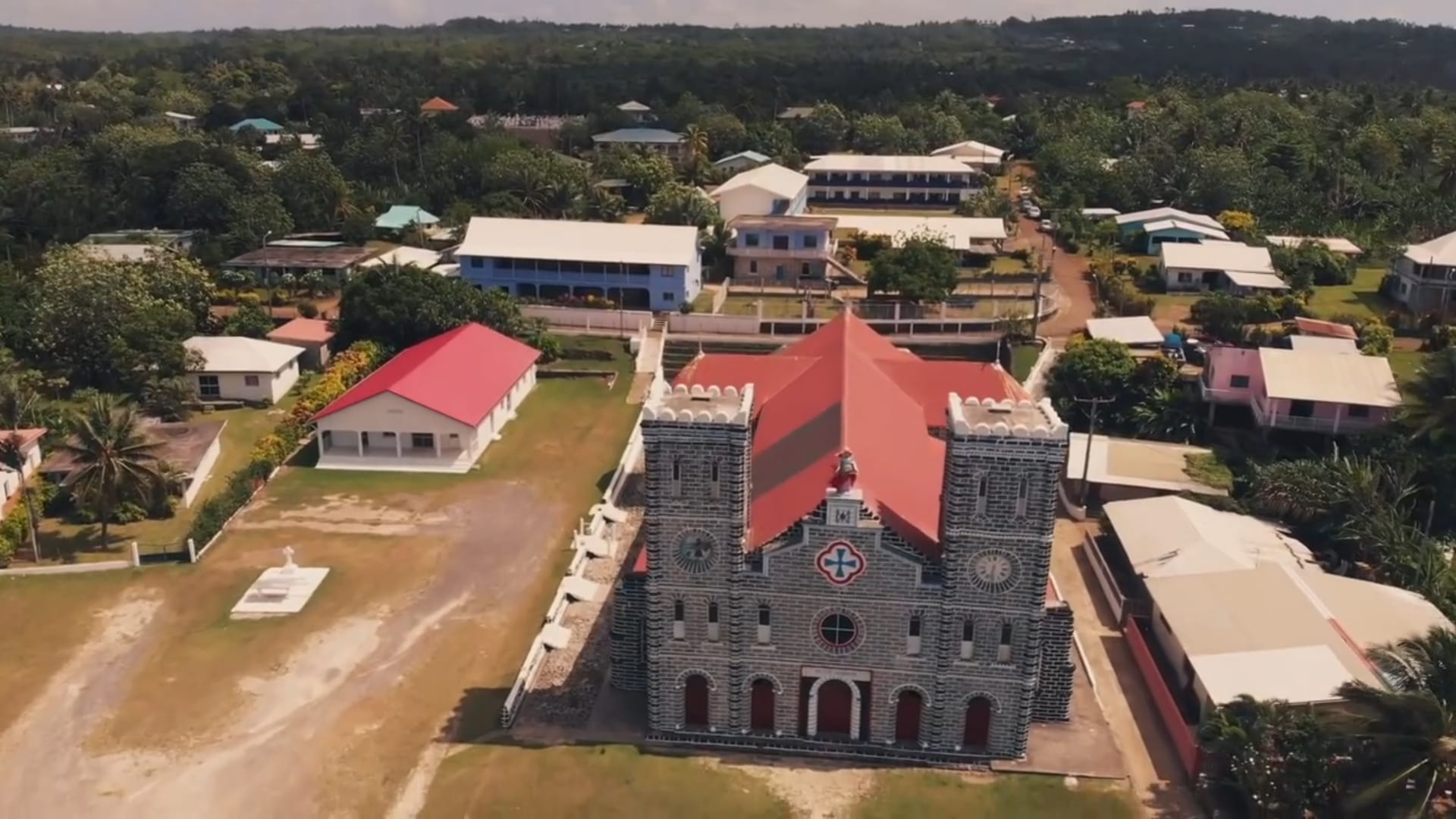
Wallis and Futuna is a French overseas collectivity of about 11,000 people on two widely separated island groups in the western Pacific — Wallis (Uvea) to the north-east, and Futuna with tiny Alofi about 240 kilometres to the south-west. It is the least-visited and one of the smallest French territories, and the most socially conservative: it is the only place under the French Republic where customary kings — three of them — hold official constitutional roles, and where the Catholic Church, land tenure and daily life are still largely governed by tradition and the chiefs.
A short history
- c. 1000 BCE onward
Settlement
Lapita, then Polynesian settlement; Uvea comes under strong Tongan influence.
- c. 1500
The kingdoms
Uvea and the two Futunan kingdoms (Alo and Sigave) take shape.
- 1616
European sighting
Dutch navigators reach Futuna; Samuel Wallis charts Uvea in 1767.
- 1837
The Marists arrive
French Catholic missionaries land on Wallis and Futuna.
- 1841
The martyr
Father Pierre Chanel is killed on Futuna; the islands soon convert en masse.
- 1887
Protectorate
The Queen of Uvea signs a treaty of protection with France.
- 1917
Futuna added
The Futunan kingdoms are formally brought under the protectorate.
- 1961
Overseas territory
Islanders vote overwhelmingly to become a French overseas territory.
- from 1950s
Migration
Large-scale movement of Wallisians and Futunans to New Caledonia.
Kingdoms and conversion
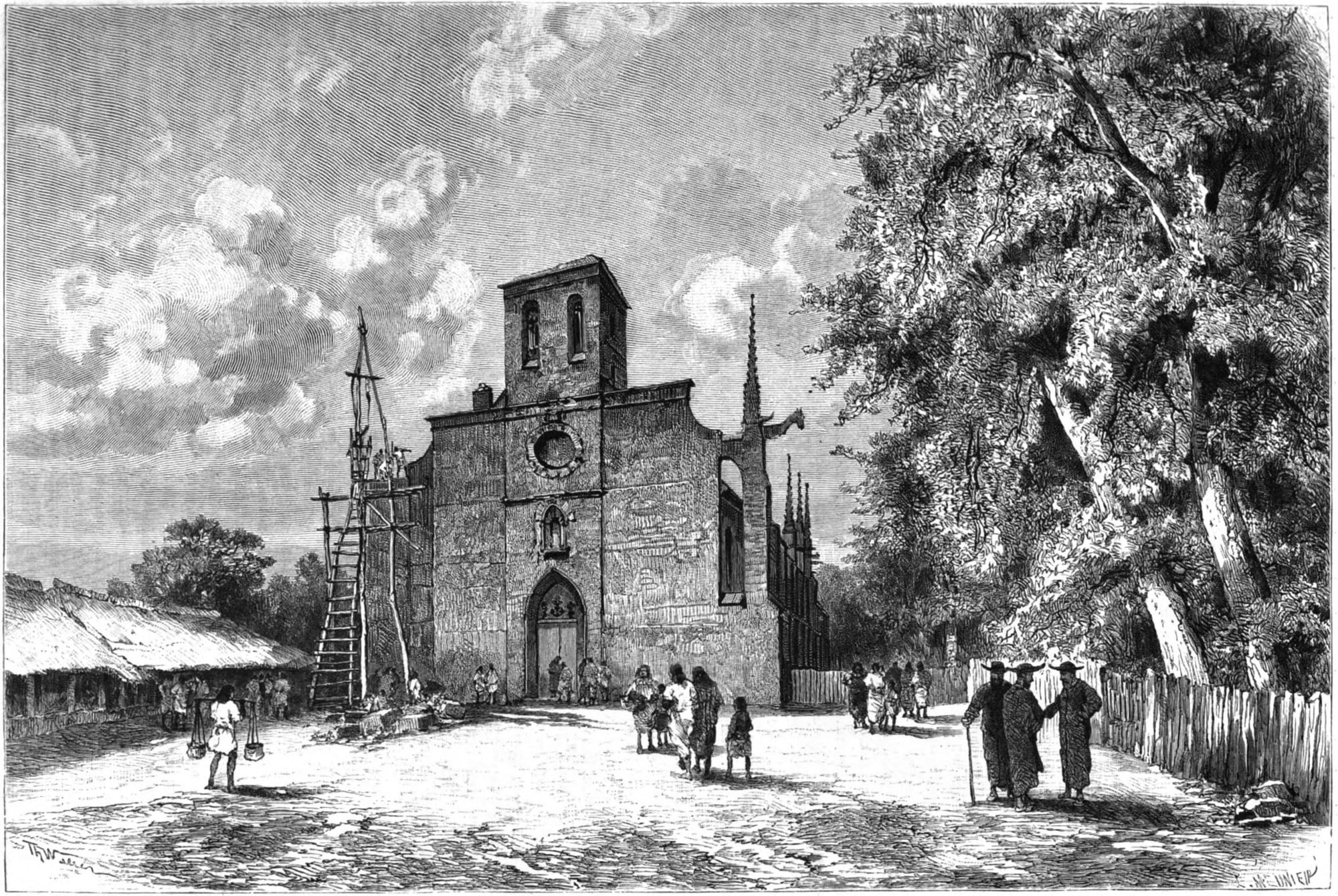
Uvea was settled around three thousand years ago and, from roughly the 15th century, came under strong Tongan influence — its language, chiefly titles and some of its monuments (like the fortifications of Talietumu) reflect a period of Tongan overlordship. It developed into a single kingdom under a paramount chief, the Lavelua; Futuna held two rival kingdoms, Alo and Sigave, in a state of frequent war. In 1837 Marist missionaries — part of a French Catholic push into the Pacific — landed on the islands. On Futuna, Father Pierre Chanel was clubbed to death in 1841 on the orders of a chief who feared for his authority; within months the island converted, and Chanel was later canonised as the first martyr of Oceania and the region's patron saint. Wallis converted almost completely by 1842.
Protectorate and territory
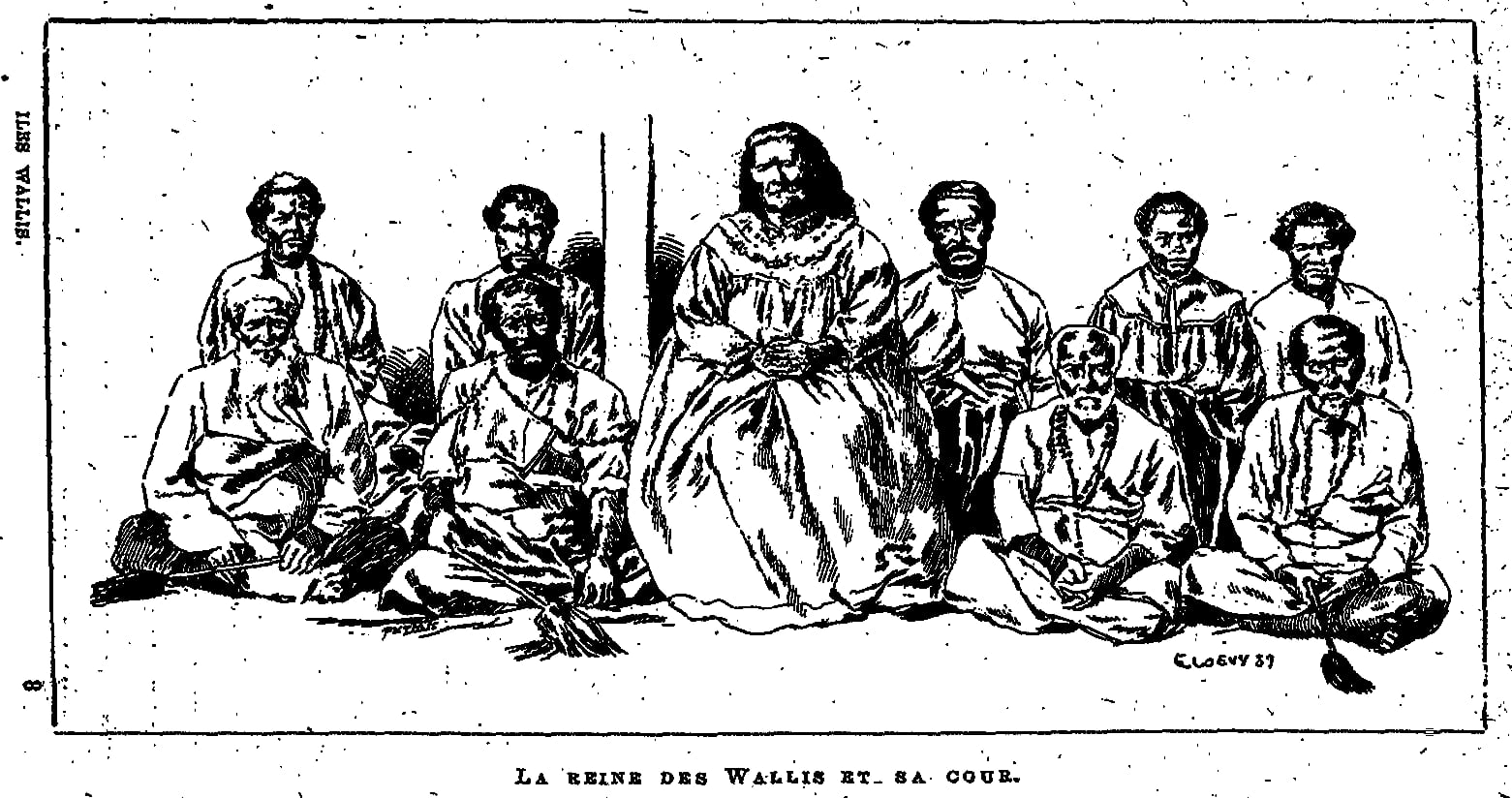
The missionaries effectively governed the islands for decades, and it was partly at their urging, and to forestall British or German interest, that France formalised its position: the Lavelua Amelia signed a protectorate treaty in 1887, and the two Futunan kingdoms were brought in by 1917. France administered the islands very lightly from a resident based on Wallis, itself subordinate to the governor of New Caledonia; there was minimal development, and the kings and chiefs continued to run internal affairs. During the Second World War, the United States built a large air base on Wallis, briefly bringing thousands of troops and a cash economy to the island. In 1959 the islanders were consulted on their future, and in a 1961 referendum they voted by a large majority to become a French overseas territory, which took effect that year with a statute that explicitly preserved the three monarchies and customary law.
Wallis and Futuna today
The 1961 statute created an unusual hybrid: a French-appointed administrator and an elected territorial assembly, alongside the King of Uvea and the Kings of Alo and Sigave, each with a customary council, who sit on the territorial council and whose authority over land, custom and village life is recognised in French law. Successions to the thrones are decided by the chiefly families and can be contested, occasionally producing long interregnums. The economy is minimal — subsistence farming and fishing, French public-sector jobs and transfers, and remittances — and the territory's defining demographic fact is emigration: far more people of Wallisian and Futunan origin now live in New Caledonia and mainland France than on the islands themselves, and the resident population is slowly declining.
What Wallis and Futuna carry
Wallis and Futuna is a rare case of a Pacific society that converted to Christianity almost overnight, kept its kings, and then chose — clearly, in 1961 — to formalise its ties to France rather than seek independence or a looser status. The result is a territory where the French Republic, the Catholic Church and three Polynesian monarchies share authority, and where the biggest question is simply whether enough people will keep living there.