Daily Life · Vietnam
Vietnam: A Day That Starts on a Plastic Stool
A country of some 100 million people whose mornings begin with a bowl of phở on the pavement, whose streets run on the motorbike, and whose households still keep a lit incense stick for the family's dead
By Worldlore Editorial · 30 September 2026
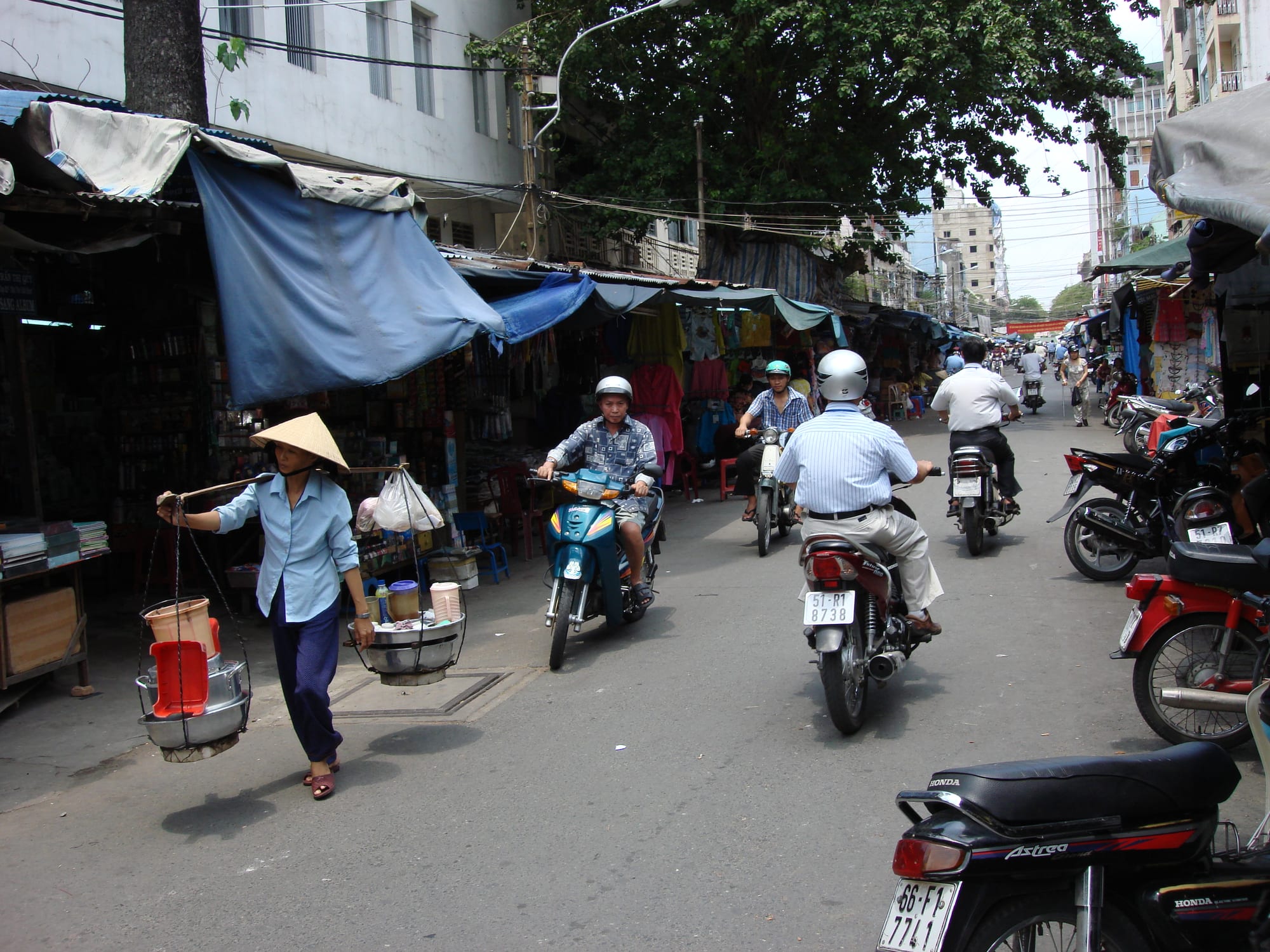
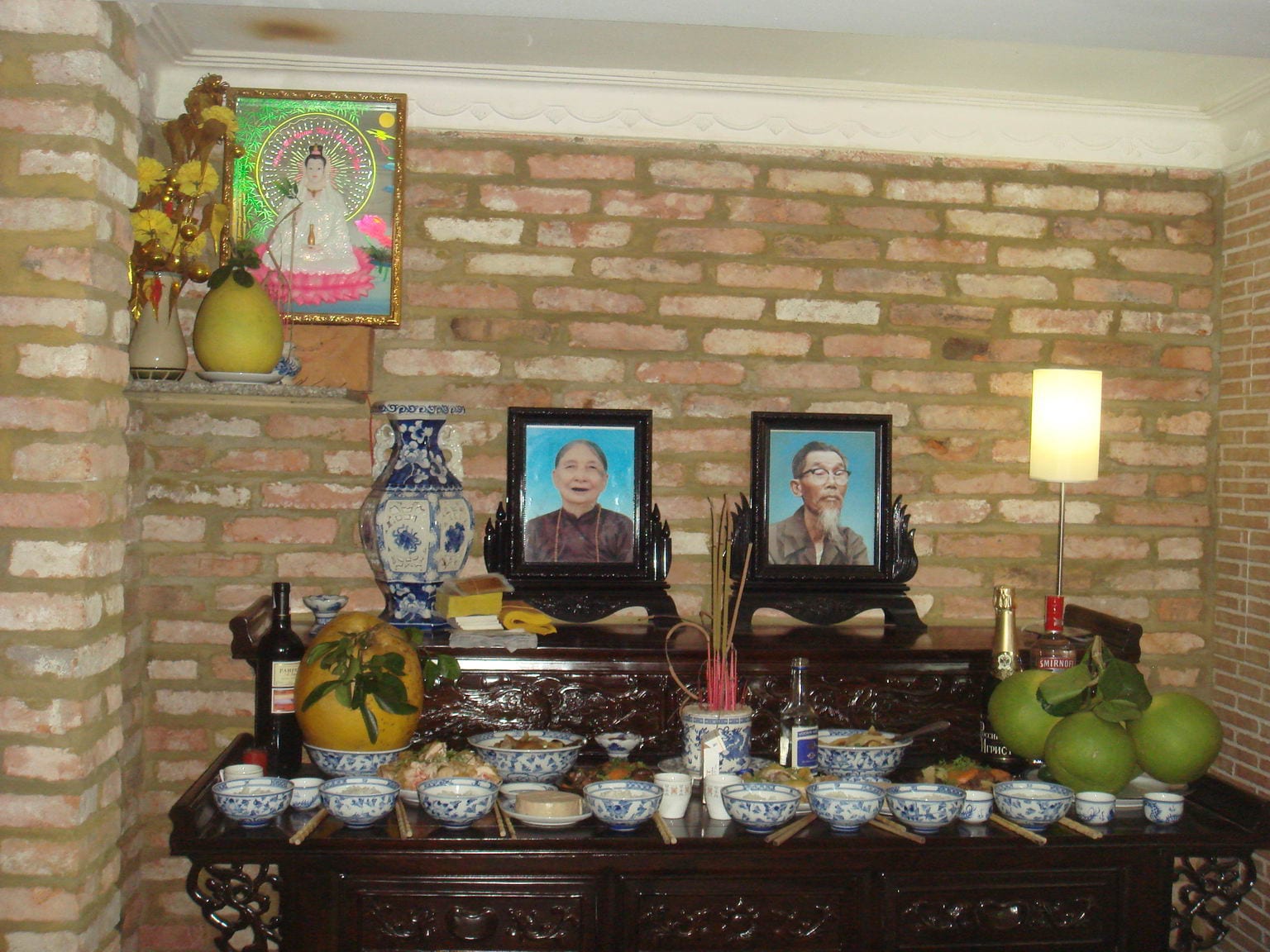
Vietnam wakes early. Well before six, market stalls are opening, stools are being set out on the pavement, and the first broths of the day are already simmering, because breakfast here is bought on the street rather than made at home. Through the day the motorbike carries almost everything and everyone, weaving in numbers that first-time visitors find astonishing and locals barely notice. Inside, nearly every home, however modest, keeps a small altar of incense and photographs for the family's ancestors, a quiet daily thread running underneath the noise outside.
Family and home life
The family remains the central institution in Vietnamese life, shaped by a long Confucian emphasis on respect for elders and by ancestor worship, the folk-religious practice of honouring deceased relatives that continues alongside Buddhism and other faiths. It is still common, particularly outside the biggest cities, for three generations to share a household, and grandparents often take a direct hand in raising children while parents work. A household altar, holding photographs of deceased relatives alongside fruit, flowers and burning incense, is a near-universal fixture, tended daily with a fresh offering and drawn into a larger ritual at death anniversaries and during Tết, when extended families gather.
Work, school and the rhythm of the day
The working week runs Monday to Friday for most office jobs, with many factories and family businesses also open on Saturday. Pupils start their school day early in the morning, in step with the country's early start. Rapid industrial growth has pulled millions into manufacturing work on strict shift patterns, while a still-substantial share of the population farms or runs small family businesses on more flexible, sunrise-to-dusk hours. Traffic peaks sharply between roughly seven and nine in the morning and again from late afternoon into the evening, as the country's enormous fleet of motorbikes carries workers, schoolchildren and goods through streets that were never built for the volume. Almost everything stops for Tết, the lunar new year in late January or February, by far the most important holiday and the one time family obligations outrank work nationwide.
Community life and public spaces
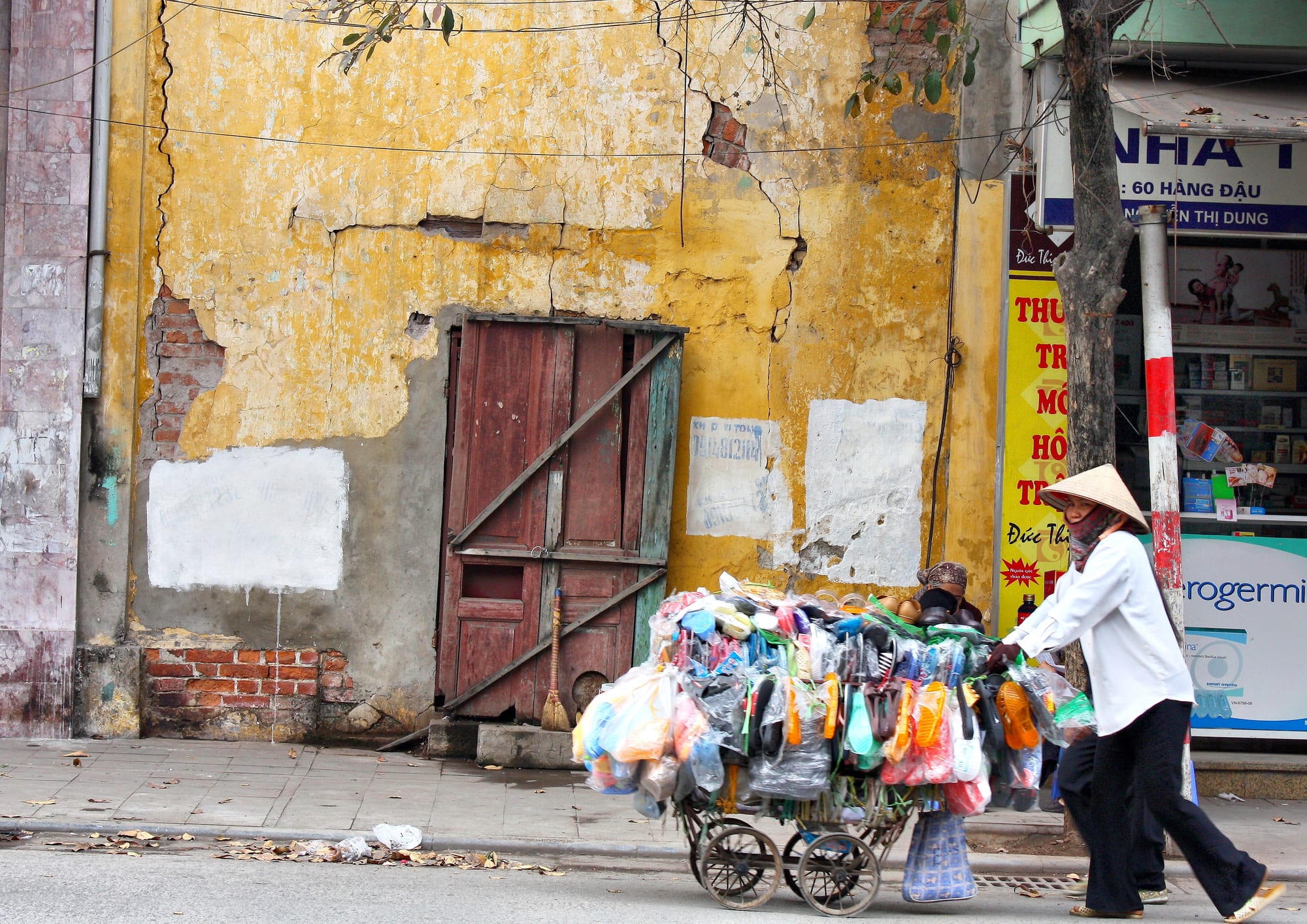
Daily life spills outdoors more in Vietnam than in most countries: coffee, breakfast, haircuts, small repairs and casual trade are all conducted on the pavement, at plastic tables and stools set up outside a shopfront or home. Markets, whether sprawling covered halls or a cluster of stalls under tarpaulin, remain the main source of fresh food for most households and a genuine daily gathering point, alongside the vendors who carry goods through the streets on a shoulder pole or a converted bicycle or cart. The motorbike is itself a kind of public space, weaving close enough for conversation, transaction and negotiation to happen mid-street rather than only at a fixed stall.
Free time and weekends
Weekends bring family meals, visits to relatives, and, in the cities, an evening out around a lake or park, where locals walk, exercise or simply sit and watch the crowd go by. Football is followed with real intensity nationwide, and a major match, especially involving the national team, can empty streets during play and fill them with celebration afterwards. Karaoke is a genuinely popular pastime across generations, and coffee shops double as a default place to meet, work or linger for an hour rather than simply somewhere to buy a drink. Tết itself is the one period the whole country effectively pauses together, with days set aside for family visits, ancestor rites and, for many workers, the only extended break of the year.
A visitor's ordinary day
Cash is still widely used for everyday spending, especially street food and markets, though cards are increasingly accepted in hotels, malls and city-centre restaurants. Ride-hailing apps for both cars and motorbikes are cheap, widely used and generally the easiest way to get around, avoiding the negotiation that hailing a taxi on the street can involve. Crossing a busy street on foot is a genuine skill: the local approach is to walk steadily and predictably rather than stop and start, letting the traffic flow around the walker. Shops and stalls generally open by mid-morning and run late into the evening, and it is worth knowing that during Tết itself, much of the country, including many restaurants and shops, closes for several days.
What to take away
An ordinary day in Vietnam runs on two things working together: the motorbike carrying people through streets built for a slower pace, and a family structure, marked daily at the household altar, that still holds the wider rhythm of the country together.