History · Venezuela
Venezuela: The Oil State That Broke Down
The birthplace of Simón Bolívar and, for most of the 20th century, one of Latin America's richest and steadiest democracies — undone by dependence on a single commodity, and since 2013 the scene of an economic collapse and a mass exodus with few peacetime parallels
By Worldlore Editorial · 10 September 2026
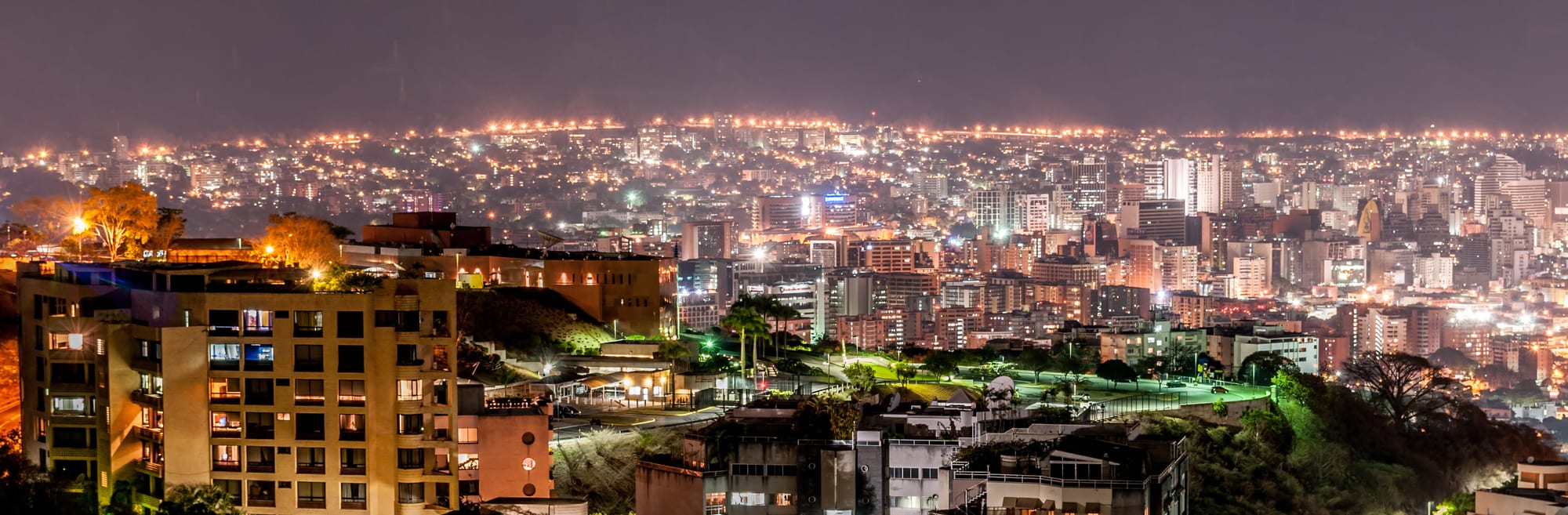
A rich country in collapse
Venezuela sits on the northern coast of South America, with about 28 million people (down from a peak as emigration accelerated), the Andes in the west, the Orinoco basin and the Guiana highlands in the south, and — beneath it all — the largest proven oil reserves in the world. For most of the 20th century that made it wealthy and, from 1958, an unusually stable democracy in a region of coups. Since 2013 it has undergone one of the deepest economic contractions ever recorded outside war, and around a quarter of its population has left. This account outlines the history and attributes contested points, especially about the recent political crisis.
A short history
- pre-1498
Indigenous peoples
Carib, Arawak and other groups; Columbus reaches the coast in 1498.
- 1520s–1810
Spanish rule
A cacao colony governed as the Captaincy General of Venezuela.
- 1811–1823
The independence war
Simón Bolívar leads the fight; Venezuela joins Gran Colombia.
- 1830
Separation
Venezuela leaves Gran Colombia; a century of caudillo rule follows.
- 1922
The oil boom
A gusher at Barroso No. 2 marks the start of the petroleum era.
- 1935–1958
Transition
The end of long dictatorships; a democratic opening, reversed, then restored.
- 1958
Punto Fijo
A pact founds a stable two-party democracy.
- 1989
The Caracazo
Riots against austerity are crushed with hundreds of deaths.
- 1999
Chávez
Hugo Chávez is elected and launches the "Bolivarian revolution".
- 2013–
The crisis
Chávez dies; under Nicolás Maduro the economy and politics break down.
Conquest, and Bolívar
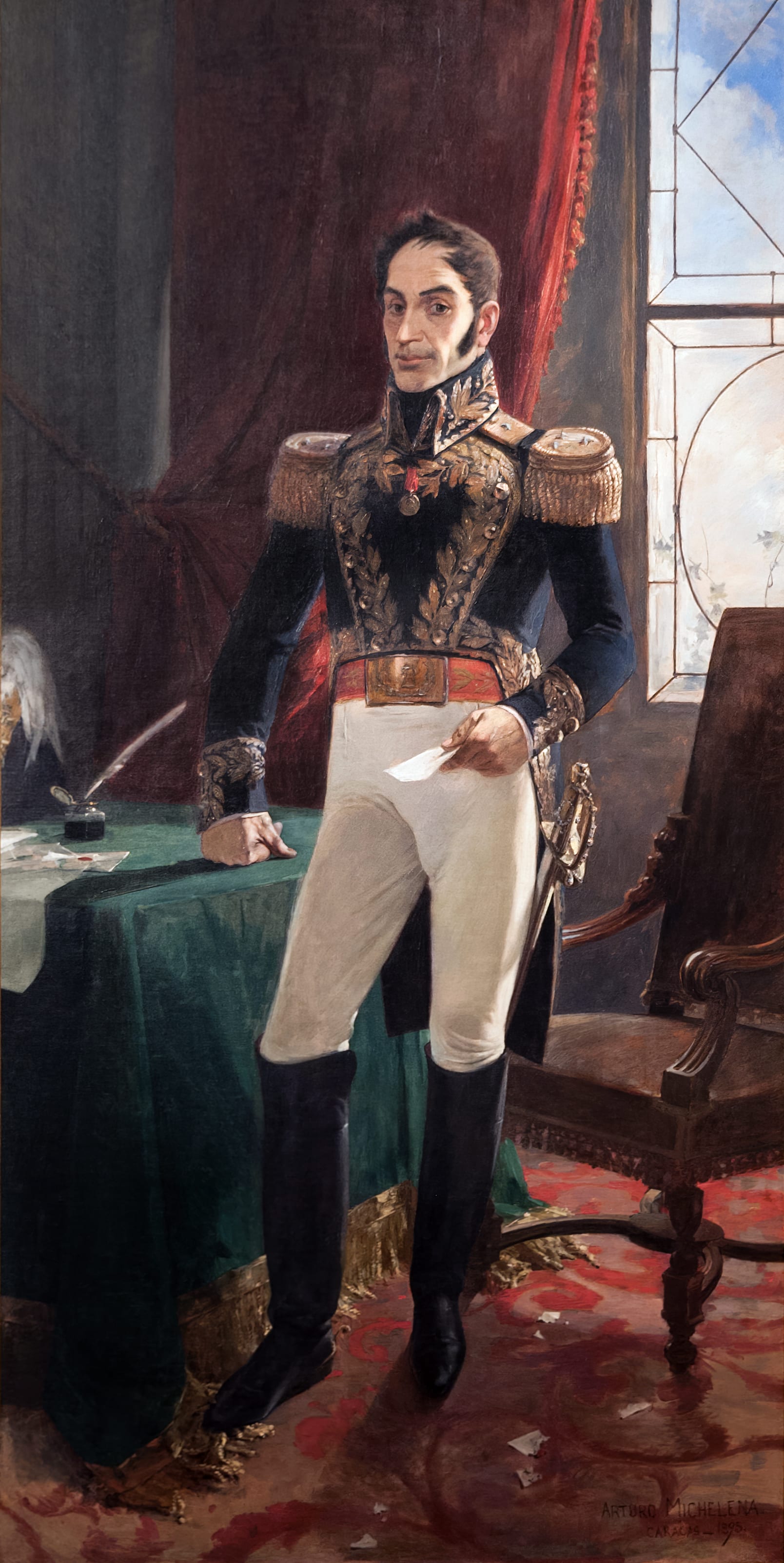
The coast Columbus reached in 1498 became a minor Spanish colony, valued for pearls, cacao and its position, and worked increasingly by enslaved Africans on the plantations. Caracas-born Simón Bolívar became the central figure of Spanish America's independence: after years of defeats, his forces won at Carabobo in 1821 and went on to liberate present-day Colombia, Ecuador, Peru and Bolivia. Venezuela was part of Bolívar's federation of Gran Colombia until it broke away in 1830. The 19th century was then dominated by caudillos — strongmen such as Páez, Guzmán Blanco and, into the 20th century, Juan Vicente Gómez, who ruled from 1908 to 1935.
The oil century
A blowout at the Barroso No. 2 well near Lake Maracaibo in 1922 announced Venezuela's future. Within a decade it was the world's leading oil exporter, and petroleum revenue — flowing to whoever held the state — reshaped everything: agriculture withered, the population moved to the cities, and governments learned to buy stability. After Gómez's death and a further military spell, a 1958 uprising ended dictatorship for good, and the main parties signed the Punto Fijo pact, sharing power and patronage in a stable, oil-funded two-party democracy that lasted four decades — long enough that Venezuela was cited as a regional success story.
The Bolivarian revolution
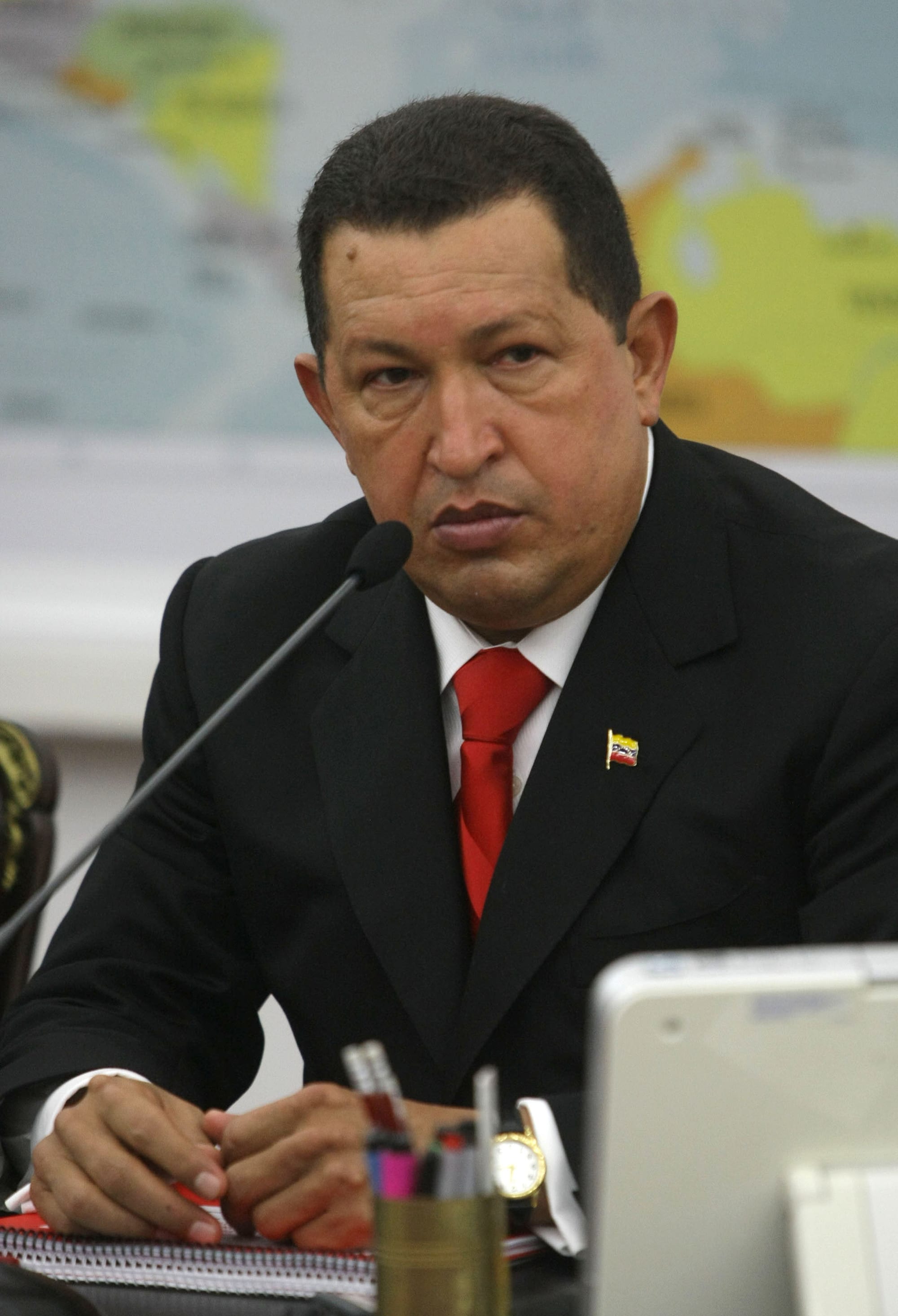
The oil-price collapse of the 1980s ended the good years. An austerity package in 1989 set off the "Caracazo" riots, put down by the army with hundreds killed. A young lieutenant colonel, Hugo Chávez, led a failed coup in 1992, was jailed, released, and in 1998 won the presidency by a wide margin. He rewrote the constitution, renamed the country the Bolivarian Republic, survived a short-lived 2002 coup and a 2002–03 oil-industry strike, took control of the state oil company PDVSA, and — as oil prices soared through the 2000s — poured money into health, literacy and food "missions" that cut poverty sharply, while also concentrating power, packing the courts, and squeezing opposition media. His supporters credit him with redistributing the country's oil wealth to the poor; his critics say he dismantled democratic checks and hollowed out the productive economy.
The crisis under Maduro
Chávez died of cancer in 2013 and was narrowly succeeded by Nicolás Maduro. Oil prices fell in 2014, exposing years of under-investment, borrowing and mismanagement. The economy went into free fall: GDP shrank by around three-quarters over roughly eight years, hyperinflation reached rates in the millions of per cent, and shortages of food and medicine became severe. Roughly 7.7 million Venezuelans — about a quarter of the population — have emigrated, mostly to Colombia and other neighbours, one of the largest displacement crises in the world. The opposition-led National Assembly elected in 2015 was stripped of power; a 2017 constituent assembly and disputed 2018 and 2024 presidential votes kept Maduro in office. The opposition, and dozens of governments, say the 2024 election was stolen from Edmundo González and Maria Corina Machado; the government insists Maduro won, and has jailed or exiled opponents and cracked down on post-election protests. Venezuela's government describes the crisis as the product of US sanctions and an "economic war"; most economists attribute the collapse mainly to domestic policy, with sanctions worsening it after 2017.
What Venezuela carries
Venezuela was the launching point of South America's independence and, for a large part of the 20th century, one of its richest and most democratic countries — and almost all of that rested on oil. The petroleum that funded the Punto Fijo democracy and the Bolivarian missions also crowded out other industry and taught every government to rule by distributing rents. When the price fell and the wells were run down, there was little else holding the economy up, and the political system broke with it.