Daily Life · Uzbekistan
Uzbekistan: Where a Wedding Needed a Law
A young, family-centred country where the neighbourhood mahalla still organises everyday life, tea punctuates every pause in the day, and weddings once grew so large and costly that the government had to cap them by law
By Worldlore Editorial · 30 September 2026
Uzbekistan is a young country, with children and working-age adults making up the great majority of its roughly 39 million people, and daily life still runs largely through two long-standing institutions: the mahalla, the neighbourhood community that organises much of ordinary social and civic life, and the extended family. Green tea appears constantly through the day, poured at home, at work and above all at the choyxona, the teahouse where men gather to talk and pause between tasks. Family obligation runs deep enough that, in 2019, the government felt it necessary to pass a law capping the number of guests, bands and cars allowed at a wedding, after celebrations had grown so large and costly that families were routinely going into debt to host them.
Family and home life
Extended, multigenerational households remain common, particularly outside Tashkent, and it is often customary for the youngest son and his wife to continue living with his parents, eventually taking on responsibility for the household as his parents age. The mahalla, the neighbourhood community, functions almost as an extension of the family itself: each has its elders, or aksakals, and a committee, which help resolve disputes, organise weddings and funerals, and generally look out for the neighbourhood's affairs, a role given more formal government backing in recent years. Many mahallas have their own mosque and teahouse, so a resident's daily errands, worship and socialising can often happen within walking distance of home.
Work, school and the rhythm of the day
The law caps normal working time at 40 hours a week, worked either as five eight-hour days or as six shorter ones, so while many offices keep a Monday-to-Friday week, Saturday working is also common. Millions of Uzbeks work abroad, most of them in Russia, and remittances sent home are a significant part of many families' income, a pattern that shapes daily life for those left behind as much as for those who leave. With children and teenagers making up close to a third of the population, school-age life and family schedules built around it are a major feature of an ordinary day nationwide. Tea breaks punctuate the working day, and plov, the national dish, is a favourite lunch as well as the centrepiece of weddings and gatherings.
Community life and public spaces
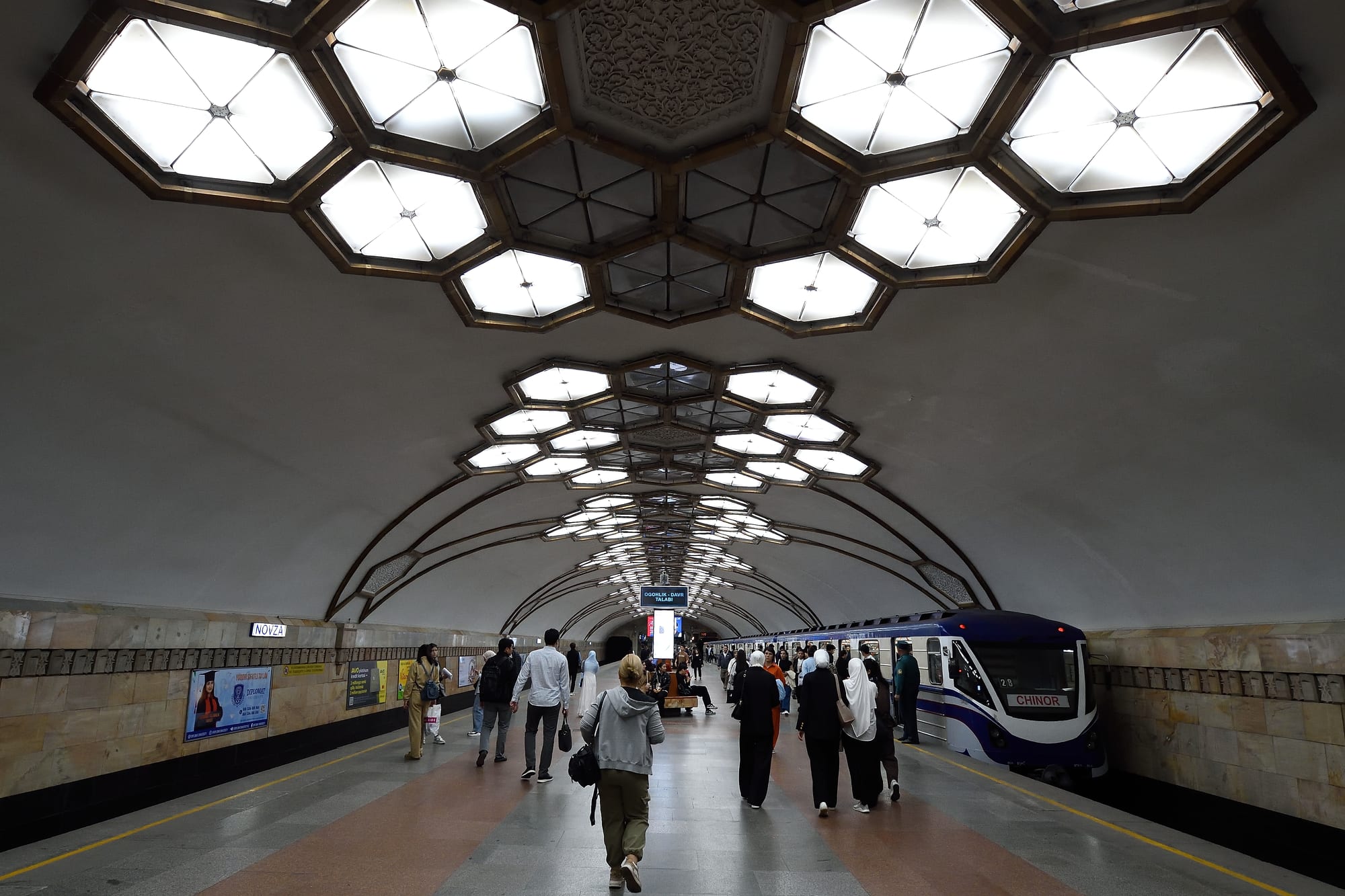
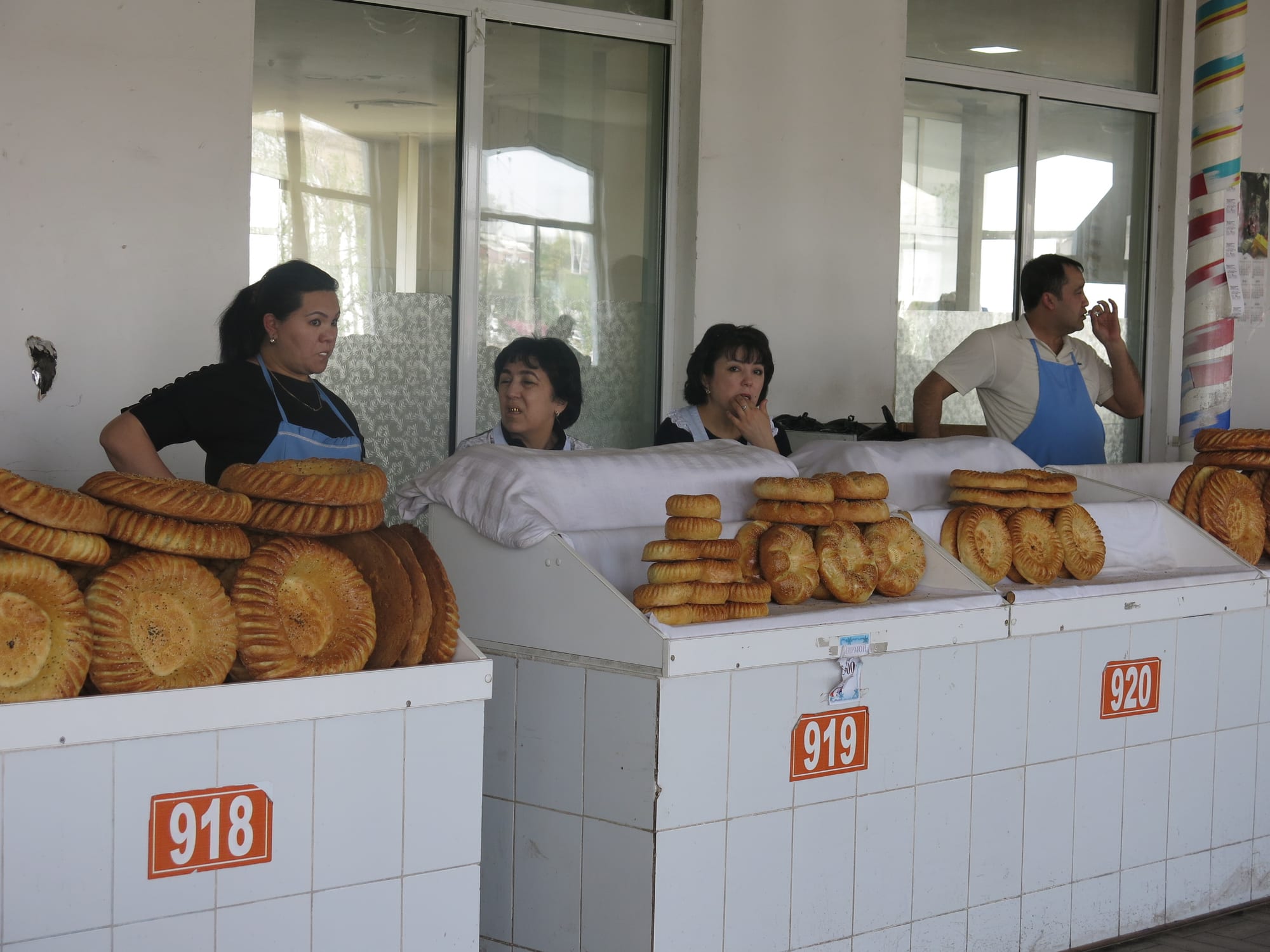
The bazaar remains the real centre of daily commerce and neighbourhood life in every town, and Tashkent's Chorsu Bazaar, trading under its great blue dome, is the working model at national scale: fresh produce, round tandoor bread and prepared food sold from stalls much as they have been for generations. Tashkent's metro, opened in 1977, its stations each decorated with marble, ceramics and chandeliers, is a genuinely everyday form of transport for the capital's residents rather than only a sight to see. Beyond commerce and transport, the choyxona functions as the mahalla's informal public living room, a place to sit, drink tea and talk that plays roughly the same daily role a café or pub might elsewhere.
Free time and weekends
Weekends centre on family visits, the choyxona and, for a great many households, weddings and other life-cycle celebrations, which remain frequent, elaborate social events even under the 2019 spending limits. Parks and public squares in Tashkent and other cities fill with families in the cooler evening hours, especially in the hot summer months when the midday heat keeps people indoors. Football and other spectator sports draw real followings, and a weekend trip to visit relatives in another town or region, often by shared taxi or the Afrosiyob high-speed train, is a routine rather than an occasion.
A visitor's ordinary day
Uzbekistan runs on cash more than cards outside the largest hotels and restaurants, though ATMs are now common in cities, and a 2017 currency liberalisation made exchanging money far simpler. The Afrosiyob high-speed train is the easiest way to move between Tashkent, Samarkand and Bukhara and is worth booking a few days ahead in high season, while shared taxis fill in the gaps elsewhere. Bazaars and shops generally open by mid-morning and stay busy into the evening, and hotel registration slips, once required to be kept and shown on request, are no longer strictly necessary but still worth holding onto as a precaution. Tea is offered constantly and drunk throughout the day rather than at fixed times, so declining or accepting a cup rarely follows any fixed schedule a visitor needs to plan around.
What to take away
An ordinary day in Uzbekistan is organised less around the clock than around the people in it, the mahalla, the extended family and a running supply of tea, in a country that recently had to write a law just to keep its biggest family occasion from bankrupting the families holding it.