History · Uzbekistan
Uzbekistan: The Heart of the Silk Road
The land of Samarkand and Bukhara — Timur's imperial capital and a cradle of Islamic science, conquered by Russia, made a Soviet cotton republic that helped drain the Aral Sea, and independent since 1991 under two long-serving presidents
By Worldlore Editorial · 19 September 2026
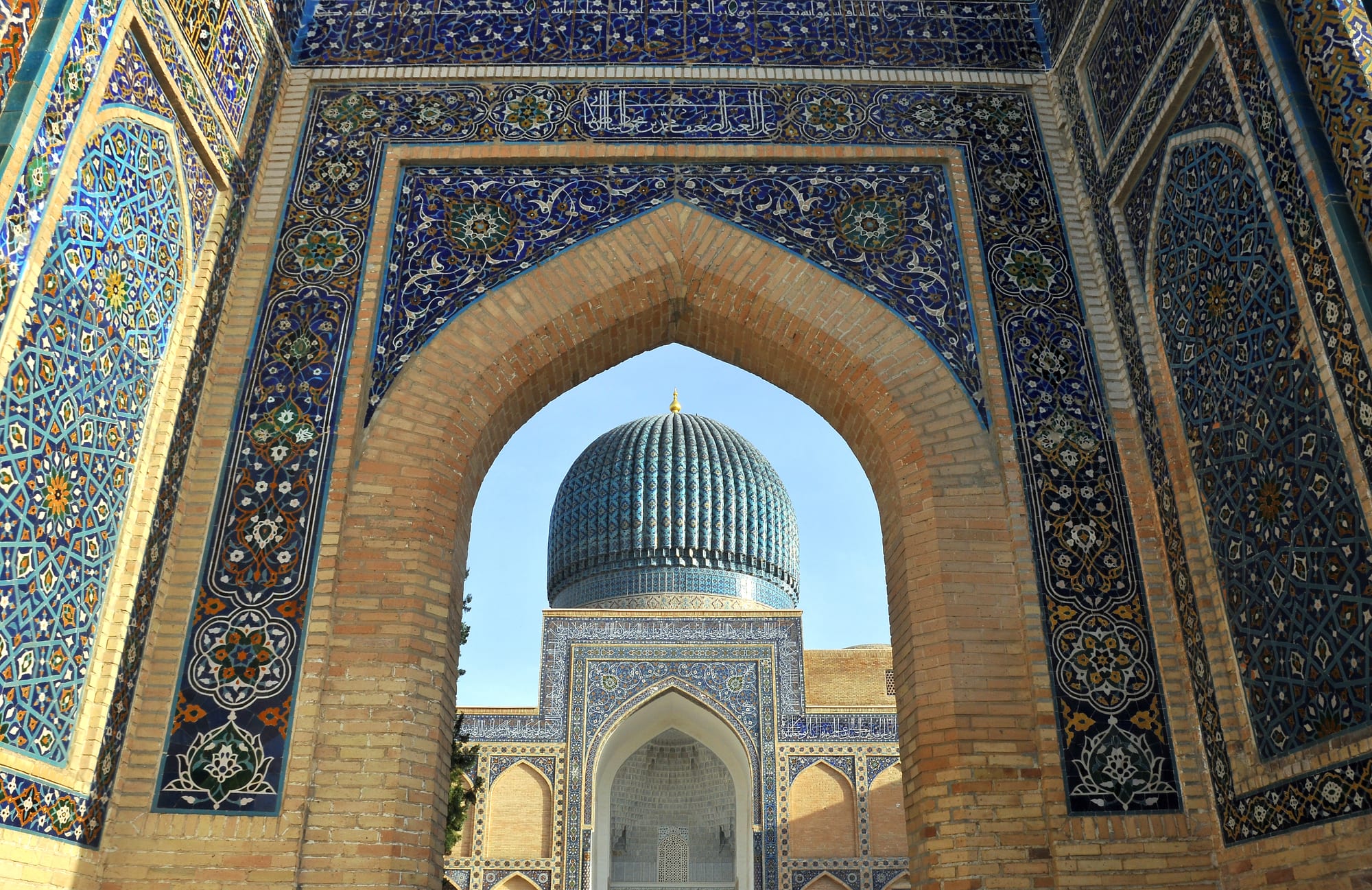
The most populous country in Central Asia
Uzbekistan is a doubly landlocked country — one has to cross two borders to reach the sea — of about 37 million people, the most populous in Central Asia. Its heartland is the string of oasis cities along the ancient Silk Road: Samarkand, Bukhara, Khiva, Tashkent. For over two thousand years this was one of the world's great crossroads of trade, religion and learning, and it was the base of empires that reached from the Middle East to India. It spent the last century and a half under Russian and then Soviet rule, and it has been independent, under strong one-man governments, since 1991.
A short history
- to 8th century CE
Sogdiana
Silk Road city-states of Zoroastrian merchants.
- 709–751
Arab conquest
Islam is established; Bukhara and Samarkand become centres of learning.
- 819–999
The Samanids
A Persian renaissance based at Bukhara.
- 1220
Genghis Khan
The Mongols devastate the region.
- 1370–1507
The Timurid empire
Timur (Tamerlane) makes Samarkand his capital; a cultural golden age.
- 16th–19th c.
The khanates
Bukhara, Khiva and Kokand — Uzbek-ruled states.
- 1865–1876
Russian conquest
Tashkent falls; Bukhara and Khiva become protectorates.
- 1924
The Soviet republic
Uzbekistan is created; cotton monoculture is imposed.
- 1991
Independence
Islam Karimov leads Uzbekistan out of the USSR.
- 2016
Mirziyoyev
Karimov dies after 25 years; a cautious opening follows.
Silk Road cities and the Timurid golden age
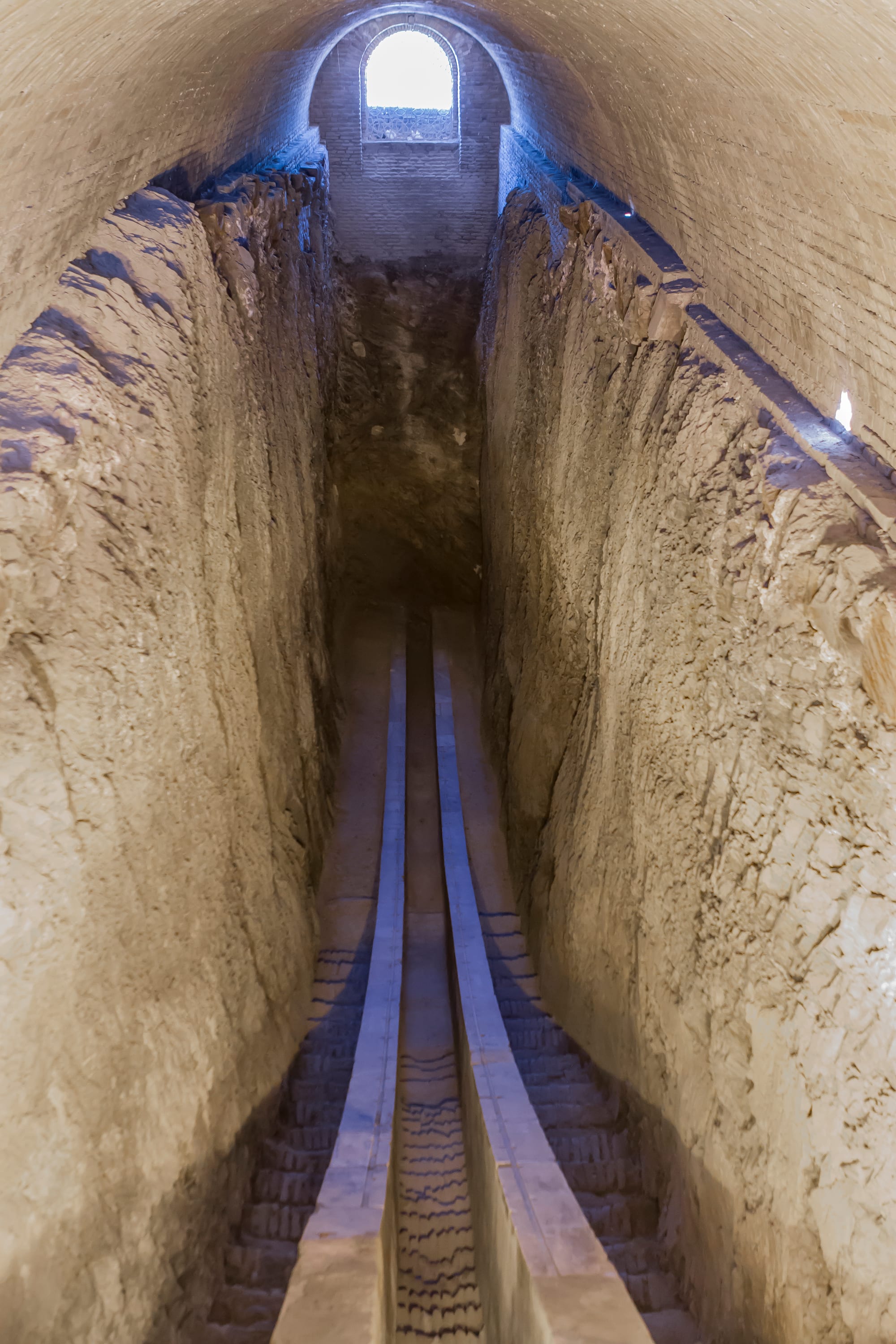
The land between the Amu Darya and Syr Darya rivers — ancient Transoxiana — was home to the Sogdians, Iranian-speaking merchants whose caravans carried silk, paper, ideas and religions across Eurasia. Arab armies brought Islam in the early 8th century, and under the Samanids and their successors Bukhara and Samarkand became world centres of scholarship: the mathematician al-Khwarizmi (whose name gave us "algorithm"), the physician Ibn Sina (Avicenna), the astronomer al-Biruni. The Mongol conquest of 1220 was catastrophic, but the region recovered spectacularly under Timur (Tamerlane), who from the 1370s built a vast, brutal empire from his capital at Samarkand and filled it with monuments; his grandson Ulugh Beg was an astronomer who built a great observatory there.
Khanates and the Russian conquest
After the Timurids, nomadic Uzbek tribes moved south and established a series of states — the emirate of Bukhara, and the khanates of Khiva and Kokand — which ruled the region, often at war with each other and with Persia, into the 19th century. They were slave-raiding, isolated and, by the standards of the age, technologically stagnant. Russia conquered Central Asia between 1865 and 1876, taking Tashkent by storm, annexing Kokand outright, and reducing Bukhara and Khiva to protectorates. Russian Turkestan was governed for its raw materials, above all cotton, and Russian and Slavic settlement grew in Tashkent.
The Soviet cotton republic
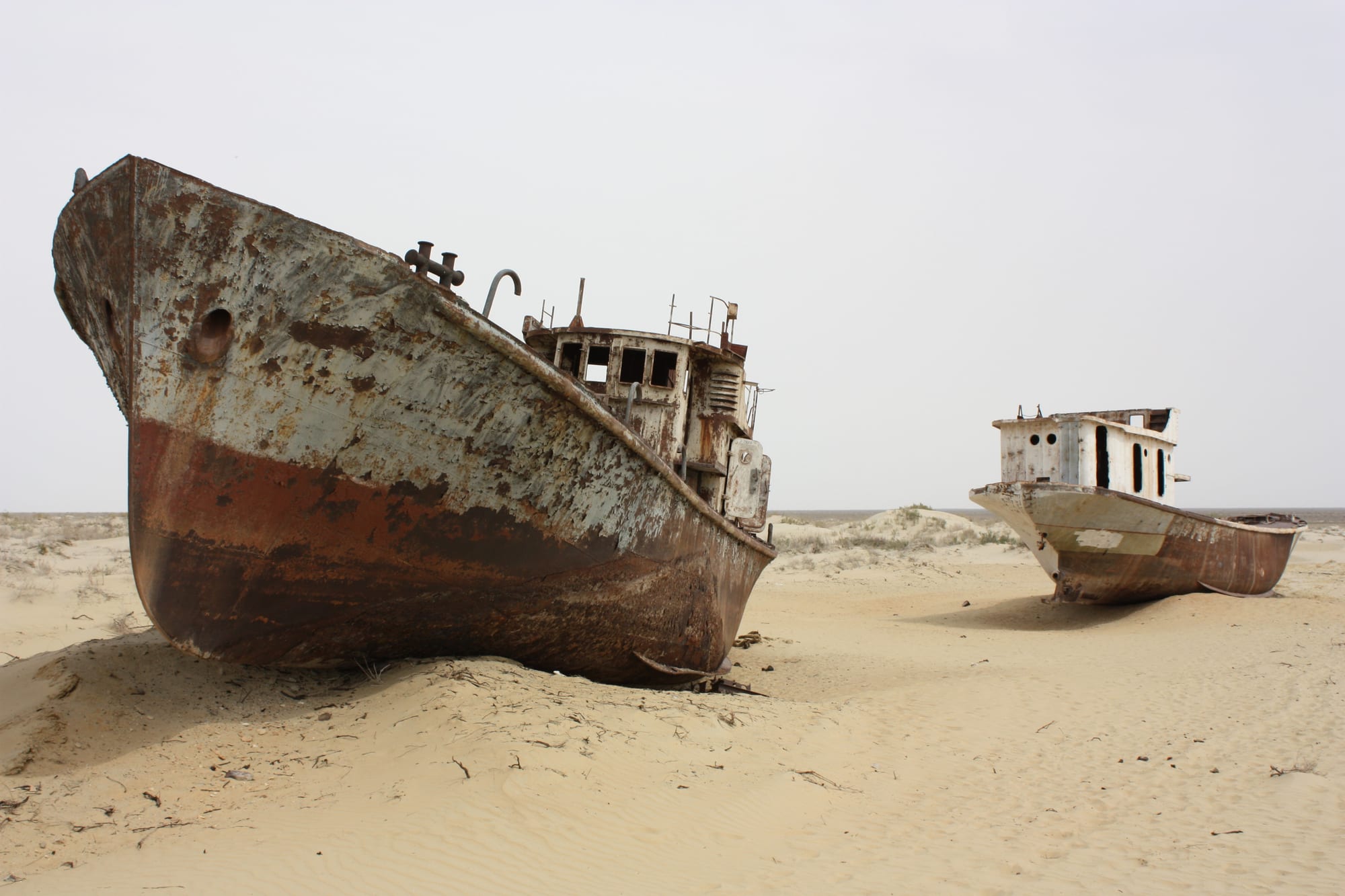
After the revolution, the Soviets crushed the Basmachi armed resistance and, in 1924, redrew the map into "national" republics; the Uzbek SSR was assembled from parts of the old khanates and Turkestan, and given the historic cities of Samarkand and Bukhara (whose populations were largely Tajik-speaking). Soviet rule brought mass literacy, the unveiling of women, industry and irrigation — and an ever-expanding cotton monoculture. To water it, huge volumes were diverted from the two rivers that feed the Aral Sea, which began to shrink in the 1960s and by the 2000s had lost most of its area, leaving a toxic salt desert, a collapsed fishing industry and a public-health disaster in the surrounding region.
Independence, Karimov, and after
Uzbekistan declared independence in 1991 with its Soviet-era Communist Party boss, Islam Karimov, in charge; he ruled until his death in 2016. His government was highly authoritarian: no meaningful opposition or free press, the systematic use of torture documented by the UN, and the annual mobilisation of students, teachers and public employees for the forced-labour cotton harvest. In 2005 security forces in the eastern city of Andijan opened fire on a crowd, killing hundreds; the government said it was suppressing an armed Islamist uprising, while human-rights groups and Western governments called it a massacre of largely peaceful protesters. Karimov's successor, Shavkat Mirziyoyev, has pursued a partial liberalisation: releasing political prisoners, easing currency controls, largely ending forced cotton labour, opening borders with neighbours, and courting foreign investment and tourism — while keeping tight control of politics and extending his own term through a 2023 constitutional change.
What Uzbekistan carries
Uzbekistan sits on the crossroads of Eurasia, and its cities were, for centuries, among the most important in the world for trade, science and Islam — a heritage the modern state leans on heavily. That golden age ended with the Mongols and never fully returned; Russian and Soviet rule made the country a cotton plantation and drained an inland sea to do it. Independence brought self-rule but, so far, under leaders in the mould of the Soviet bosses they replaced.