History · United Kingdom
United Kingdom: Four Nations, One State
An island kingdom assembled by conquest and union — the first industrial nation, the largest empire in history, a survivor of two world wars, and a state now redefined by devolution, the loss of empire, and departure from the European Union
By Worldlore Editorial · 10 September 2026
A state made of nations
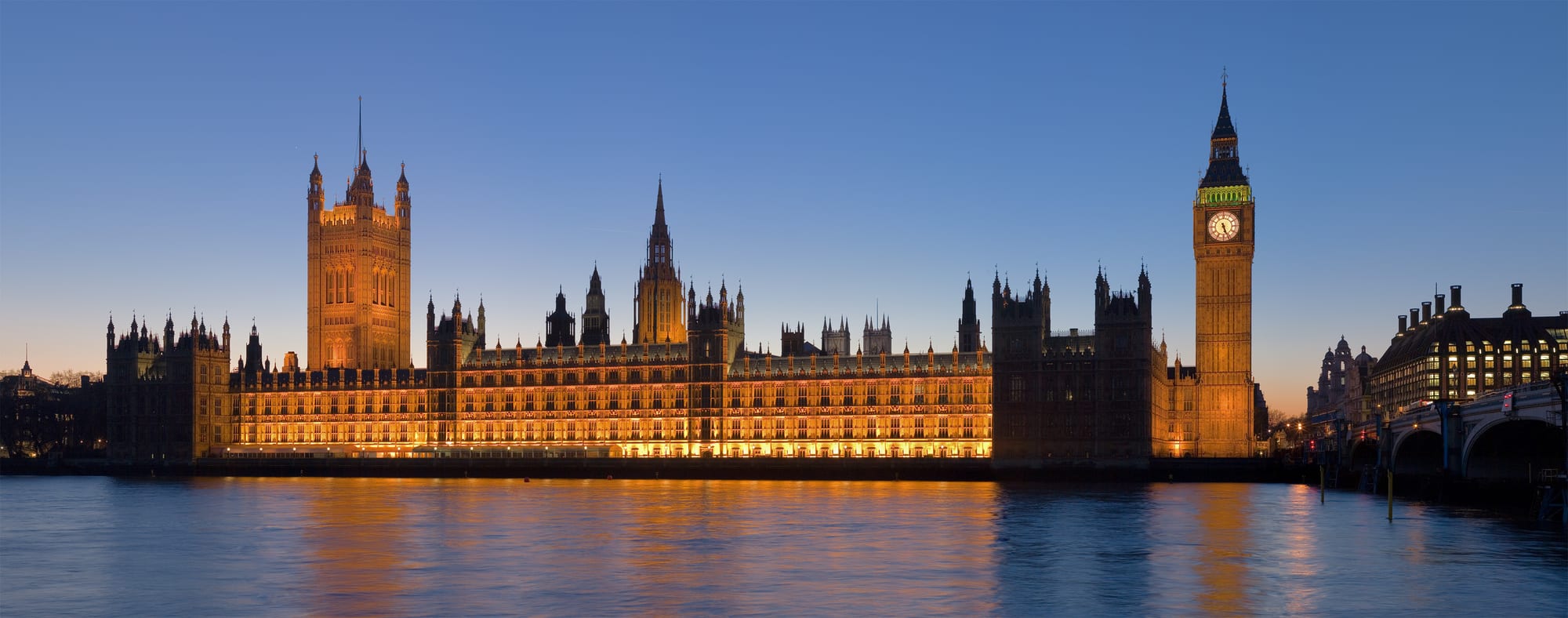
The United Kingdom of Great Britain and Northern Ireland is a state of about 68 million people, comprising four historic nations — England, Scotland, Wales and Northern Ireland — joined at different times and by different means. Its full title records that history: England absorbed Wales, joined with Scotland in 1707, and united with Ireland in 1801, most of which then left in 1922. For roughly two centuries the UK was the most powerful state in the world, the first to industrialise and the ruler of the largest empire ever assembled. The last century has been a long adjustment to being neither.
A short history
- 43–410 CE
Roman Britain
Rome rules the island south of Hadrian's Wall.
- 5th–9th c.
Anglo-Saxon kingdoms
Germanic settlement; the kingdoms coalesce into England.
- 1066
The Norman Conquest
William of Normandy defeats the Anglo-Saxons at Hastings.
- 1215
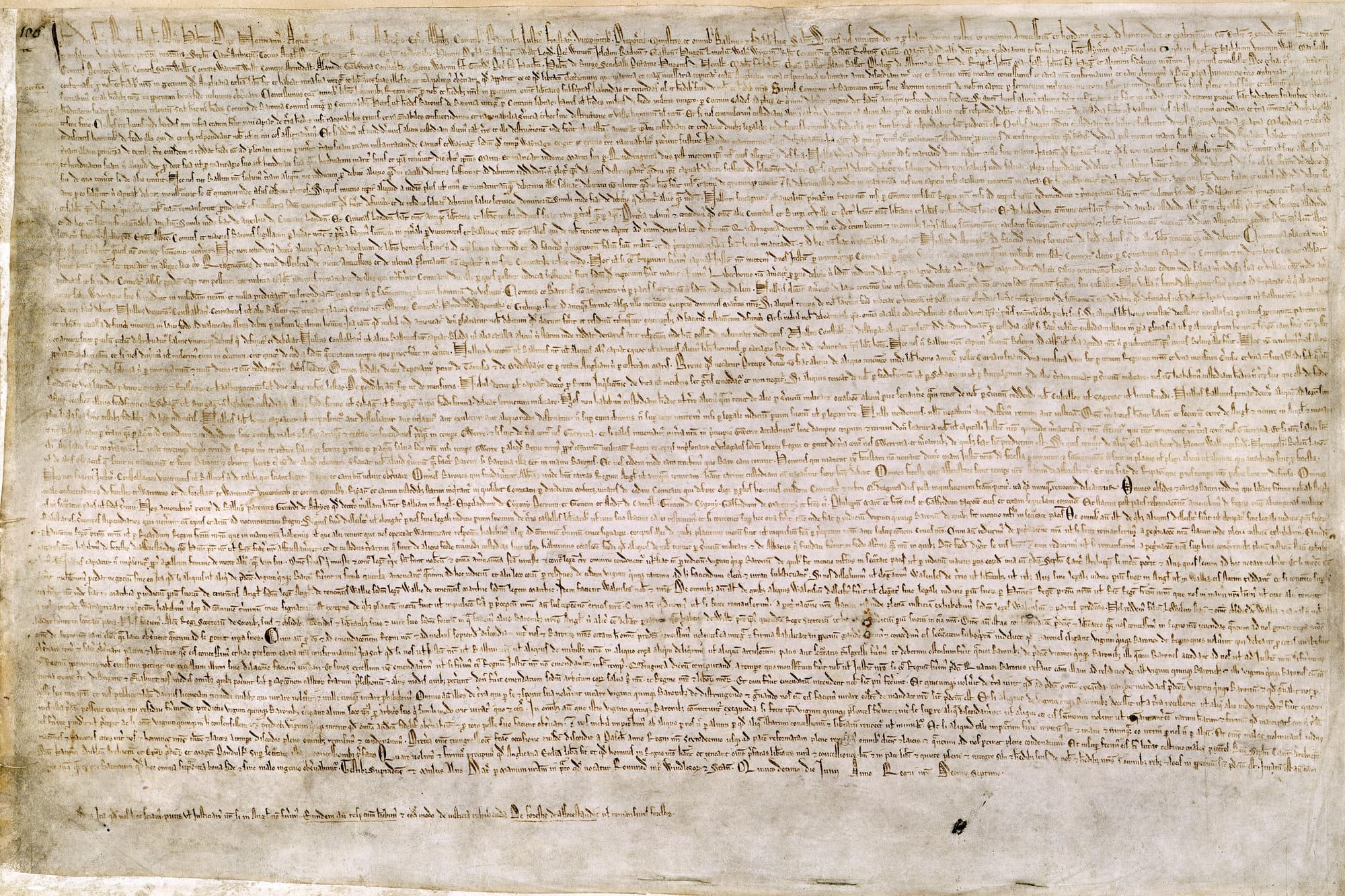
Magna Carta
Rebel barons force King John to accept limits on royal power.
- 1536–1543
Union with Wales
Wales is incorporated into the English state.
- 1603 & 1707
Union of the Crowns and Parliaments
Scotland and England share a monarch, then unite.
- 1801
Union with Ireland
The United Kingdom of Great Britain and Ireland is formed.
- c. 1760–1840
The Industrial Revolution
Britain becomes the world's first industrial economy.
- 1914–1945
The world wars
Victory at great cost; the empire begins to unwind.
- 1945–1951
The welfare state
The NHS and the modern social settlement are built.
- 1998–1999
Devolution
Parliaments and assemblies for Scotland, Wales and Northern Ireland.
- 2016–2020
Brexit
A referendum votes to leave the EU; the UK departs in 2020.
From Rome to the Normans
Britain was inhabited for millennia before writing — Stonehenge was raised around 2500 BCE — by peoples now generally called Celtic. Rome conquered the south from 43 CE and held it for nearly four centuries, building towns, roads and Hadrian's Wall before withdrawing around 410. Anglo-Saxon settlers from the Continent then established a patchwork of kingdoms that, under pressure from Viking invasion, merged into a single kingdom of England by the 10th century. In 1066 William, Duke of Normandy, defeated King Harold at Hastings and imposed a French-speaking ruling class, a centralised feudal state and a great survey of the land, the Domesday Book. Medieval England developed distinctive institutions: common law, and from 1258–1265 a parliament that came to include commoners as well as lords.
Union, reformation, and civil war
Henry VIII broke with Rome in the 1530s, making the English (and later the Scottish and Irish) churches Protestant and seizing the monasteries; Wales was legally incorporated into England in the same decade. In 1603 the Scottish king James VI inherited the English throne, uniting the crowns. Conflict between crown and parliament over money, religion and power erupted in the civil wars of the 1640s, the execution of Charles I in 1649, a republic under Oliver Cromwell, and the restoration of the monarchy in 1660. The "Glorious Revolution" of 1688 deposed James II and established parliamentary supremacy and a Bill of Rights. In 1707 the English and Scottish parliaments merged to create the Kingdom of Great Britain.
Empire and industry
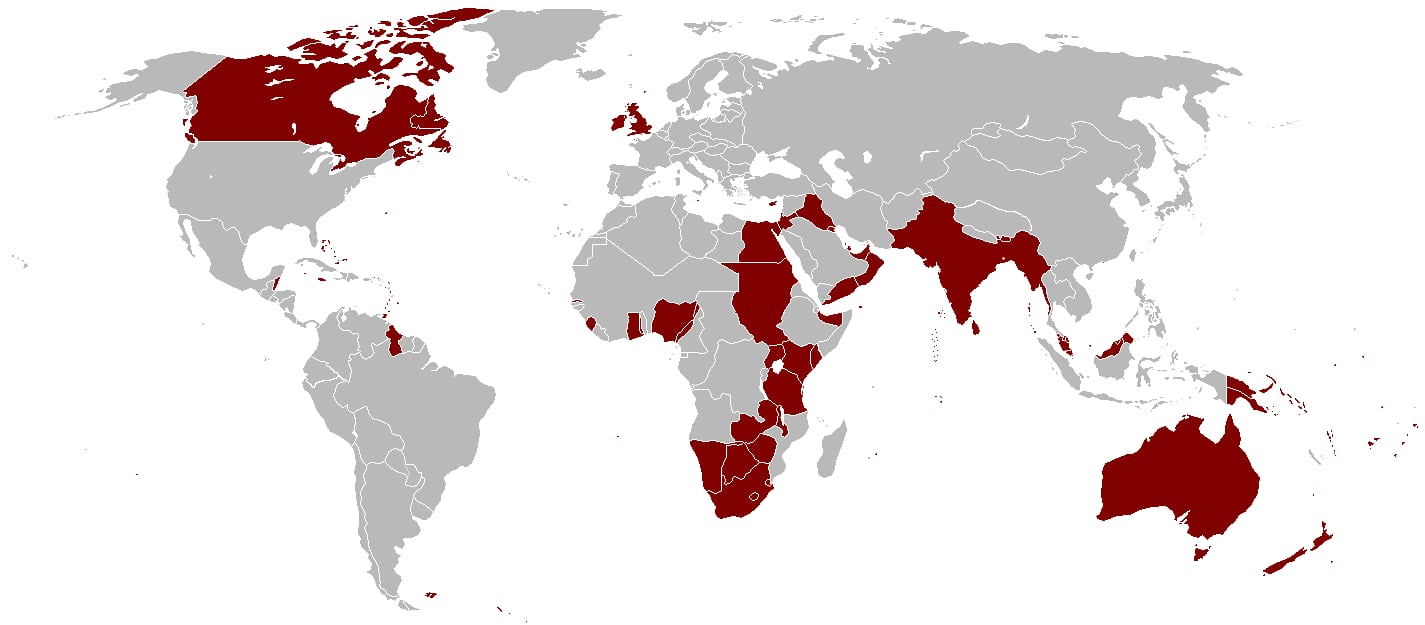
From the 17th century England, then Britain, built a global trading and colonial empire — plantation colonies in the Caribbean and North America worked by enslaved Africans, trading posts in India and West Africa, and settler colonies later. The loss of the thirteen American colonies in 1783 was followed by expansion elsewhere, above all the conquest of India. From around 1760 Britain became the first industrial society: coal, steam, iron, textiles, canals and then railways transformed the economy and threw up vast, polluted new cities. Industrial and imperial power reinforced each other. Britain abolished the slave trade in 1807 and slavery itself in 1833, then used its navy to suppress the trade globally. By 1900 the British Empire covered a quarter of the world's land and people.
The world wars and their aftermath
The union with Ireland in 1801 never settled the "Irish question"; after a war of independence, most of Ireland left in 1922 as the Irish Free State, while six counties in the north-east remained in the UK. The First World War killed about 886,000 British service personnel and shook the empire and the economy. The Second World War, in which Britain stood alone against Nazi Germany in 1940–41 before the US and USSR entered, was won but at the cost of near-bankruptcy and dependence on American loans. The 1945 Labour government responded with the welfare state: the National Health Service, universal social insurance, nationalised industries. And the empire unwound fast — India and Pakistan in 1947, most of Africa and the Caribbean by the 1960s, Hong Kong in 1997.
Devolution, the Troubles, and Brexit
Northern Ireland descended into three decades of sectarian conflict, "the Troubles" (c. 1968–1998), between mostly Catholic Irish nationalists and mostly Protestant unionists, with the British Army deployed; the 1998 Good Friday Agreement brought a power-sharing settlement. In 1997–99 referendums approved devolved legislatures for Scotland and Wales, and the Northern Ireland Assembly. Scotland voted 55–45 to remain in the UK in a 2014 independence referendum. In June 2016 the UK voted 52–48 to leave the European Union, which it had joined in 1973; it formally left in January 2020. Brexit strained the union further — Scotland and Northern Ireland had voted to remain — and complicated the Irish border. The UK remains a permanent member of the UN Security Council, a nuclear power and a member of NATO and the G7, but its economy has grown slowly since the 2008 financial crisis and its politics has been unusually turbulent.
What the United Kingdom carries
The UK is a composite state, built up over centuries by conquest, inheritance and union, and its central modern question is how much of that structure holds: the place of Scotland and Northern Ireland, the settlement in Ireland, the relationship with Europe. Its institutions — parliamentary government, common law, a constitutional monarchy — were exported worldwide, and so were the consequences of its empire, which independent Britain is still reckoning with at home and abroad.