Daily Life · Uganda
Uganda: The Boda-Boda Rhythm
One of the youngest populations on earth, a day built around the shamba and the market, and a nation kept moving by the motorcycle taxi
By Worldlore Editorial · 30 September 2026
Uganda is a young country in the most literal sense: with a median age of around 15, among the lowest in the world, and a fast-growing population, most of daily life plays out among children, teenagers and young adults rather than an ageing population. Around 46 million people lived here at the 2024 census, most of them still tied in some way to the shamba, the family garden plot, even as Kampala grows fast and crowded around the old hills of the Buganda kingdom. An ordinary day runs on farming, markets and the constant drone of the boda-boda, the motorcycle taxi that carries people, produce and just about everything else along Uganda's roads.
Family and home life
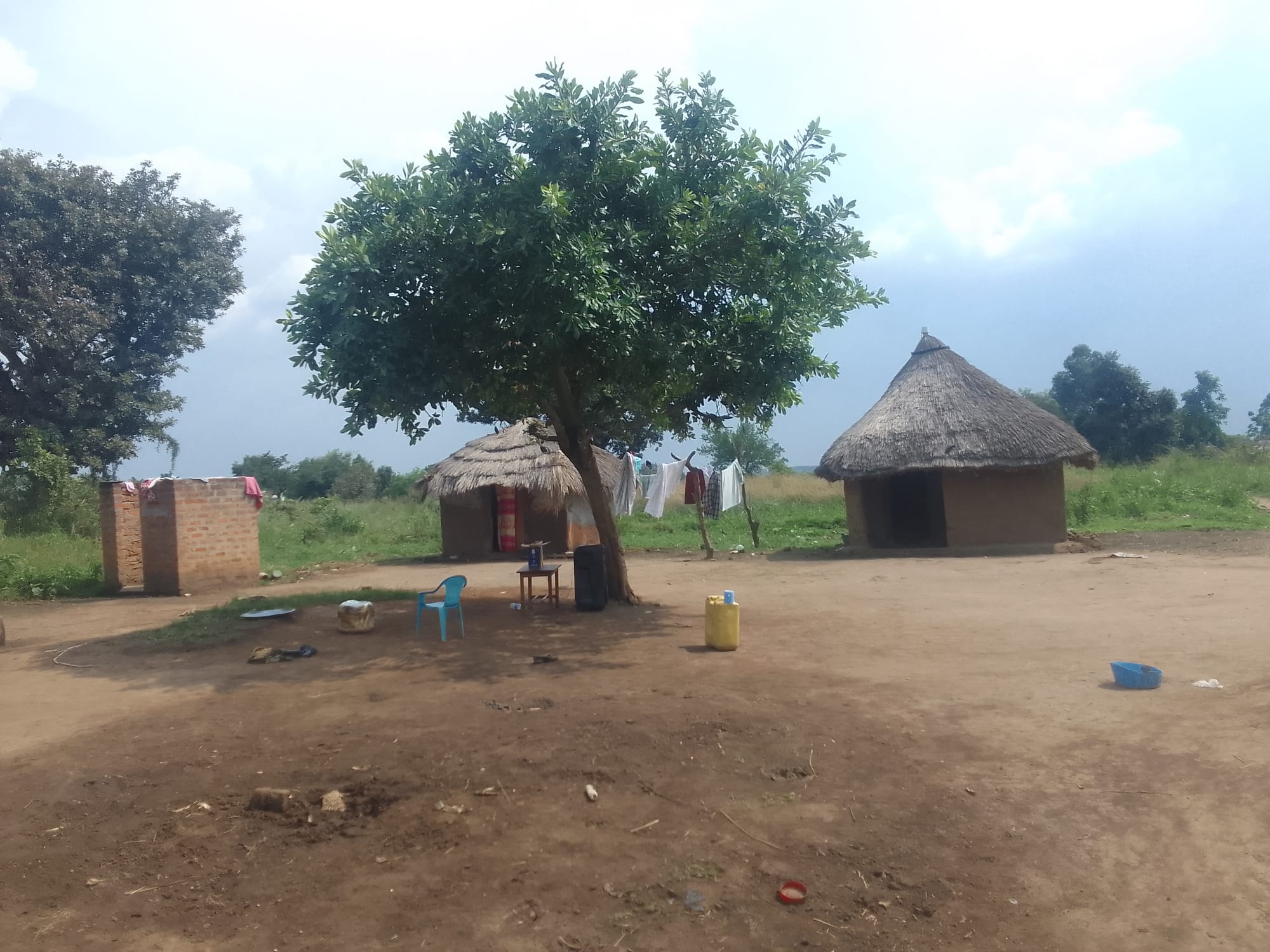
The extended family remains the basic unit of Ugandan life, and it is common for grandparents, aunts, uncles and cousins to be closely involved in raising children, sometimes within the same household, more often close enough to be part of daily routine. Most Ugandans still live rurally, in homes built around a central compound, a cluster of houses, a cooking area and a garden plot, with construction ranging from mud-and-thatch to brick and iron sheeting depending on the family's means and the region. Given how young the population is, households are often large and childcare is distributed across more than just two parents, with older siblings and grandparents both playing an everyday part.
Work, school and the rhythm of the day
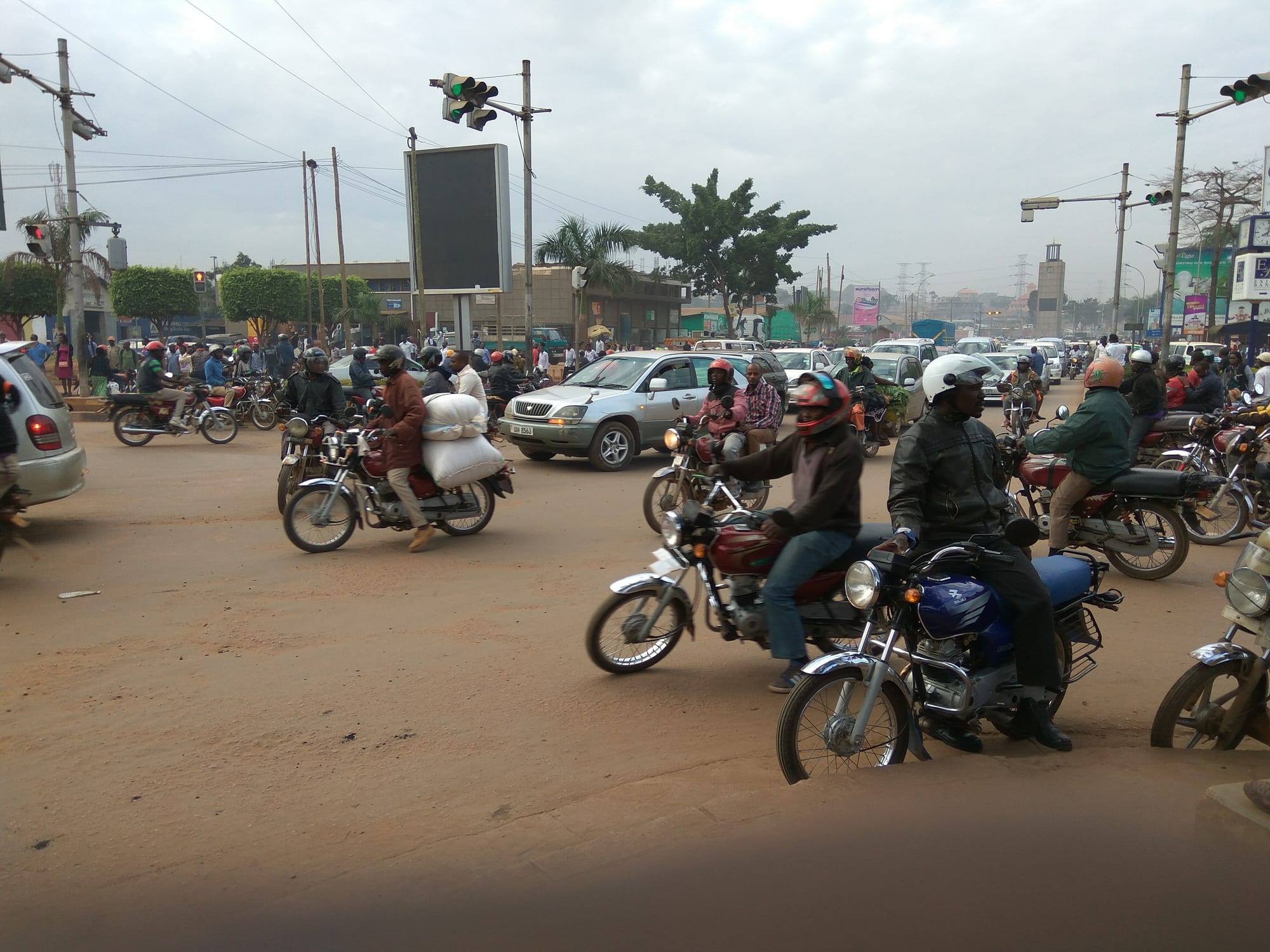
Most Ugandans work the land: matoke, cassava, maize, beans and sweet potato for the household, alongside cash crops like coffee, tea and sugar sold on for income, and farm work generally starts early to make use of the cooler morning hours. Formal employment is limited, and the informal sector, small trade, transport, casual labour, employs far more people than any office or factory does. The boda-boda, a motorcycle taxi, is now central to how people actually get to work, school and market, weaving through traffic in Kampala and covering rural roads that buses and matatus cannot easily reach. The school day generally runs a conventional morning-to-afternoon schedule, though for many rural families school also has to fit around the demands of planting and harvest.
Community life and public spaces
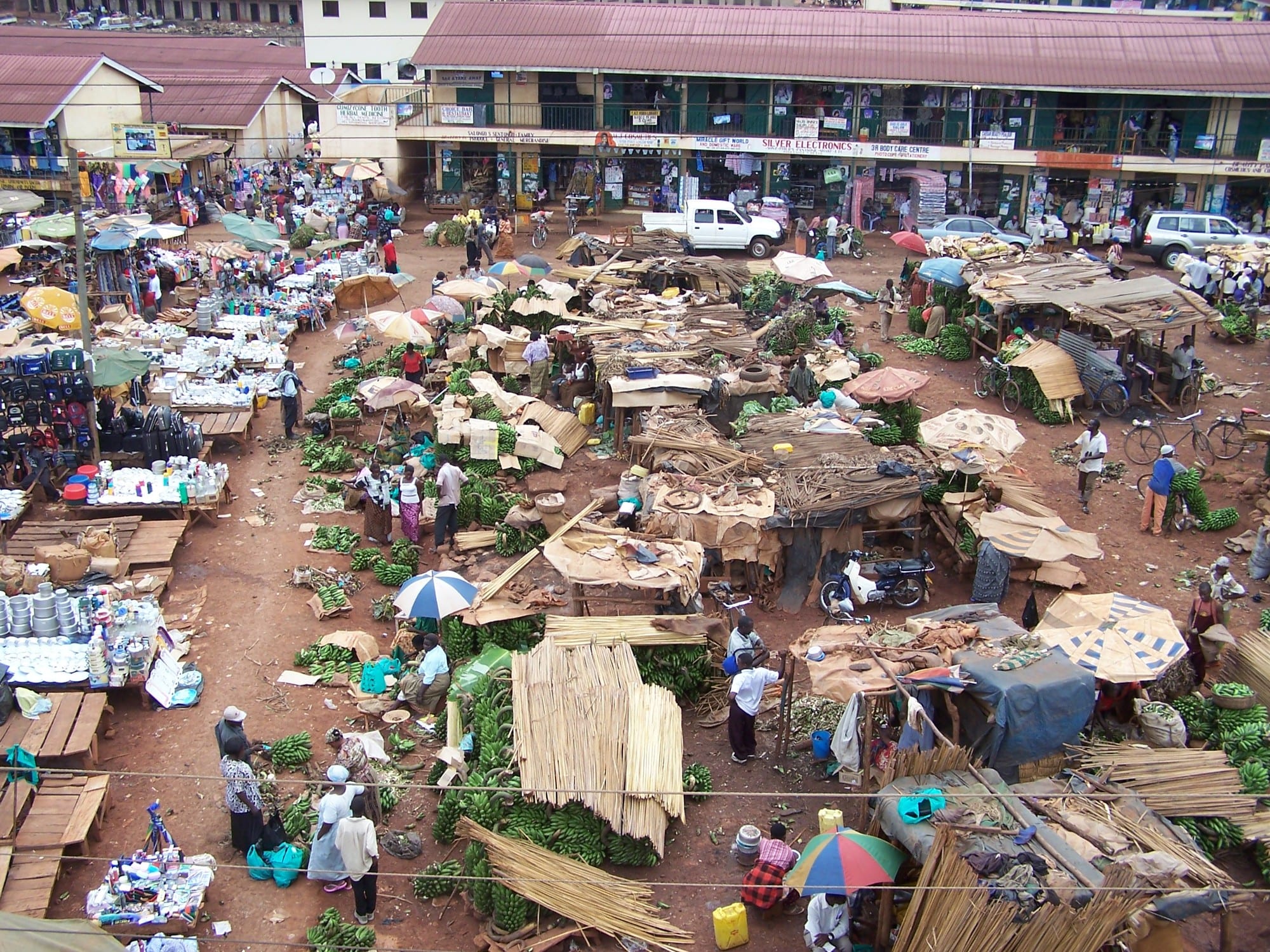
Markets are the real daily hub of Ugandan public life, from Kampala's large produce markets, where matoke, vegetables and goods change hands under packed stalls and awnings, to the smaller trading centres found in every town along the main roads. Churches and mosques anchor community life well beyond worship itself, since Uganda is strongly religious: about 82 per cent of people are Christian, with Catholics and Anglicans the largest churches, and around 13 per cent are Muslim. Kampala's streets, dense with boda-bodas, matatus, pedestrians and market stalls, are themselves a kind of constant public space, loud and crowded through most of the day.
Free time and weekends
Sunday is widely kept for church, family and rest, in line with Uganda's strongly Christian majority, while Friday holds a similar place for the country's Muslim minority. Football commands enormous everyday attention, watched in bars, homes and public viewing spots with real passion even though Uganda's own national team, the Cranes, has had limited international success. Music is a genuine part of weekend life, from Kampala's kidandali and dancehall scene to community gatherings built around live bands, and visiting extended family, often travelling back to a home village, remains a common way to spend time off for people now working in the city.
A visitor's ordinary day
Boda-bodas are quick and everywhere but carry a real accident risk; insisting on a helmet, or choosing a car taxi or ride-hailing app instead in Kampala, is worth the small extra cost and time. Cash in Ugandan shillings is still needed for markets and small shops, though ATMs are common in Kampala and larger towns and US dollars are used for park and gorilla-permit fees. Traffic in Kampala is dense and can be slow at almost any hour, so building in extra time for getting across the city is sensible. Outside the capital, shops and roadside stalls generally keep long, informal hours, often open from early morning into the evening, following demand rather than a fixed schedule.
What to take away
An ordinary day in Uganda is carried by two things above all: a household stretched wide across generations, and the boda-boda that gets nearly everyone, and nearly everything, to wherever the day's work actually is.