History · Turks and Caicos Islands
Turks and Caicos Islands: Salt and Sand
A low archipelago at the south-east end of the Bahamas chain — raked for sea salt by Bermudians for two centuries, shuffled between colonial administrations, and now a British territory living on beach tourism and offshore finance
By Worldlore Editorial · 19 September 2026
Two island groups, one territory
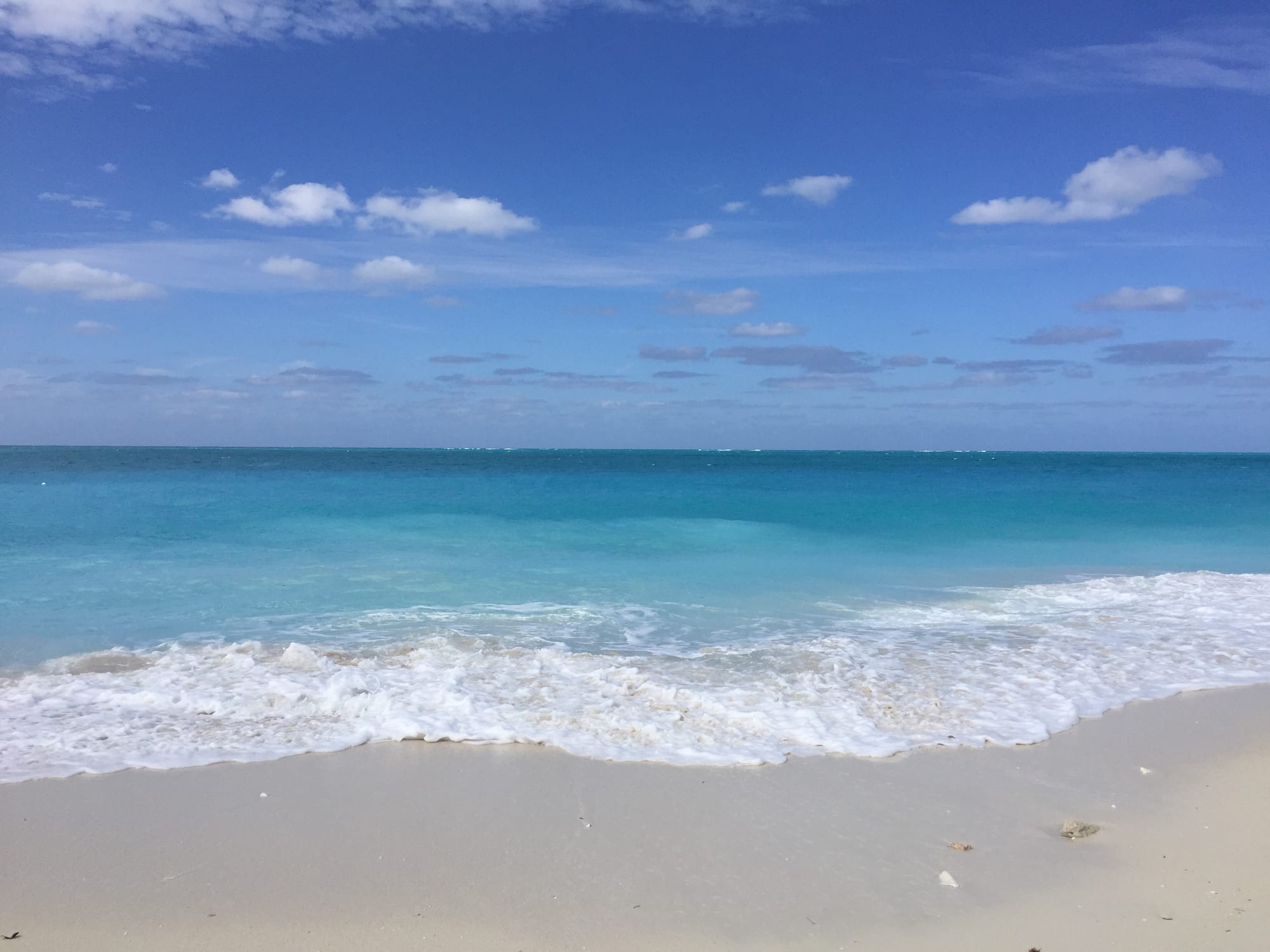
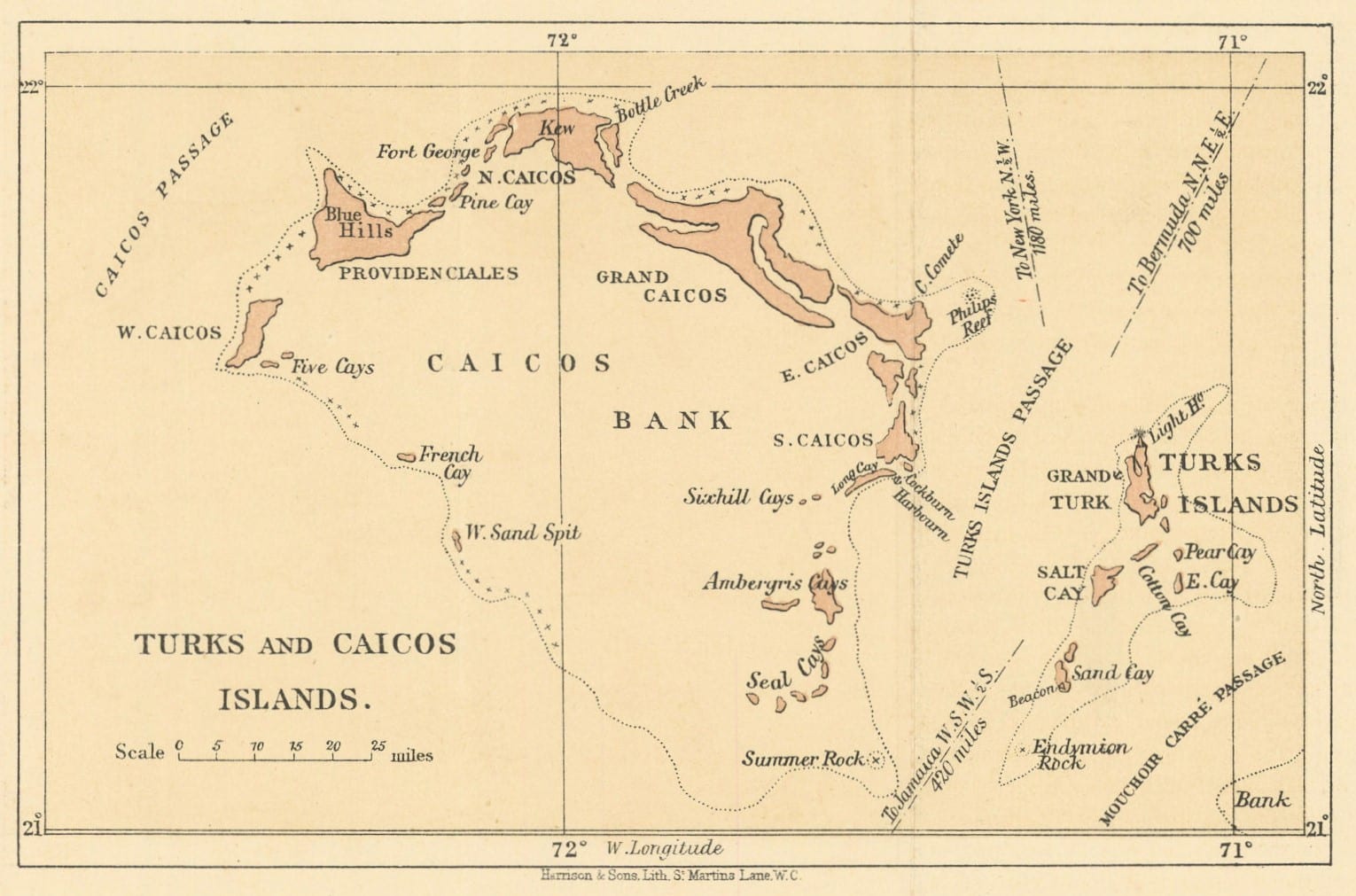
The Turks and Caicos Islands are a British Overseas Territory of about 40 low limestone islands and cays — the Turks group and the larger Caicos group, separated by a deep channel — at the south-eastern end of the Bahamas archipelago, though politically distinct from the Bahamas. Around 46,000 people live there, most on Providenciales, the tourism hub. The islands have almost no history of self-sufficiency: for centuries their one industry was raking salt from shallow ponds, and today it is tourism and finance for outsiders. Their name comes from the Turk's-head cactus and the Lucayan word "caya hico".
A short history
- to c. 1500
The Lucayans
Taíno people inhabit the islands; some hold Columbus first landed here.
- c. 1512
Depopulation
The Lucayans are carried off to Hispaniola as slave labour and die out.
- 1660s–1670s
Bermudian salt rakers
Bermudians begin seasonal salt production on the Turks Islands.
- 1780s
Loyalist planters
American Loyalists set up short-lived cotton plantations on the Caicos.
- 1799
Annexed to the Bahamas
Britain places the islands under Bahamas administration.
- 1848–1873
Brief separate colony
Then attached to Jamaica until Jamaican independence in 1962.
- 1962–1973
Bahamas link again, then direct rule
The islands become a separate Crown colony in 1973.
- 1980s
Tourism takes off
Club Med opens on Providenciales in 1984.
- 2009–2012
Suspended self-government
The UK takes direct control after a corruption inquiry.
Lucayans and salt
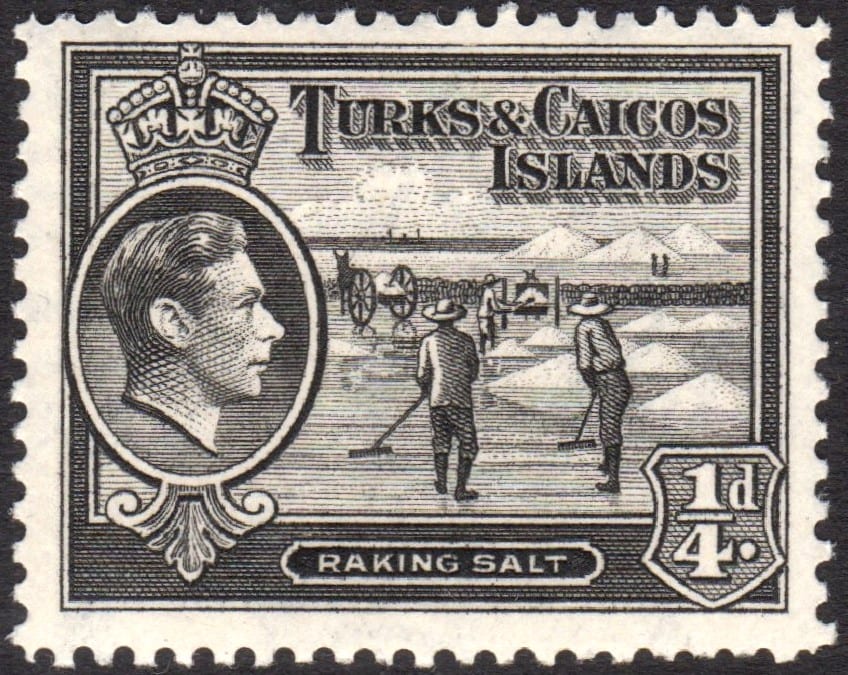
The islands were settled by Lucayan Taíno, and some historians argue that Columbus's first American landfall in 1492 was on Grand Turk rather than in the Bahamas proper — the claim is disputed. Whatever the location, the consequence was the same: within about two decades the Spanish had shipped the entire Lucayan population off to the mines and plantations of Hispaniola, where they died, leaving the islands empty. From the 1660s Bermudians came each year to rake salt from the natural ponds of the Turks Islands — evaporating seawater into a valuable preservative that was shipped to the North American colonies for curing fish and meat — and gradually settled permanently, bringing enslaved Africans to do the raking.
Passed from hand to hand
The islands' colonial status was never settled for long. American Loyalists, fleeing the Revolution in the 1780s, established cotton and sisal plantations on the Caicos Islands with enslaved labour; the plantations failed within a generation as the soil gave out, and many planters left, leaving the freed and enslaved population behind. Britain attached the islands to the Bahamas in 1799, made them a separate colony in 1848, then attached them to Jamaica in 1873. When Jamaica became independent in 1962 the Turks and Caicos reverted to Bahamian administration, and when the Bahamas approached independence in 1973 the islands were separated again as a Crown colony in their own right, with their own governor from 1976. Salt production, undercut by mechanised producers elsewhere, ceased entirely around 1964, leaving the economy with almost nothing.
Tourism, finance, and a governance crisis
The modern economy was built almost from scratch from the 1980s, when an airport and the arrival of Club Med on Providenciales in 1984 launched an upmarket beach -tourism industry that now dominates, alongside an offshore financial-services sector. Rapid growth brought rapid immigration, much of it from Haiti and the wider Caribbean, and also serious corruption: a 2008–09 UK Commission of Inquiry found "a high probability of systemic corruption" and self-enrichment in the elected government, and in August 2009 Britain suspended the constitution, dissolved the legislature and cabinet, and imposed direct rule by the governor. Self-government was restored under a new constitution in 2012, with tighter financial oversight. Since then politics has alternated between the two main parties, and debate continues over the balance between London's reserved powers and local autonomy, and over whether the territory should seek independence.
What the Turks and Caicos carry
The Turks and Caicos Islands have never really run on their own resources: emptied of their first people by Spanish slaving, worked for salt by Bermudians, planted briefly and unsuccessfully with cotton by Loyalists, and shuffled between the Bahamas, Jamaica and direct British rule for two centuries. Tourism gave the islands prosperity for the first time in the 1980s; the 2009 suspension of self-government showed how quickly that new wealth could outrun the institutions meant to manage it.