History · Tunisia
Tunisia: Carthage to the Arab Spring
The small, fertile hinge of North Africa — home of Carthage, a Roman breadbasket, an Ottoman then French possession, the most liberal of the post-independence Arab states, and the country where the Arab Spring began and, for a decade, its only democracy survived
By Worldlore Editorial · 19 September 2026
The small country at the centre
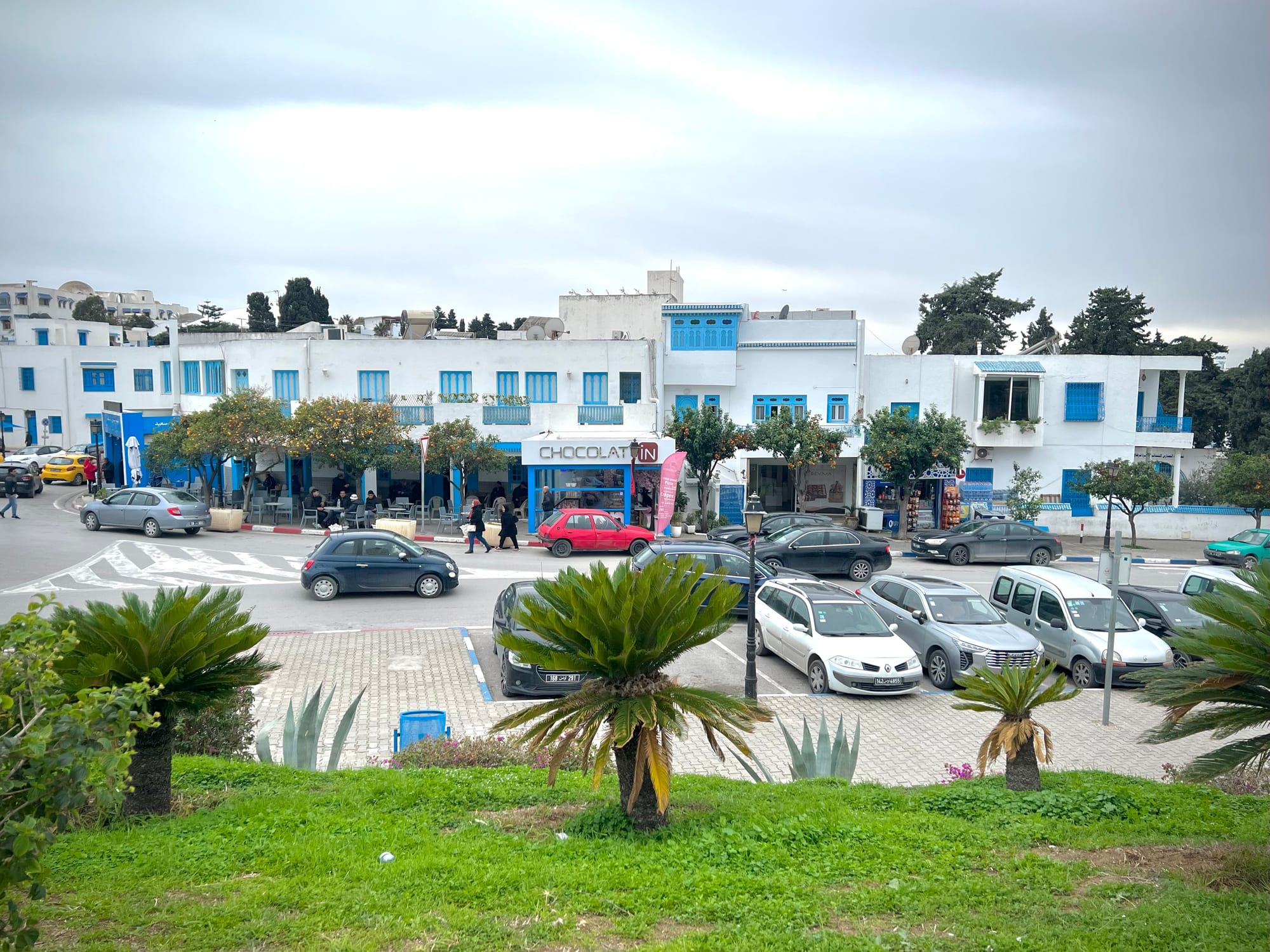
Tunisia is the smallest country in North Africa, a wedge of fertile coast and Saharan interior between Algeria and Libya, with about 12 million people. Its position — the point where the Mediterranean narrows toward Sicily — made it a prize for every empire that sought to control the sea: Phoenicians, Romans, Vandals, Byzantines, Arabs, Ottomans, French. It is one of the most homogeneous and, for decades, most socially liberal of the Arab states, and in 2010–11 it became the birthplace of the Arab Spring and, for the following decade, the movement's sole democratic success.
A short history
- 814 BCE (traditional)
Carthage founded
A Phoenician colony grows into a Mediterranean empire.
- 146 BCE
Rome destroys Carthage
"Africa" becomes a wealthy Roman grain province.
- 698 CE
Arab conquest
Kairouan is founded; the region is Islamised and Arabised.
- 1574
Ottoman rule
Tunis becomes an Ottoman regency, soon largely autonomous under beys.
- 1881
French protectorate
France occupies Tunisia, keeping the bey as a figurehead.
- 1956
Independence
Habib Bourguiba leads Tunisia to sovereignty.
- 1957
The republic
The monarchy is abolished; Bourguiba begins 30 years of rule.
- 1987
Ben Ali's coup
The prime minister deposes an ailing Bourguiba.
- 2010–2011
The revolution
Protests force Ben Ali out; the Arab Spring spreads.
- 2021
Saied's power grab
The president suspends parliament and rules by decree.
Carthage and Rome
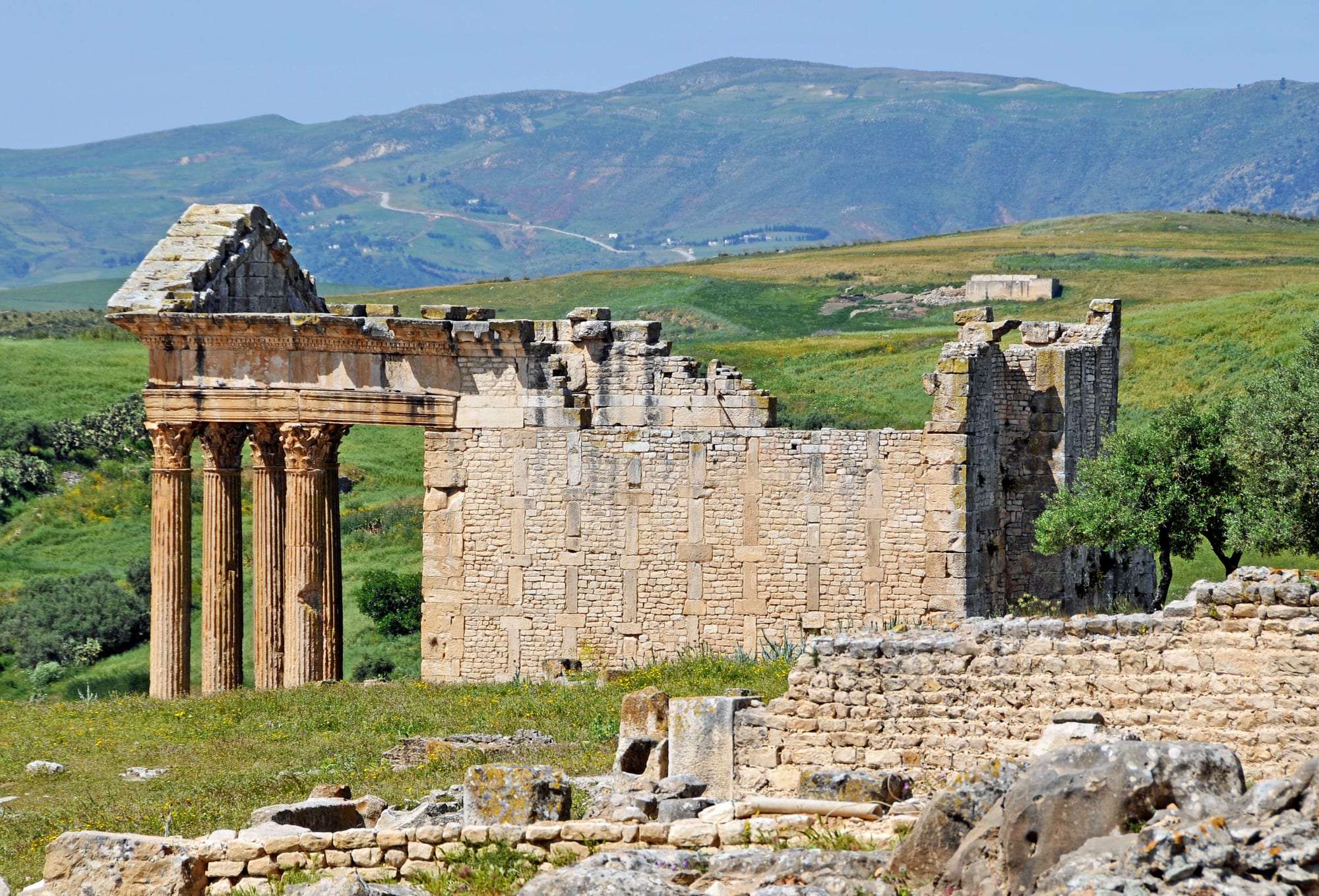
According to tradition, Phoenician settlers from Tyre founded Carthage in 814 BCE; it became the dominant maritime and commercial power of the western Mediterranean, clashing with Rome in the three Punic Wars. Rome razed the city in 146 BCE, then rebuilt it, and the province of Africa became one of the empire's granaries and the home of Latin writers and the theologian Augustine of Hippo. After Vandal and Byzantine interludes, Arab armies took the region in the late 7th century, founded the holy city of Kairouan, and made Tunisia — Ifriqiya — a centre of Islamic learning and, under the Aghlabids, a base for the conquest of Sicily.
Beys and the French
From 1574 Tunis was an Ottoman regency, but real power soon passed to local governors, and from 1705 the Husainid dynasty of beys ruled it as a hereditary, effectively independent state that abolished slavery in 1846 and issued a constitution in 1861 — the first in the Arab world — before European debt and bankruptcy left it exposed. In 1881 France, using a border incident as a pretext, invaded and imposed a protectorate, keeping the bey as nominal sovereign while French officials and settlers took control of government, land and the economy. A nationalist movement grew, and after the Second World War the Neo-Destour party under Habib Bourguiba led a campaign of negotiation and armed pressure that won internal autonomy in 1955 and full independence on 20 March 1956.
Bourguiba's republic
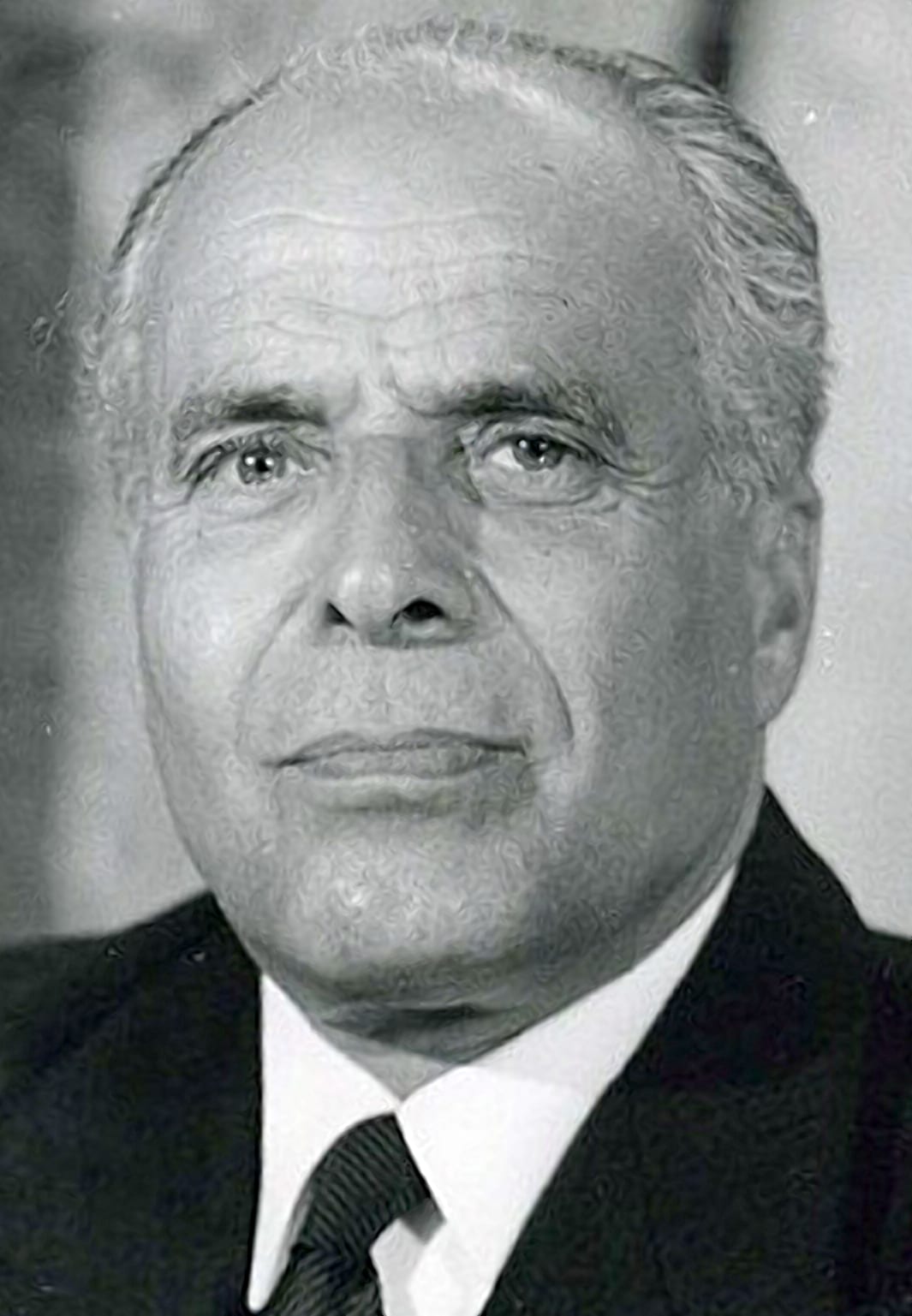
Bourguiba abolished the monarchy in 1957 and governed as president for 30 years, building a secular, modernising, one-party state. His 1956 Code of Personal Status gave Tunisian women rights unmatched in the Arab world — banning polygamy, establishing judicial divorce, setting a minimum marriage age — and he expanded education and health while curbing the role of religion in public life. The economy was mixed and, after a failed collectivisation experiment, increasingly liberal. But politics stayed closed, and as Bourguiba aged and grew erratic, his prime minister Zine El Abidine Ben Ali declared him medically unfit and took over in a bloodless 1987 coup.
The revolution and the democratic decade
Ben Ali ran a police state for 23 years, combining economic growth and a tourism boom with pervasive surveillance, censorship, rigged elections and extensive corruption centred on his wife's family. On 17 December 2010, a street vendor, Mohamed Bouazizi, set himself on fire in the town of Sidi Bouzid after officials confiscated his cart; the protests that followed spread nationwide, the army refused to fire on crowds, and on 14 January 2011 Ben Ali fled to Saudi Arabia. The uprising set off the wider Arab Spring. Tunisia's transition, alone among the affected countries, held: a constituent assembly, a 2014 constitution balancing Islamist and secular forces, alternating governments, and a National Dialogue Quartet of civil-society groups that won the 2015 Nobel Peace Prize for brokering compromise. But the decade also brought weak coalitions, economic stagnation, and jihadist attacks on tourists in 2015.
Tunisia now
In July 2021, amid a pandemic-worsened economic crisis and public anger at a paralysed parliament, President Kais Saied — a law professor elected in 2019 as an outsider — invoked emergency powers, suspended and then dissolved parliament, sacked the government, and began ruling by decree. A new constitution he drafted, concentrating power in the presidency, was approved in a 2022 referendum on very low turnout and boycotted by the opposition. He has since jailed opposition figures, journalists and judges, and directed a crackdown on sub-Saharan African migrants, while the economy remains in deep difficulty. Most observers regard Tunisia's democratic experiment as having ended, or been badly damaged.
What Tunisia carries
Tunisia's small size and central position made it a coveted piece of the Mediterranean for three millennia, and it entered independence with an unusual inheritance: an old tradition of statehood, a homogeneous population, and reformers who gave it the Arab world's first modern constitution in 1861 and its most liberal family law in 1956. That history made it the one place the Arab Spring produced a lasting democracy — and the reversal since 2021 is a measure of how fragile even that exceptional case proved.