Daily Life · Tunisia
Tunisia: A Day Paced by the Café Table
Extended families gathering for a long Sunday lunch, a working week broken up by café stops that are never rushed, and a Ramadan rhythm that reshapes the whole country for a month each year
By Worldlore Editorial · 30 September 2026
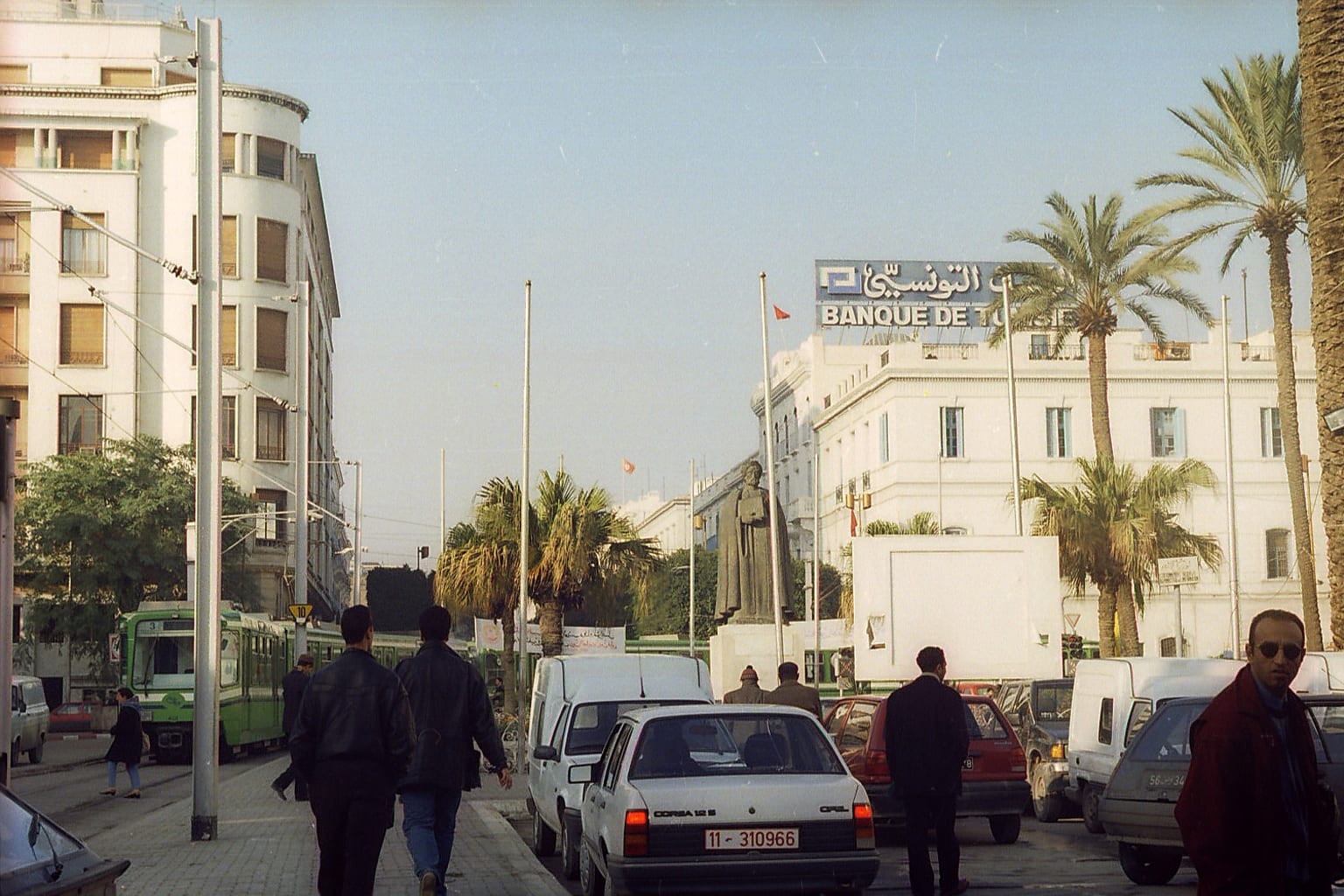
Tunisia moves at a Mediterranean pace laid over a North African structure. The working week generally keeps to a Monday-to-Friday rhythm, but the day itself is punctuated by the café rather than rushed through it — strong coffee or mint tea taken slowly, alone or over a long conversation, treated as a legitimate use of an hour rather than a break from real life. Family still sits at the centre of how the week is organised, most visibly at a long Sunday lunch that draws in relatives from beyond the household, and once a year the whole country shifts its rhythm together for Ramadan, when the day empties out before sunset and fills up again after it.
Family and home life
The household remains the basic unit of Tunisian life, and while nuclear families are now the norm in the cities, multiple generations still often live together or gather regularly, typically for a family lunch that can run long into the afternoon. Respect for elders carries real weight in ordinary interactions — offering a seat or serving them first at the table — and even in more secular, Westernised households these habits generally persist. Meals are treated as a genuine gathering point rather than a formality, and it is common for extended family to expect each other's presence at them rather than simply being welcome to attend.
Work, school and the rhythm of the day
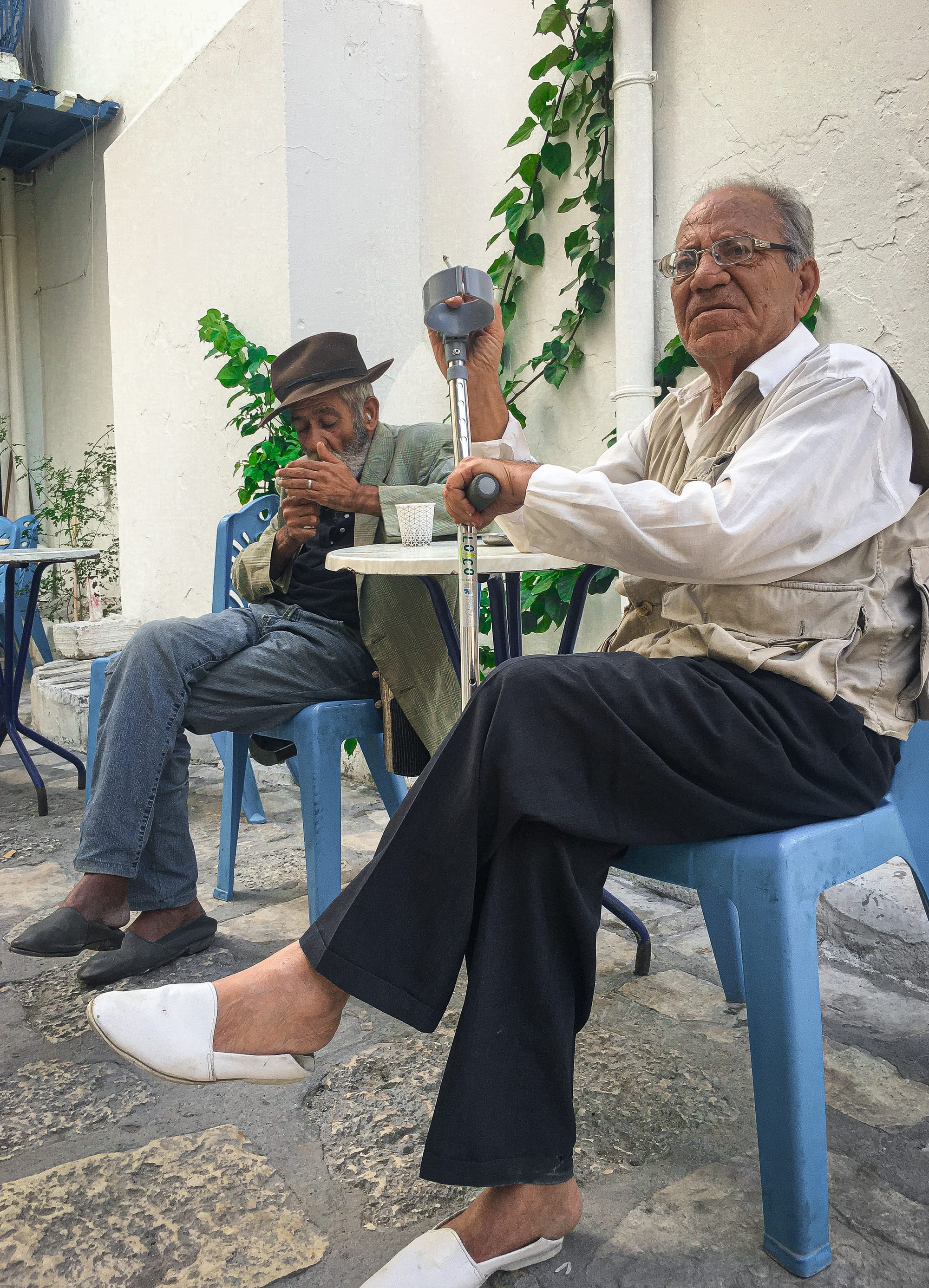
The standard working week runs Monday to Friday, eight hours a day and 40 hours in all, with Saturday and Sunday off, and many businesses close for a break from around noon to 2pm. Schooling is compulsory from six to sixteen, the school day starts early, and French remains widely used in business and in teaching, especially of maths and science, alongside Arabic. The café is woven into this working day rather than separate from it: a coffee stop mid-morning or between errands is routine, and in many towns street cafés are still used mostly by men, a pattern that holds more strongly in rural areas than in Tunis.
Community life and public spaces
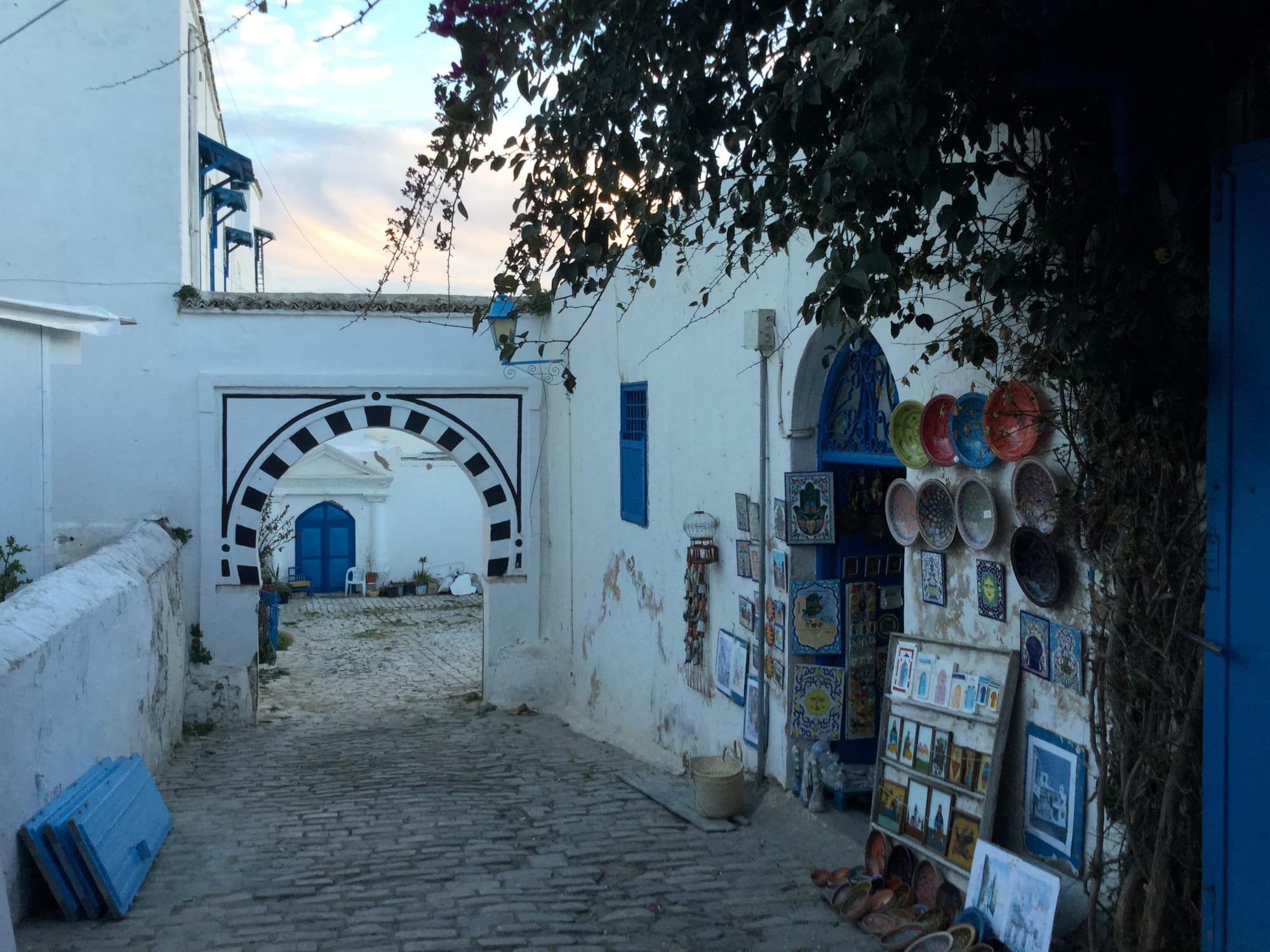
The souk remains a genuine daily fixture rather than a tourist backdrop, particularly for spices, produce, meat and household goods, and many towns of any size have one at the heart of their old quarter, the medina. Cafés function as an informal extension of public space, somewhere to sit for an hour with newspaper, cards or simply conversation, and in many neighbourhoods a regular café is treated almost as a second address. Mosques anchor the rhythm of the day nationwide through the five calls to prayer, audible in most towns whether or not a given household is strictly observant. Public squares and tree-lined boulevards, most famously Avenue Habib Bourguiba in Tunis, serve as the modern equivalent of the same gathering function.
Free time and weekends
Weekends centre on family time, and where distance allows, a Sunday lunch that can last well into the afternoon. In summer, the beach becomes a favourite weekend destination for many households, not only in the resort towns. Football, the most popular sport, commands wide interest and is followed as closely in ordinary conversation as in stadiums. Café culture carries into free time as much as the working day, with card games and board games commonly played at outdoor tables, treated as an unremarkable, sociable way to spend an afternoon rather than a special occasion.
A visitor's ordinary day
The Tunisian dinar cannot legally be taken out of or brought into the country, so change money after arrival and reconvert any surplus before leaving; cards work in cities and hotels, but carry cash for the souk and the interior. Shared louage vans are the fast, inexpensive way to travel between towns, on set routes at government-set fares, leaving once full rather than on a fixed timetable, while trains link Tunis to the coast and the interior. During Ramadan, expect shorter public and business hours, quieter daytime streets in the weeks of fasting, and a livelier, later evening once the fast breaks each day. Outside Ramadan, café terraces filling from mid-morning onward are a reliable sign of the day's actual rhythm, whatever the posted opening hours say.
What to take away
What defines an ordinary day in Tunisia is less any single institution than how much of it happens at a café table or a family table rather than in transit between the two — a pace that treats sitting down together as the point, not the interruption.