History · Tristan da Cunha
Tristan da Cunha: The Remotest Settlement
A single volcanic island in the South Atlantic, 2,400 kilometres from anywhere — garrisoned by Britain to guard against a Napoleonic rescue, settled by a Scottish corporal who stayed, and evacuated whole when the volcano erupted in 1961
By Worldlore Editorial · 19 September 2026
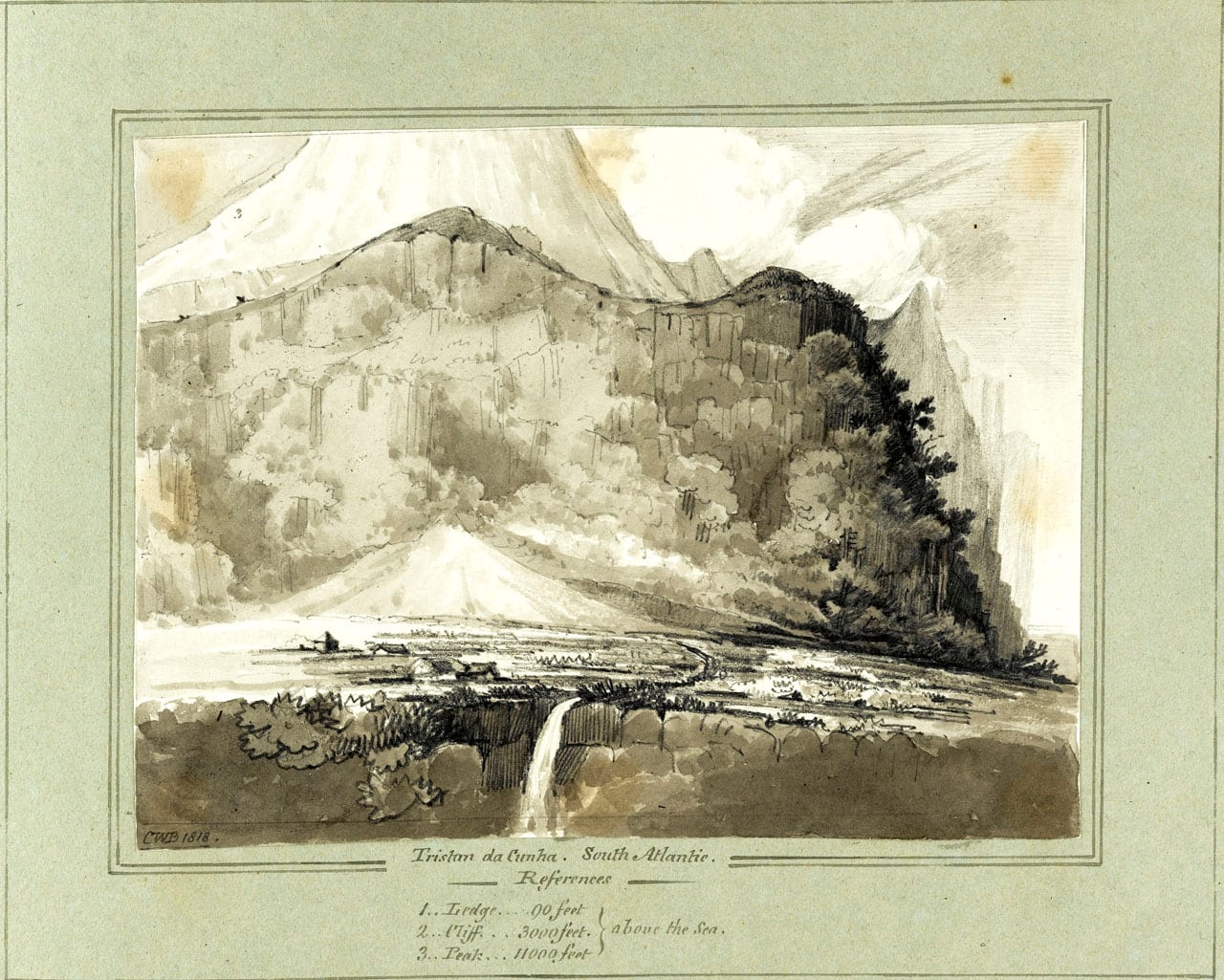
The most isolated inhabited place on Earth
Tristan da Cunha is a near-circular volcanic island about 12 kilometres across in the South Atlantic, roughly 2,400 kilometres from St Helena, 2,800 from South Africa and 3,400 from South America — the most remote permanently inhabited place in the world. Around 240 people live there, in a single settlement with the resounding name of Edinburgh of the Seven Seas, all descended from a handful of 19th-century founders and sharing just a few surnames. There is no airstrip; access is by a week-long boat trip from Cape Town. It is part of the British Overseas Territory of St Helena, Ascension and Tristan da Cunha.
A short history
- 1506
Discovery
The Portuguese navigator Tristão da Cunha sights the island; no landing.
- 1790s–1810s
Sealers and squatters
American and British sealers use the island; a first family settles briefly.
- 1816
The garrison
Britain occupies the island, reportedly to forestall a rescue of Napoleon from St Helena.
- 1817
Glass stays
When the garrison leaves, Corporal William Glass and two others remain and found the community.
- 19th century
Whaling and shipwrecks
Passing ships trade; wrecked sailors and a few settlers add to the population.
- 1938
Dependency status
Tristan is formally made a dependency of St Helena.
- 1961
The eruption
A volcanic vent opens by the settlement; the whole population is evacuated to England.
- 1963
The return
After two years in Britain, almost everyone votes to go home.
Garrison and settlement
The uninhabited island was named for the Portuguese admiral who spotted it in 1506 but could not land in its heavy seas. Sealers worked the group from the late 18th century, and in 1810 a New Englander, Jonathan Lambert, declared himself sovereign of the "Islands of Refreshment" before drowning within two years. In 1816, with Napoleon imprisoned on St Helena, Britain annexed Tristan and stationed a small garrison — the usual explanation is that it was to deny the island to anyone plotting the emperor's escape, though guarding the sea route to India was also a motive. When the garrison was withdrawn in 1817, a Scottish corporal, William Glass, asked to stay with his family and two others; they signed an agreement to hold everything in common and share the work equally, and that egalitarian constitution shaped the community that grew from them.
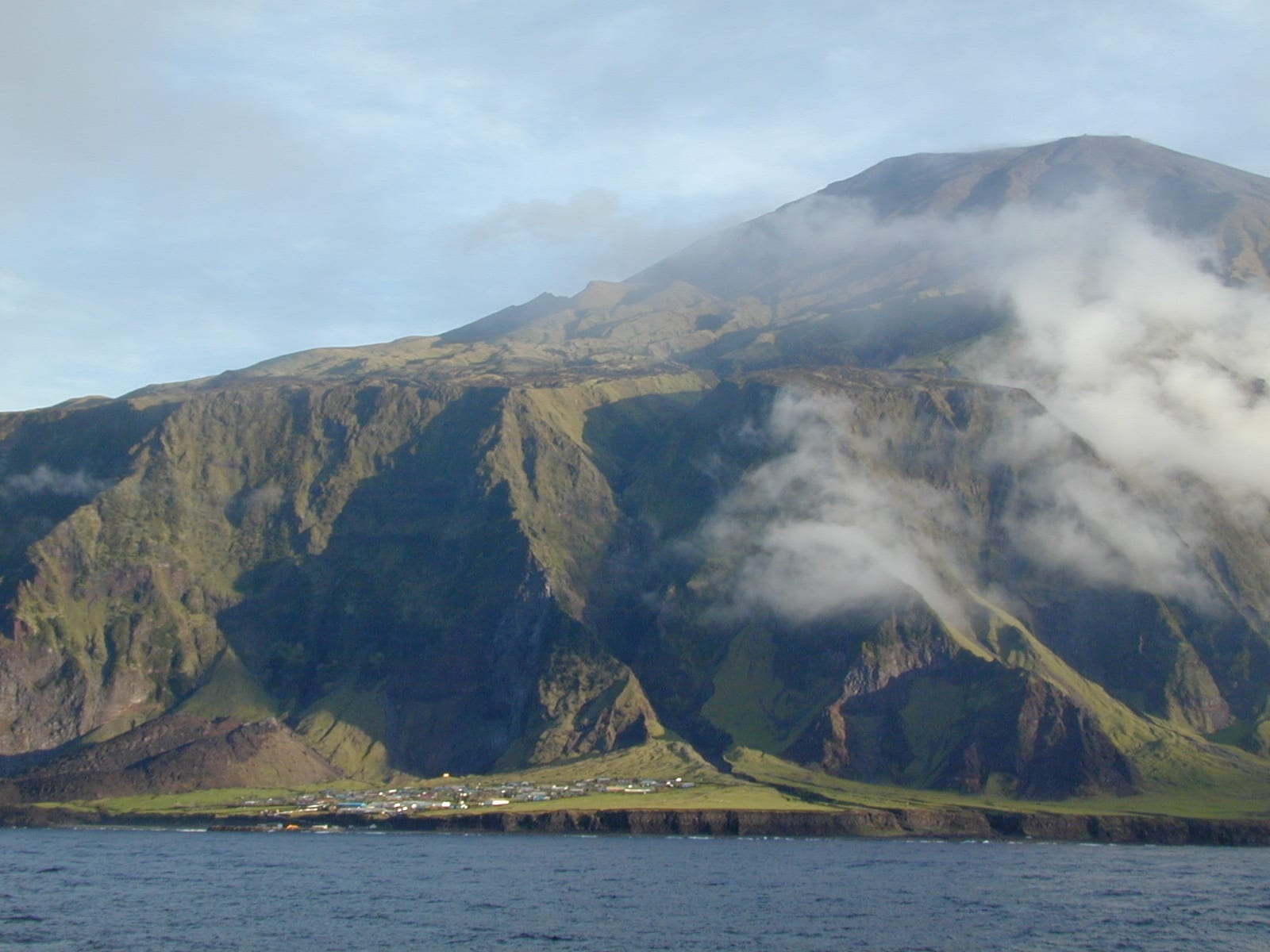
An isolated society
Through the 19th century the population grew slowly, added to by shipwrecked sailors, a few women brought from St Helena, and Italian sailors wrecked in 1892 whose surnames (Repetto, Lavarello) are still common. The islanders lived by subsistence farming on the potato patches, fishing, gathering seabird eggs, and bartering with the whaling ships that called — but as sail gave way to steam and whaling declined, the island became more cut off, and by the early 20th century it had no regular contact with the outside world for years at a stretch. Britain paid it little attention until the Second World War, when a naval station was established, and a crayfish (rock lobster) cannery opened in 1949 that finally gave the island a cash economy.
The eruption and the exile
On 10 October 1961 a volcanic vent opened on the plain a few hundred metres from the settlement, and lava began to advance toward the houses and the cannery. The entire population — 264 people — was evacuated: first to a neighbouring island by open boat, then to Cape Town, and finally to a former RAF camp at Calshot in Hampshire, England. The "Tristan islanders" became a media sensation, studied by sociologists as a pre-industrial community suddenly dropped into modern Britain. Most disliked it — the cold, the crime, the pace, the pull of factory jobs on the young — and pined for home. In 1963, after the eruption had subsided and a survey found the settlement largely intact, an island referendum voted almost unanimously to return, and almost everyone did.
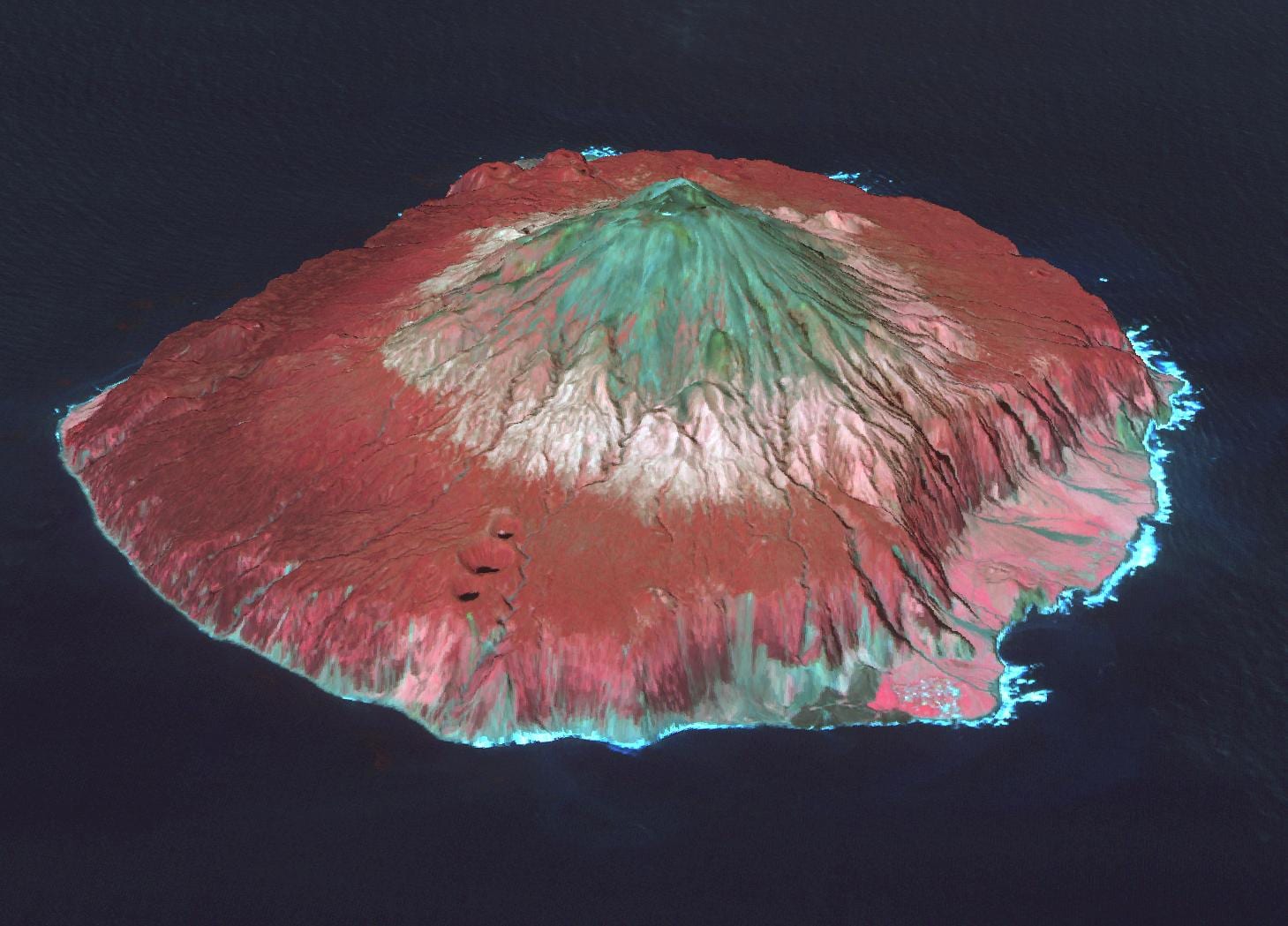
Tristan now
Tristan da Cunha governs its local affairs through an Island Council under an Administrator appointed from London, and it remains determinedly communal: all land is held in common, no outsiders may buy property or settle, and livestock numbers are capped so that every family has an equal share. The economy still rests on the lobster fishery, plus the sale of stamps and coins and fishing licences, and a handful of tourists a year. In 2020 Tristan declared a marine protection zone covering nearly 700,000 square kilometres of its waters, one of the largest in the Atlantic. Its future is shadowed by its size and isolation — a shrinking, ageing population, and no easy way in or out.
What Tristan da Cunha carries
Tristan da Cunha exists because Britain garrisoned an empty rock during the Napoleonic Wars and one soldier chose to stay. The community he founded — small, equal, self-sufficient, related — has held to those principles for two centuries, and when a volcano forced it into the modern world in 1961, it looked at the alternative and chose, overwhelmingly, to go back to the remotest inhabited island on the planet.