History · Trinidad and Tobago
Trinidad and Tobago: Oil, Carnival, and Callaloo
Two islands off the coast of Venezuela — a Spanish colony repopulated by French planters, a British sugar island worked by enslaved Africans and then indentured Indians, and a petroleum economy whose mixed society invented the steelpan and modern Carnival
By Worldlore Editorial · 19 September 2026
Two islands, many peoples
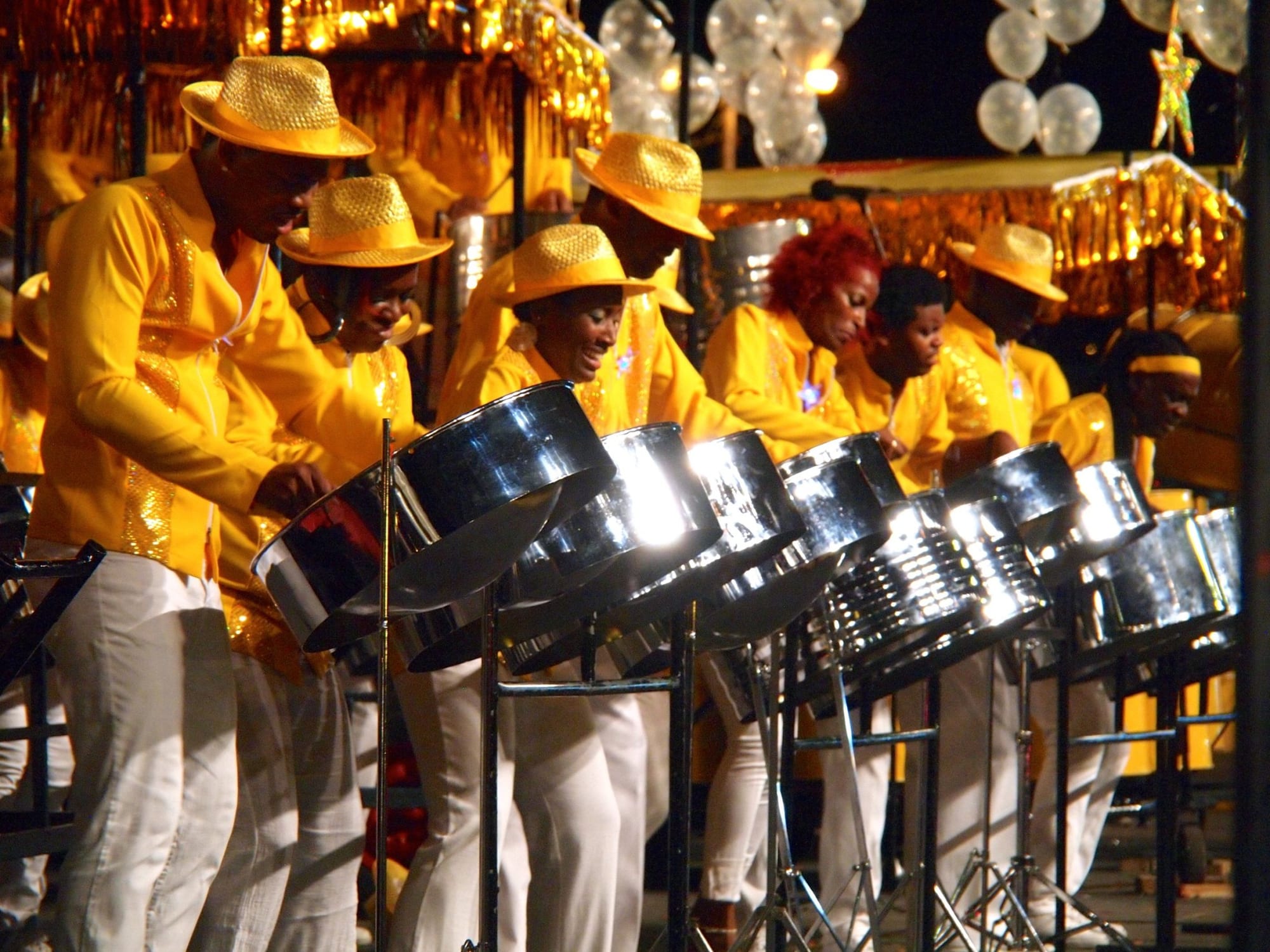
Trinidad and Tobago is the southernmost country in the Caribbean, just off the Venezuelan coast, with about 1.4 million people. Trinidad is large, industrial and diverse; Tobago is small, hillier and more tourism-focused, with its own assembly. The population is split fairly evenly between people of African and of Indian descent, with smaller mixed, European, Chinese, Syrian-Lebanese and Amerindian communities — the result of a plantation history that first imported enslaved Africans and then indentured South Asians. The country runs on oil and gas, not sugar, and its cultural exports — Carnival, calypso and soca, the steelpan — are out of all proportion to its size.
A short history
- pre-1498
Indigenous peoples
Arawak and Carib peoples on both islands.
- 1498
Columbus
Sights Trinidad on his third voyage; Spain claims it.
- 1783
The Cédula de Población
Spain invites Catholic (mostly French) planters and their slaves.
- 1797
British conquest
Britain takes Trinidad from Spain; Tobago changes hands repeatedly.
- 1834–1838
Emancipation
Slavery is abolished.
- 1845–1917
Indian indenture
About 144,000 labourers arrive from British India.
- 1889
Union
Trinidad and Tobago are administratively joined.
- 1937
Labour rebellion
Oilfield strikes and riots reshape colonial politics.
- 1962
Independence
Under Eric Williams and the PNM.
- 1970
Black Power revolution
Mass protests and an army mutiny.
- 1990
Coup attempt
The Jamaat al Muslimeen storms parliament and holds the government hostage.
Spanish neglect, French planters
Columbus reached Trinidad in 1498, and Spain claimed it, but for nearly 300 years did almost nothing with it — a poor, thinly settled backwater whose Indigenous population was devastated by disease, mission labour and slaving. That changed in 1783, when Spain issued the Cédula de Población, offering land grants to Roman Catholic settlers; French planters, many fleeing revolution in the other Caribbean islands, poured in with enslaved Africans, and within a decade transformed Trinidad into a French-speaking, Catholic sugar and cotton colony — under a Spanish flag. In 1797 a British expedition took the island with barely a shot; it was ceded formally in 1802. Tobago, meanwhile, had been fought over by the Dutch, French, British and others more than 30 times before Britain secured it, and was run as a separate sugar colony until it was joined to Trinidad in 1889.
Sugar, indenture, and oil
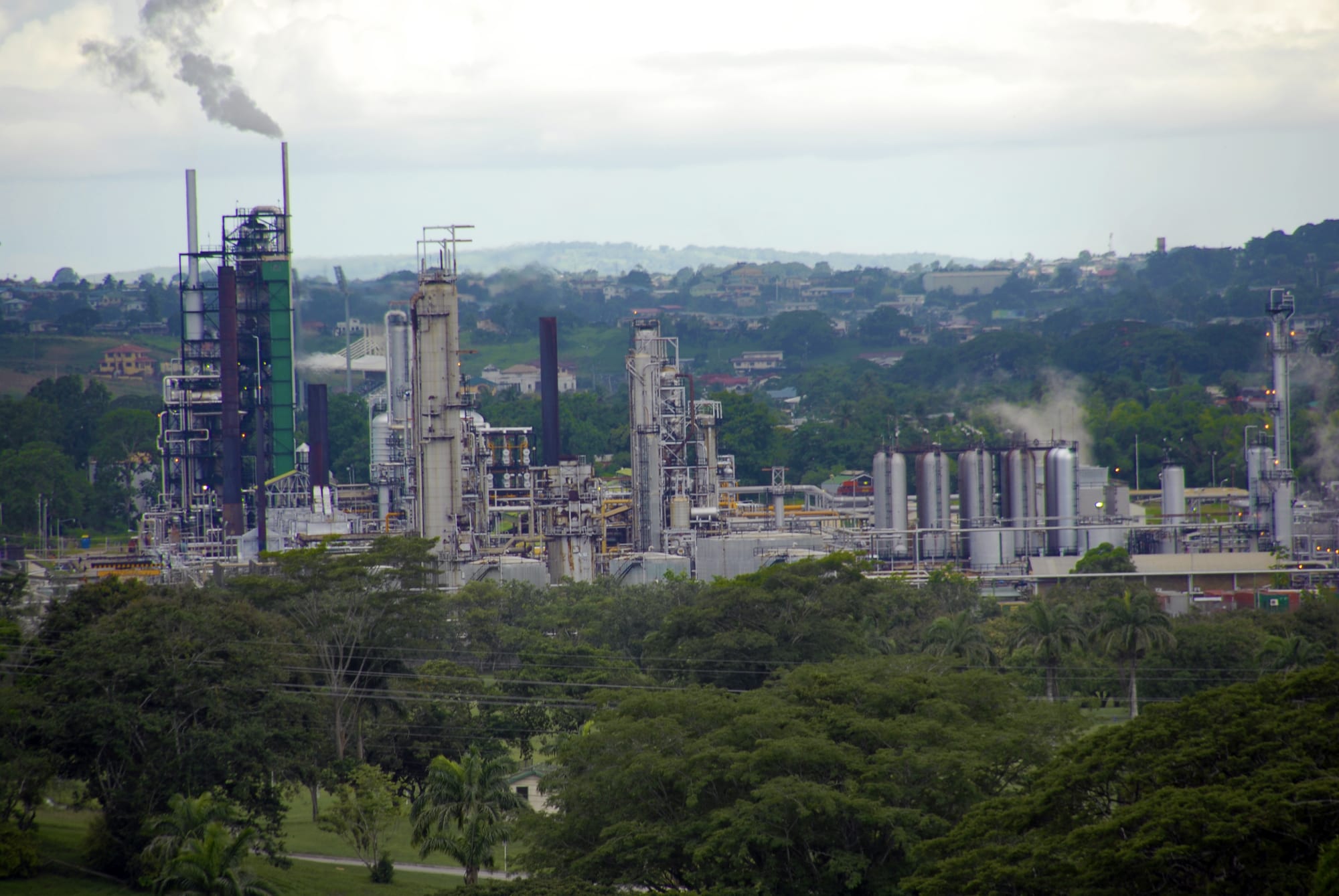
Britain abolished slavery across its empire in 1834, with a coerced "apprenticeship" period ending in 1838. To keep the sugar estates running, planters turned to indentured labour, overwhelmingly from India, brought under contracts that tied workers to estates for years in conditions often little better than slavery. This created the Indo-Trinidadian community, concentrated in the central sugar belt, alongside the largely urban and Afro-Trinidadian population — a division that still structures politics. From the 1900s a new industry emerged: oil, first drilled commercially in southern Trinidad, along with the natural asphalt of the Pitch Lake. Petroleum gradually overtook sugar and, by the mid-20th century, made Trinidad one of the wealthier colonies in the region.
Labour, independence, and Black Power
The Depression hit the oil and sugar workforce hard, and in 1937 a wave of strikes and riots, led by the oilfield unionist Uriah "Buzz" Butler, forced Britain to concede trade-union rights and set the country on the path to self-government. Eric Williams, a Oxford-trained historian and author of the influential Capitalism and Slavery, founded the People's National Movement in 1955 and led Trinidad and Tobago to independence on 31 August 1962. A brief attempt at a wider West Indies Federation had already collapsed. In 1970 a Black Power movement — protesting racial inequality in the economy, the persistence of a light-skinned and foreign business elite, and unemployment — brought huge marches, a state of emergency, and a mutiny by part of the army, which was contained.
Booms, busts, and a coup attempt
The 1970s oil-price shocks brought a windfall that funded state industries and public spending; the 1980s price collapse brought austerity, an IMF programme, and the PNM's first electoral defeat in 1986. In July 1990 a radical Muslim group, the Jamaat al Muslimeen, stormed the parliament and the state television station, holding the prime minister and MPs hostage for six days and killing more than 20 people before surrendering; the leaders were freed under an amnesty later upheld by the courts. Since then power has alternated between the PNM and the mainly Indo-Trinidadian UNC, and the economy has run on natural gas, petrochemicals and LNG exports, leaving it exposed to energy-price swings and, more recently, to declining production and the spillover of Venezuela's crisis, including a large refugee inflow and gang and gun violence.
What Trinidad and Tobago carries
Trinidad and Tobago's population was assembled in stages to serve a plantation economy — Indigenous, then Spanish, then French and their slaves, then indentured Indians — and it later found a different foundation in oil and gas. Out of that mix came Carnival, calypso and the steelpan, a genuinely creole culture. The enduring tensions are the ones the history built in: the Afro- and Indo-Trinidadian division that shapes every election, and an economy still bound to the price of hydrocarbons.