Daily Life · Tonga
Tonga: Where Sunday Silences the Whole Kingdom
Extended families sharing a single household economy, root-crop markets that open early in the morning, and a constitution that makes Sunday rest the law of the land rather than just a custom
By Worldlore Editorial · 30 September 2026
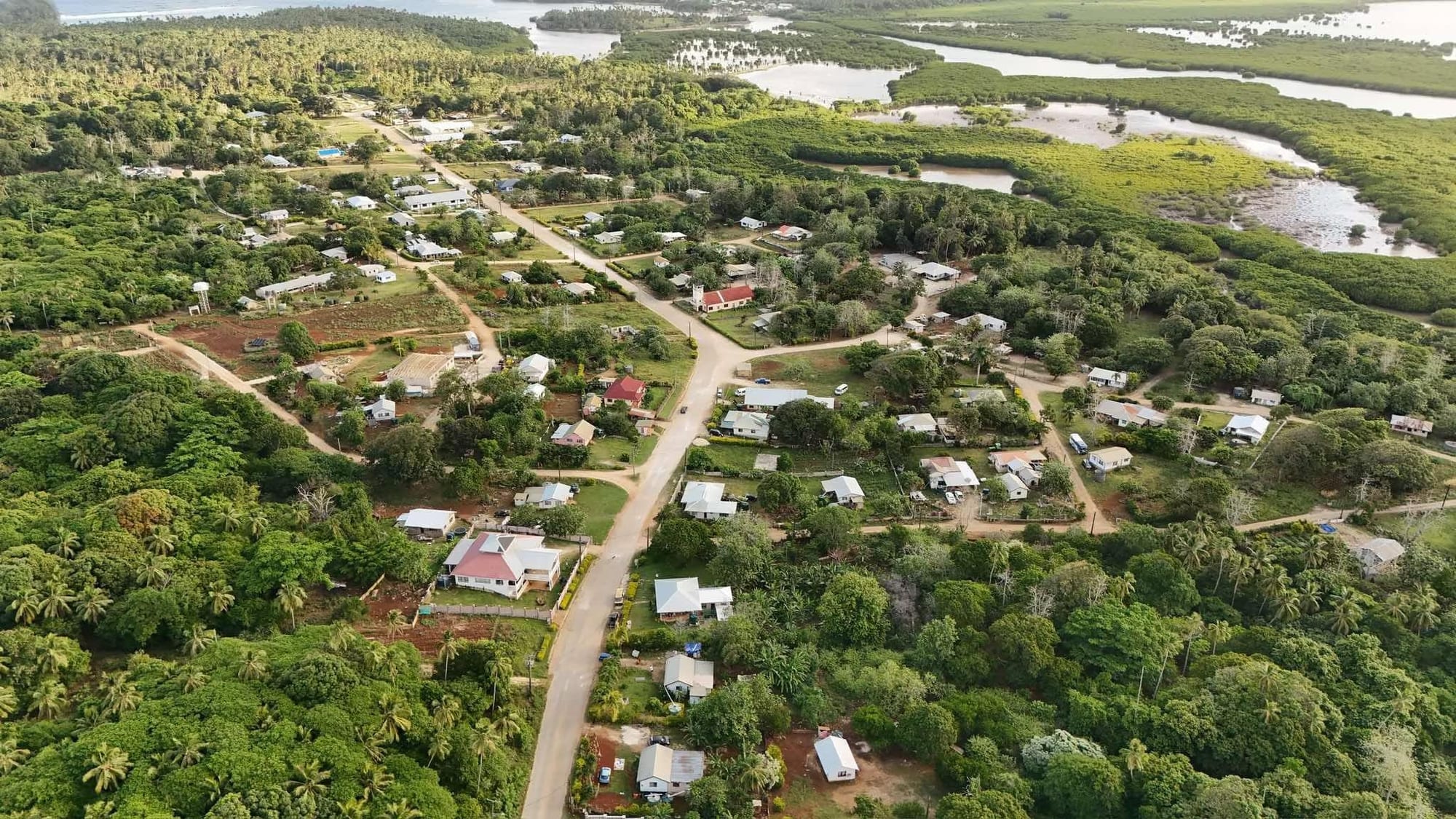
An ordinary week in Tonga runs six days and then stops. From Monday to Saturday, market stalls open early in the morning, children in uniform walk or ride to school, and extended families work the same small plots of land their relatives have farmed for generations. Then, at midnight on Saturday, the country falls quiet: shops shutter, transport thins out, and almost nothing commercial is allowed to operate until Monday, a pause written directly into Tonga's 1875 constitution rather than left to custom. Between those two rhythms, family obligation, the kava circle and the church calendar do more to organise daily life than any employer's timetable.
Family and home life
The Tongan household, or famili, is rarely just parents and children — it commonly includes grandparents, unmarried siblings, cousins and sometimes informally adopted relatives, all contributing to and drawing on a shared household economy. Beyond that immediate group sits the kainga, a wider network of extended kin, often spread across several villages, who are called on for major events, land matters and financial support. Raising children is treated as a family-wide responsibility rather than a task for parents alone, and it remains common for a young married couple to begin their household living with or near one set of parents. Land itself carries a family logic: under a system going back to the nineteenth century, every Tongan man aged 16 or over is nominally entitled to a rural allotment, though population growth has made this promise increasingly difficult for the state to honour in practice.
Work, school and the rhythm of the day
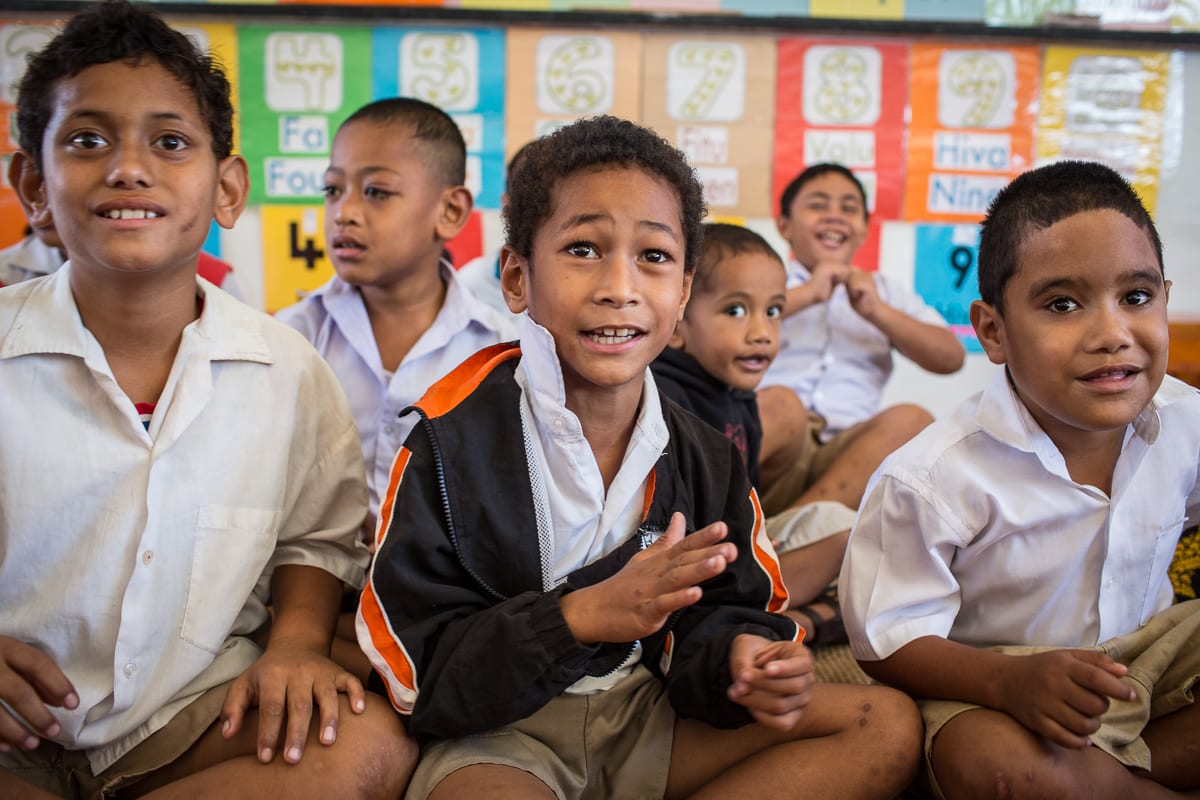
Many rural households combine subsistence farming — yams, taro, cassava and sweet potato — with a cash crop, commonly squash exported to Japan in season, or kava and vanilla, and with fishing where the coast allows. Formal jobs are concentrated in Nukuʻalofa and the outer-island centres, in government, small business and the limited tourism sector, generally run on a standard weekday timetable. Schooling mixes church-run and government schools, with primary education broadly followed by secondary study, and pupils wear school uniforms, which often include the tupenu, the wrapped skirt worn in Tonga by men and women alike. Because almost all commerce and paid work stop by law on Sunday, the working week effectively concentrates six days of activity before the country pauses as one.
Community life and public spaces
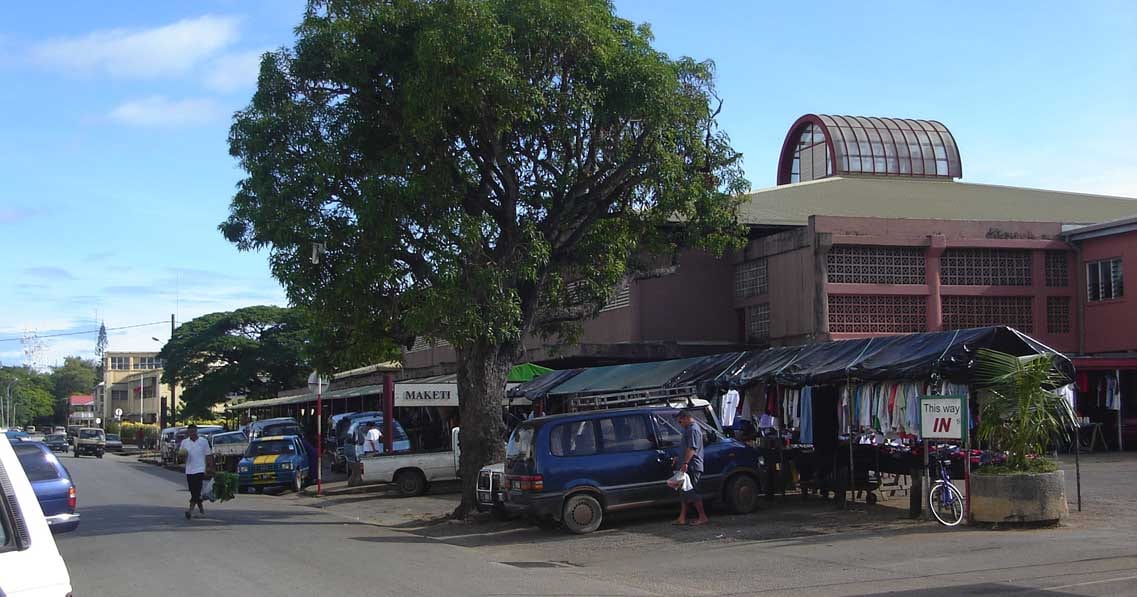
Talamahu Market in Nukuʻalofa, and smaller versions of it in other centres, is the country's clearest everyday public space: root vegetables, woven baskets, tapa cloth and produce laid out on tables from early morning, busiest on Saturday as households stock up before the Sunday closure. Villages are typically arranged around a church, a scatter of family allotments and a shared meeting ground, and because Tonga is spread across roughly 170 islands, getting between communities often means a boat or a domestic flight rather than a road. Kava clubs, informal gathering spots found in many villages, draw men together after dark around a communal bowl of the pounded, mildly sedative root, a routine social fixture rather than an occasional event.
Free time and weekends
Saturday is the last working day before the pause and tends to be busy and social at once — markets crowded, errands finished, sport played. Rugby union commands enormous everyday interest, watched and played country-wide rather than confined to any elite. Sunday itself is set aside for church, often more than one service, and for a long family meal afterwards, with swimming, sport and most other public recreation avoided out of custom as much as any formal rule. Evening kava circles, mostly attended by men, are the standard way free time is spent once the working day ends, conversation stretching on for hours around the shared bowl.
A visitor's ordinary day
Plan around the Sunday closure rather than against it: shops, banks, transport and most tourist activity stop from Saturday midnight to Monday morning, so treat Sunday as a day for a quiet walk or a church visit rather than for errands or travel. The paʻanga is the currency, and while Nukuʻalofa and Vavaʻu have ATMs, cash is essential on the outer islands. Inter-island travel runs on limited, weather-dependent flights and ferries, so build slack into any itinerary that crosses between island groups. Minibuses and shared taxis cover local transport; modest dress is expected, particularly outside resort areas and always for a church visit.
What to take away
What shapes an ordinary week in Tonga is less any single custom than the six-day rhythm the whole country keeps together, and the constitutional full stop that follows it every single week.