Culture & Customs · Tonga
Tonga: A Kingdom Wrapped in Fine Mats
A Christian monarchy where the Sabbath is kept by law, rank shapes every greeting, kava is poured in a strict order, and a woven mat tied at the waist says more than any necktie
By Worldlore Editorial · 30 September 2026
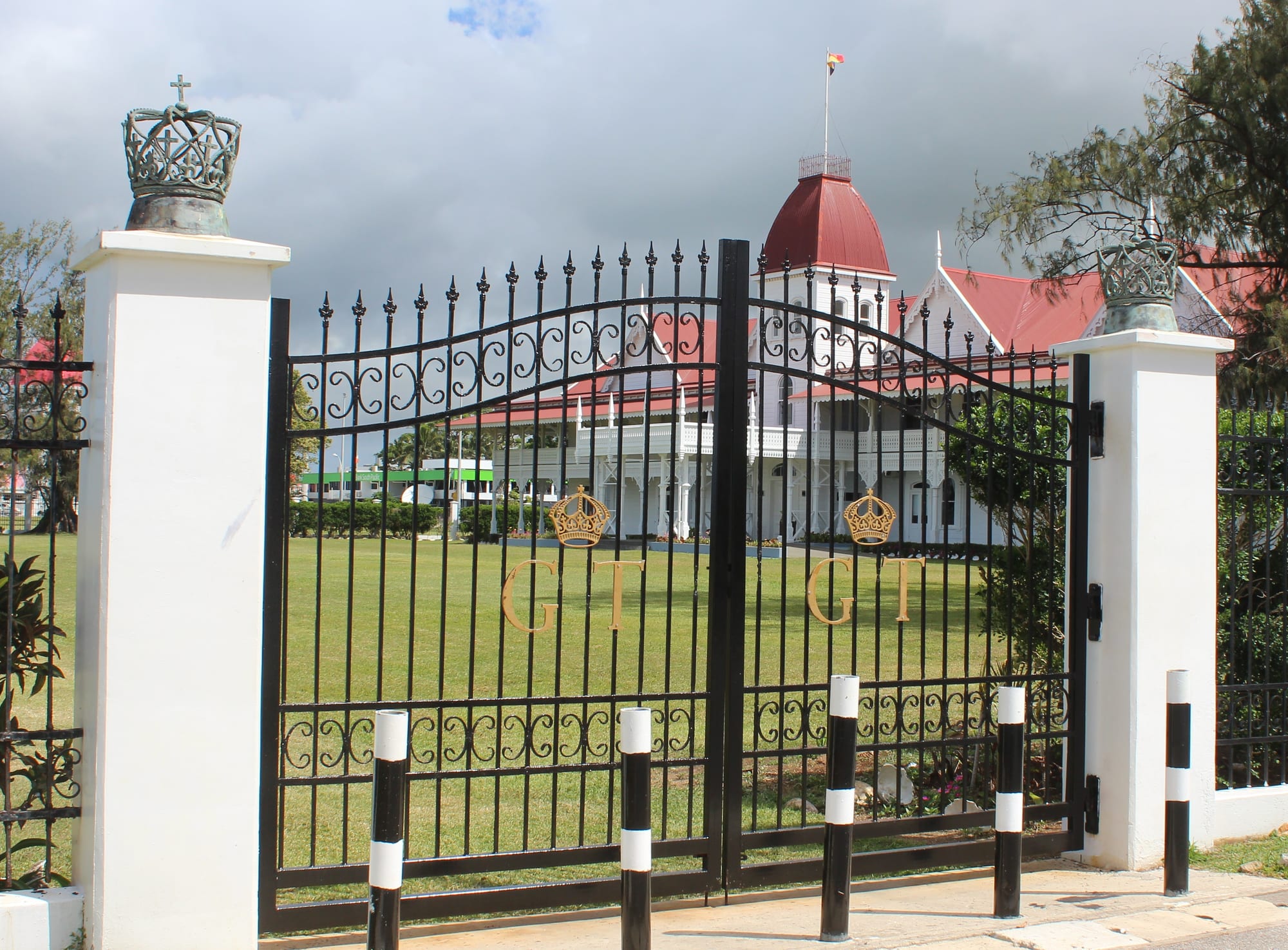
In July 2015, before a new king of Tonga could be crowned, he first had to drink a cup of kava. About 150 nobles, each wearing a traditional woven mat around the waist, sat in the ancient taumafa kava ceremony while King Tupou VI drank the mildly narcotic brew that confirmed his title, one first held centuries before Tonga became a modern monarchy. Only then did the celebrations begin in earnest: a service in church, eleven days of street parties, balls and feasting, and some 15,000 visitors, most of them Tongans flying home from abroad. The whole occasion held the country's character in miniature. Chiefly ritual, Christian worship and family loyalty sat side by side, and every part of it was governed by an exact sense of who ranks where.
Faith, identity and values
Tonga is a deeply Christian country, and churches are, as Cultural Atlas puts it, a significant part of social and cultural life for most people, visible even in the most remote places. The Free Wesleyan Church is the largest denomination, with around a third of the population, followed by the Church of Jesus Christ of Latter-day Saints, the Roman Catholic Church, the Free Church of Tonga and the Church of Tonga. Tongans often speak of the arrival of Christianity as "the coming of light", set against an earlier era remembered for its warfare, and many older traditions were adapted to fit the new faith rather than discarded.
The most visible sign of that faith is Sunday. The constitution declares the Sabbath sacred: trade and most work stop, with exceptions for essential services and some tourism businesses, most transport halts, and church attendance, followed by a family meal, is widely expected. The British government's travel advice notes that the Sabbath is strictly observed and that recreational activities on a Sunday may be seen as disrespectful; resorts, which have some exemptions, tend to be more relaxed.
Beneath the church lies a set of values that Tongans sum up as angafakatonga, the Tongan way. At its heart is faka'apa'apa, respect, and with it the expectation that those of lower status defer to those above them. Society is layered into royalty, nobles and commoners, and within families rank is set first by gender and then by age, with women holding the higher position. Loto to, humility, is prized: wealth is not flaunted, dress is modest, and a readiness to apologise and seek forgiveness is admired. Success is expected to be shared with the wider family, the kāinga, whose members may live across several villages.
The relationship between brothers and sisters is one of the most carefully guarded. A brother shows his sister respect and a measure of avoidance, and Cultural Atlas records that it is considered tapu, or forbidden, for a man past puberty to be alone in a room with his sister or female cousins. The same logic raises the eldest paternal aunt to the top of the family hierarchy. Known in her ceremonial role as the fahu, she is honoured at every major family occasion, while the mother's brother ranks lower and takes on duties of service.
Greetings and meeting people
The usual greeting is "Mālō e lelei", and a visitor is welcomed with "Talitali fiefia". The most common physical greeting is a prolonged handshake. On formal occasions people may place their right cheek beside the other person's and take a deep breath, a greeting known formally as fe'iloaki. Among acquaintances, greetings are exchanged freely: Tongans usually greet one another when passing in the street, even people they barely know.
On first meeting, titles and surnames are used before first names. Where someone's rank is unclear, the safe forms are Tangata'eiki for a man, Fine'eiki for a married woman and Ta'ahine for an unmarried one. Rank is also built into the language itself, which has several levels of speech, including a respectful register for commoners and more elevated forms reserved for nobles and the royal family.
Much of the respect is conveyed without words. A quick lift of the eyebrows means yes. Eye contact is fine between equals, but a person lowers their gaze before someone of higher standing, and when approaching a person of higher rank it is polite to keep one's head lower than theirs, even stooping to match the level of someone who is seated. Communication is indirect: requests are softened and criticism is approached gradually rather than stated outright. People of the same sex often hold hands as a sign of friendship.
Hospitality and being a guest
Visiting is relaxed, and unannounced calls on relatives and neighbours are normal, especially on Sunday afternoons. Shoes come off on entering a home and before sitting on floor mats. The host will steer a guest to the best seat and offer something to drink, and anyone who arrives at mealtime is invited to eat. Where people sit follows rank: elders and those of higher status take the centre of the mat, younger people the edges. At formal gatherings men sit cross-legged while women sit with both legs tucked to one side.
Meals are often eaten on mats and, traditionally, by hand, and they begin with a prayer. The guest of honour sits in a central place, is served first and sets the pace; others wait for the guest to begin, and to finish, before doing so themselves. Cultural Atlas cautions against bringing a plate of food to share when invited to a meal, since it can offend the host, and notes that a guest is expected to take a single serving. On leaving, a guest traditionally makes a short speech of thanks and praise, and the host may respond with a gift of food or a handicraft. Refusing such a gift is considered a serious insult.
Kava belongs to a world of its own. The drink, made from the pounded root of the kava plant, is central to formal ceremonies and to the informal kava circles where men gather in the evening to talk and sing. In modern custom drinking it has been largely reserved for men, while it is prepared and served by a young unmarried woman, the tou'a, a role that the academic Nalei Taufa has described to RNZ as a mark of a woman's virtue. That convention is shifting: RNZ has reported more young Tongan women forming circles of their own, where they drink and join the conversation rather than only serving.
Festivals and life's big moments
The public calendar reflects both church and crown. Christmas, Easter and New Year are major occasions, and the royal calendar adds King Tupou VI Day on 4 July, the birthday of the heir to the crown on 17 September, Emancipation Day on 4 June and Tupou I Day on 4 December, which honours King George Tupou I, the founder of the modern kingdom. Great royal events, such as a coronation or an anniversary of the constitution, are the setting for lakalaka, the country's most important dance.
Weddings are elaborate affairs combining civil and church ceremonies. The bride and groom, in Cultural Atlas's phrase, "wear their wealth": they are wrapped in the family's finest mats, their skin rubbed with oil, and garlanded with flowers, while the two extended families exchange mats and other goods. According to Te Papa, lengths of decorated bark cloth may be draped over the couple's car as a display of wealth. The bride traditionally performs a final solo tau'olunga, a graceful dance marking her passage from single to married life.
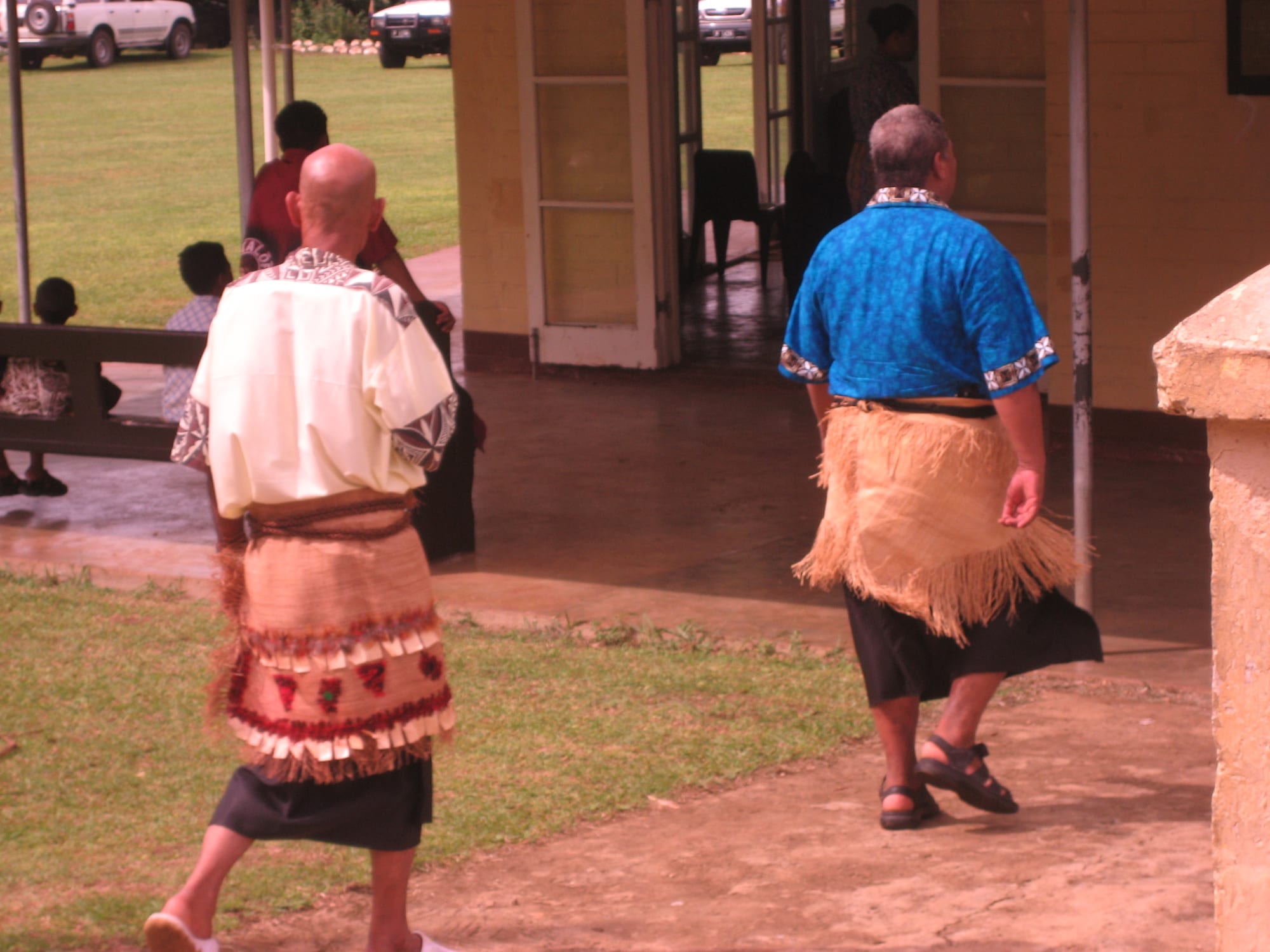
Funerals are the most exacting of all ceremonies. Mourners wear black with a ta'ovala tied at the waist by a cord of coconut fibre or human hair, and the mat chosen reveals each person's relationship to the deceased. The fahu wears the finest mat of all, while the dead person's maternal uncles and their families, whose role is to cook and serve, wear a huge, deliberately old and tattered mat that covers them from head to ankle. The body rests on a bed spread with bark cloth and is wrapped in it for burial. Close relatives continue to wear black long afterwards, from three months to a year or more, so that the whole community can see they are in mourning; guests without a mat simply wear black.
Arts, crafts and music
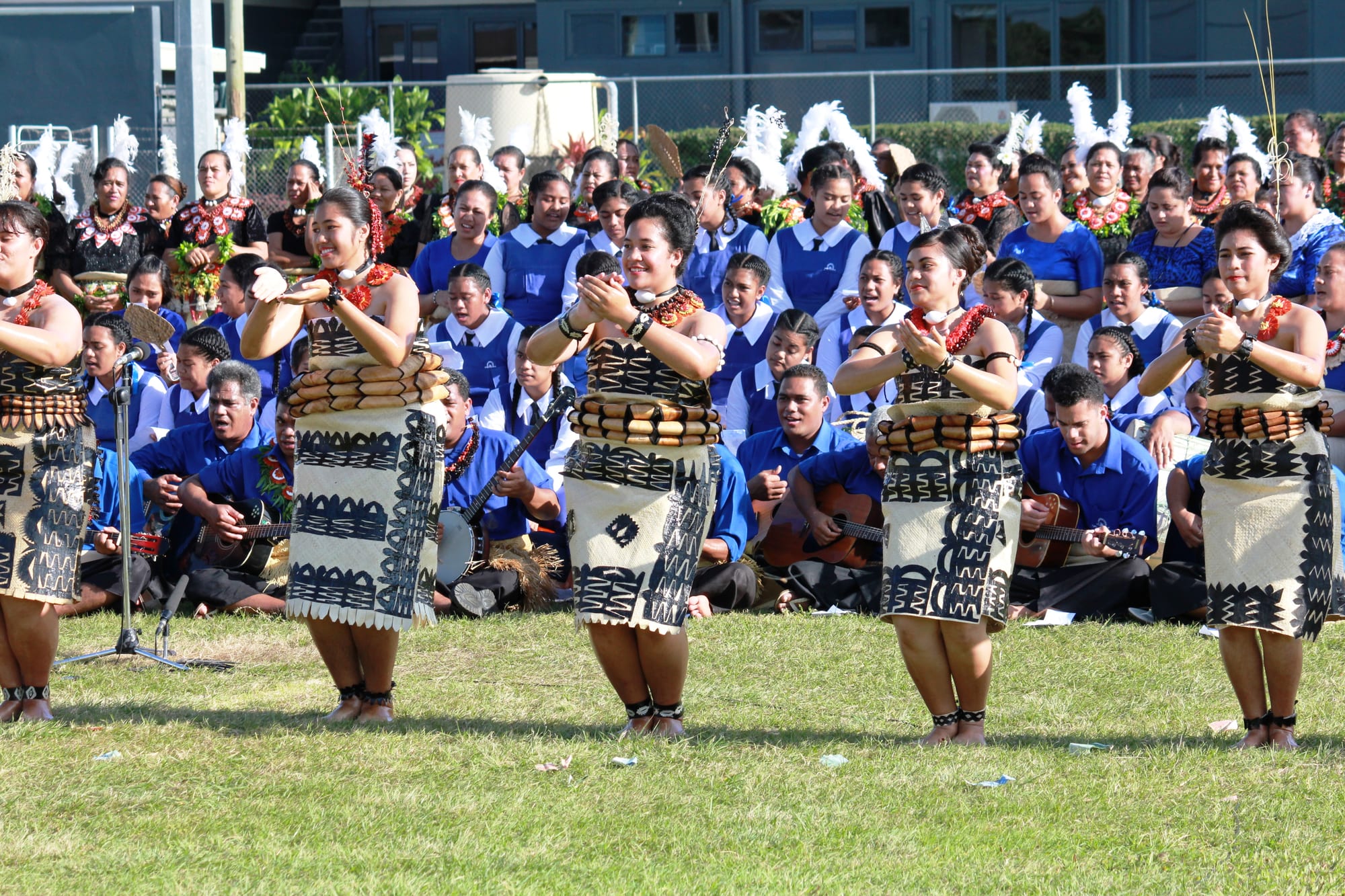
Lakalaka is the highest expression of Tongan performance, and it is on UNESCO's list of intangible cultural heritage. UNESCO describes it as a blend of choreography, oratory and vocal and instrumental polyphony, in which groups of up to several hundred people perform for around half an hour, men on the right and women on the left. The men's movements are rapid and energetic, the women's graceful and precise, with elegant hand gestures, and everyone claps and sings. Each piece is the work of a punake, who is at once poet, composer, choreographer and director, and whose texts draw on Tongan history, legend, values and social structure.
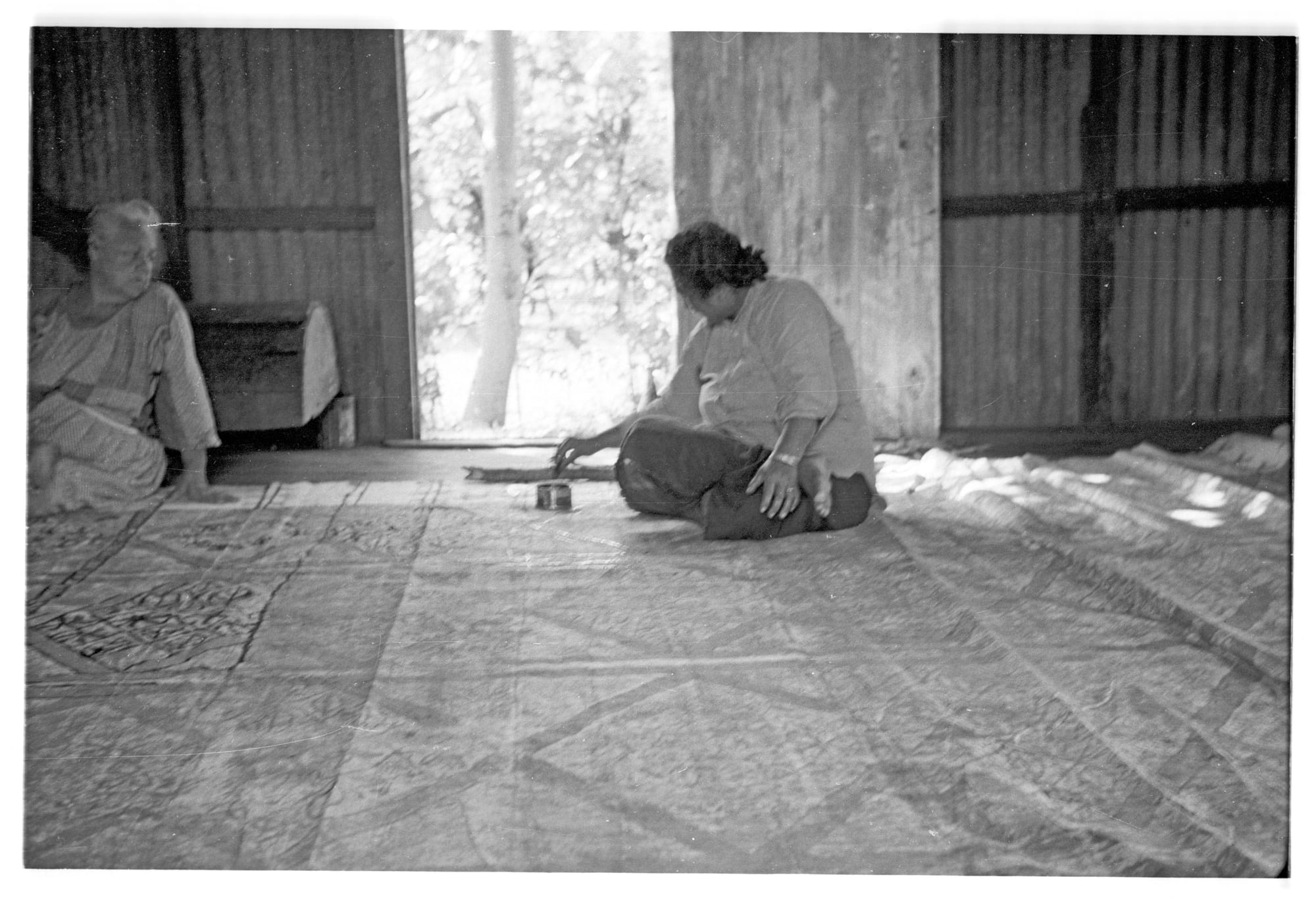
The most treasured crafts are made by women. Mat weaving is a cherished tradition, often done in groups, and fine mats are given at births, weddings and funerals and handed down as family heirlooms. Ngatu, the decorated bark cloth of Tonga, is made from the paper mulberry: only men may tend the trees while they grow, but once the bark is harvested, only women may turn it into cloth. Te Papa describes the bark being stripped, beaten into broad sheets, dried and flattened, then patterned with rubbing boards and painted by hand. The finished cloth is a constantly circulating gift, exchanged at weddings, funerals and other great occasions, and the larger the piece, the greater the wealth it signals.
Church music is the other great tradition. Brass bands are a fixture in church on Sundays and at official events, celebrations and funerals. The conductor Dave Bremner told RNZ that perhaps up to half of the high school students on the main island play a brass instrument, and he described one funeral procession led by a massive band playing a blend of Tongan hymns and gospel. Rugby union, the national sport, draws something close to the same devotion.
Dos and don'ts for visitors
- Do keep Sunday quiet: expect shops and transport to close, and avoid sport, swimming or noisy recreation outside resorts.
- Do dress modestly, especially for church; topless sunbathing and public nudity are illegal, and swimwear is for the beach only.
- Do take off shoes before entering a home or sitting on a mat, and keep the head lower than that of an elder or person of rank.
- Do wait for the guest of honour or elders to begin eating, and take only a single serving.
- Do accept a parting gift graciously; refusing one is considered a serious insult.
- Don't bring a plate of food to share when invited to a meal, as it may offend the host.
- Don't drink alcohol in public outside bars and restaurants, which is against the law.
What to take away
Tonga's customs rest on respect given in every direction, to God, to the crown, to elders and to the sister and the aunt, and visitors who dress with care, keep the Sabbath and let rank set the order of things will find a kingdom of remarkable warmth.