Daily Life · Tokelau
Tokelau: An Equal Share of Everything
Three atolls, three villages and around 1,500 people, where a communal fish catch is still shared out to every household in equal portions per person and Sunday belongs almost entirely to church
By Worldlore Editorial · 30 September 2026
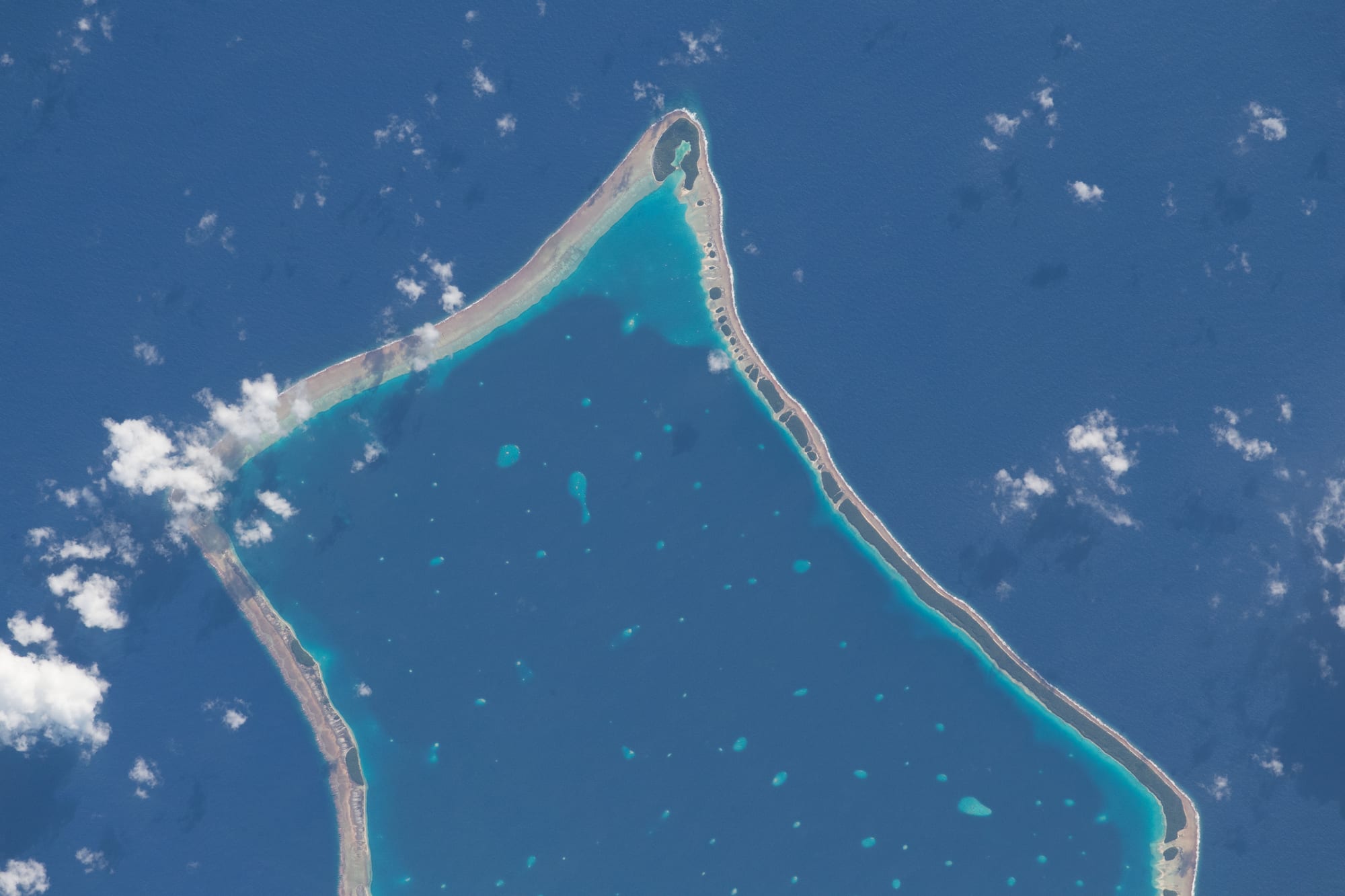
Life on Tokelau's three atolls is small enough that almost everyone genuinely knows almost everyone else, and close enough to the sea that the two are never really separate. Each atoll — Atafu, Nukunonu and Fakaofo — centres on a village (Fakaofo has two) strung along a narrow strip of coral a few hundred metres wide, walkable end to end in minutes. The day still turns on long-standing habits rather than modern convenience: men going out fishing and dividing the catch by household rather than by who caught it, women weaving pandanus and preparing food, and a Sunday that, across all three atolls, belongs almost entirely to church. There is no airport, no traffic beyond the odd small truck, and nowhere on any of the atolls far enough away to be out of earshot of a neighbour.
Family and home life
Households are built around the extended family rather than any smaller unit, and it is common for a married couple to live with parents, grandparents or other relatives under one roof, sharing the practical work of the household in both directions — the young caring for the old, and grandparents helping raise children. With around 1,500 people spread across three villages, and a Tokelauan population living overseas, mostly in New Zealand, several times larger than the one at home, family ties reach well beyond the atolls themselves, kept up through remittances, visits and a two-way flow of people. Housing is simple, typically timber or concrete-block, and every village is small enough that family life spills easily into the street and the shoreline rather than staying behind a fence.
Work, school and the rhythm of the day
Formal employment is mostly with the public service — health, education, the small island administration — funded largely by New Zealand, and jobs tend to sit close to home; a short walk or a two-minute drive is a typical commute on an atoll a few hundred metres across. Alongside paid work, most households still fish and grow food, and men's fishing trips remain central to the local economy. What is caught is generally shared out through the inati system, which divides a catch into equal portions by household size rather than leaving it with whoever went out that day, an arrangement that keeps every family fed regardless of luck at sea. Each atoll has its own school, running from early childhood education into the secondary years.
Community life and public spaces
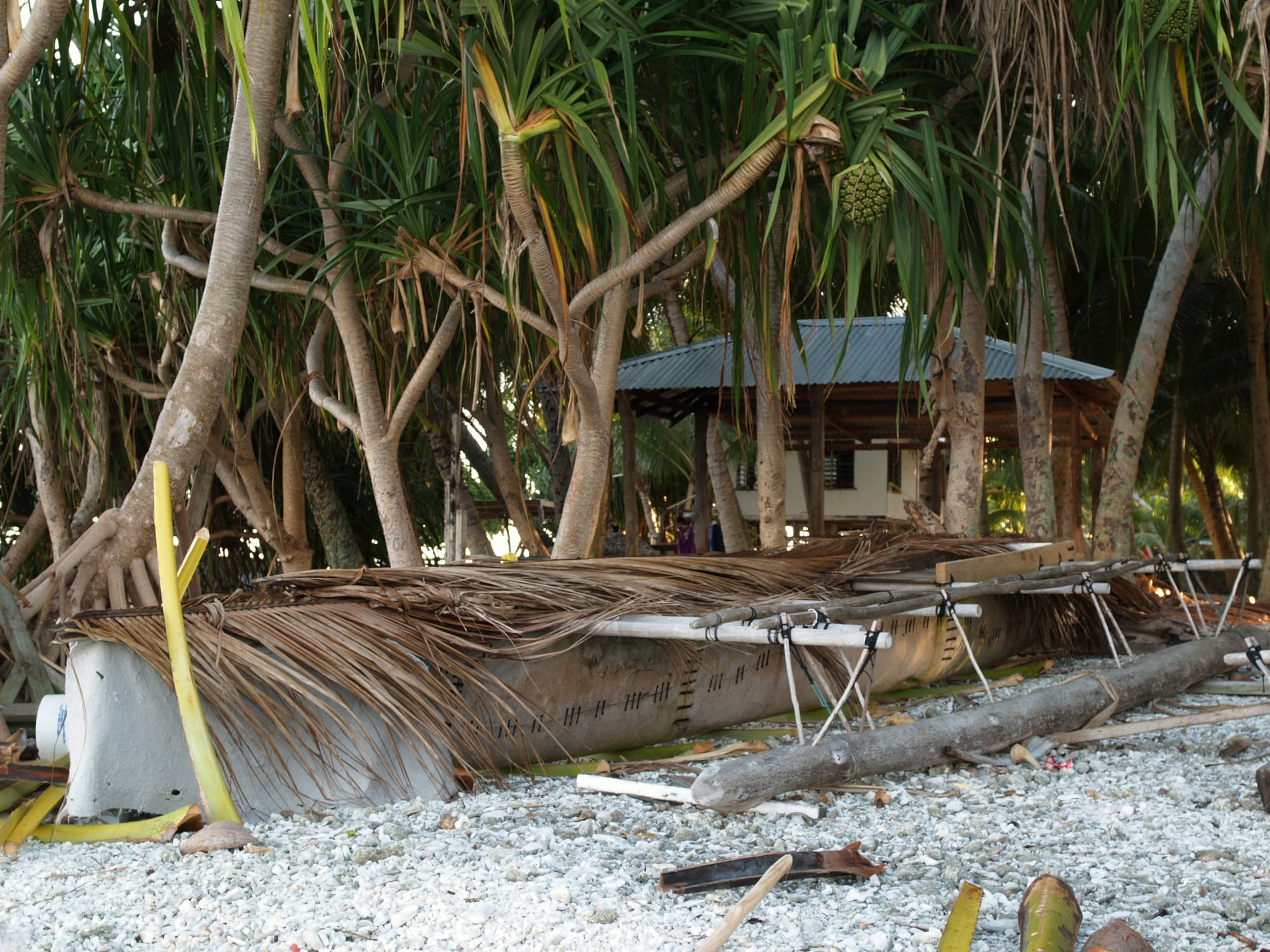
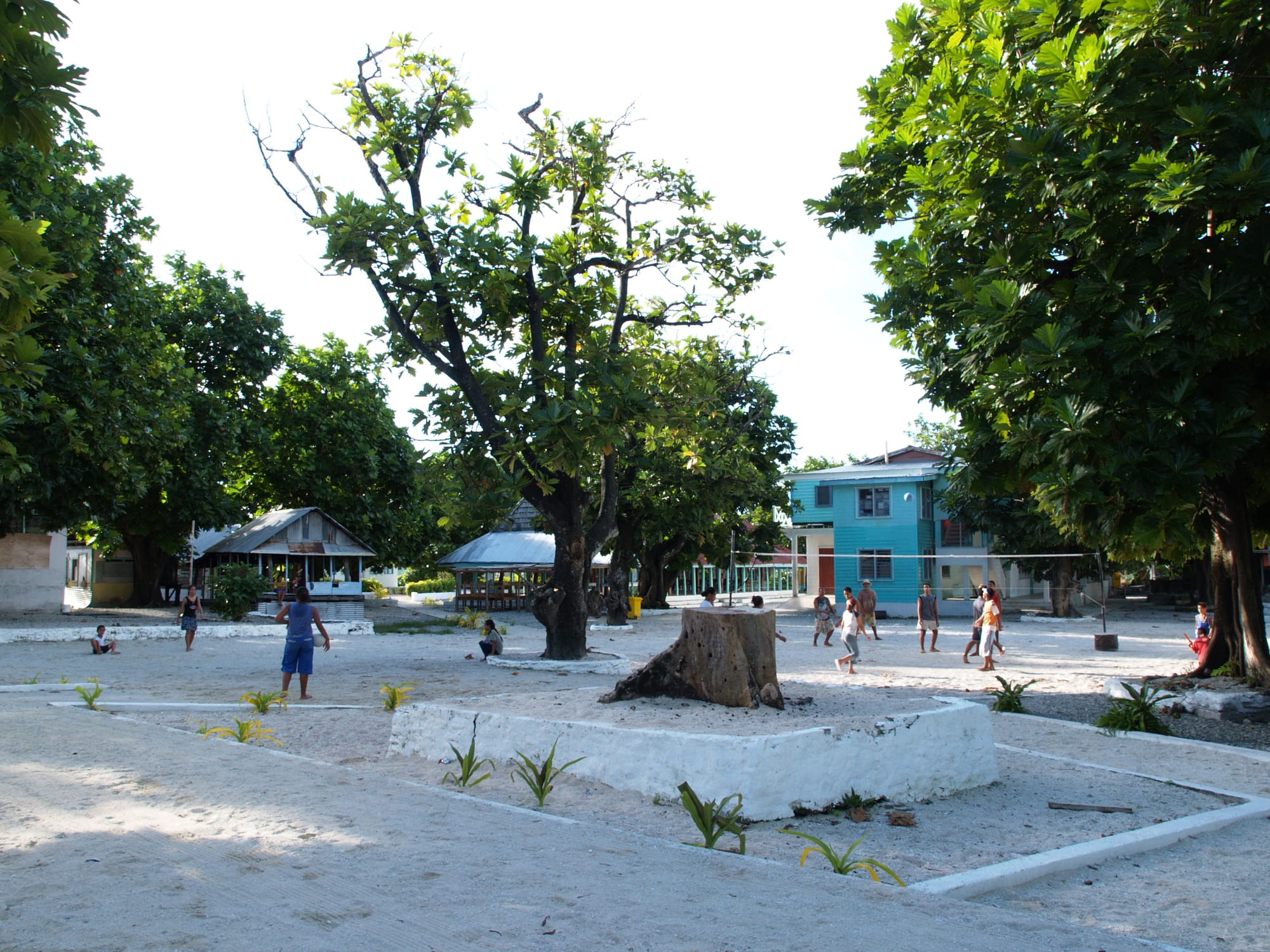
Each atoll is governed day to day by its Taupulega, a council of elders representing the constituent families, and the national leadership, Ulu-o-Tokelau, rotates every year between the three atoll leaders — there is deliberately no single permanent capital or seat of power. With no shops beyond a village store and no restaurants or cafés, the church, the school and the open village green are the real public spaces, along with the shoreline, where boats are launched and hauled up and where much of the day's practical business happens in view of everyone else. Weddings and funerals draw in the whole village for cooking and preparation rather than staying within one family, and the tiny scale of each community means public life and private life overlap constantly.
Free time and weekends
Sunday is set apart almost completely for church and family, and by custom very little else, including most work and organised activity, happens on that day across all three atolls. Through the rest of the week, free time centres on the same things that organise everyday life: fishing for pleasure as much as food, swimming and time on the lagoon, and the fatele, a song-and-dance performance for weddings, welcomes and other village occasions, a tradition shared with neighbouring Tuvalu. Because each atoll is its own small world, socialising happens on foot, in the open, rather than at any single dedicated venue.
A visitor's ordinary day
Almost nobody visits Tokelau without a specific reason and a great deal of advance planning: there is no independent tourism, almost no commercial accommodation and no way to simply turn up. Anyone travelling must arrange permission, a host family and a berth on the supply vessel well ahead through the Tokelau administration in Apia, Samoa, and then commit to the boat's roughly fortnightly schedule for both the outbound and return legs, each a little over a day at sea. Once there, the New Zealand dollar is the currency and cash is essential, as there are no banks or ATMs on any of the atolls. Life moves at the pace of the tide and the weather rather than a clock, and Sunday in particular is a day to follow the household's lead rather than plan around.
What to take away
What an ordinary day in Tokelau really comes down to is scale: three villages small enough that sharing the catch, filling the school roll and running the church are not abstractions but things every household takes its turn at, week after week.