History · Togo
Togo: The Narrow Strip
A ribbon of West Africa barely 100 kilometres wide — Germany's "model colony", split between Britain and France after 1914, and ruled since 1967 by a single family, the longest such grip in Africa
By Worldlore Editorial · 19 September 2026
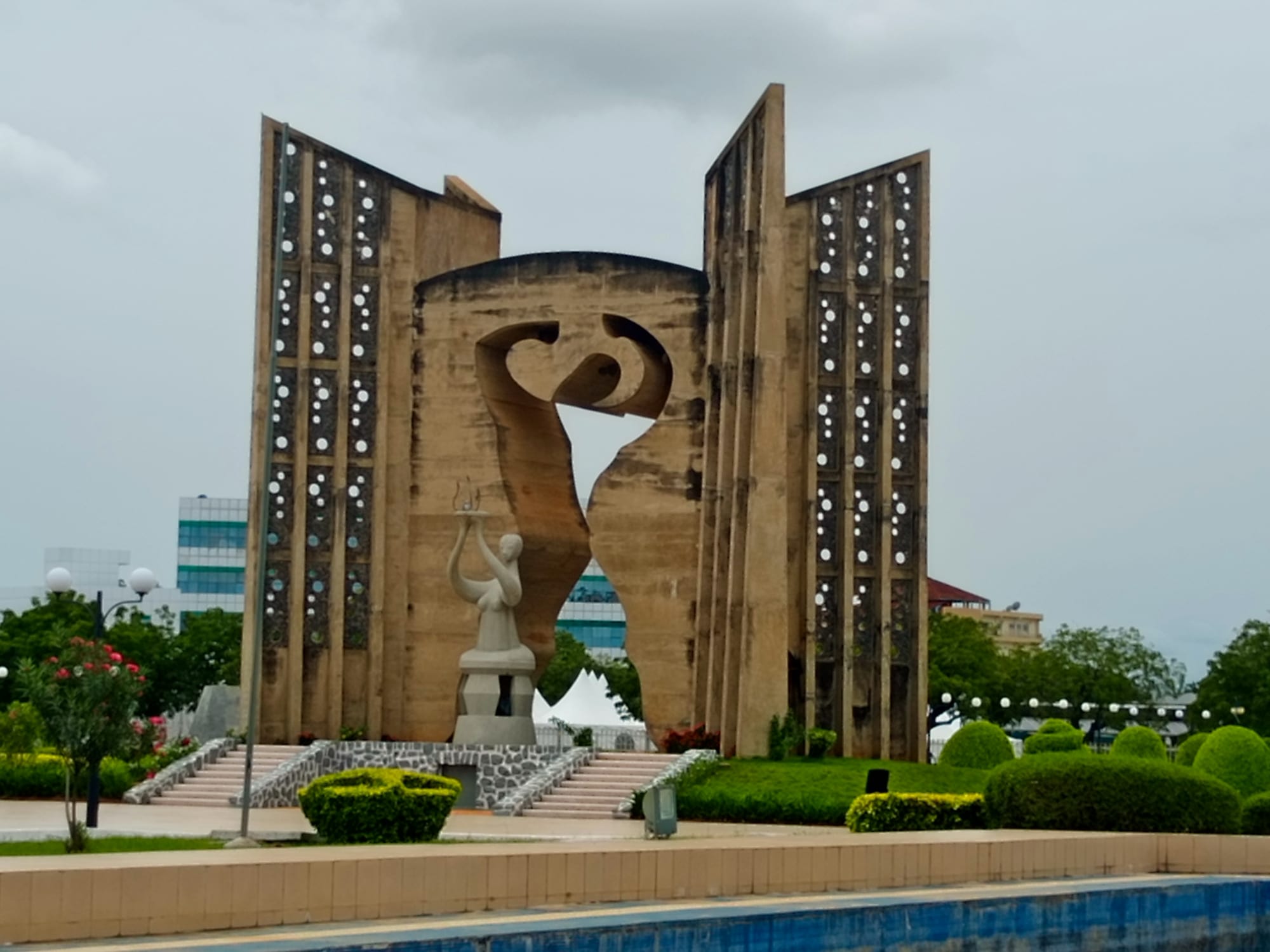
A country the shape of a corridor
Togo is a long, thin country in West Africa, stretching about 550 kilometres inland from a 56-kilometre stretch of Atlantic coast, and rarely more than 100 kilometres wide. Its roughly 9 million people belong to some 40 ethnic groups, with the Ewe of the south and the Kabye of the north the largest, a division that colonial and post-colonial politics turned into a fault line. Togo's borders are an accident of European rivalry, and its post-independence history has been shaped, almost entirely, by one military family that has held the presidency since 1967.
A short history
- pre-1800s
The peoples of the coast
Ewe, Mina, Kabye and others; the Atlantic slave trade.
- 1884
German protectorate
Germany declares Togoland; Lomé becomes the capital.
- 1914
Conquest
British and French forces take Togoland in the first Allied victory of the war.
- 1919–1960
Partition
British Togoland (west) and French Togoland (east) are administered separately.
- 1956–57
British Togoland joins Ghana
Its people vote to merge with the Gold Coast.
- 1960
Independence
French Togoland becomes the Republic of Togo under Sylvanus Olympio.
- 1963
Assassination
Olympio is killed in a coup — the first in post-colonial Africa.
- 1967
Eyadéma takes power
Étienne (Gnassingbé) Eyadéma seizes the presidency.
- 2005
Dynastic succession
Eyadéma dies; his son Faure Gnassingbé becomes president.
The Slave Coast and German Togoland
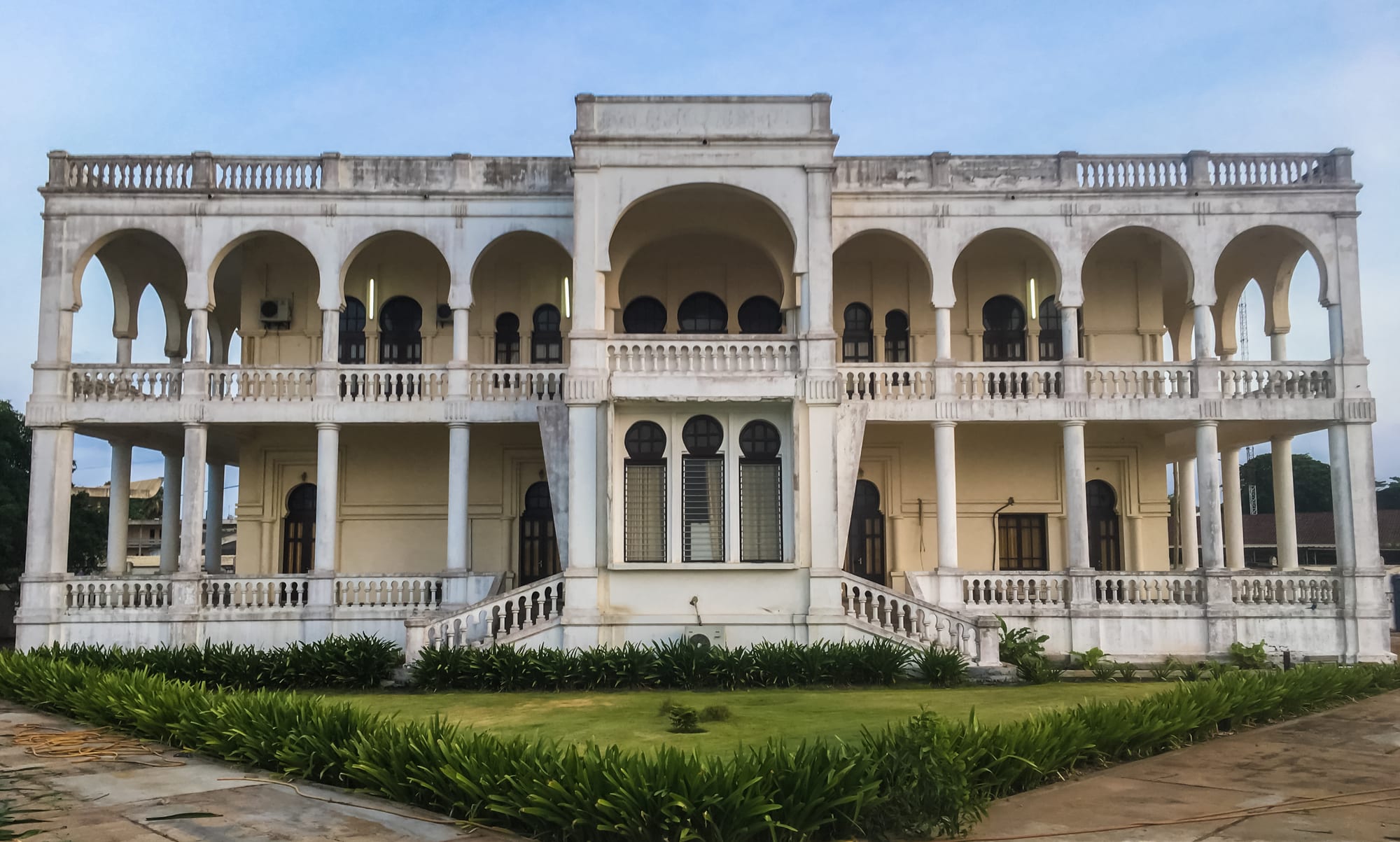
The coastal peoples — Ewe, Mina, Guin — were part of the stretch of West Africa Europeans called the Slave Coast, and the ports here fed the Atlantic trade for centuries. In 1884 the German explorer Gustav Nachtigal signed a protectorate treaty with a local chief at Togoville on the lagoon, and Germany built the colony of Togoland, running it as a showcase — Lomé's boulevards, a wharf, three railway lines, plantations and a telegraph — financed by harsh taxation and forced labour that provoked repeated resistance. Germany called it its "Musterkolonie", the model colony; Togolese experience of it was considerably less flattering.
Partition and independence
After the war the League of Nations divided Togoland into a British mandate in the west and a French one in the east. This cut the Ewe homeland in two and, in the west, separated communities from their historic centres. In 1956 the people of British Togoland voted, in a UN plebiscite, to join the Gold Coast, becoming part of independent Ghana the following year — a decision many Ewe still resent. French Togoland moved to internal self-government and then to full independence on 27 April 1960, led by Sylvanus Olympio, a businessman and nationalist from the southern Ewe elite.
Olympio, and the coups
Olympio governed austerely and tried to keep his distance from France, including by planning a Togolese currency. In January 1963 soldiers — among them recently demobilised veterans of the French army in Algeria and Indochina, mostly northern Kabye, whom Olympio had refused to absorb into the small Togolese army — shot him dead at the gate of the US embassy in Lomé. It was the first coup and the first assassination of a head of state in post-colonial Africa. A civilian government followed until 1967, when the sergeant who had led the 1963 coup, Étienne Eyadéma (later Gnassingbé Eyadéma), seized full power.
The Gnassingbé era
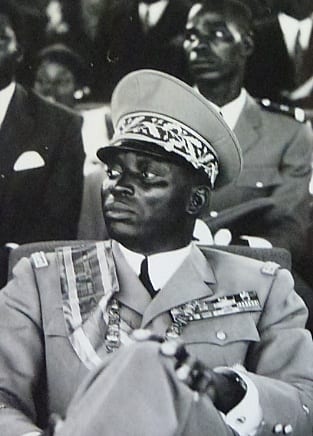
Eyadéma ruled for 38 years through a one-party state, a personality cult, and security forces dominated by his Kabye base, backed for much of the Cold War by France and the United States. A pro-democracy wave in 1990–91 forced a national conference and multiparty elections, but Eyadéma clung on through violence and fraud; a wave of repression in the early 1990s drove hundreds of thousands of Togolese into exile, and the EU suspended aid for years. When Eyadéma died in 2005, the army installed his son Faure Gnassingbé; international pressure forced a hasty election, held amid violence that a UN inquiry said killed 400–500 people. Faure has since won repeated disputed elections. In 2024–25 a constitutional change moved Togo to a parliamentary system in which Faure, as head of a powerful new "Council of Ministers" post chosen by the legislature, could stay in office indefinitely without facing voters directly — a move the opposition called a "constitutional coup".
What Togo carries
Togo's borders were drawn by Germany and then redrawn by Britain and France, cutting the Ewe in half and yoking a southern coast to a northern interior. Independence began with the continent's first coup and its first presidential assassination, and almost everything since has been the story of one family's hold on power — through a one-party state, a faked democratisation, a father-to-son succession, and now a constitutional rewrite designed to make that hold permanent.