Daily Life · Togo
Togo: The Courtyard and the Market
Extended families sharing a single walled compound, a working day split around the midday heat, and an economy that still runs largely through the hands of market women and motorbike-taxi drivers
By Worldlore Editorial · 30 September 2026
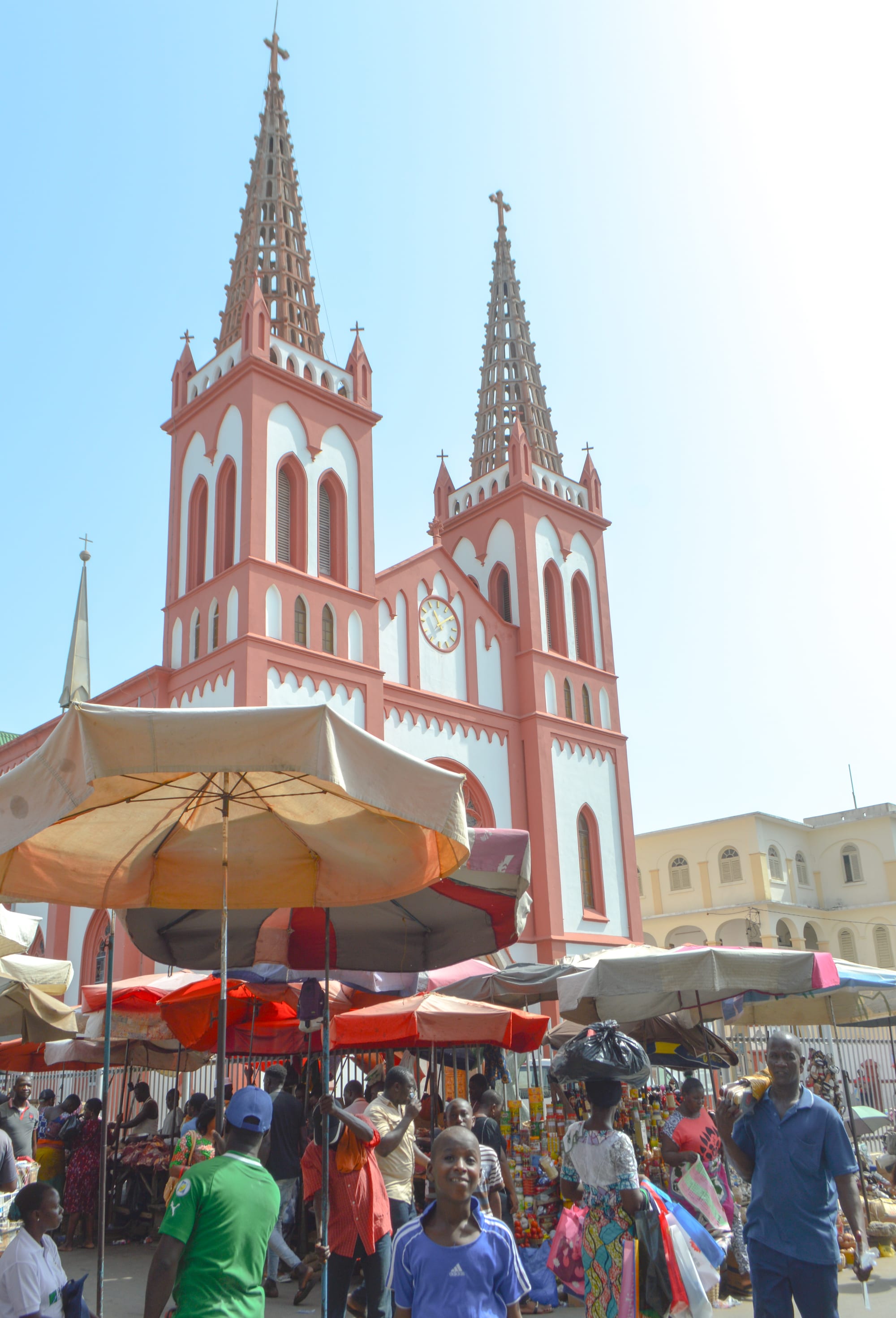
An ordinary day in Togo starts early and runs on small transactions. Motorbike taxis thread through the streets from first light, carrying office workers, schoolchildren and sacks of produce alike, while women set out cloth, dried fish and vegetables on market stalls that will stay busy until dusk. Many people still live within a walled family compound shared by several generations, and the working day bends around the worst of the midday heat before picking up again in the cooler hours. Church bells, the call to prayer and, in many households, the rhythms of Vodun ceremony all have a place in the same week, a mix found, in varying proportions, across the country.
Family and home life
Households in Togo are built around the extended family rather than the couple alone, and it remains common for several related families to share one walled compound, each with its own room or two opening onto a communal courtyard. Households are typically larger in rural areas than in Lomé and other towns, where younger Togolese increasingly live in smaller, nuclear arrangements. Authority generally rests with the eldest man of the household, in keeping with the patrilineal kinship of groups such as the Ewe, even though women have long dominated trade. Cooking, water-fetching and childcare fall mainly to women and older daughters, with chores shared across the compound rather than confined to a single nuclear family.
Work, school and the rhythm of the day
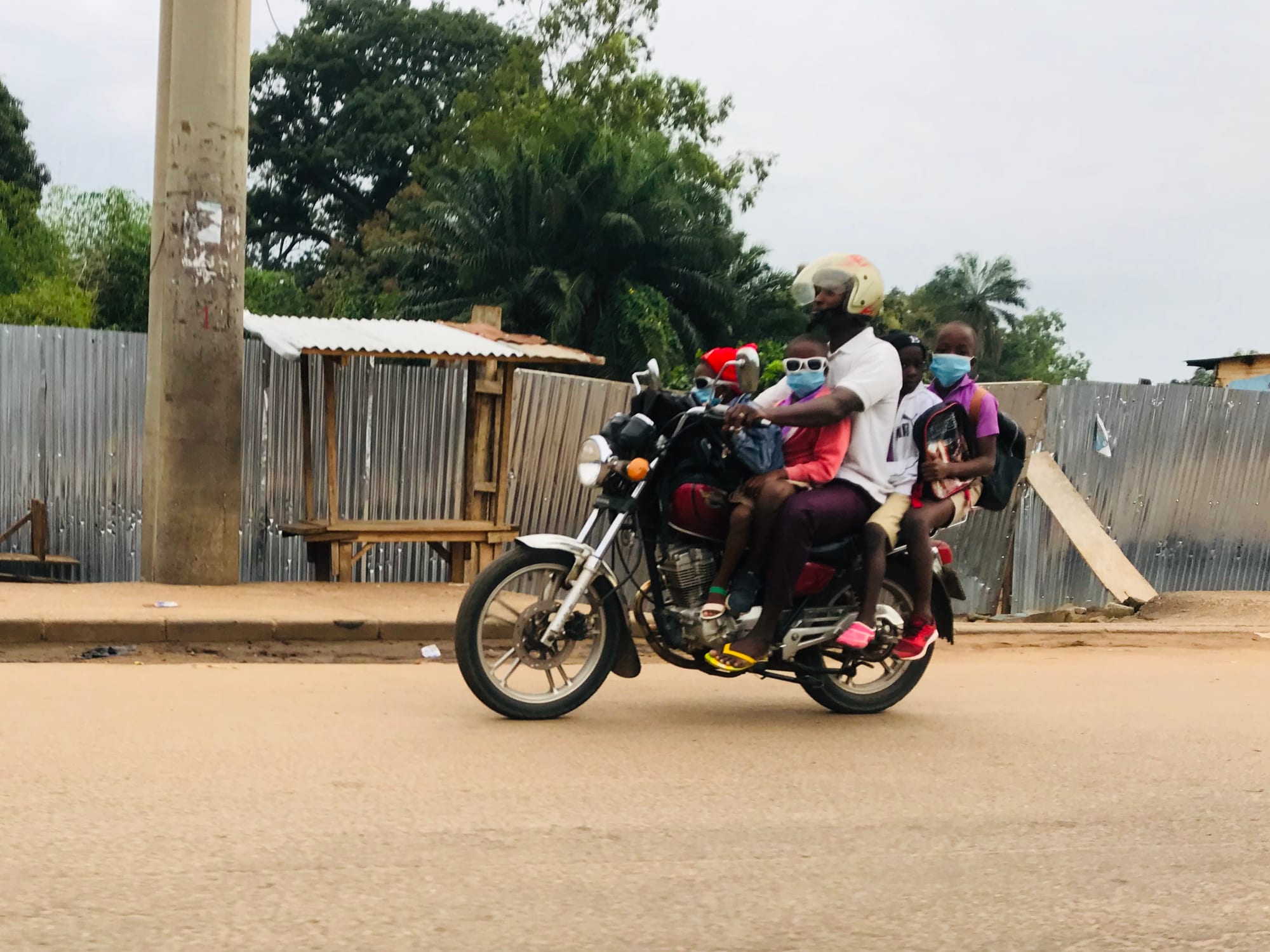
Around half of Togolese workers still farm — maize, cassava, yams and sorghum for the household, cocoa, coffee and cotton for cash — while in Lomé and other towns a large share of the population works in informal trade, running market stalls, small shops or transport rather than salaried jobs. Formal employers generally follow a Monday-to-Friday week of around 40 hours, and government offices often split the day into a morning session and an afternoon one either side of a long midday break, a pattern built around the heat rather than around any single custom. Schooling follows the French model inherited from the colonial period: primary school is compulsory from around age six to twelve, after which secondary study runs in two cycles, the second leading to the baccalauréat. Getting to school is itself part of the day's transport puzzle — it is common to see several children and an adult sharing one motorbike taxi for the ride in.
Community life and public spaces
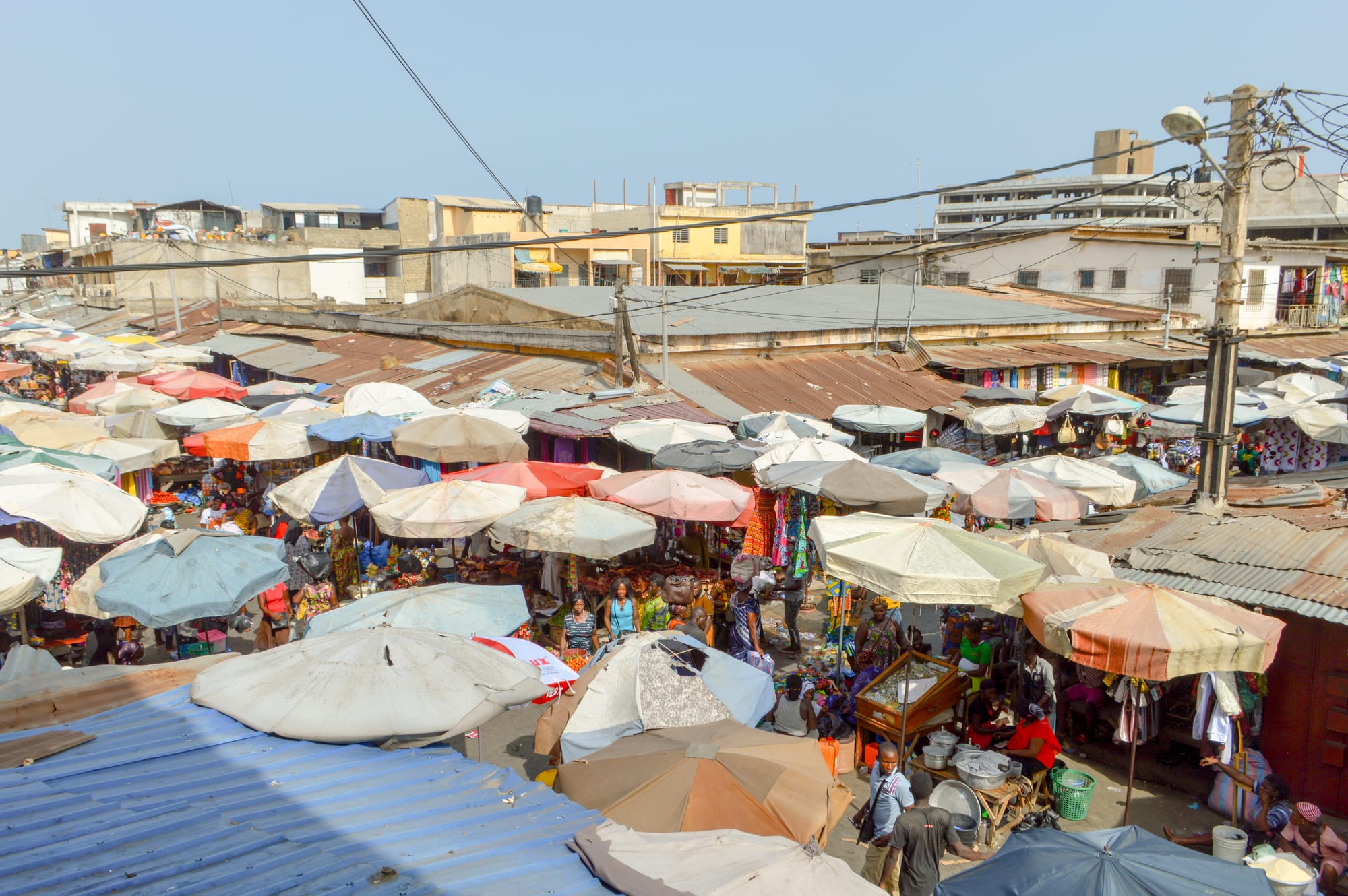
The market is Togo's real public square, and nowhere more than at Lomé's Grand Marché, long associated with the Nana Benz, the wax-print traders whose commercial power peaked in the 1970s and whose name — a play on the Mercedes-Benz cars some of them drove — has stuck to the country's market women ever since. Markets like it operate across the country, selling produce, cloth, hardware and prepared food under a dense canopy of umbrellas, and they remain the place where most people's everyday contact outside the household actually happens. Zémidjan motorbike taxis, found in every town of any size, are the connective tissue between compound, market, school and workplace, flagged down rather than booked and paid for by the trip. Churches, mosques and Vodun shrines sit within the same neighbourhoods and often the same streets, each drawing its own regular gathering of worshippers through the week.
Free time and weekends
Sunday is the one widely shared day off, given over to church for Christian households, to family visits and, for many, to a slower version of the same market routine that runs the rest of the week — stalls still open, if less crowded. Football is followed closely nationwide, watched at home or wherever a television draws a crowd, and informal five-a-side games are common on any patch of open ground. Extended-family gatherings, often centred on a shared meal prepared communally in the compound, are the default way free time is spent, with organised leisure such as cinemas or sports clubs largely confined to Lomé.
A visitor's ordinary day
Togo runs on cash, in West African CFA francs; ATMs are reliable in Lomé and a handful of larger towns but scarce elsewhere, so plan withdrawals in advance of travelling upcountry. Shops and market stalls typically open by mid-morning and trade into the evening most days of the week. Zémidjan motorbike taxis are the everyday way to get around towns — agree the fare before setting off, since none run on a meter — while shared bush taxis and minibuses cover longer routes between towns on a leave-when-full basis rather than a fixed timetable. Government offices, and some banks, often keep a split midday schedule, so plan errands for the morning or late afternoon rather than around noon.
What to take away
What holds an ordinary Togolese day together is less any single institution than the two that repeat everywhere, from the capital to the smallest village: the family compound that people come home to, and the market that, one way or another, is how most of them make a living.