History · Thailand
Thailand: The Land That Was Never Colonised
The one Southeast Asian country that kept its independence through the age of empire — a Buddhist kingdom that traded territory for survival, replaced its absolute monarchy with a fragile constitution in 1932, and has cycled through a dozen coups since
By Worldlore Editorial · 10 September 2026
The independent exception
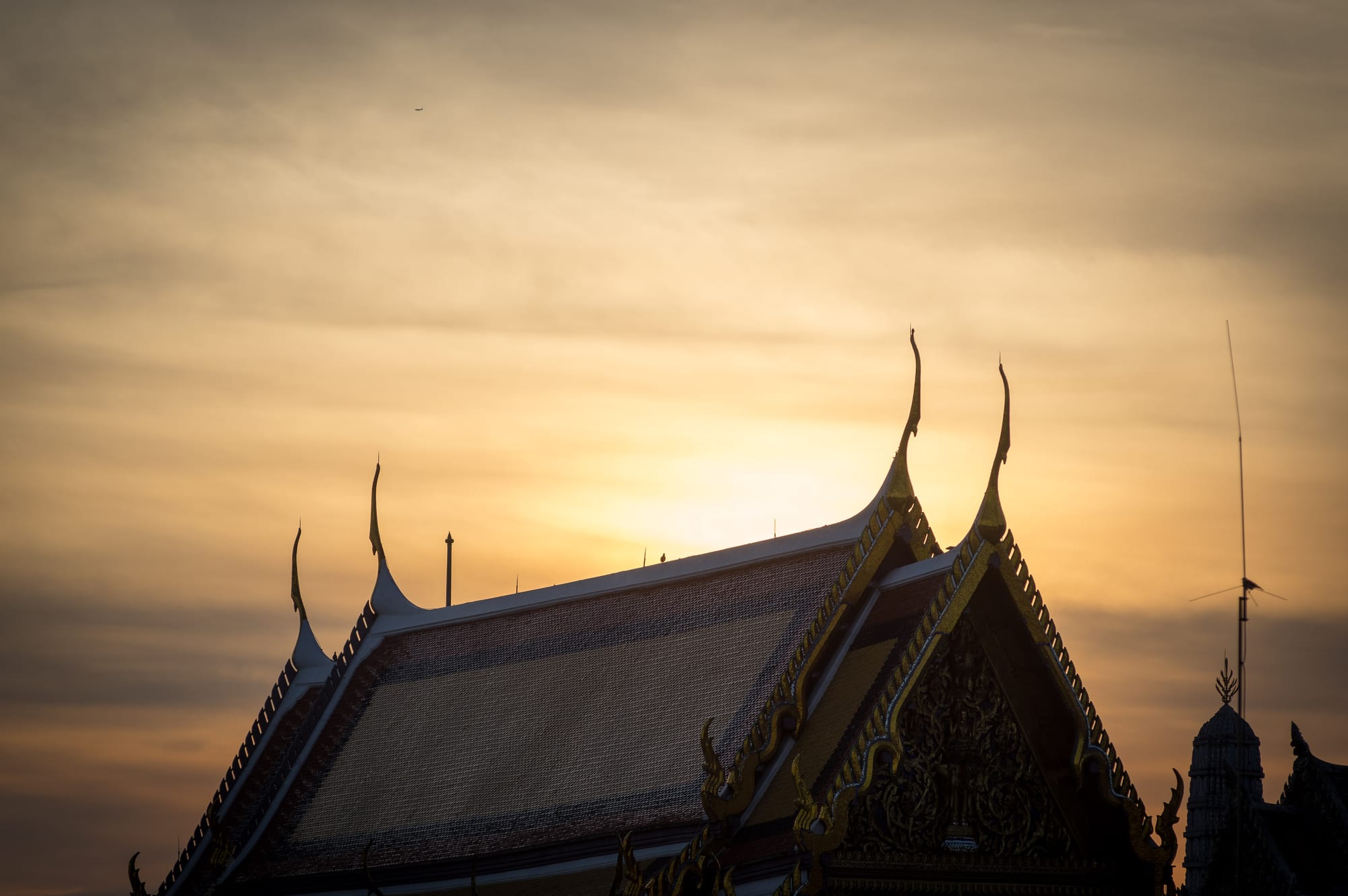
Thailand — known as Siam until 1939 — is a country of about 72 million people at the centre of mainland Southeast Asia, and it holds a distinction its neighbours do not: it was never formally colonised by a European power. It kept its independence by ceding border territories, modernising its administration on European lines, and playing Britain and France against each other. The monarchy, Theravada Buddhism and the Thai language are the pillars of national identity, but the country's politics since 1932 has been an unstable contest between elected governments, the military, and the palace.
A short history
- 1238–1438
Sukhothai
An early Thai kingdom, remembered as a golden age.
- 1351–1767
Ayutthaya
A powerful, cosmopolitan kingdom; sacked and destroyed by Burma.
- 1782
The Chakri dynasty
Bangkok is founded; the current royal house begins.
- 1855–1909
The colonial squeeze
Siam signs unequal treaties and cedes land to Britain and France.
- 1868–1910
King Chulalongkorn
Sweeping reforms modernise the state and end slavery.
- 1932
The revolution
A bloodless coup ends the absolute monarchy.
- 1941–1945
The Second World War
Siam allies with Japan, then switches sides.
- 1946–2016
King Bhumibol
A 70-year reign spanning most of the modern era.
- 1932–present
The age of coups
Around a dozen successful military coups.
Sukhothai, Ayutthaya, Bangkok
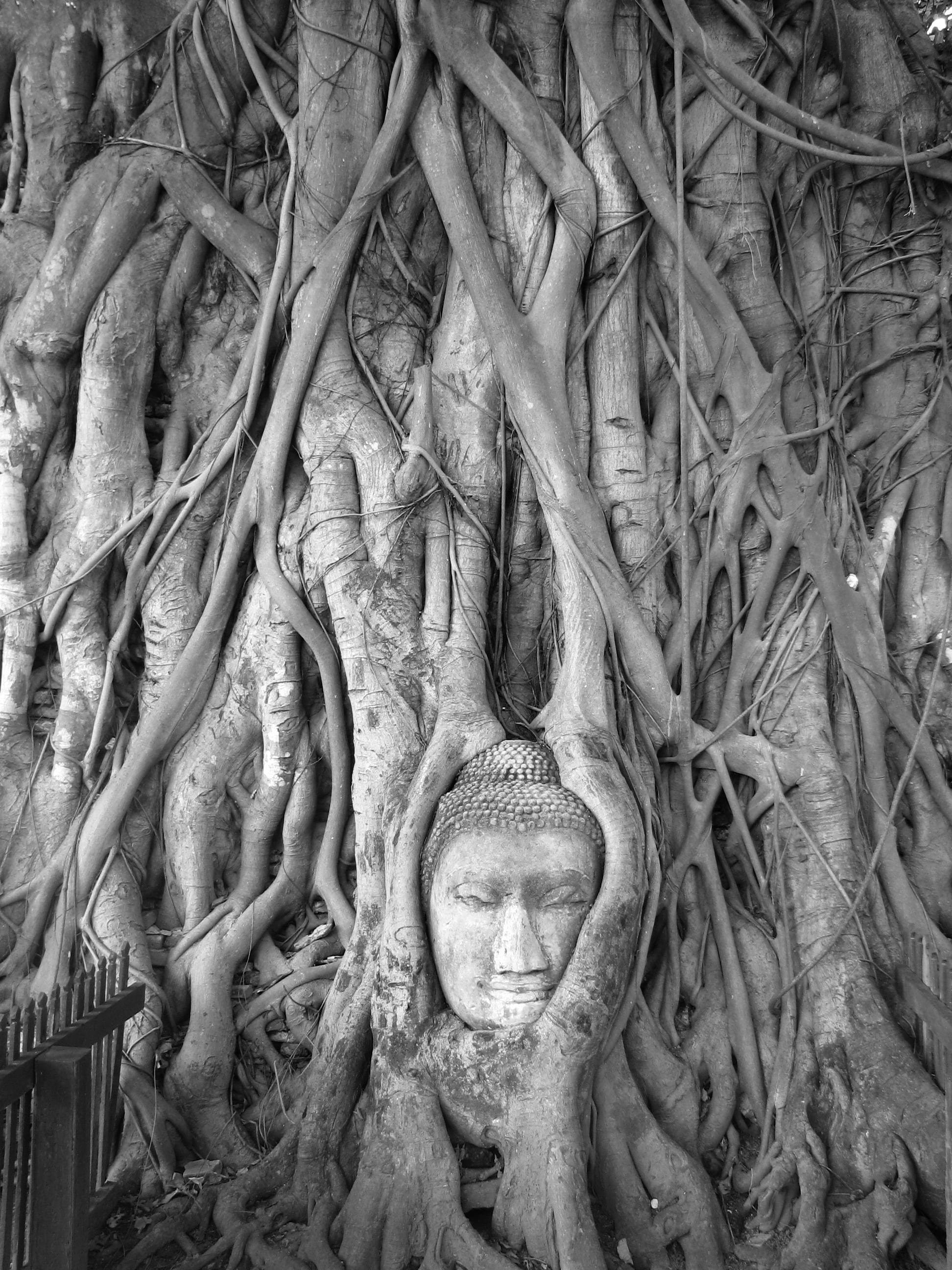
Tai-speaking peoples migrated south into the region over centuries, and by the 13th century had founded kingdoms including Sukhothai, credited in Thai tradition with the invention of the Thai script and a benevolent model of Buddhist kingship. It was eclipsed by Ayutthaya, a wealthy trading kingdom on the Chao Phraya that lasted four centuries, dealt with Portuguese, Dutch, French and Persian embassies, and was one of the largest cities in the world before a Burmese army sacked and burned it in 1767. A general, Taksin, rallied resistance, and his successor founded the Chakri dynasty and a new capital at Bangkok in 1782.
Keeping the empires out
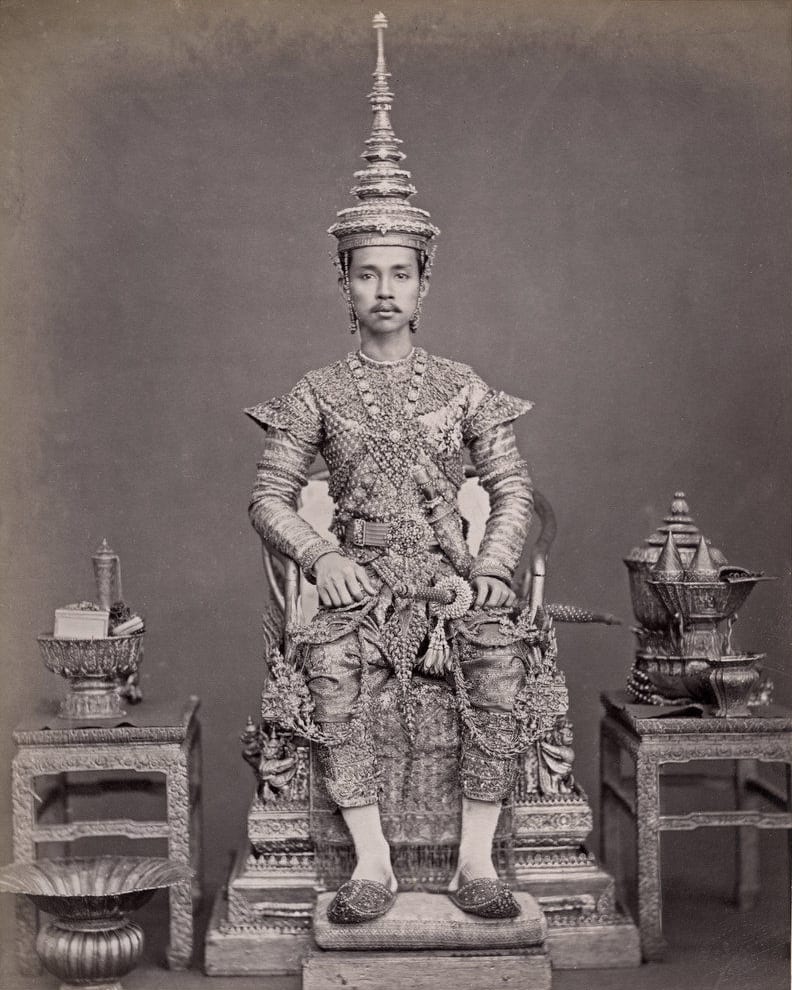
In the 19th century Siam was surrounded: Britain took Burma and Malaya, France took Vietnam, Laos and Cambodia. King Mongkut (Rama IV) and especially his son Chulalongkorn (Rama V) chose accommodation and reform over resistance. They signed trade treaties that were unequal but avoided war, hired European advisers, centralised a formerly loose realm into a modern bureaucratic state with provinces, railways, a standing army and a legal code, and abolished slavery and corvée labour. They also ceded peripheral territories — parts of Laos, Cambodia and the northern Malay states — to the two empires as the price of keeping the core independent. Siam ended the colonial era smaller but sovereign, the only such state in Southeast Asia.
1932 and the military
On 24 June 1932 a group of soldiers and civil servants, the People's Party, staged a bloodless coup that replaced the absolute monarchy with a constitutional one. The promised democracy did not take hold: the military, led for years by Field Marshal Plaek Phibunsongkhram, dominated, renamed the country Thailand in 1939, and allied with Japan in the Second World War (a Free Thai resistance and a quiet switch of sides limited the consequences). After the war, and with heavy US backing during the Cold War — Thailand hosted major American air bases during the Vietnam War — a succession of military governments ruled, punctuated by brief democratic openings and by student-led uprisings, notably the mass protests of 1973 and the massacre of demonstrators at Thammasat University in 1976.
Bhumibol, Thaksin, and the colour-coded conflict
King Bhumibol Adulyadej (Rama IX), who reigned from 1946 to 2016, became a unifying, near-sacred figure, and the palace and army developed a close relationship, backed by strict lèse-majesté laws. A more open period from the 1990s was upended by the rise of Thaksin Shinawatra, a telecoms billionaire whose party won landslide elections in 2001 and 2005 on populist policies popular with the rural north and north-east. His opponents in the Bangkok establishment, military and courts accused him of corruption and authoritarianism; he was ousted by a coup in 2006, and Thai politics split into "red shirt" (pro-Thaksin) and "yellow shirt" camps, with street confrontations, court-ordered dissolutions of pro-Thaksin governments, and a bloody crackdown on red-shirt protests in 2010.
Thailand now
A 2014 coup installed a junta under General Prayuth Chan-ocha, which wrote a new constitution designed to limit elected governments and appointed a Senate that helped keep Prayuth in power after a 2019 election. In 2020–21 a youth-led protest movement broke a long taboo by openly criticising the monarchy and demanding reform of the lèse-majesté law; it was met with prosecutions. In 2023 a reformist party won the most votes but was blocked from power by the appointed Senate, and a Thaksin-aligned party formed a government in coalition with its former military adversaries — an illustration of how fluid, and how constrained, Thai democracy remains.
What Thailand carries
Thailand's founding boast is that it was never colonised, achieved by a 19th-century strategy of reform and territorial concession that preserved the monarchy and the state. But the same period left an unusually powerful army and palace at the centre of national life, and since 1932 the country has never settled the basic question of who governs — voters, generals, or the courts. The dozen coups are the record of that unfinished argument.