Daily Life · Thailand
Thailand: Sanuk and the Six A.M. Alms Round
Barefoot monks collecting rice at dawn, a street-food economy that feeds much of the country its lunch and dinner, and an idea, sanuk, that even ordinary work should have some enjoyment built into it
By Worldlore Editorial · 30 September 2026
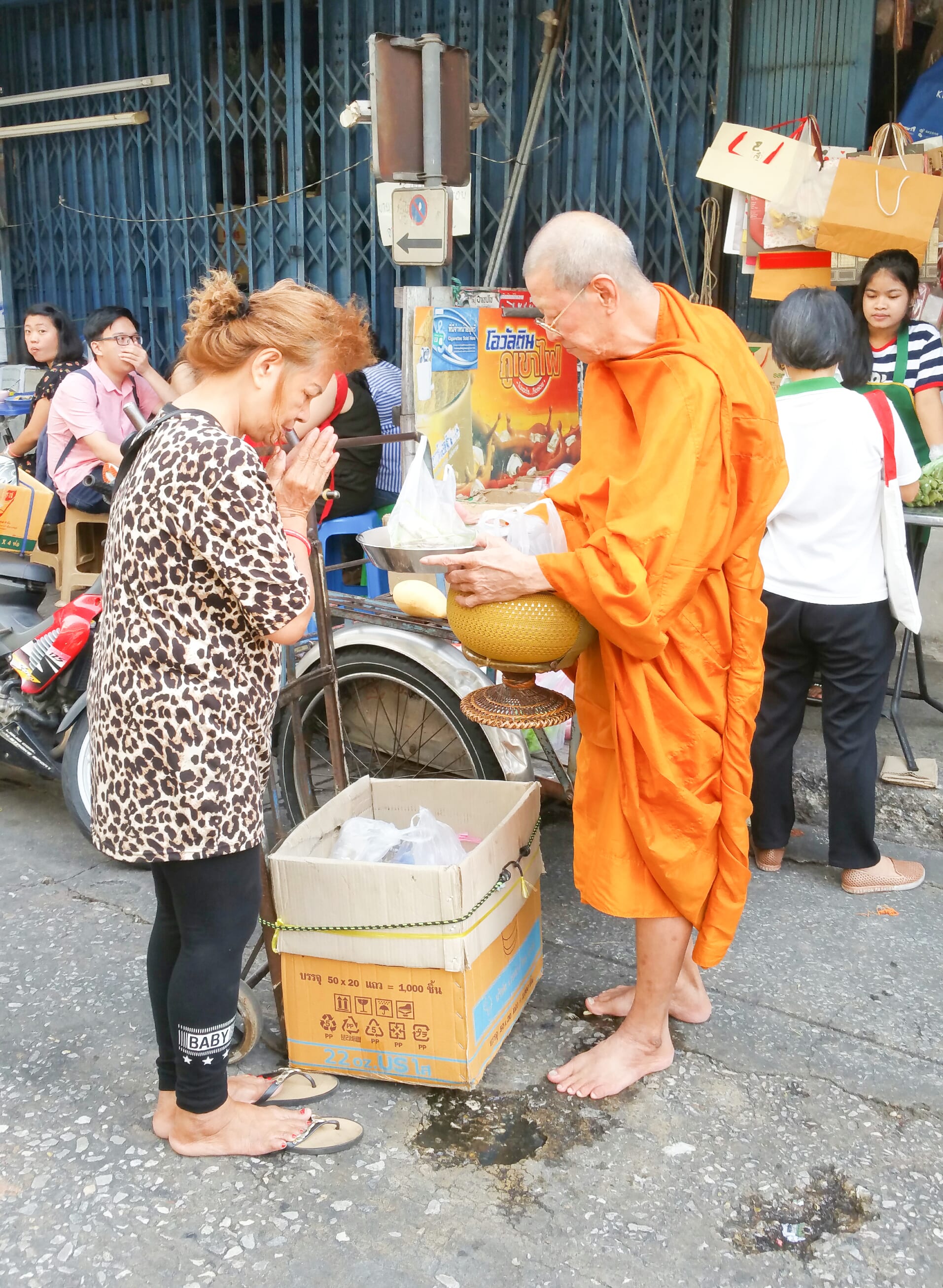
An ordinary day in Thailand often begins before most visitors are awake, with barefoot monks walking a fixed route through their neighbourhood to collect food offered by households and shopkeepers, a ritual repeated nationwide every morning of the year. From there the day moves at a pace shaped by sanuk, the widely held idea that an activity, work included, should carry at least some enjoyment, and by an economy that runs substantially through street food: carts and stalls selling breakfast, lunch and dinner to office workers, students and labourers who may never cook a full meal at home. Buddhism, the monarchy and a strong sense of courtesy and composure sit under almost all of it, whether in a Bangkok tower block or a rural village.
Family and home life
Extended family ties and respect for elders remain important, and children are generally raised to defer to parents and grandparents in a way that continues into adulthood. It remains common, though decreasingly so in Bangkok, for several generations to share a household, and the giving of alms to monks each morning is frequently a family activity, with children brought along to place food in a monk's bowl as part of learning generosity and respect from a young age. For many Thai men, ordaining as a monk for a period, sometimes no more than a few weeks, remains an expected life event, traditionally undertaken before marriage, and families treat a son's ordination as a significant milestone in its own right.
Work, school and the rhythm of the day
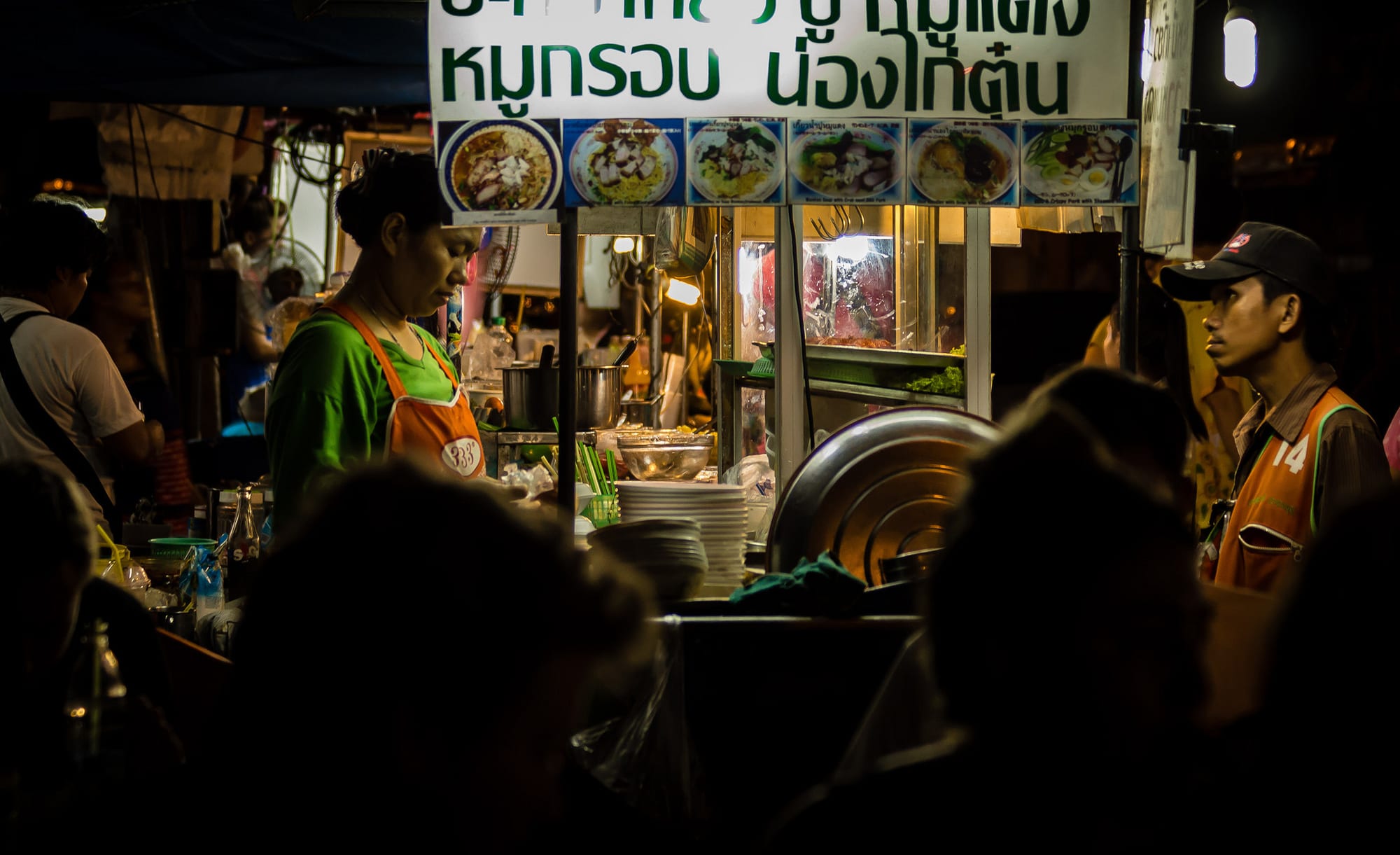
Office hours generally follow a standard working week, but street-food vendors, markets and small shops keep far longer and more irregular hours, often opening before dawn and closing late. Eating out for lunch and dinner is genuinely normal rather than a treat, since a bowl of noodles or a plate of rice from a street stall is often as cheap and quick as cooking, and office workers, students and construction crews alike rely on this street-level food economy through the working day. Thailand's economy runs on manufacturing, agriculture, and one of the largest tourism sectors in the world, and traffic congestion in the capital is enough of a fact of daily life that many commuters plan journeys around the BTS Skytrain, MRT metro or river boats rather than the road.
Community life and public spaces
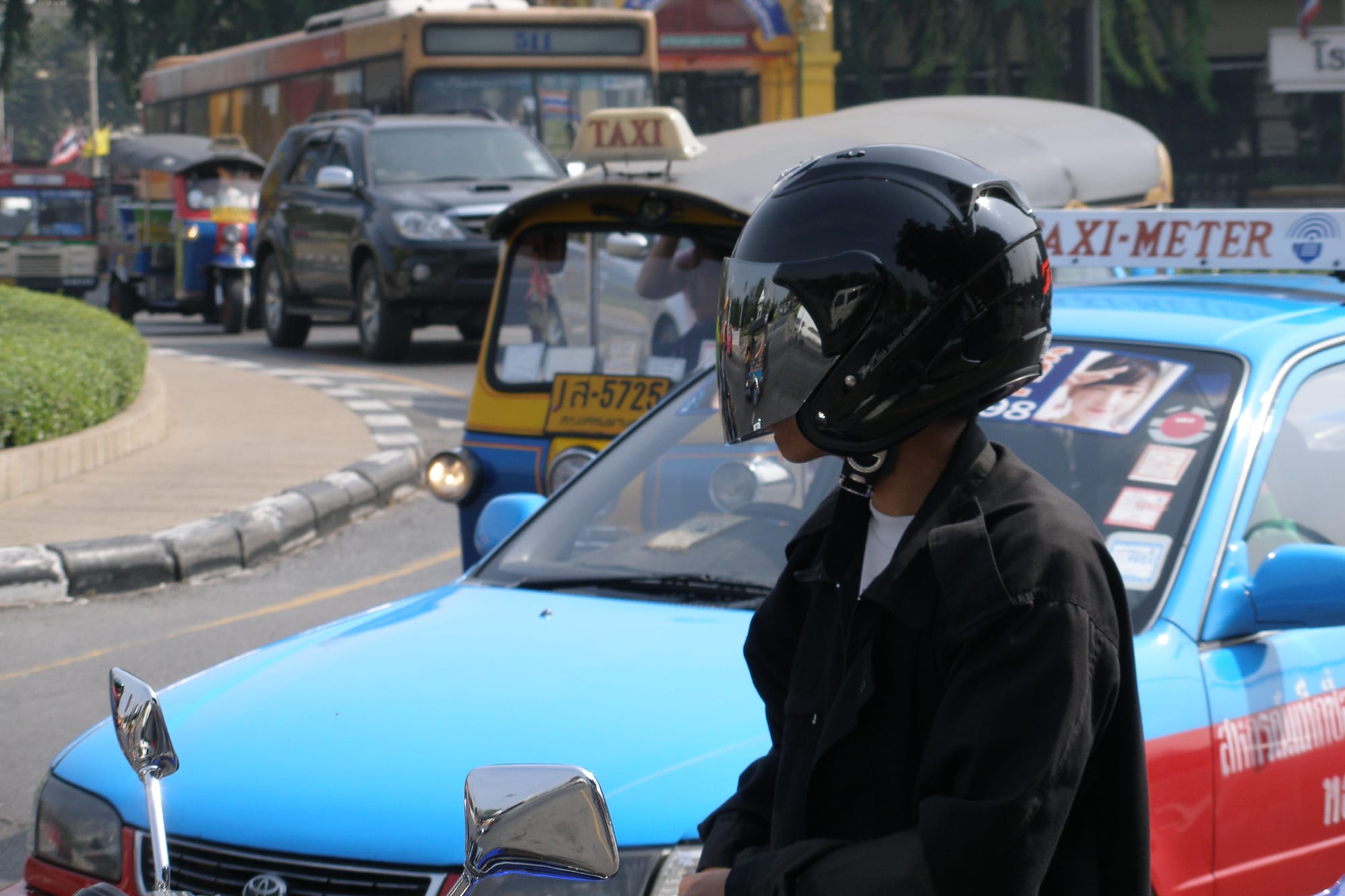
Temples, or wat, function as genuine community centres well beyond religious observance, hosting festivals, markets and, in some villages, the local school. Streets are shared in a way that takes visitors some adjustment: motorbikes, tuk-tuks, metered taxis and songthaews, converted pick-up trucks used as shared transport, weave through the same lanes as cars and buses, and short motorbike-taxi hops are a routine way to cover the last stretch of any journey. Markets, whether a fixed covered market or a temporary evening set-up of stalls, remain a central gathering point in towns of every size, doing double duty as a place to shop and to see other people.
Free time and weekends
Weekends bring family meals, temple visits and, in Bangkok, a trip to a weekend market such as Chatuchak, one of the world's largest, for shopping as much as socialising. Sanuk shapes leisure time directly: activities are generally chosen and judged partly by whether they are enjoyable to do with others, and this extends to food, where sharing several dishes at one table is the normal way to eat rather than each person ordering their own. Muay Thai and football both draw devoted followings, and karaoke and evening markets are common ways for friends to spend a weekend evening.
A visitor's ordinary day
Thailand is comfortable for cashless payment in malls, hotels and chain stores, but street food, markets and small shops still expect cash, and ATMs, while everywhere, charge a fixed fee per withdrawal for foreign cards, so it pays to take out larger amounts less often. The BTS Skytrain and MRT are the easiest way to beat Bangkok traffic, while overnight trains and long-distance buses connect the regions economically. Modest dress, covered shoulders and knees and shoes removed, is expected at temples, and the general composure valued in daily life, avoiding raised voices or visible frustration, is worth matching even when a queue or a delay tests patience.
What to take away
What defines an ordinary day in Thailand is less any single custom than how consistently sanuk and Buddhist practice run underneath it, turning even routine things, a shared meal, a morning alms round, a market stall, into something meant to be, at least a little, enjoyed rather than simply endured.