History · Syria
Syria: The Crossroads of the Levant
One of the oldest continuously inhabited lands on Earth — heart of empires and caliphates, carved into a French mandate, ruled for half a century by one family, and shattered by a civil war that ended only with the regime's sudden fall in 2024
By Worldlore Editorial · 19 September 2026
An ancient land, a young state
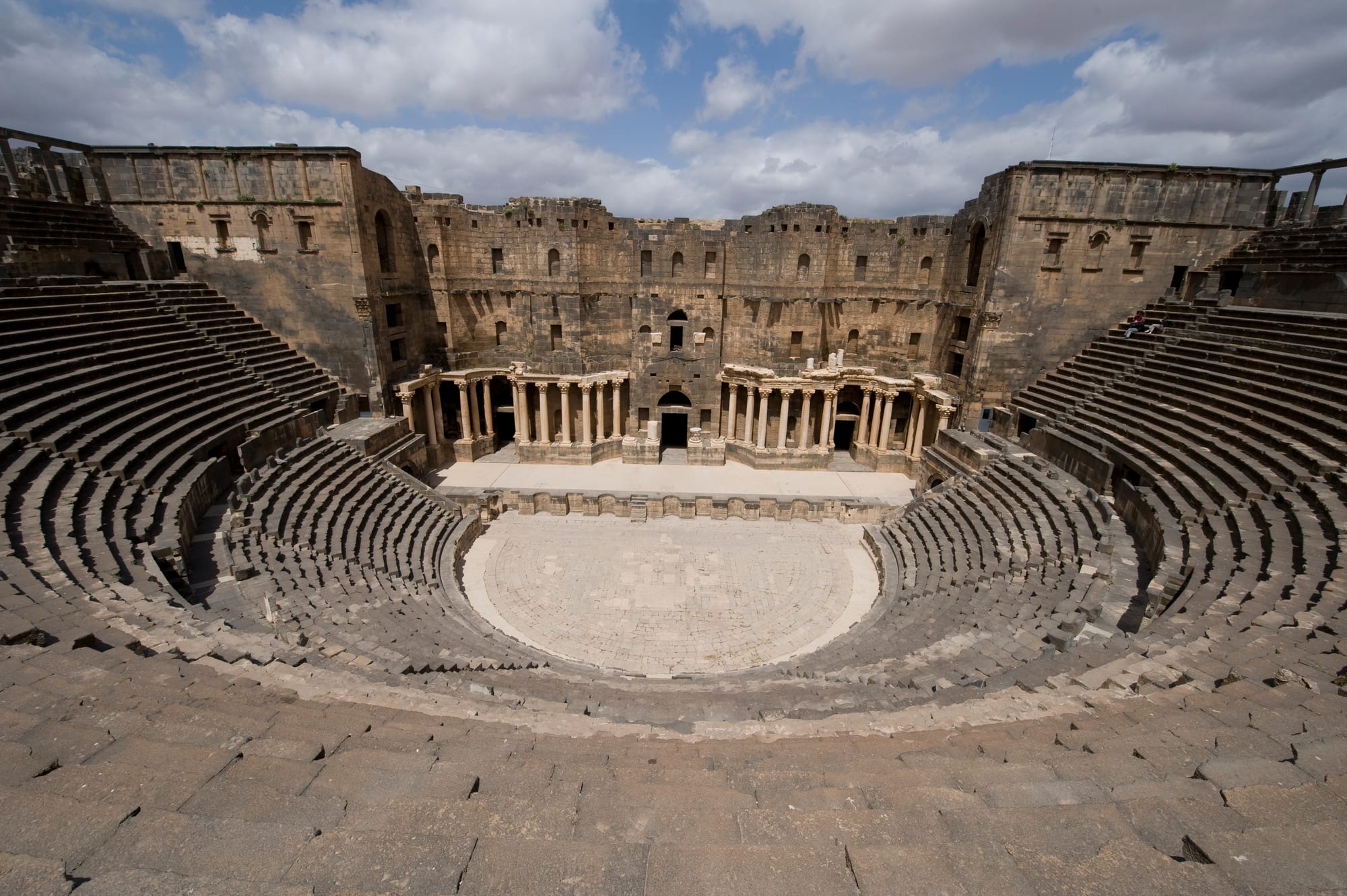
Syria, in the eastern Mediterranean, contains some of the oldest cities and states in human history, and Damascus and Aleppo are among the longest continuously inhabited cities anywhere. The modern republic, by contrast, was drawn by France after the First World War and has existed only since the 1940s. Its roughly 23 million people (before the war displaced half of them) are mostly Sunni Arab, with significant Alawite, Christian, Kurdish, Druze and other communities. This account sketches the long history and the recent conflict, attributing contested points rather than resolving them.
A short history
- 3rd millennium BCE
Early states
Ebla, Mari and other cities; a crossroads of the ancient Near East.
- 1st–3rd c. CE
Roman Syria
Palmyra flourishes as a caravan city between Rome and Persia.
- 636–750
The Umayyad Caliphate
Damascus is the capital of an empire from Spain to India.
- 1516–1918
Ottoman rule
Syria is governed from Istanbul for four centuries.
- 1920–1946
The French Mandate
France divides and administers the territory.
- 1946
Independence
Syria becomes a republic after French withdrawal.
- 1958–1961
Union with Egypt
The United Arab Republic; it breaks up after a coup.
- 1963
The Baʿath seizes power
A one-party state; Hafez al-Assad takes over in 1970.
- 2011
The uprising
Protests are met with force; a civil war follows.
- 2024
The fall
A rebel offensive topples Bashar al-Assad in eleven days.
Empires and the caliphate
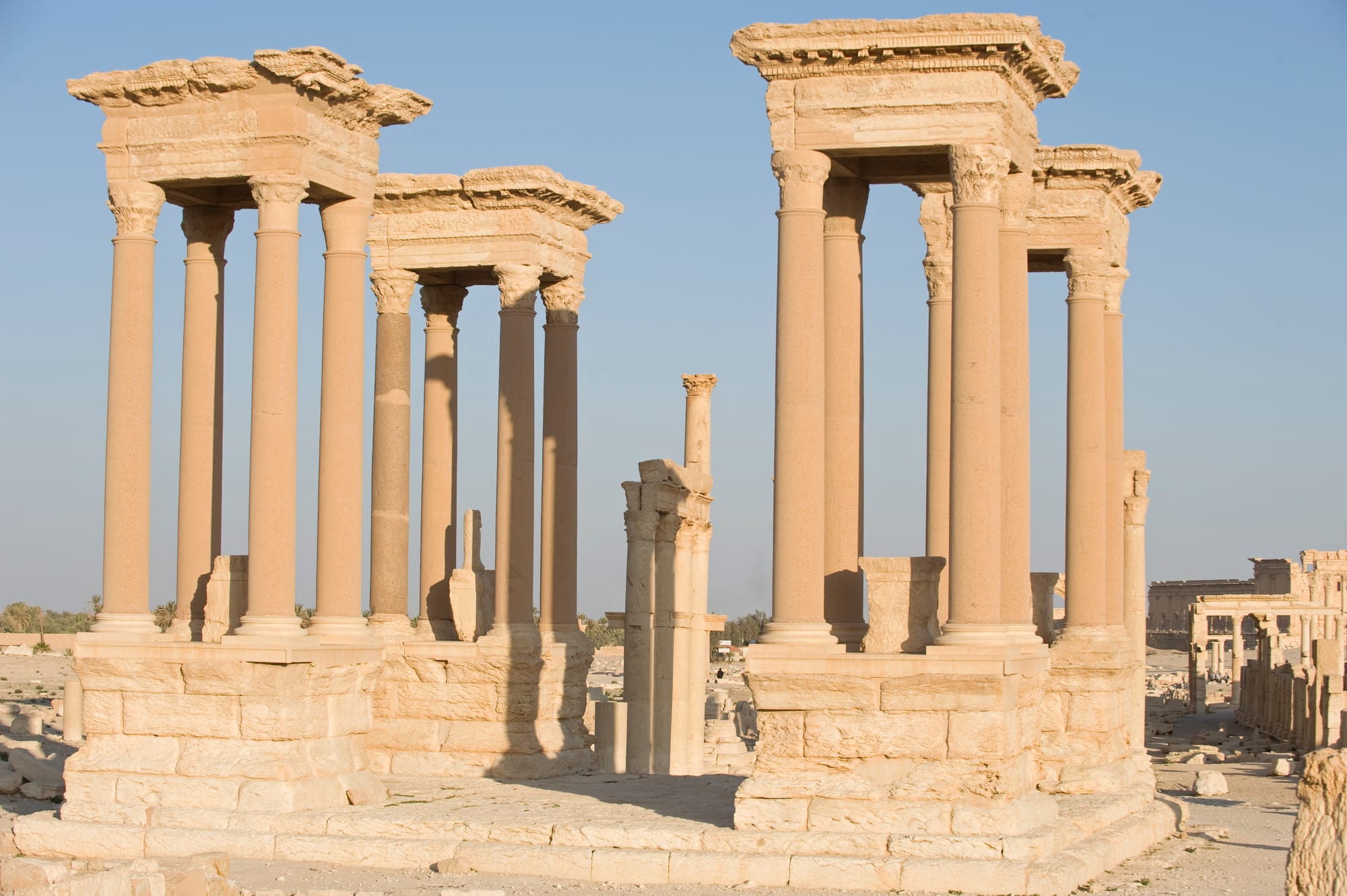
The region was a hearth of civilisation — the archives of Bronze Age Ebla, the Aramaean kingdoms, and Palmyra, whose queen Zenobia briefly challenged Rome in the 3rd century. Syria was an early and important centre of Christianity, then, after the Arab conquest in 636, the seat of the Umayyad Caliphate (661–750), which ruled from Damascus over the largest empire the world had yet seen. Later it was contested by Abbasids, Crusaders (who built castles such as Krak des Chevaliers), Ayyubids under Saladin, Mongols, Mamluks, and finally the Ottomans, who held it from 1516 to 1918.
Mandate and independence
After the Ottoman collapse, an Arab government briefly ruled from Damascus, but the 1916 Sykes–Picot understanding and the 1920 San Remo conference placed Syria under French mandate. France defeated the Arab kingdom at Maysalun, then governed by division — separate statelets for the Alawites and the Druze, the detachment of Lebanon, and the cession of the Alexandretta district to Turkey in 1939 — and put down a major national revolt in 1925–27, bombarding Damascus. Independence was proclaimed during the Second World War and completed with the French departure in 1946. The new republic was chronically unstable, cycling through coups; in 1958–61 it merged with Egypt as the United Arab Republic before a coup pulled it out.
The Baʿath and the Assads
In 1963 the pan-Arab, secular-nationalist Baʿath Party took power in a coup and never relinquished it. A 1966 intra-party coup, then the loss of the Golan Heights to Israel in the 1967 war, set the stage for the defence minister Hafez al-Assad, who seized full control in 1970. Assad — from the minority Alawite community — built a highly centralised police state resting on the army, the security services (mukhabarat), the Baʿath and an Alawite-dominated officer corps, with a personality cult and emergency law in force for decades. When the Muslim Brotherhood led an uprising centred on Hama in 1982, the army crushed it, killing many thousands of people and levelling much of the old city. Hafez was succeeded on his death in 2000 by his son Bashar al-Assad.
The uprising and the war
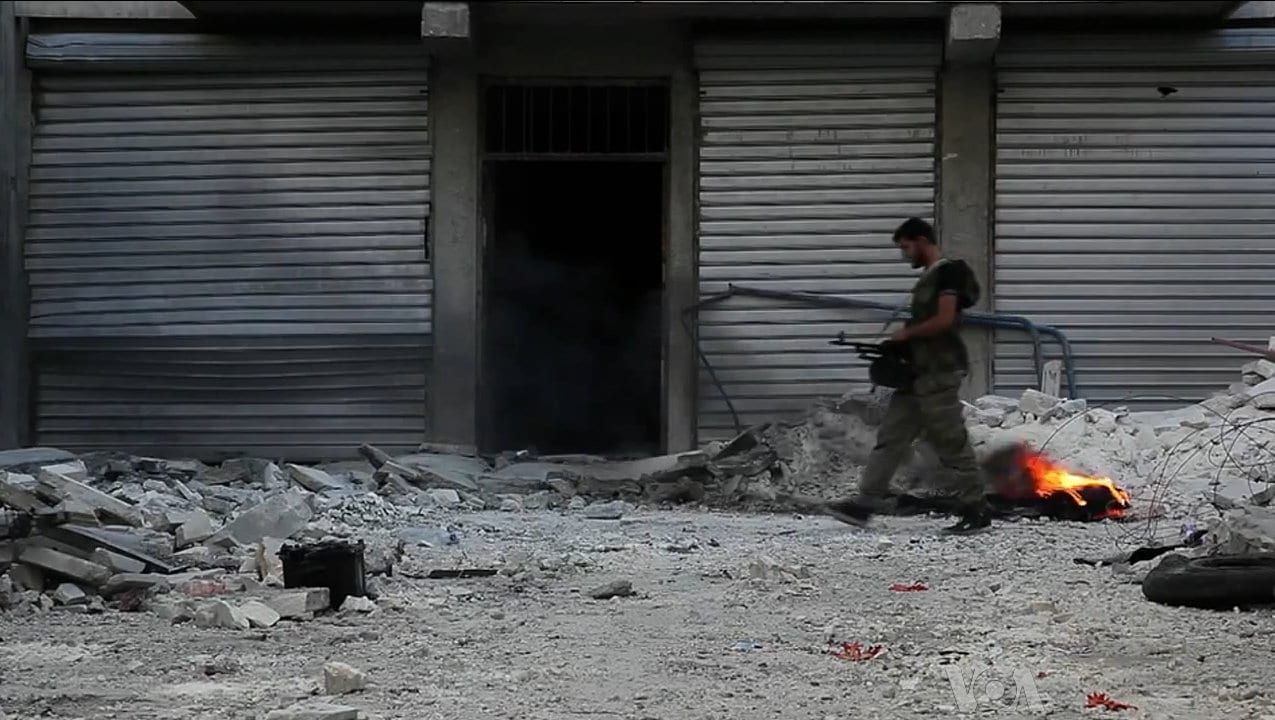
In March 2011, amid the wider Arab Spring, protests demanding reform and the release of detained children spread across Syria and were met with live fire, mass arrest and torture, according to UN investigators and human-rights groups; the government said it faced armed terrorist groups from the outset. The confrontation escalated into a civil war that fragmented the country: the government, backed by Russia and Iran and the Lebanese group Hezbollah; a range of opposition and Islamist factions, some backed by Turkey, Gulf states and the West; the jihadist Islamic State, which seized eastern Syria and Mosul in 2014 and was defeated by 2019; and a Kurdish-led administration in the north-east supported by the United States. UN bodies and the OPCW attributed multiple chemical-weapons attacks to the Syrian government, which denied responsibility. By the early 2020s the war had killed an estimated 500,000 people or more and displaced around 13 million, over half the pre-war population, with the government controlling most of the west in a ruined economy under heavy sanctions.
The fall of the Assads
In late November 2024 a rebel coalition led by Hayat Tahrir al-Sham launched an offensive from the north-west. Government forces, hollowed out and no longer sufficiently propped up by a Russia bogged down in Ukraine and an Iran and Hezbollah weakened by war with Israel, collapsed with startling speed. Aleppo, Hama and Homs fell within days, and on 8 December 2024 Damascus was taken and Bashar al-Assad fled to Russia, ending 54 years of Assad family rule. A transitional administration led by the offensive's commander took over, facing the tasks of unifying armed factions, protecting minorities, restarting the economy and deciding how to account for the crimes of the war.
What Syria carries
Syria's deep history is one of centrality — to the ancient Near East, to early Christianity, to the first Islamic empire. Its modern history is the opposite: a state assembled by France from pieces, ruled for half a century by one family through fear, and then torn apart for thirteen years in a war that drew in every major power in the region. The sudden fall of the regime in 2024 reopened, rather than answered, the question of what kind of country Syria will be.