Daily Life · Svalbard
Svalbard: A Town Where Nobody Stays for Good
A visa-free Arctic settlement with no indigenous population, where most people are temporary researchers, students or tourism workers, where a rifle is as ordinary as a coat, and where the very old, the dying and the newly born are, by long practice, sent to the mainland
By Worldlore Editorial · 30 September 2026
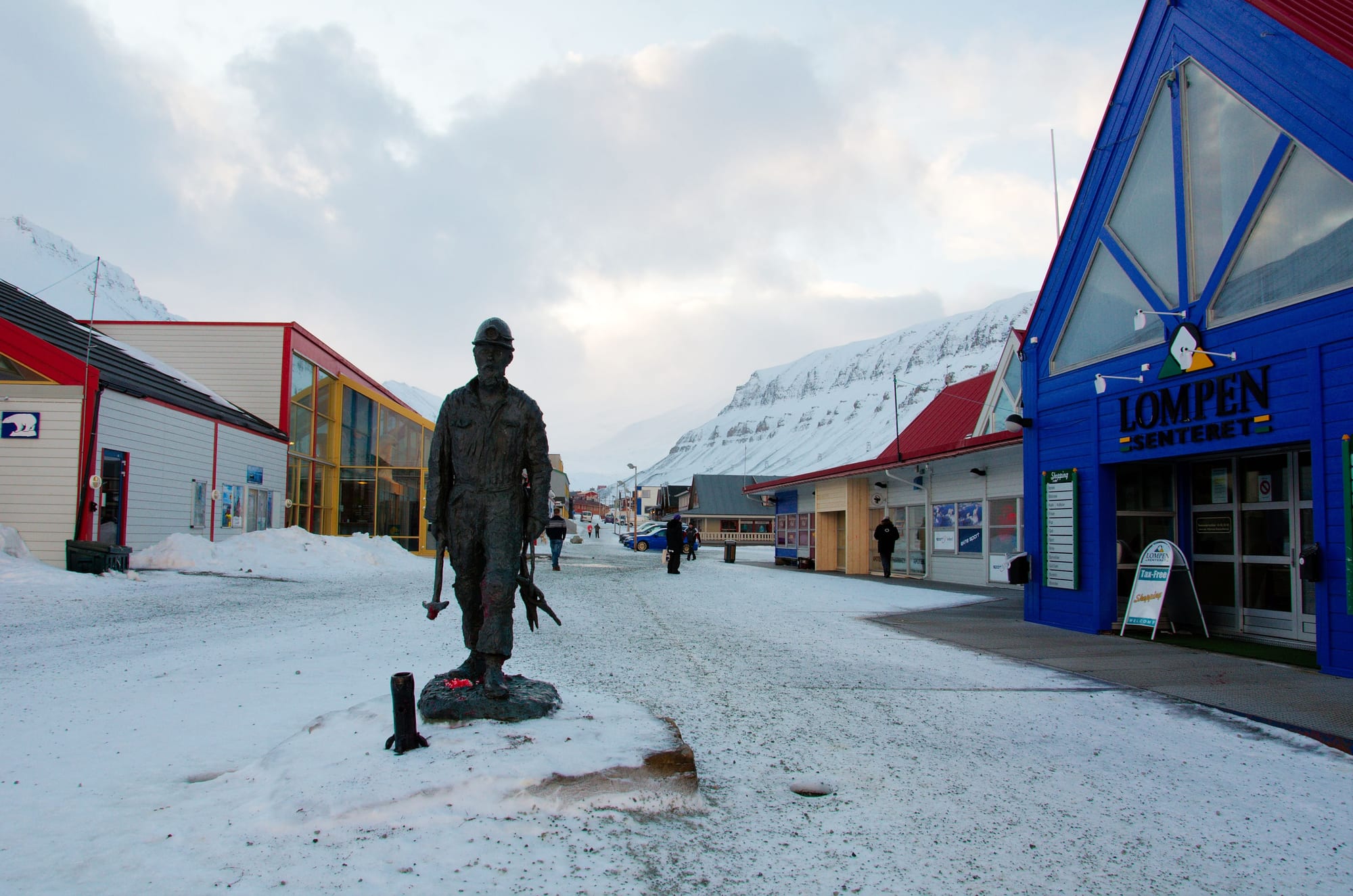
Svalbard has no towns that grew up over centuries and no families that have always lived there, because nobody has: the archipelago had no indigenous population before whalers, trappers and miners began wintering over a few hundred years ago. What exists instead, overwhelmingly in Longyearbyen, is a small, international, working community of around 2,500 people, from more than 50 countries, who came for a job, a research post or a season and generally expect to leave again within a few years. Daily life here is shaped less by old custom than by the practical business of living well north of anywhere else permanently settled: dressing for the cold, tracking the light, and keeping a rifle within reach the moment anyone steps past the town's edge.
Family and home life
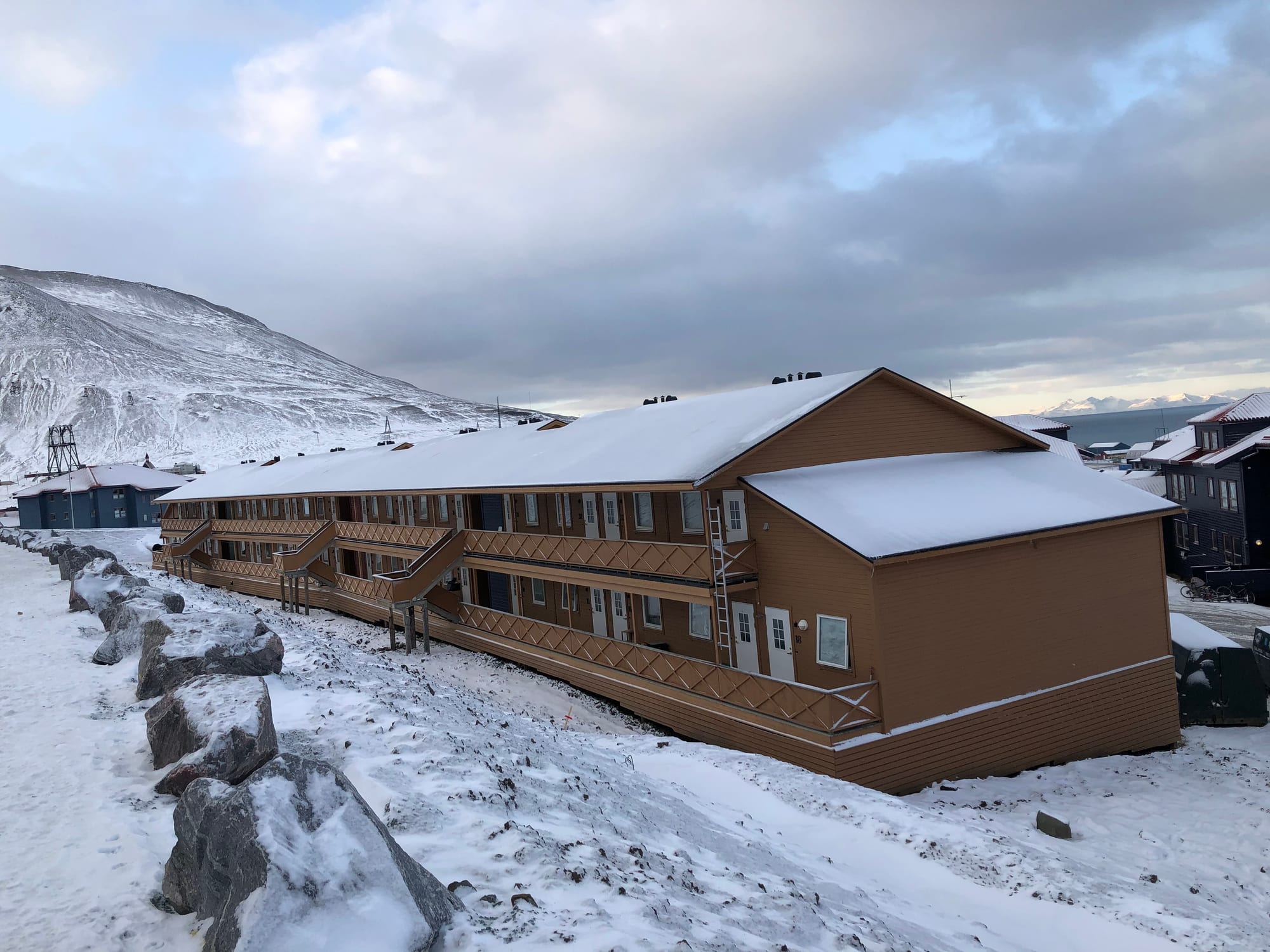
Families do live in Longyearbyen, with a kindergarten and a school, but the population as a whole is unusually young and unusually mobile: turnover is high, with around a fifth or more of residents moving away in a typical year, and the average resident has stayed only about six years, foreigners less than that, since many arrive on fixed-term contracts rather than settling for good. Since 2023, foreign citizens may vote in the local council election only if they have previously lived at least three years on the Norwegian mainland; before that, three years in Longyearbyen itself had been enough. Housing is mostly modest, brightly painted wooden houses and terraces built up on stilts or piled foundations to protect the permafrost beneath them, clustered on the valley floor below bare Arctic mountains. Because the settlement has almost no elderly residents and only a small hospital equipped for emergencies rather than long-term treatment, elderly or seriously unwell residents are generally expected to relocate to mainland Norway, and pregnant women travel to the mainland in the final weeks before their due date to give birth. In practice, almost nobody is born, grows old or dies in Svalbard itself: those life stages happen elsewhere, and it is one of the more unusual, quietly organising facts of life here.
Work, school and the rhythm of the day
Work has shifted decisively away from coal, which finally wound down with the closure of the last Norwegian mine, Mine 7, in 2025, toward tourism, research and higher education. Hotels, tour operators and restaurants hire heavily for the summer hiking and boat season and the spring snowmobile season, while the University Centre in Svalbard (UNIS) and a cluster of climate and glacier research institutes keep a steady population of scientists and students, many there for a single term or field season. Ordinary working hours follow standard Norwegian norms, but the working day is set far more by the season's light than by habit: midnight sun from mid-April to late August, and a polar night in which the sun stays below the horizon from late October to mid-February, both of which reshape sleep, mood and even office hours more than any clock does. Longyearbyen School combines primary and secondary education, but the town has markedly fewer teenagers than the national average, as many families move to mainland Norway around the upper-secondary years, another point at which the town's population quietly resets itself.
Community life and public spaces
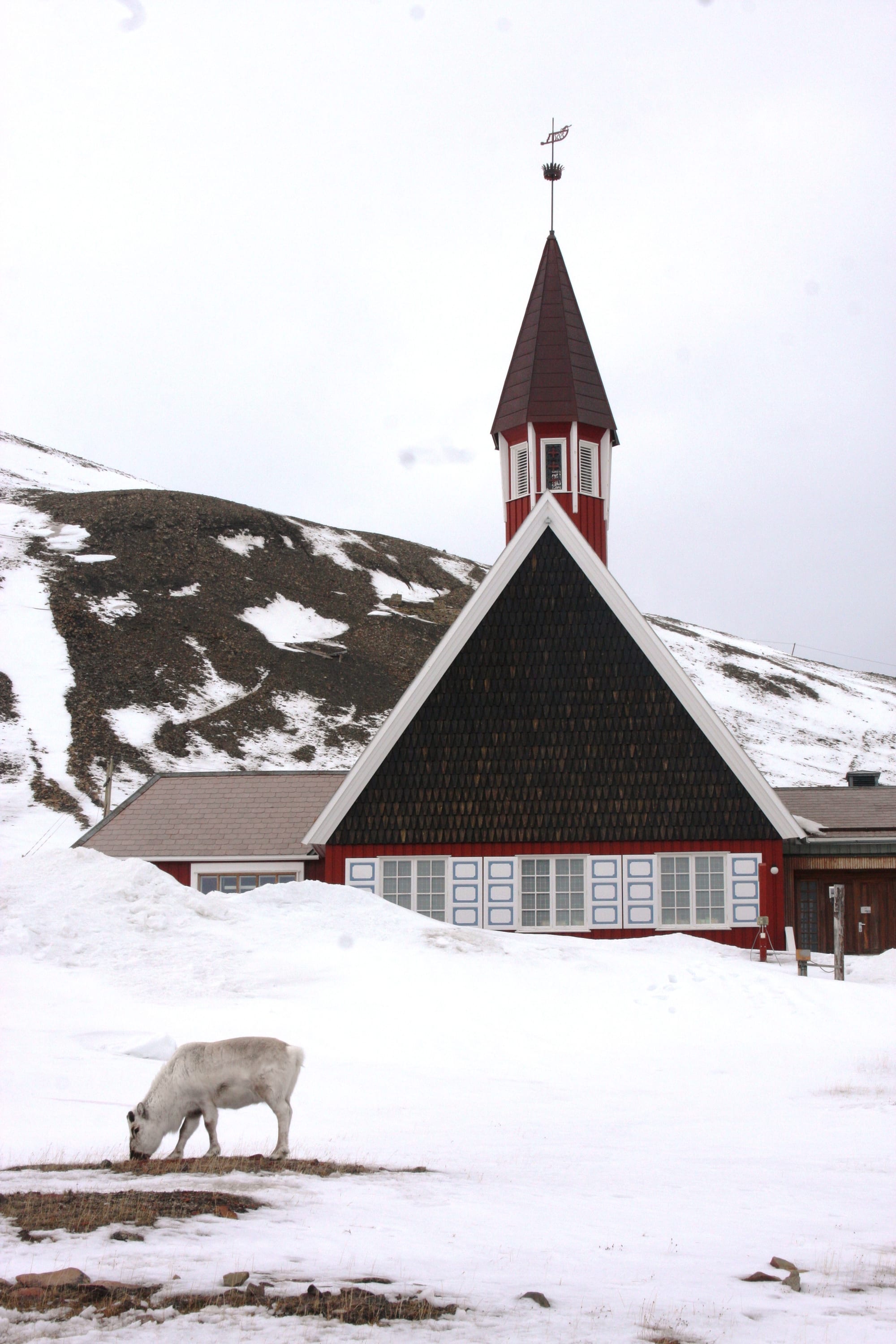
Almost everything in Longyearbyen is within a few minutes' walk of the pedestrian main street: the shops, cafés, the post office, and Svalbardbutikken, the town's main supermarket and department store, which sells groceries, outdoor gear, duty-free goods and alcohol under one roof. Removing shoes at the door, a habit that dates back to the coal-dust years, remains normal in homes, workplaces and even some public buildings. Svalbard Church, long the world's northernmost, sits above the town and is left open around the clock as an informal gathering place, open to residents of any faith or none, and it is common enough for reindeer to graze right up against its walls that nobody much stops to look. Cars share the streets with snowmobiles, the default winter transport beyond the very centre of town.
Free time and weekends
Free time follows the season as closely as work does. In the light months, people hike, kayak and take boat trips out to the glaciers and bird cliffs, and the almost continuous daylight around midsummer means events and sports matches can run at hours that would be unthinkable further south. In the dark months, cross-country skiing, snowmobiling, dog-sledding and watching for the northern lights, sometimes visible even by day during the polar night, take over, alongside a lively bar and restaurant scene supported by Svalbard's tax-free status on alcohol. Whatever the season, leaving the town's small perimeter on foot means carrying a rifle and knowing the polar-bear rules, which since January 2025 require keeping at least 300 metres from a bear, or 500 metres from March to June, a routine piece of planning rather than an adventure-story detail. Community festivals such as Solfestuka, held in the week around 8 March to mark the sun's return after the polar night, give the whole town a shared occasion to mark the changing light together.
A visitor's ordinary day
Svalbard is almost entirely cashless, with cards used even for small purchases. There are no roads connecting settlements, so any trip beyond the town itself, whether by snowmobile, boat or on foot, is, for most visitors, made with a licensed guide rather than independently, since going out unguided is strongly discouraged for safety reasons. Flights connect only through Oslo or Tromsø on the Norwegian mainland, and since Svalbard sits outside the Schengen Area while that connecting leg sits inside it, some travellers need a double-entry Schengen visa to make the trip work both ways. Shops on the main street generally keep standard daytime hours, and it is worth checking opening times around the shoulder seasons, when the settlement's rhythm shifts along with the light.
What to take away
What defines an ordinary day in Svalbard is less any single custom than the fact that almost everyone living it is, by design, passing through: a research post, a work contract or a season, rather than a life that started and will end on the archipelago itself.