Daily Life · Suriname
Suriname: Living Between Diaspora and Delta
A small, plural society of Hindustani, Creole, Javanese, Maroon and Indigenous households sharing one river-mouth capital, family ties that run as strong to Amsterdam as to the next street, and a currency that has lost much of its value
By Worldlore Editorial · 30 September 2026
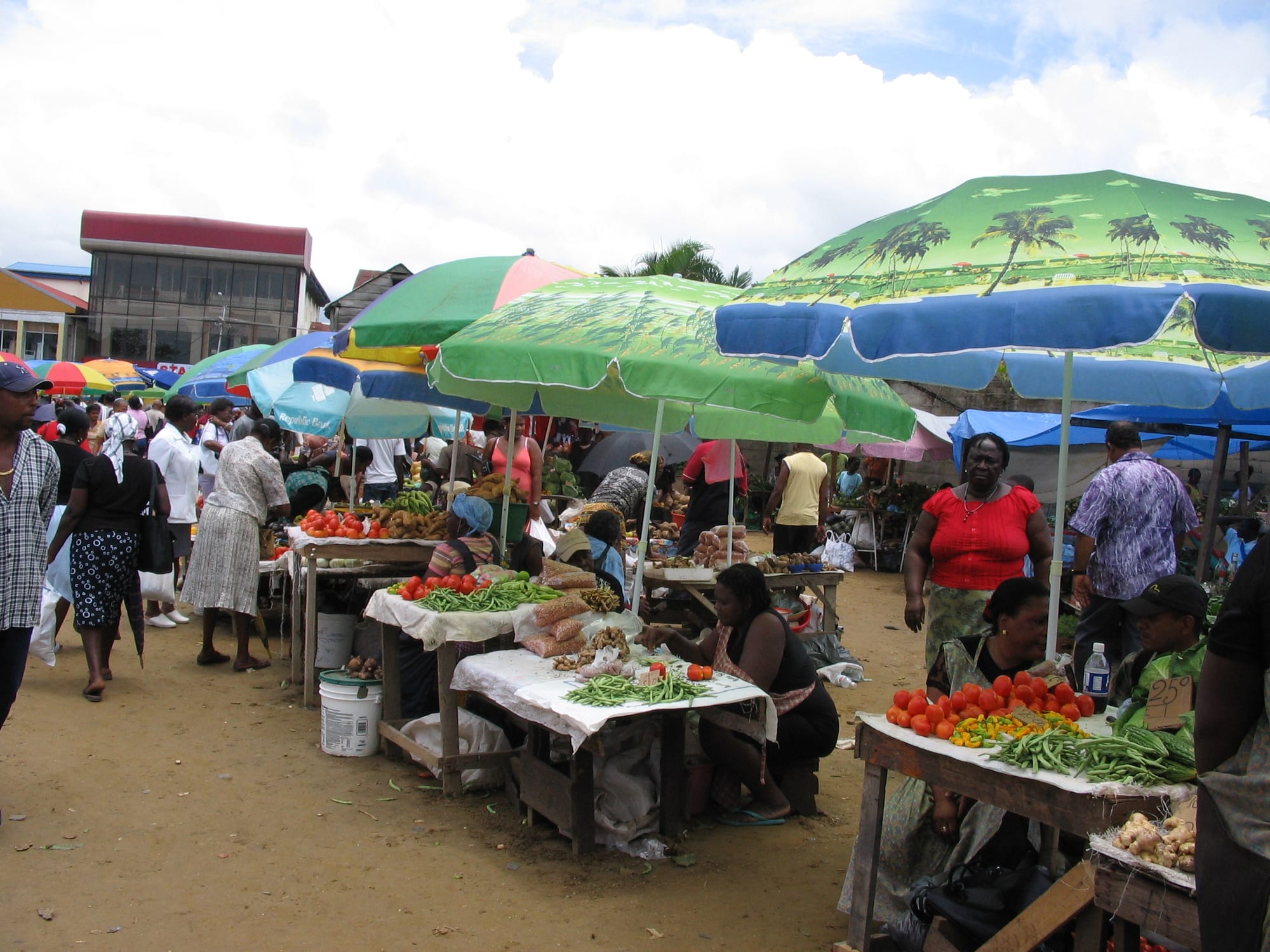
Suriname is a small country that behaves like several at once. Around 620,000 people, of Hindustani, Creole, Javanese, Maroon, Indigenous and Chinese descent among others, live mostly along a narrow coastal strip, with the rainforest interior beginning almost as soon as the city ends. An ordinary day nationwide tends to move at a tropical, unhurried pace, but it is never quite a single culture's day: mosque, temple, synagogue and church calendars all run at once, and many households have a parent, sibling or child living in the Netherlands, sending money back or being visited in return.
Family and home life
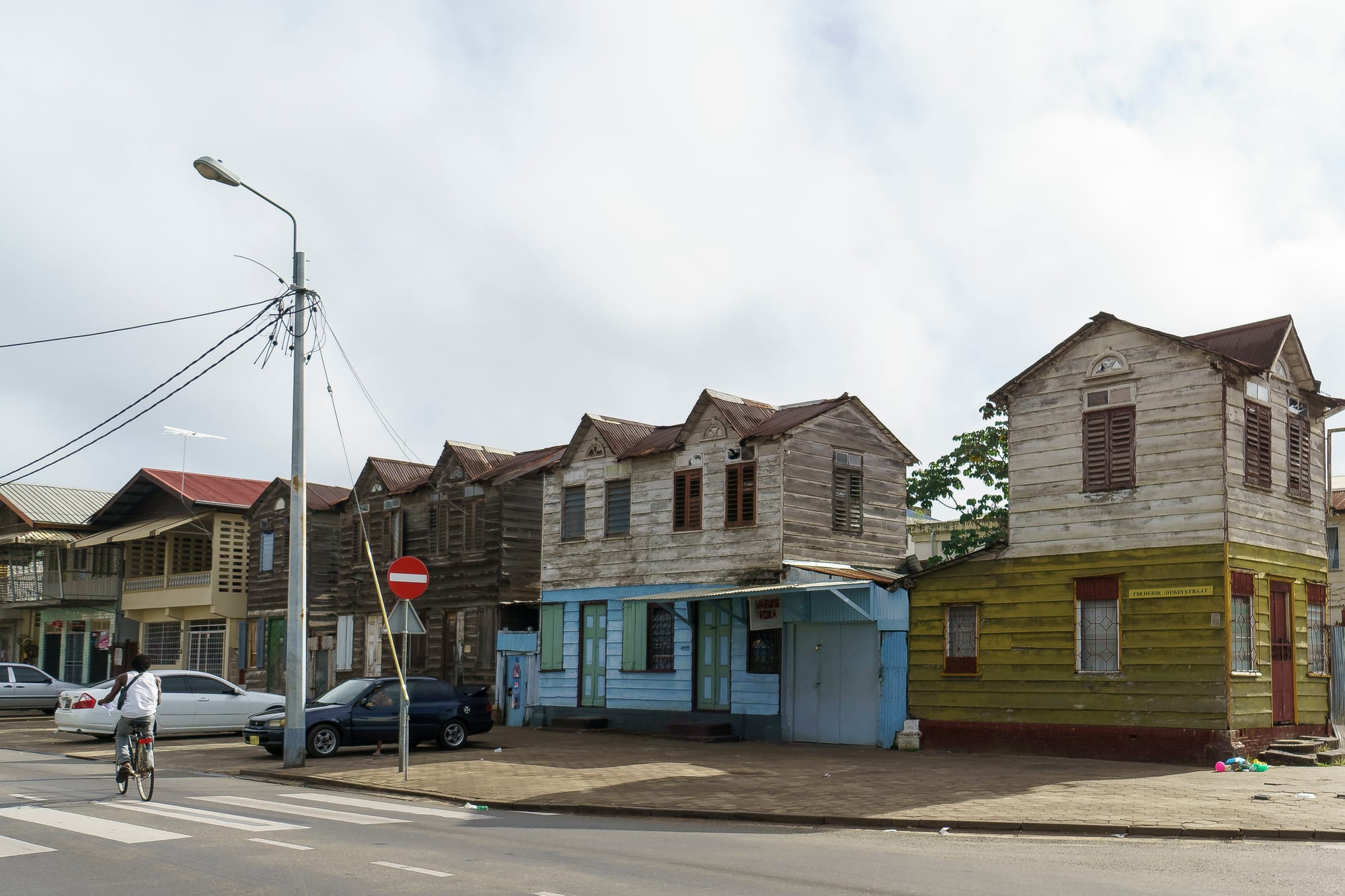
Households vary by community rather than following one national pattern. Among Creole families, grandmothers often play a central role in raising children while parents work, and three generations under one roof is not unusual. Hindustani and Javanese households have traditionally leaned on extended kin networks too, with Javanese communities traditionally valuing mutual aid among neighbours and relatives. In and around Paramaribo, many families live in modest wooden houses, some dating from the colonial period and since subdivided or extended, lining narrow streets shared by cars, bicycles and pedestrians. Around 350,000 people of Surinamese descent live in the Netherlands, more than half as many as live in Suriname itself, a legacy of the years around independence in 1975, when nearly a third of the population emigrated, and that diaspora tie shapes home life directly, through remittances, phone calls and family visits in both directions.
Work, school and the rhythm of the day
The working week generally runs Monday to Friday, with Saturday and Sunday as the weekend. Government and other public-sector jobs are especially important in and around Paramaribo, while further along the coast and into the interior, work centres on agriculture, fishing, forestry and gold, both at large mining operations and through small-scale, often informal digging, which accounts for around two-fifths of gold output. Dutch is the language of schooling and administration nationwide and the native language of an estimated 60 per cent of the population, while many children also grow up speaking Sranan Tongo, an English-based creole and lingua franca, or a home language such as Sarnami Hindustani or Javanese. Household budgets have been squeezed hard in recent years: Suriname's currency lost the great majority of its value against the US dollar over the decade to 2024, and inflation averaged more than 50 per cent in 2023 before easing sharply in 2024, a strain felt most visibly in grocery and transport costs.
Community life and public spaces
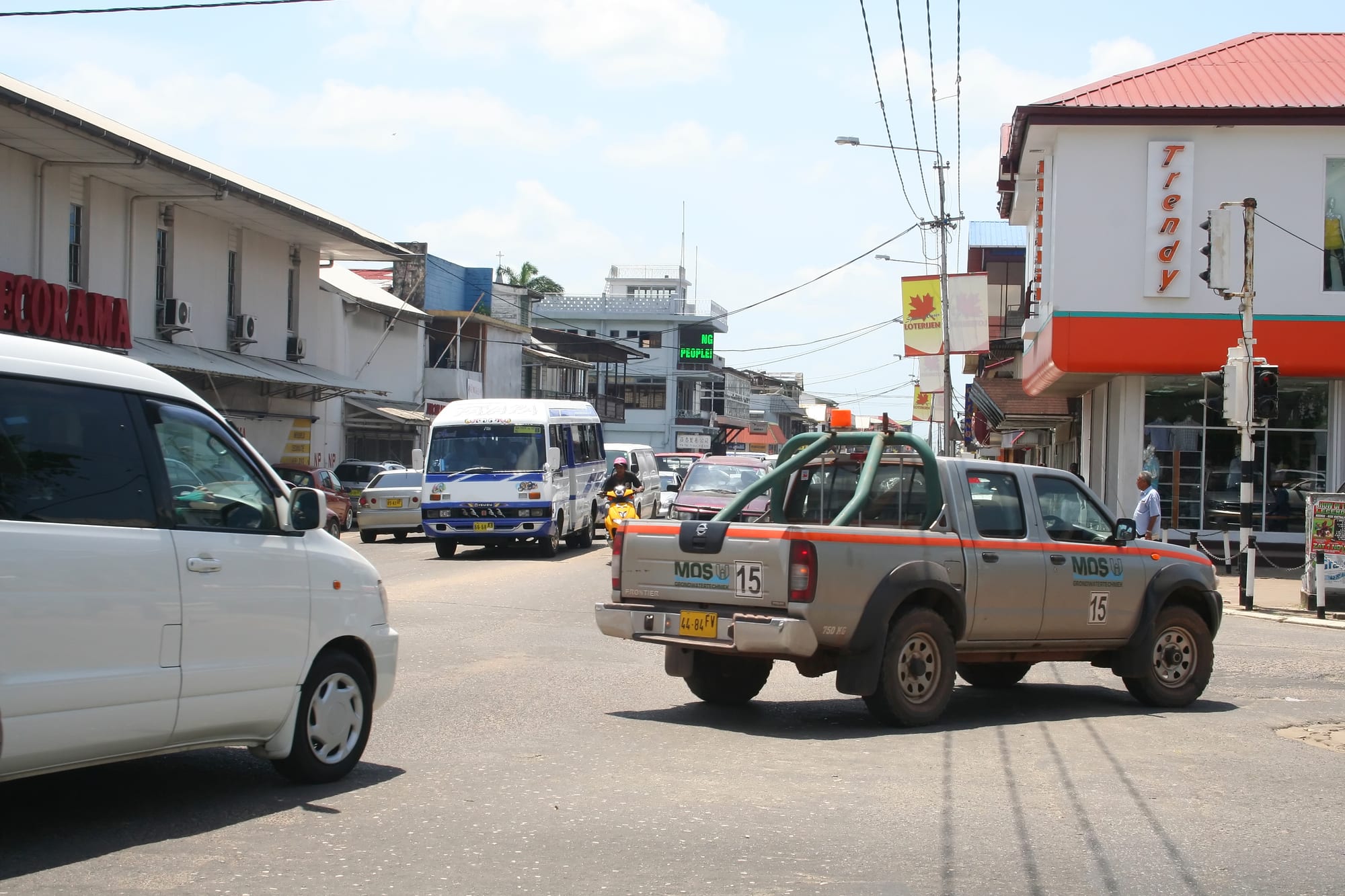
Markets are where Suriname's different communities most visibly share space. Paramaribo's central market and smaller neighbourhood markets sell produce, fish and prepared food from Creole, Javanese, Hindustani and Chinese vendors within a few stalls of one another, and going to market remains a normal, frequent errand rather than an occasional outing. Streets in the capital mix small shops, minibuses and shared taxis, which serve as the everyday transport for people without a car, running informally rather than to a fixed timetable. Along the coast, life is organised around the Suriname, Commewijne and other rivers; in the interior, where there are few roads, villages are arranged along the riverbank itself, and travel by boat replaces travel by road as the ordinary way to reach a neighbour, a market or a clinic.
Free time and weekends
Weekends are given over to family, faith and, where money and distance allow, the river. Extended families gather for Sunday lunch, and church, temple or mosque attendance structures the day for many households depending on faith. A trip out of the city to a river resort or a relative's plot in the countryside is a common way to spend a free Saturday or Sunday, as is simply sitting out on a porch or stoop talking with neighbours in the evening cool. Football is widely followed, and Suriname's public holiday calendar, which mixes Christian, Hindu and Muslim festivals and Indian, Javanese and Chinese arrival days alongside Keti Koti, the 1 July emancipation commemoration, means that some community's celebration is rarely far off.
A visitor's ordinary day
Cash remains important outside Paramaribo's hotels and larger shops, so carrying Surinamese dollars, changed from US dollars or euros, is useful, especially in the interior where cards are rarely accepted at all. Shops and markets in the capital typically open by mid-morning and stay open into the evening on weekdays and Saturdays, with Sunday much quieter. Getting around the coastal towns generally means a shared minibus or taxi rather than a fixed-route bus, agreed and paid for informally; reaching the interior means a chartered light aircraft or a long river journey, almost always arranged in advance through a lodge rather than found on the spot.
What to take away
What defines an ordinary day in Suriname is less any single tradition than the constant, everyday overlap of several: markets, faiths and family networks that stretch from a Paramaribo street all the way to Amsterdam, sharing the same small country without collapsing into one culture.