Daily Life · South Africa
South Africa: The Stokvel and the Taxi Rank
A country of gated suburbs and shack settlements a few streets apart, held together by extended families, informal savings clubs, and a fleet of privately run minibus taxis that carries most of the country's commuters
By Worldlore Editorial · 30 September 2026
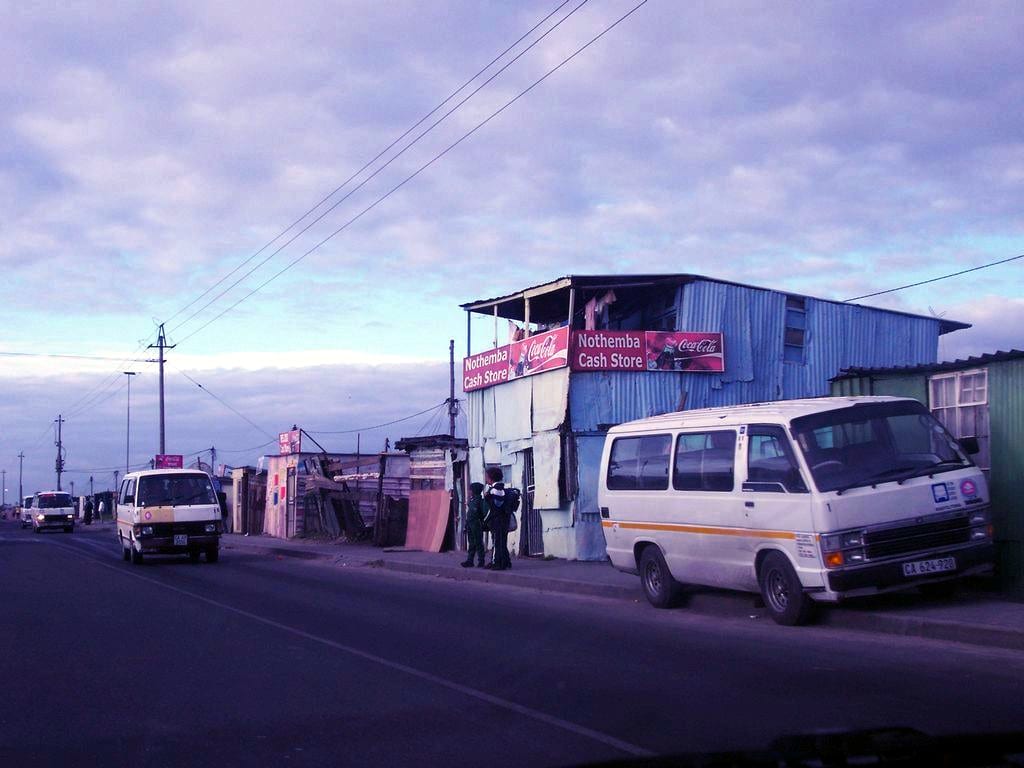
An ordinary day in South Africa can look entirely different depending on which side of a single road someone lives on, and that gap runs through nearly everything else in daily life. What holds across it is a set of shared institutions: the extended family that absorbs whoever needs a room, the minibus taxi that gets millions of working people to their jobs, and the braai that brings people together regardless of where they live. Mornings start early almost everywhere, with taxi ranks filling before sunrise and children in school uniform walking to gather points long before classes begin.
Family and home life
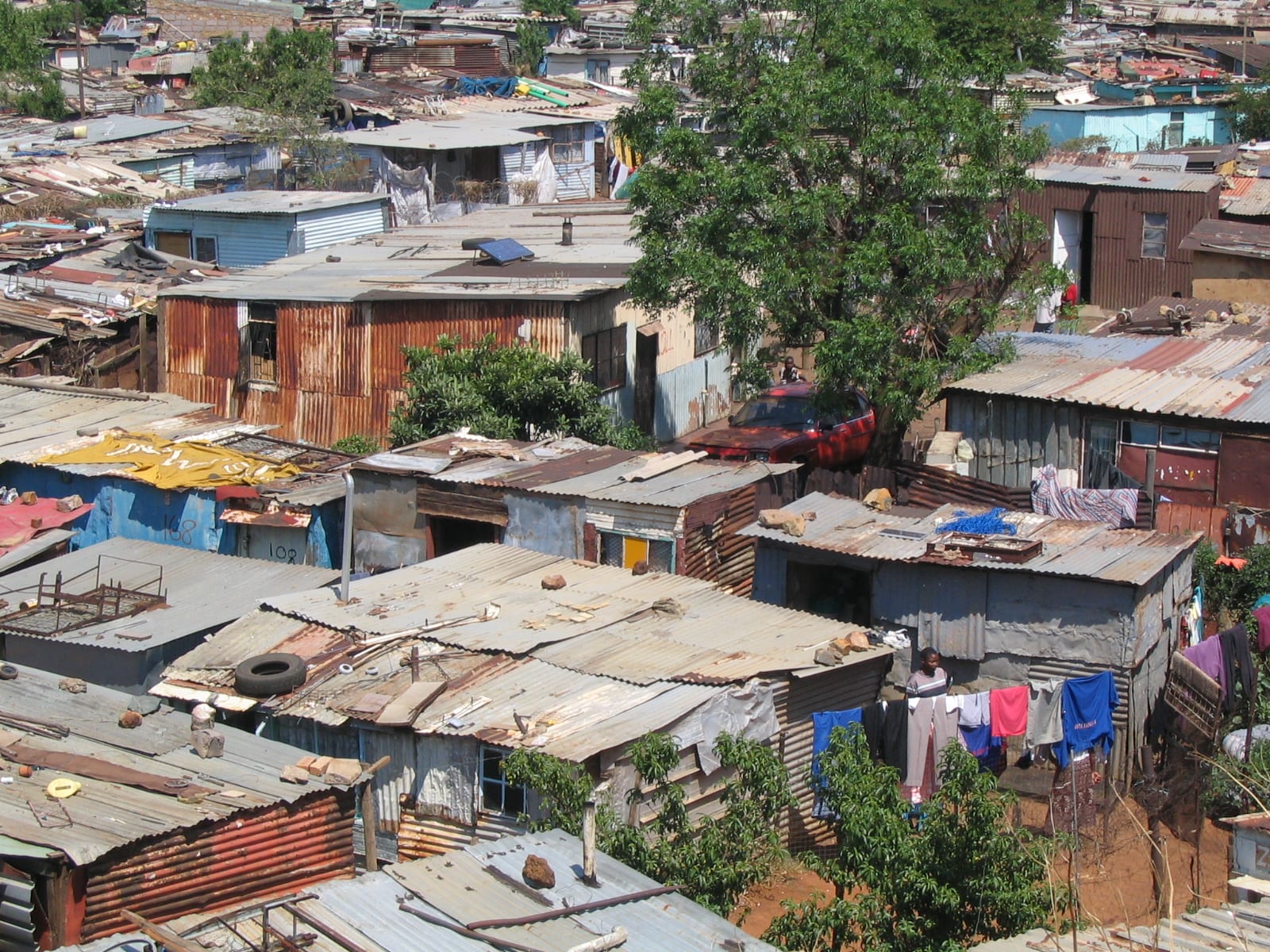
The average South African household now has about three members, but that figure hides real variety: just over a quarter of households are one person living alone, while many others are extended, bringing in-laws, grandparents, aunts, uncles, and cousins under one roof. Some are "skip-generation" households, where grandparents raise grandchildren with no parent present, often because parents have moved elsewhere for work. Housing itself spans a wide range nationwide, from walled and guarded suburban homes with private security to the corrugated-iron structures of townships and informal settlements that still lack full water, sanitation or electricity in many areas, a direct legacy of apartheid-era spatial planning that confined Black South Africans to the urban margins.
Work, school and the rhythm of the day
The standard working week runs Monday to Friday, roughly eight hours a day, with many commutes adding an hour or more each way. Unemployment is high, running around a third of the workforce and higher still among young people, so a large informal economy of street trading, spaza shops and casual labour fills the gap for many households. School generally starts early in the morning and runs into early afternoon, with pupils in uniform and the school day structured, as in the wider economy, around the country's twelve official languages: the first years of schooling can be taught in a child's home language, and from grade 4 most schools switch to teaching all subjects in English (Afrikaans-medium schools aside). For years, rolling blackouts known as load-shedding also shaped the working day, forcing businesses and households to plan around scheduled power cuts; the outages eased markedly in 2024 and 2025, though the risk has not fully gone away.
Community life and public spaces
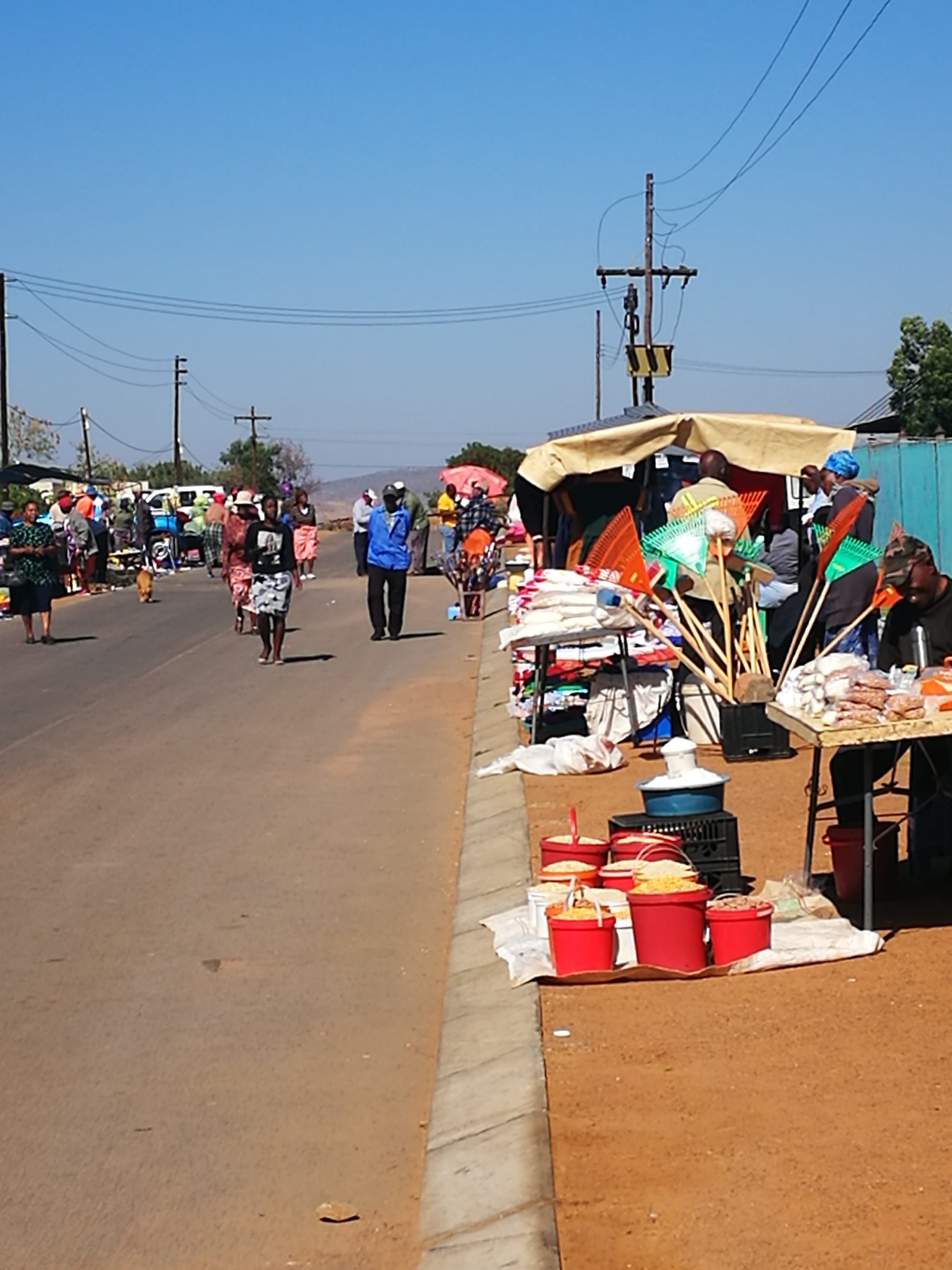
Minibus taxis, privately owned and operated on informal routes rather than fixed timetables, carry a majority of the country's public transport commuters, more than any bus or train service, and taxi ranks are among the busiest public spaces in many towns and cities, especially at dawn and early evening. Street markets and spaza shops, small informal stores usually run from a home, are everyday retail points in townships and rural areas alike. Churches anchor community life for the large Christian majority, often blended with traditional practice, and community halls and sports grounds host everything from funerals to football.
Free time and weekends
The braai, a barbecue built around slow-grilled meat, cuts across income and background more than almost any other custom, and a weekend gathering around one, with family or neighbours, is a very common way to spend free time. Sport draws huge shared attention: rugby (the Springboks have won the World Cup four times), football and cricket all have large followings, and a big match is as much a communal event watched in a shebeen or living room as it is a game. Where finances and distance allow, weekends and holidays are spent visiting family in another province, at the coast, or in one of the national parks that many South Africans, not only foreign visitors, treat as a genuine domestic holiday destination.
A visitor's ordinary day
Cards are widely accepted in shops, restaurants and even national park camps, though cash remains useful for tips, informal markets and rural areas. Ride-hailing apps such as Uber and Bolt are the standard, low-stress way to get around cities and are generally considered safer than using minibus taxis or walking after dark. Self-driving is common for touring between cities and reserves, on a good road network driven on the left, with intercity coaches as a cheaper backup. Petrol stations, malls and many services keep long hours, often seven days a week.
What to take away
What defines an ordinary day in South Africa is less any single custom than the size of the gap it has to bridge — between suburb and township, formal job and informal trade — and the family networks, taxi routes and stokvels that quietly do the bridging.