History · Somalia
Somalia: The Nation Without a State
A country unusually united by language, religion and lineage — colonised in five pieces, briefly whole at independence, ruled by a dictator, and then, after 1991, the textbook case of state collapse
By Worldlore Editorial · 19 September 2026
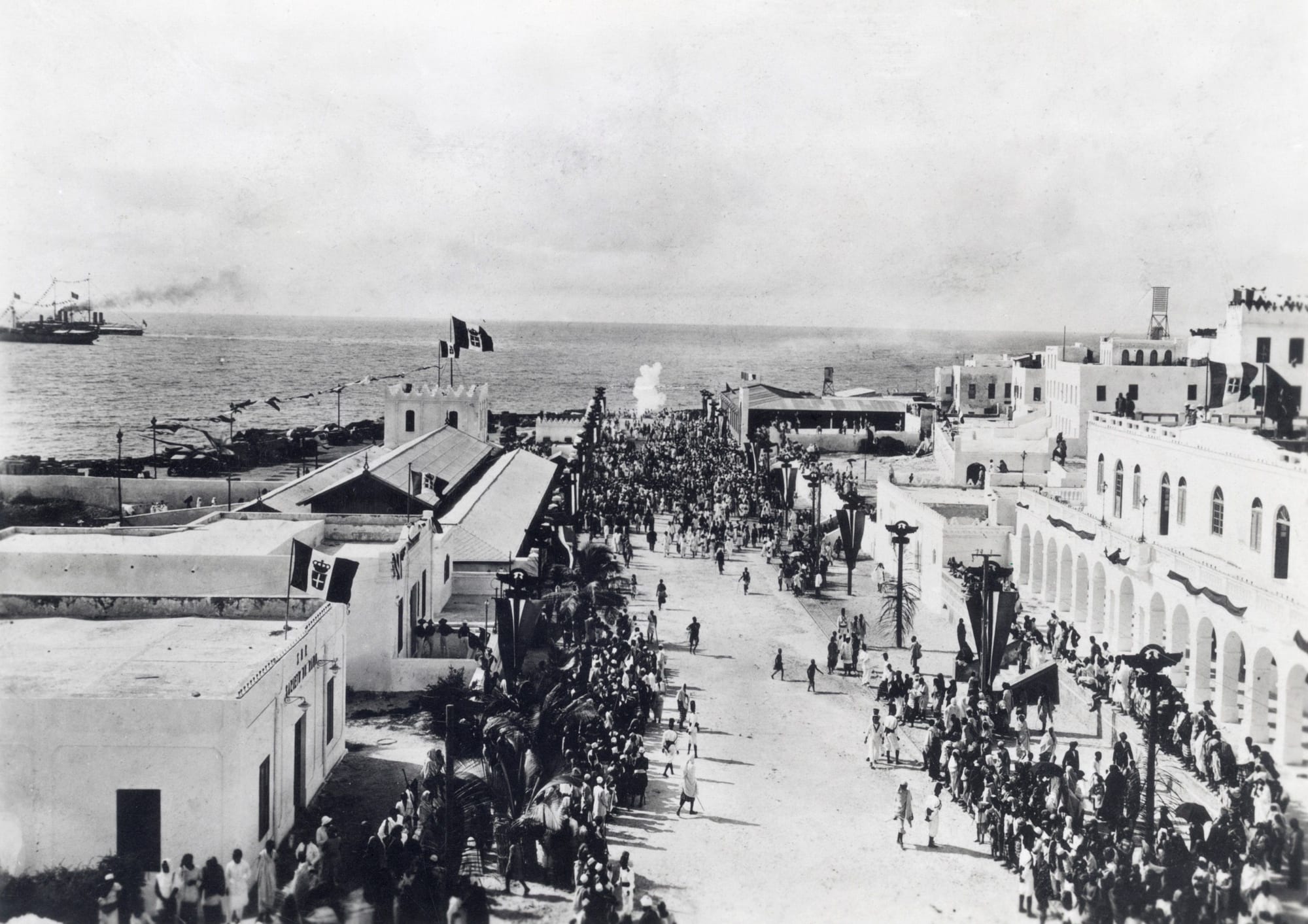
A unusually homogeneous country that fell apart
Somalia occupies the Horn of Africa, the continent's easternmost point, with a long coast on the Gulf of Aden and the Indian Ocean and about 18 million people. Unlike most African states, it is not a patchwork of peoples: almost all Somalis share one language, the Muslim faith, and a nomadic pastoral heritage, and trace descent through a system of clans. That has not made it easy to govern. Since the central state collapsed in 1991, Somalia has become the world's standard example of a "failed state" — and yet Somali society, trade and identity have carried on.
A short history
- antiquity
The trading coast
Ports supply frankincense and myrrh to Egypt and Rome; the land of "Punt".
- 13th–19th c.
Sultanates
The Ajuran, Adal, Geledi and other Somali Muslim states.
- 1880s–1900s
The partition
Britain, Italy, France, Ethiopia and (briefly) Egypt divide Somali lands.
- 1899–1920
The Dervish resistance
Sayyid Mohammed Abdullah Hassan fights the British for two decades.
- 1960
Independence and union
British and Italian Somaliland join as the Somali Republic.
- 1969
Barre's coup
Major General Siad Barre seizes power; "scientific socialism".
- 1977–1978
The Ogaden War
Somalia invades Ethiopia and is defeated.
- 1991
Collapse
Barre is overthrown; the state disintegrates; Somaliland secedes.
- 1992–1995
UN/US intervention
Ends after the "Black Hawk Down" battle in Mogadishu.
- 2006–
Islamists and the federal state
The Islamic Courts, then al-Shabaab, versus a UN-backed government.
Coast, faith, and clans
The Somali coast was part of the ancient world's trade in aromatics — possibly the "Land of Punt" of Egyptian records — and its ports later linked into the Indian Ocean network. Islam arrived early, carried by Arab and Persian merchants, and from the medieval period a succession of Somali Muslim sultanates rose along the coast and in the interior, some of them, like Adal, powerful enough to wage major wars against Christian Ethiopia. Somali society organised itself through segmentary clan lineages — a flexible system of alliance and feud with no permanent central authority — and through pastoral nomadism across arid grazing lands.
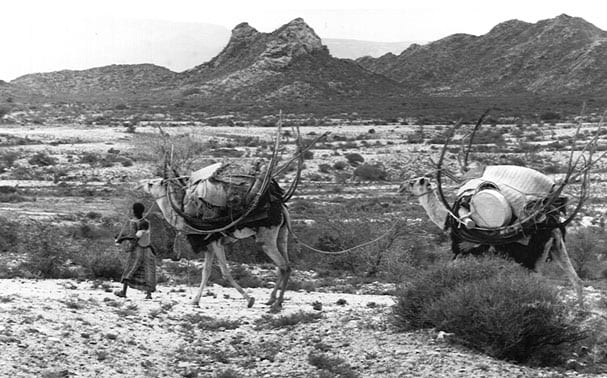
The five-way partition
In the late 19th century Somali-inhabited territory was split among five powers: Britain took the north (British Somaliland) to guard the approach to the Red Sea; Italy took the south and east (Italian Somaliland); France took the port of Djibouti; Ethiopia annexed the western Ogaden; and Britain later attached the Somali-inhabited Northern Frontier District to Kenya. This partition of a single people into five jurisdictions created the dream of a "Greater Somalia" reuniting them all — symbolised by the five-pointed star on the flag — which would drive Somali foreign policy and war for decades. Resistance to colonial rule was fierce: Sayyid Mohammed Abdullah Hassan, dubbed the "Mad Mullah" by the British, fought a Dervish war against them for twenty years until 1920.
Independence, union, and dictatorship
British and Italian Somaliland gained independence in June 1960 and immediately united as the Somali Republic. Its first years were democratic but strained by the cost of pursuing Greater Somalia, and in 1969, after the president's assassination, Major General Mohamed Siad Barre took power in a coup. He declared "scientific socialism", aligned with the Soviet Union, introduced a Somali script and mass literacy campaigns, and suppressed open clan politics while in practice favouring his own. In 1977 he invaded Ethiopia's Ogaden; a massive Soviet and Cuban airlift to Ethiopia — which had just had its own revolution — reversed the invasion by 1978. Defeat discredited the regime, which grew more repressive, and by the late 1980s Barre was waging war on rebel movements, bombing the northern city of Hargeisa flat.
Collapse
Barre fled Mogadishu in January 1991, and no successor government could take hold. The victorious clan-based factions fought each other; the north-west declared itself the independent Republic of Somaliland (unrecognised, but stable and self-governing ever since); the north-east later formed the autonomous region of Puntland. Famine in 1991–92, caused largely by the fighting, killed an estimated 200,000–300,000 people and prompted a US-led UN intervention. That mission ended after the October 1993 battle in Mogadishu — the "Black Hawk Down" incident, in which 18 American soldiers and hundreds of Somalis died — and the last foreign troops left in 1995, with the country still without a government.
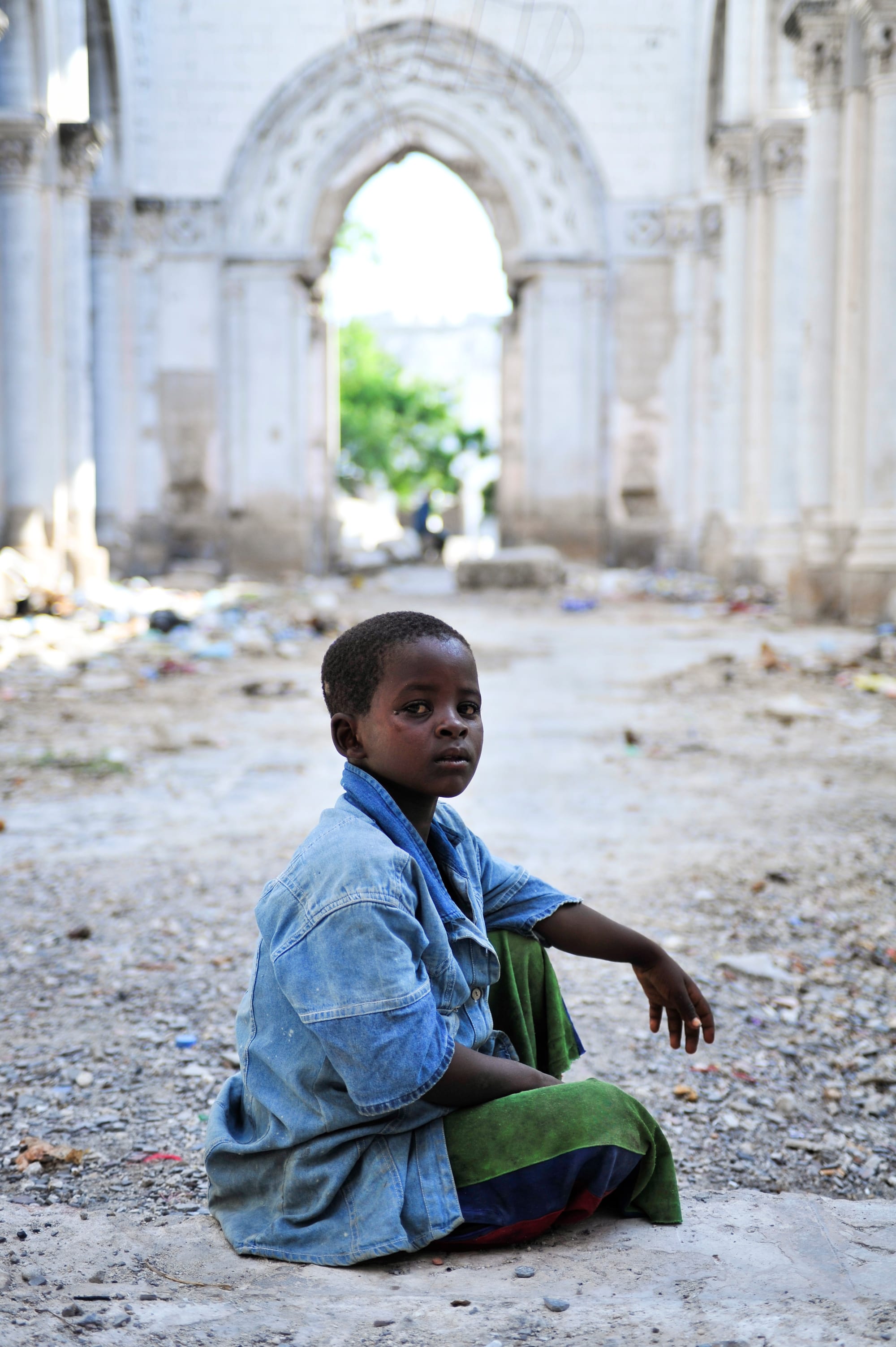
Islamists and the federal state
For over a decade south-central Somalia was run by warlords, businessmen and local sharia courts. In 2006 the Islamic Courts Union briefly unified Mogadishu and much of the south, bringing a measure of order, before an Ethiopian invasion backed by the US drove it out. From its remnants rose al-Shabaab, an al-Qaeda-linked insurgency that at its peak controlled much of the south and has carried out major bombings in Mogadishu and abroad (including the 2013 Westgate attack in Nairobi). A UN-backed Transitional Federal Government, and from 2012 a permanent Federal Government, has been propped up by an African Union force (AMISOM, later ATMIS) of troops from Uganda, Burundi, Ethiopia, Kenya and elsewhere. The government controls Mogadishu and the main towns; al-Shabaab still holds rural areas and mounts regular attacks.
What Somalia carries
Somalia is a rare case of a nation that is culturally unified but politically ungovernable as a single centralised state, and its history explains why: a people split five ways by empires, a unifying nationalist dream that led to a lost war, a dictatorship that turned clan against clan, and a collapse so complete that recovery has taken more than 30 years and is still partial. Somaliland's quiet success in the same period is a standing question about whether the answer is one Somali state or several.