History · Solomon Islands
Solomon Islands: The Scene of the Battle
A double chain of Melanesian islands with more than 70 languages — a labour reservoir for Queensland's cane fields, a British protectorate, the turning-point battleground of the Pacific War at Guadalcanal, and an independent state strained by ethnic conflict
By Worldlore Editorial · 10 September 2026
A country of many small places
Solomon Islands is a scattered double chain of islands east of Papua New Guinea, with about 800,000 people and more than 70 indigenous languages — one of the most linguistically diverse countries on Earth relative to its size. Society is overwhelmingly rural, village-based, and organised around clan and customary land, which covers around 87 per cent of the country. There was never a pre-colonial state; identity has always been local. Two outside events dominate the islands' modern history: the 19th-century trade in island labour, and the enormous 1942–43 battle for Guadalcanal.
A short history
- c. 1500 BCE
Lapita settlement
Ancestors of today's Solomon Islanders arrive.
- 1568
Spanish contact
Álvaro de Mendaña names the islands, hoping for the gold of King Solomon.
- 1860s–1900s
Blackbirding
Tens of thousands are recruited, often by force, to Fiji and Queensland.
- 1893
British protectorate
Britain declares one over the southern islands.
- 1942–1943
The Guadalcanal campaign
Six months of land, sea and air battles; a Japanese defeat.
- 1978
Independence
Solomon Islands becomes sovereign within the Commonwealth.
- 1998–2003
The Tensions
Ethnic militia conflict on Guadalcanal; the state nearly collapses.
- 2003–2017
RAMSI
An Australian-led regional mission restores order.
- 2019
Diplomatic switch
Solomon Islands recognises Beijing instead of Taipei.
- 2021
Honiara riots
Unrest linked to the switch and to internal grievances.
Islanders, and the labour trade
The islands were settled around 3,500 years ago by Lapita voyagers, and later arrivals added to the mix; over millennia, mountainous terrain and dense forest kept communities small and separate, with their own languages, and often at war through raiding and headhunting. Europeans made little impact until the mid-19th century, when the "blackbirding" trade began: labour recruiters, ranging from deceptive to outright kidnappers, carried tens of thousands of Solomon Islanders to work on sugar plantations in Fiji and Queensland. Britain declared a protectorate over the southern Solomons in 1893, partly to regulate the trade, and Germany transferred the northern islands (Bougainville aside) in 1900. Under the protectorate, large coconut plantations were established and Christian missions spread widely.
Guadalcanal
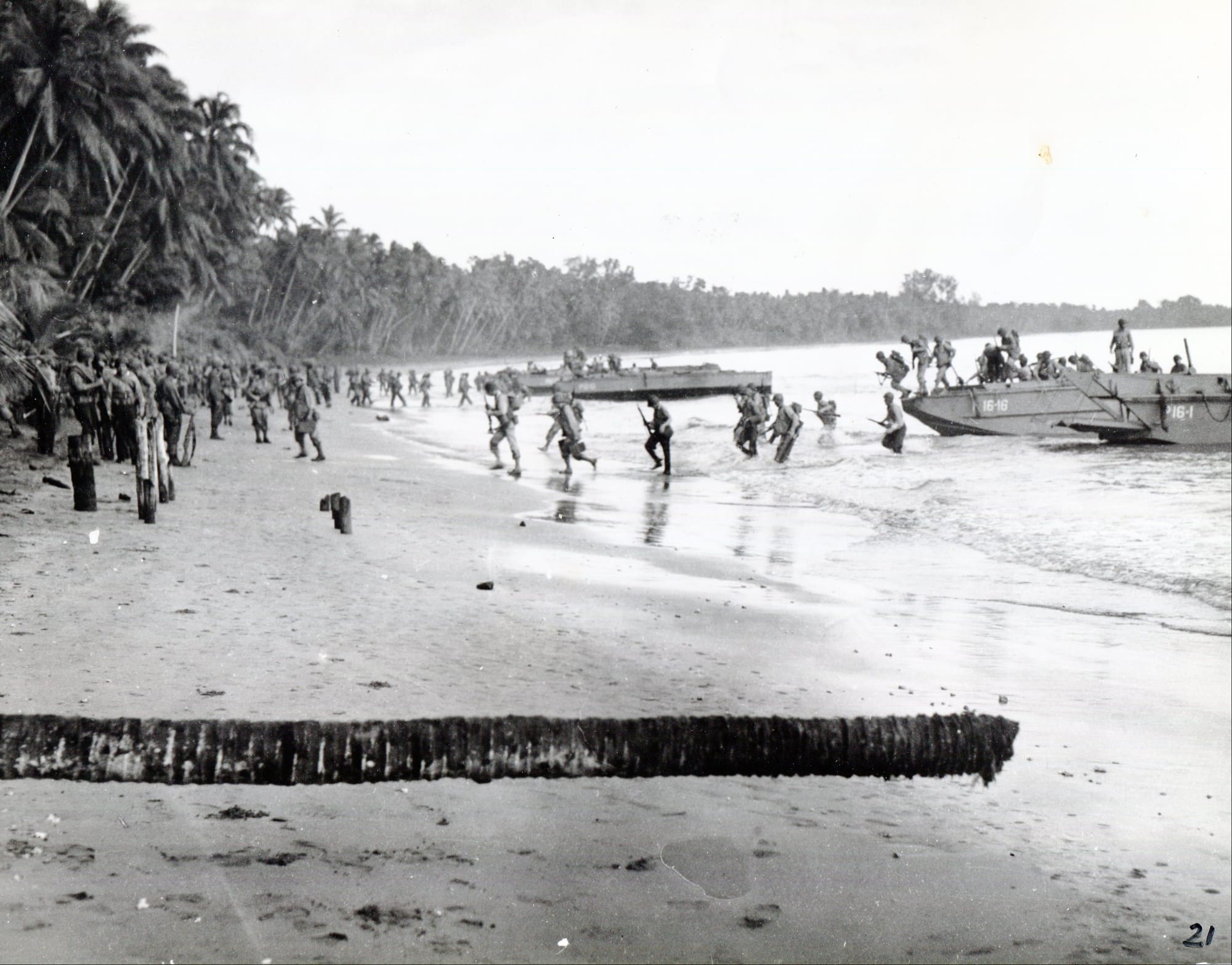
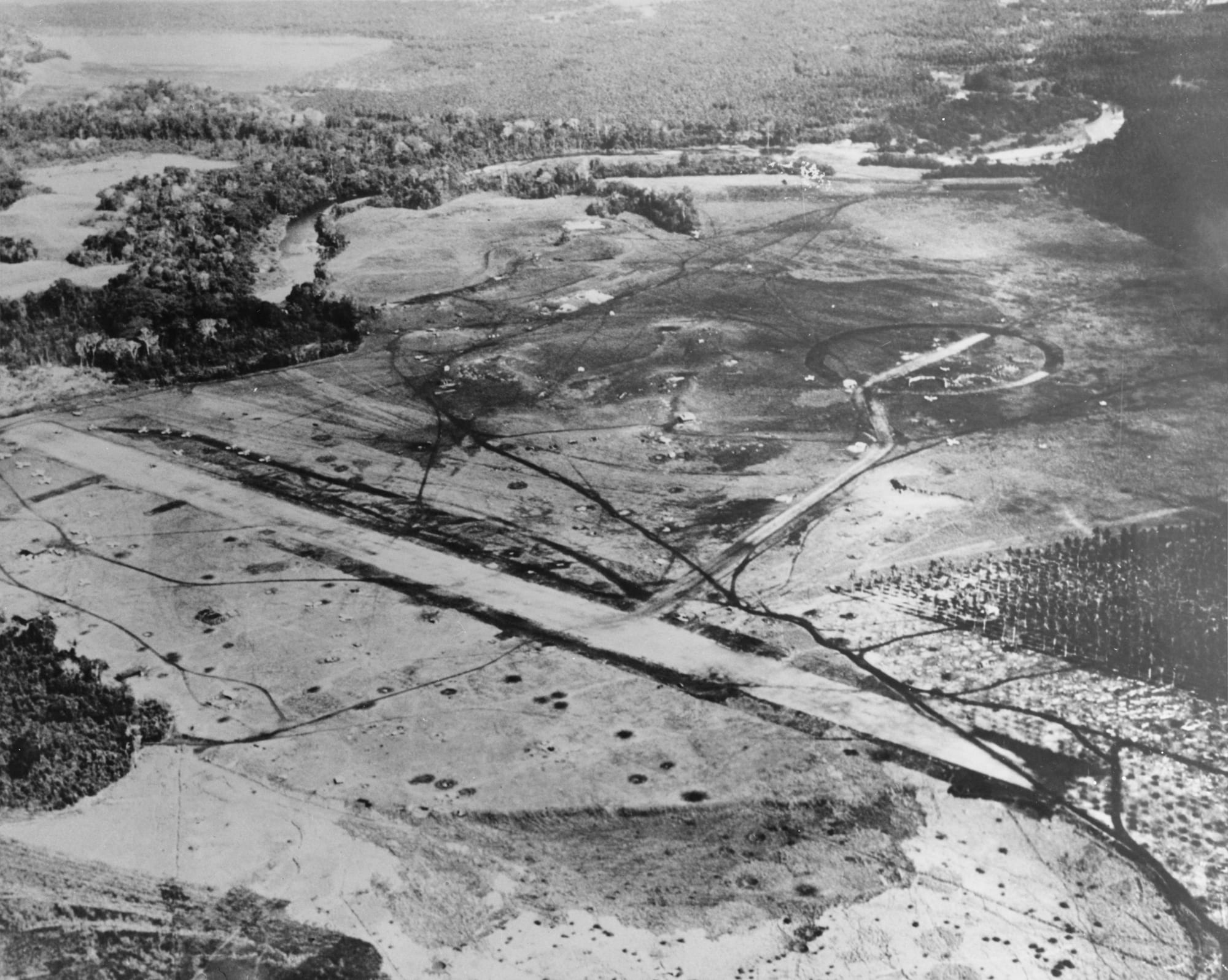
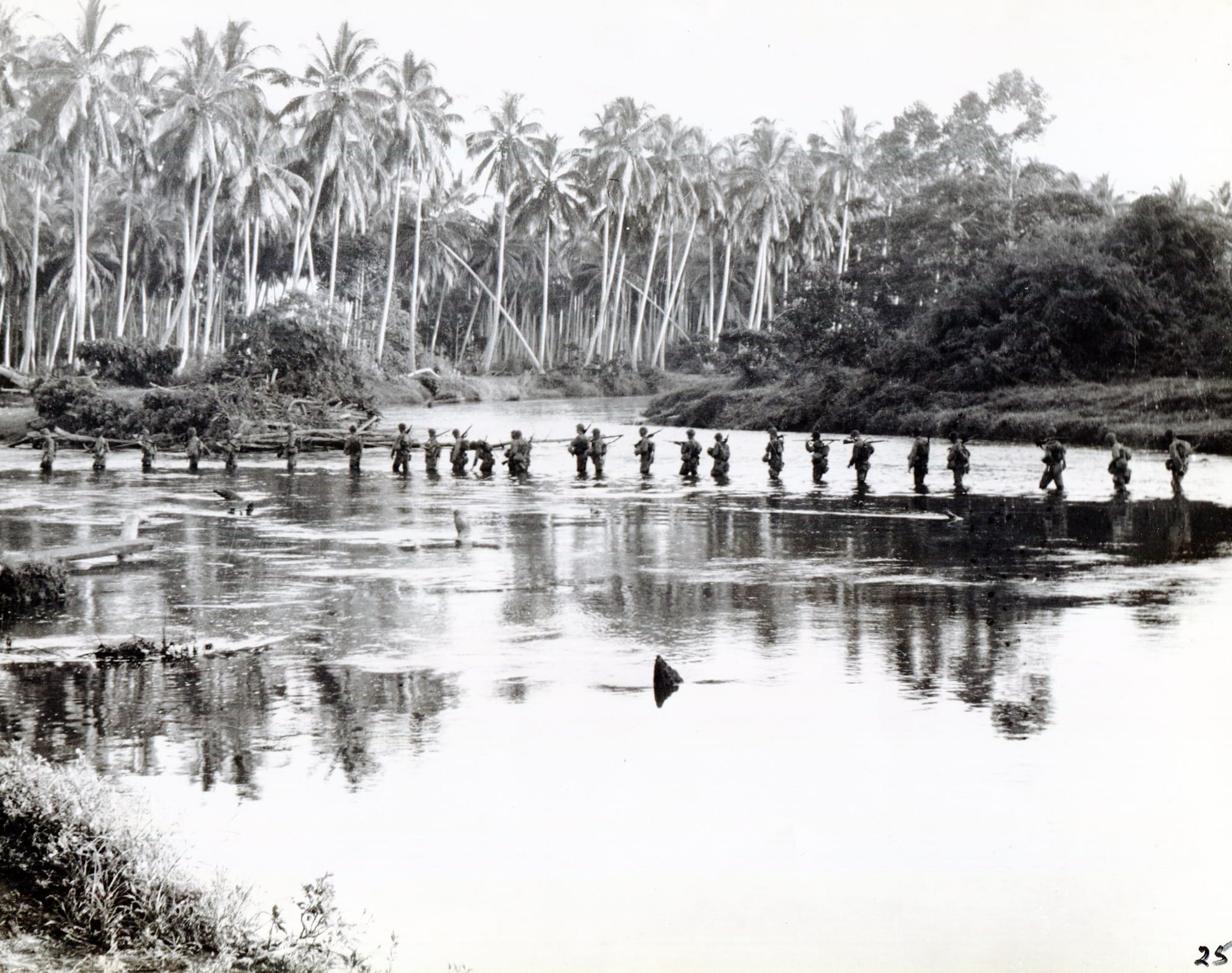
In 1942 Japan occupied the islands and began building an airfield on Guadalcanal. The United States landed there in August 1942 in its first major offensive of the Pacific War, and the campaign that followed lasted six months: repeated naval battles in the waters that became known as "Ironbottom Sound" for the number of ships sunk, a grinding land fight in jungle and malarial swamp, and constant air combat. Around 7,000 Allied and over 30,000 Japanese troops died before Japan evacuated in February 1943. Many Solomon Islanders served as scouts, carriers and coastwatchers — the rescuers of the future US president John F. Kennedy among them — and the war left the islands littered with wreckage and remade Honiara from a military base into the capital.
Independence and the Tensions
Britain moved the Solomons toward self-rule after the war, and the country became independent on 7 July 1978 as a parliamentary democracy with the British monarch as head of state. Politics was fragmented and localised, governments were unstable, and development was thin outside Honiara. In 1998 long-standing resentment on Guadalcanal against settlers from the neighbouring island of Malaita — over land, jobs and the dominance of Honiara — erupted into militia violence. The "Tensions" of 1998–2003 saw armed groups on both sides, a 2000 coup in which the prime minister was held at gunpoint, the collapse of government finances and services, and hundreds of deaths. In 2003 the government requested help, and the Australian-led Regional Assistance Mission to Solomon Islands (RAMSI) deployed police and troops from across the Pacific; it restored order and stayed until 2017.
Solomon Islands now
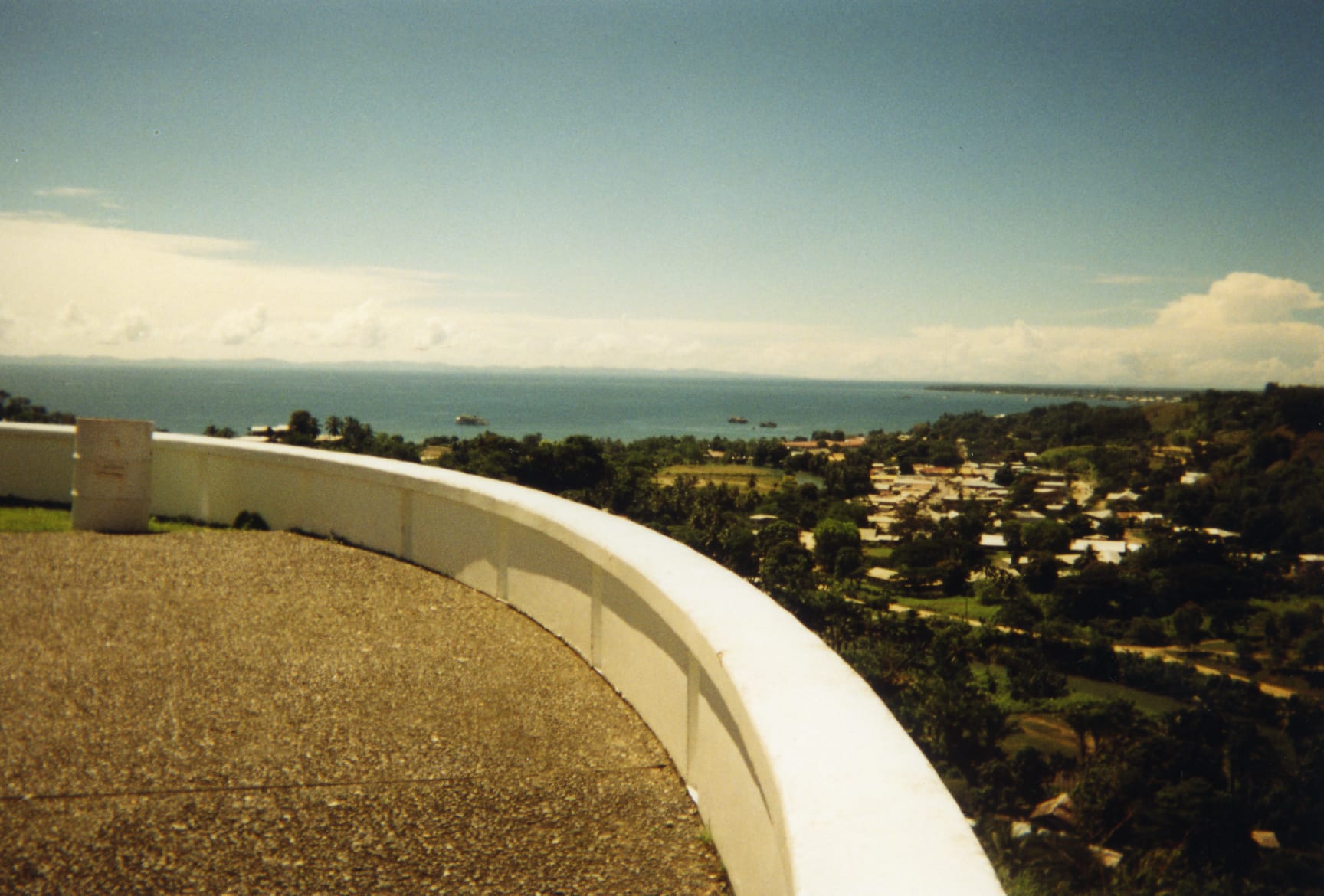
Since RAMSI's departure the country has remained fragile. In 2019 the government switched diplomatic recognition from Taiwan to the People's Republic of China, a decision resented in Malaita and by parts of the public, and a contributing cause of the November 2021 riots in Honiara, which again burned much of Chinatown and prompted Australian, Fijian and Papua New Guinean forces to deploy. In 2022 Solomon Islands signed a security pact with China, raising concern in Canberra and Washington about a possible Chinese military presence in the region. The economy depends on logging — much of it unsustainable — fishing, and aid, and most people still live by subsistence farming.
What Solomon Islands carries
Solomon Islands has never been a single society, and the state built by Britain and inherited at independence has struggled to hold together islands and language groups whose loyalties are local. The labour trade and the Guadalcanal campaign were things done to the islands from outside; the Tensions and the recurring Honiara riots are the internal strains — over land, over Malaitan–Guadalcanal rivalry, over who benefits from the capital — that outside interventions have managed but not resolved.