Daily Life · Sint Maarten
Sint Maarten: Where the Bridge Decides the Day
An island economy that rises and falls with the cruise ship schedule, a workforce drawn from across the Caribbean, and a lagoon drawbridge that stops road traffic several times a day on a fixed timetable
By Worldlore Editorial · 30 September 2026
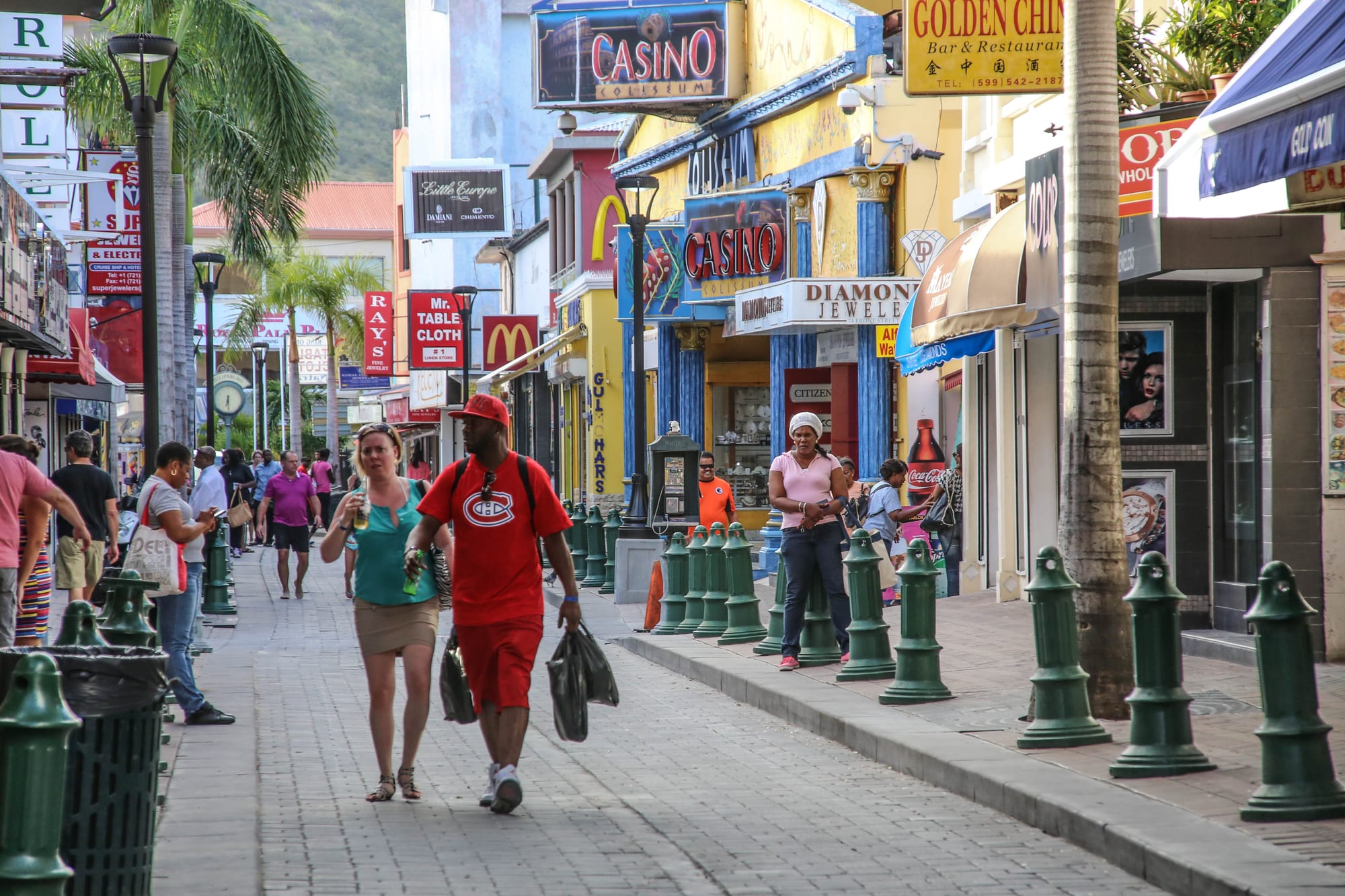
Life on the Dutch side of Sint Maarten moves to a schedule set largely by other people's holidays. Cruise ships dock at Philipsburg on many mornings, and the crowds they release set the rhythm of Front Street's jewellery and duty-free shops until the ships sail again by late afternoon. Away from the tourist strip, the island runs as a small, close-knit Caribbean community where English is the language actually spoken on the street, even though Dutch sits beside it on official signs on this half of the island and French is the official language of the other. Hurricane Irma, which tore through in September 2017, is still a living reference point: people speak of things as being from "before Irma" or "after Irma" as a matter of course.
Family and home life
Close to 60,000 people live on the Dutch side, on an island shared without a border with French Saint-Martin's roughly 32,000. More than two thirds of residents are not "SXM-born" at all but drawn from more than 120 nationalities — the neighbouring islands, Curaçao, Haiti, the Dominican Republic, the United States, Europe and Asia among them — pulled in by decades of tourism-driven demand for workers, so it is common for a household to mix a first generation raised abroad with children growing up as islanders. Housing remains marked by Hurricane Irma, which damaged the great majority of the island's buildings and destroyed many homes; rebuilding has continued for years since, constrained by high construction costs, scarce land and patchy insurance, and a good number of buildings still carry visible repairs or unfinished work.
Work, school and the rhythm of the day
Tourism is not just the largest employer here, it is close to the only one: around 80 percent of the workforce is employed in tourism, whether serving long-stay visitors or the day-trippers from the cruise ships that dock at Philipsburg's harbour. That dependence sets the working day — retail staff, tour operators and restaurant workers gear their hours to when the ships are in port, busiest from mid-morning to late afternoon and quieter on days with few or no calls. Many residents hold Dutch or French nationality and, with it, EU citizenship, and it is common for young islanders to leave for study or work in Europe before returning, or not.
Community life and public spaces
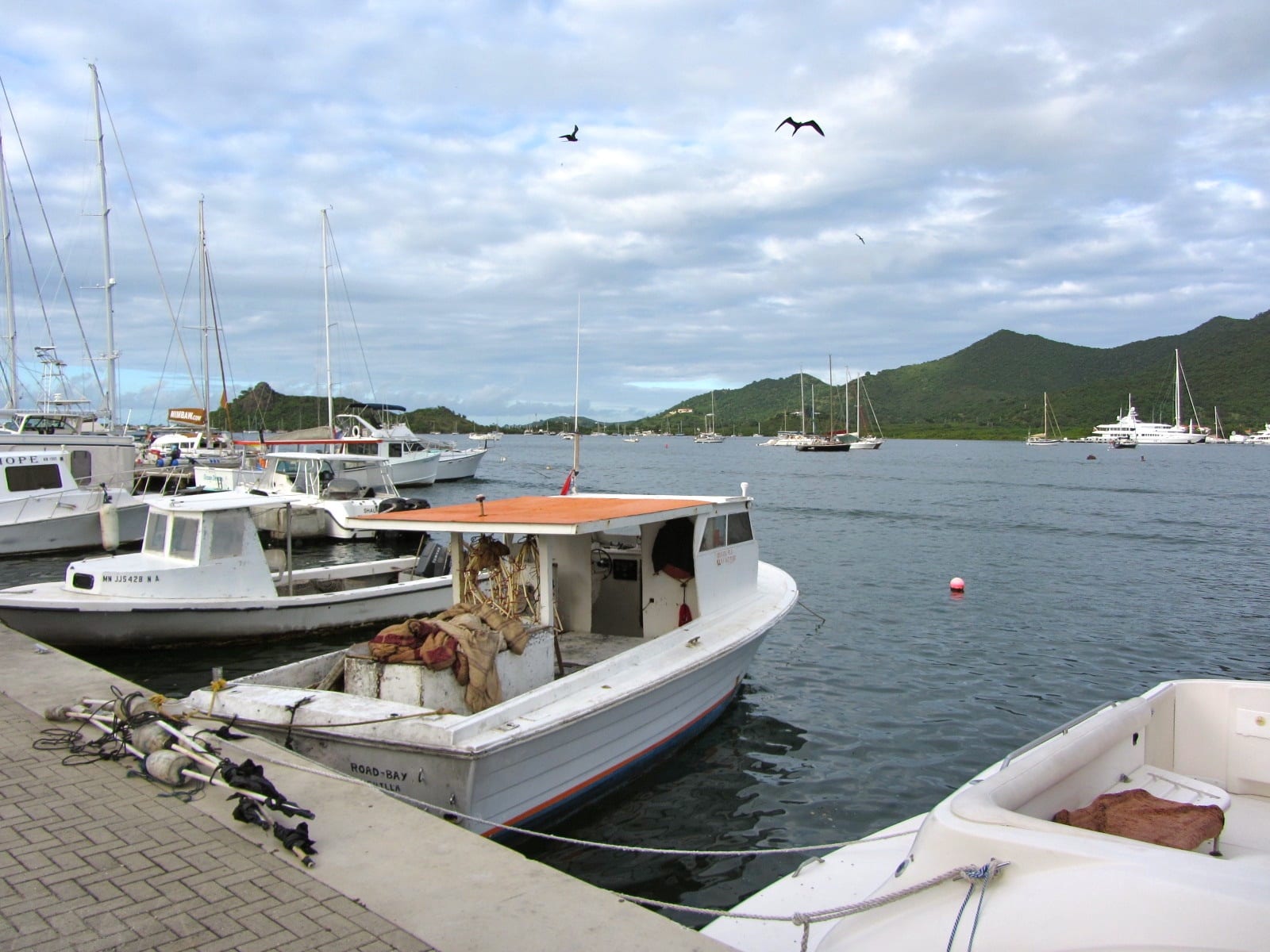
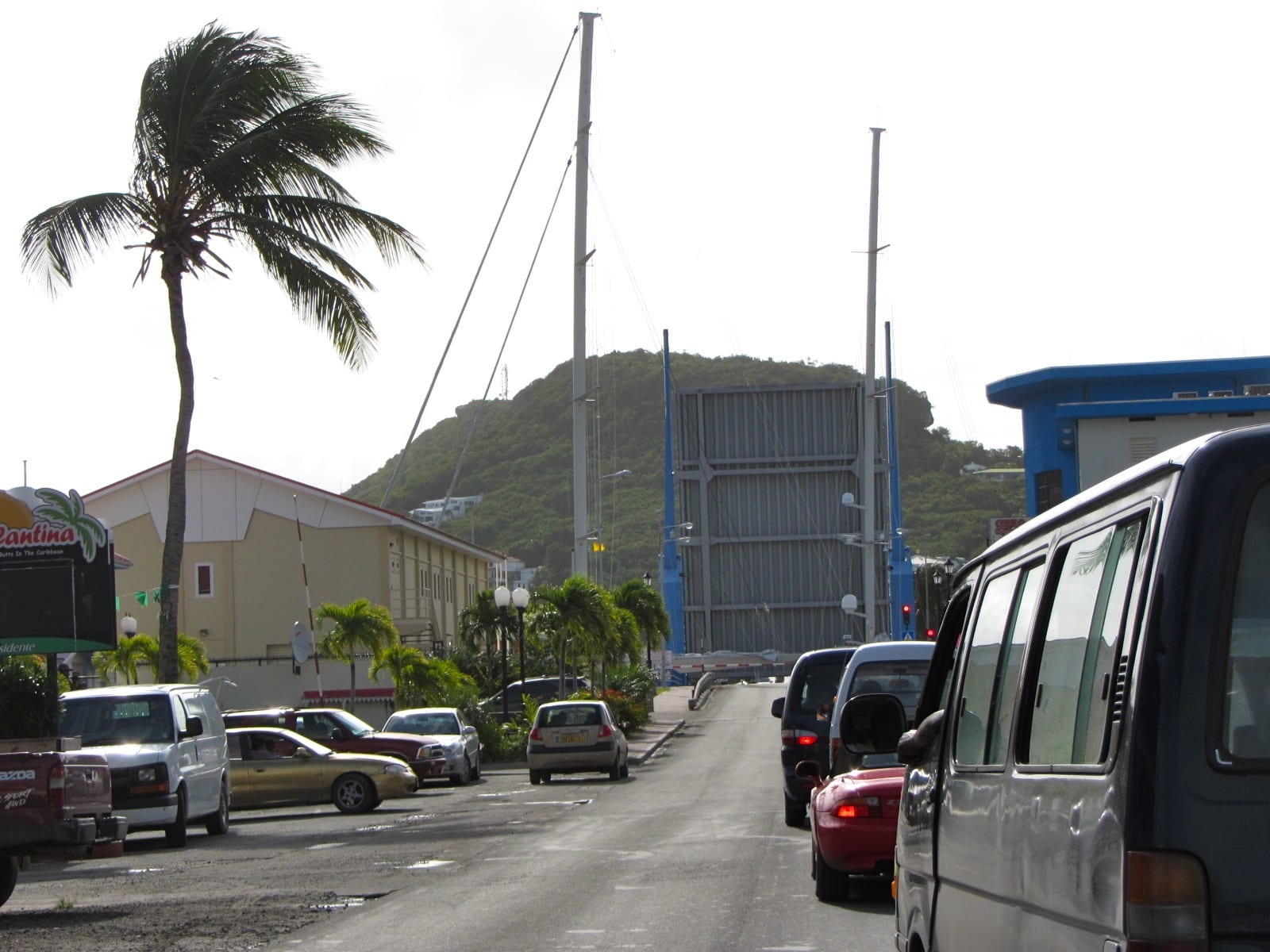
The Simpson Bay Lagoon, one of the largest in the Caribbean, sits at the centre of daily movement: a drawbridge across its mouth lifts several times a day on a fixed schedule to let yachts in and out, and each opening briefly closes the road, backing up cars on both sides while it is raised. Front Street and the streets around it form the main public gathering point on the Dutch side, and because there is no border control between the Dutch and French halves, people move between the two sides constantly for shopping, work and errands, treating the whole island as a single space despite its two flags.
Free time and weekends
Weekends bring beach time on both the Dutch and French sides, family cookouts, and, each spring, the run-up to the Dutch side's Carnival, which runs from April into May and fills weeks with calypso and soca competitions, costumed parades and street "jump-ups"; the French side holds its own carnival too. Church attendance remains a regular fixture for many households across the island's mix of Christian denominations. With the French side's beaches, restaurants and hilltop viewpoints only a short drive away and no border to cross, a day off often means simply going to the other half of the island rather than staying on one's own side of it.
A visitor's ordinary day
US dollars are accepted everywhere alongside the official Caribbean guilder, which replaced the Netherlands Antillean guilder in 2025, and cards are standard in shops and restaurants. There is no immigration checkpoint between the Dutch and French sides, just a sign and a change in road markings, so a rental car can cross freely between the two. Expect the Simpson Bay drawbridge to interrupt road traffic several times a day on its published schedule, and expect Philipsburg's Front Street to be busiest whenever a cruise ship is in port and comparatively quiet on the days none call.
What to take away
What defines an ordinary day in Sint Maarten is how directly it is shaped by outside forces — cruise schedules, a shared border-free island, a hurricane's long aftermath, and a bridge that still, several times daily, brings the traffic to a stop.