History · Sierra Leone
Sierra Leone: The Province of Freedom
A colony founded as a home for freed slaves, and a slaving coast before that — the base of Britain's anti-slavery squadron, a diamond economy, and a 1990s civil war defined by amputations and child soldiers
By Worldlore Editorial · 19 September 2026
A country named for a sound
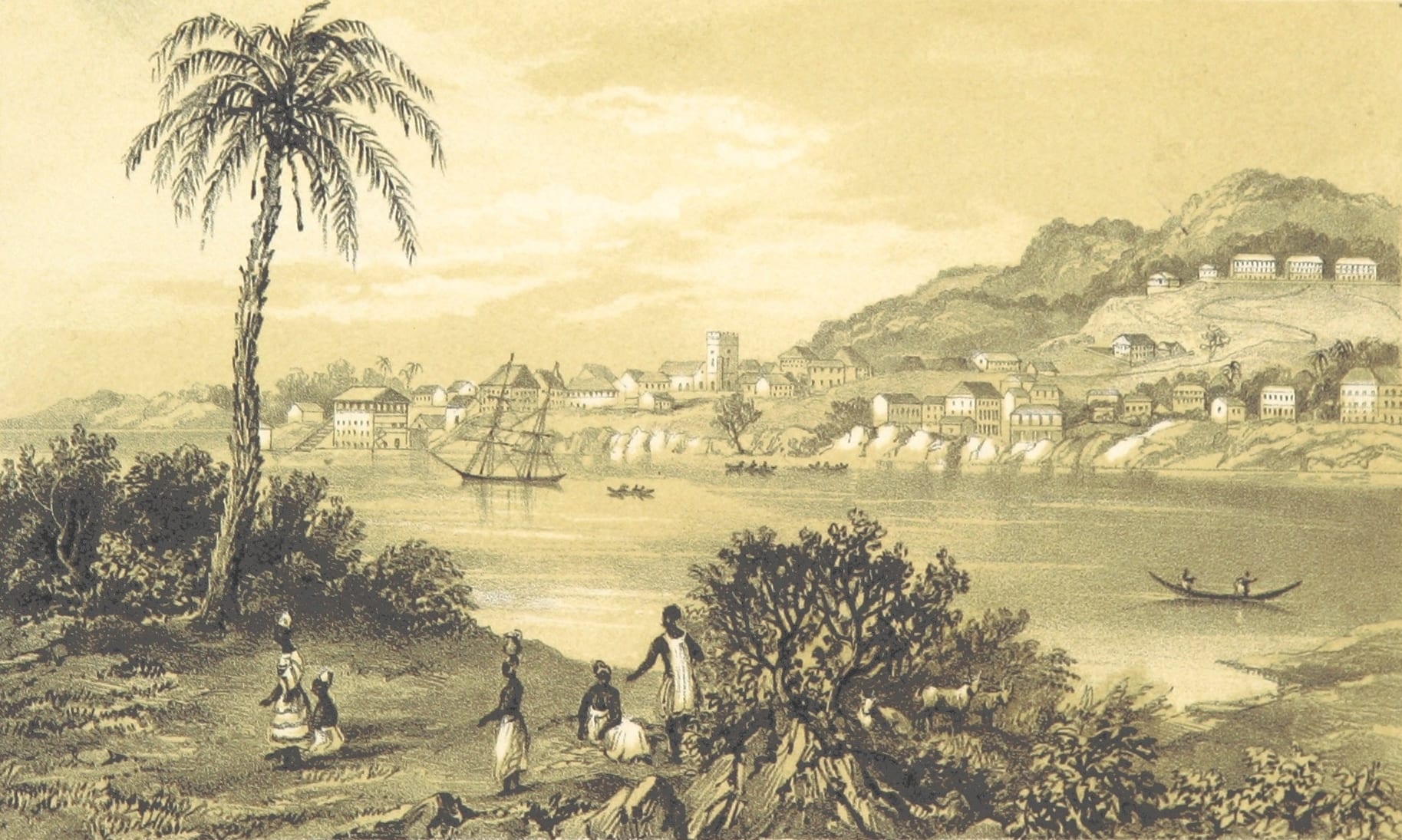
Sierra Leone is a small West African country of about 8.5 million people, its name a corruption of the Portuguese "Serra Lyoa" — "lioness mountains" — for the range behind Freetown, said to sound like a lion's roar in thunderstorms. Its founding is unusual: the capital, Freetown, was established at the end of the 18th century as a settlement for freed and formerly enslaved people from Britain, Nova Scotia and Jamaica, and the colony became the headquarters of Britain's campaign to suppress the Atlantic slave trade — on a coast that had itself been a major source of captives.
A short history
- to 1780s
The slaving coast
Coastal states and European forts trade in captives.
- 1787
"Province of Freedom"
The first party of London's Black poor is settled at the coast.
- 1792
Freetown founded
Freed slaves from Nova Scotia establish the town.
- 1808
Crown colony
Britain takes over; Freetown becomes the anti-slavery squadron's base.
- 1808–1863
Recaptives
Tens of thousands freed from slave ships are landed; the Krio people form.
- 1896
The protectorate
Britain extends rule over the interior.
- 1898
The Hut Tax War
An armed revolt against colonial taxation is crushed.
- 1961
Independence
Sierra Leone becomes sovereign under Milton Margai.
- 1991–2002
The civil war
The RUF insurgency; around 50,000–70,000 dead.
- 2014–2016
Ebola
An epidemic kills nearly 4,000 people.
The settlement for freed slaves
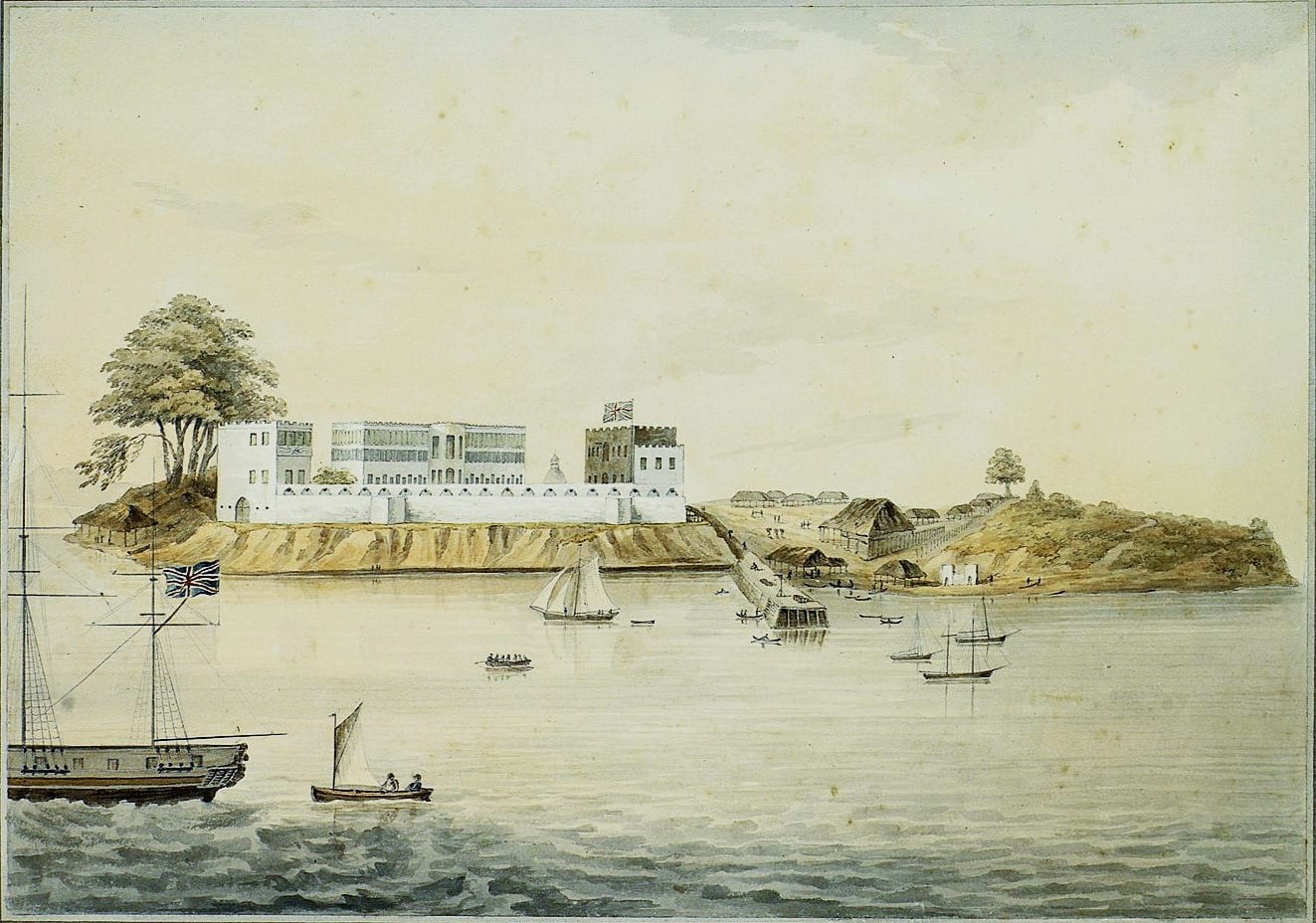
The coast was home to Temne, Mende, Sherbro and other peoples, and its harbours and rivers had long supplied the Atlantic slave trade. In 1787 British abolitionists and the government settled about 400 of London's "Black poor" — freed slaves, including some who had fought for Britain in the American Revolution — on land bought from a Temne ruler. The first attempt largely failed, but in 1792 around 1,200 Black Loyalists who had been resettled in Nova Scotia sailed to Sierra Leone and founded Freetown; they were joined in 1800 by Jamaican Maroons. When Britain abolished the slave trade in 1807 and made Sierra Leone a Crown colony in 1808, Freetown became the base for the Royal Navy's West Africa Squadron.
The Krios, and the protectorate
Between 1808 and the 1860s the navy landed tens of thousands of "recaptives" — Africans freed from intercepted slave ships — at Freetown. These people, from dozens of origins across West Africa, mixed with the earlier settlers to form the Krio (Creole) people, with their own English-based language, Anglican and Methodist churches, distinctive architecture, and a strong tradition of education. Krios became clerks, missionaries, lawyers and traders across British West Africa, and Fourah Bay College in Freetown, founded in 1827, was the first Western-style university in sub-Saharan Africa. In 1896 Britain declared a protectorate over the much larger interior; when it imposed a house tax in 1898, a widespread revolt led by the Temne chief Bai Bureh was put down by force.
Independence and decline
Sierra Leone became independent on 27 April 1961 under Milton Margai. Politics quickly fell into a contest between the Krio- and Mende-supported SLPP and the northern-based APC. Siaka Stevens's APC, in power from 1968, turned the country into a one-party state, hollowed out its institutions, and ran the economy — especially the alluvial diamond fields — as a system of personal patronage. Education, roads and the civil service decayed. By 1991 the state was weak, corrupt and broke, and a small armed group crossed from Liberia.
The civil war
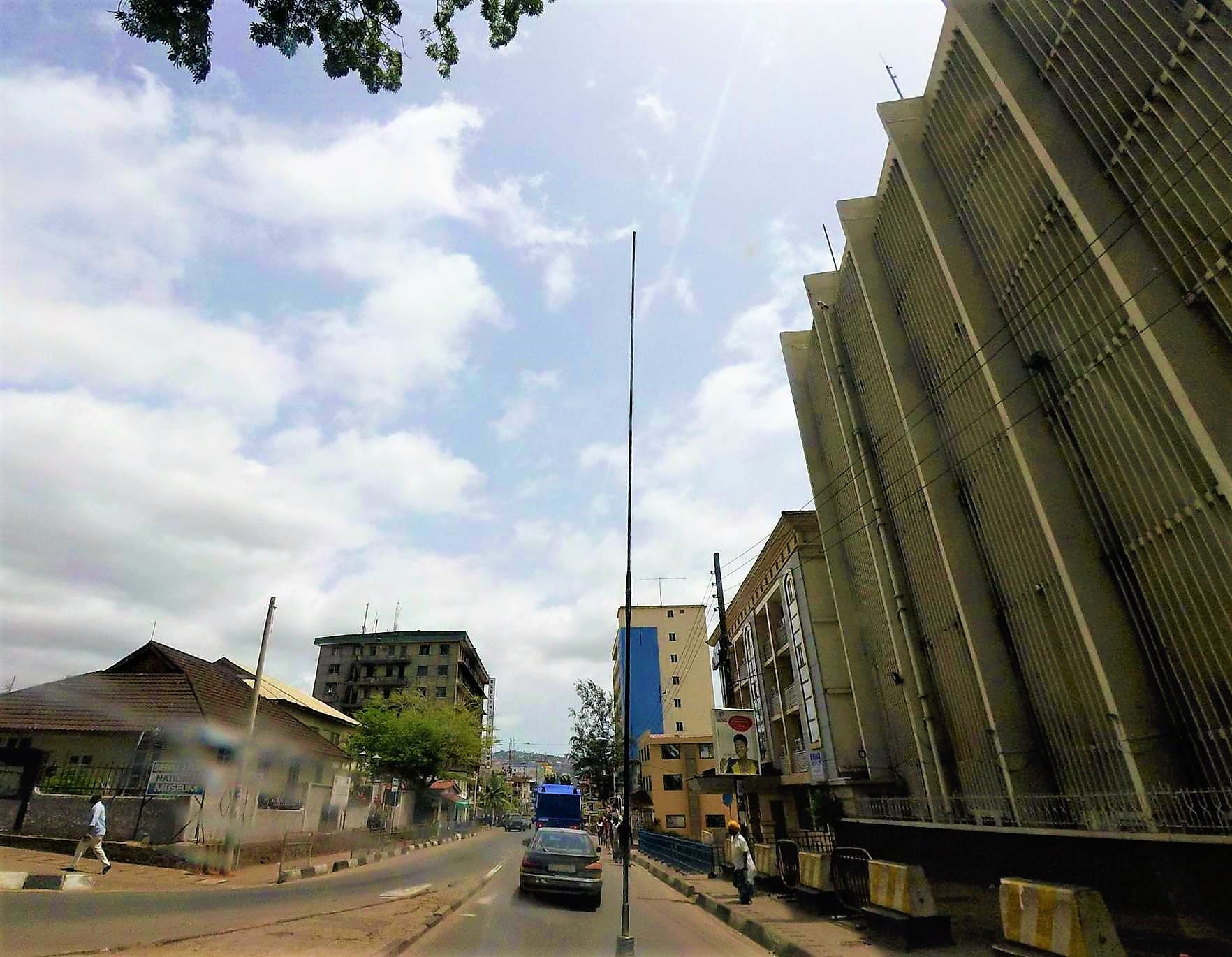
The Revolutionary United Front (RUF), backed by Liberia's Charles Taylor, launched its insurgency in March 1991. The war that followed lasted eleven years and became notorious for its methods: the RUF and, at times, other factions financed themselves by seizing the diamond fields ("blood diamonds"), abducted thousands of children as soldiers, and deliberately hacked off the hands and arms of civilians as a terror tactic. Governments were overthrown by coups in 1992 and 1997; a Nigerian-led West African force, British troops in 2000, and a large UN mission eventually restored the elected government and disarmed the factions. The war was declared over in January 2002, with an estimated 50,000 to 70,000 dead and half the population displaced. A UN-backed Special Court later convicted RUF commanders and, in 2012, Charles Taylor.
Recovery
Since 2002 Sierra Leone has held regular multiparty elections with peaceful transfers of power between the SLPP and APC. Growth returned, driven by iron ore and agriculture, but was interrupted by the 2014–16 Ebola epidemic — one of the worst-hit countries, with nearly 4,000 deaths and a shattered health system — and by a commodity-price slump and mudslides. It remains one of the world's poorest countries, with weak infrastructure and high youth unemployment, though its democratic record since the war has held.
What Sierra Leone carries
Sierra Leone was founded on an idea — a home in Africa for people freed from slavery — and it became the front line of the campaign to end the slave trade, producing in the Krios one of West Africa's most influential 19th-century communities. The late-20th-century collapse into dictatorship and then a diamond-fuelled civil war of extraordinary cruelty is the shadow over that history; the two decades of elections since 2002 are the country's attempt to move past it.