History · Saudi Arabia
Saudi Arabia: The Kingdom and the Two Mosques
A state built three times by one family in alliance with one religious movement — unifier of the Arabian Peninsula, guardian of Islam's holiest cities, the world's swing producer of oil, and now attempting a state-directed reinvention
By Worldlore Editorial · 19 September 2026
A kingdom named for a family
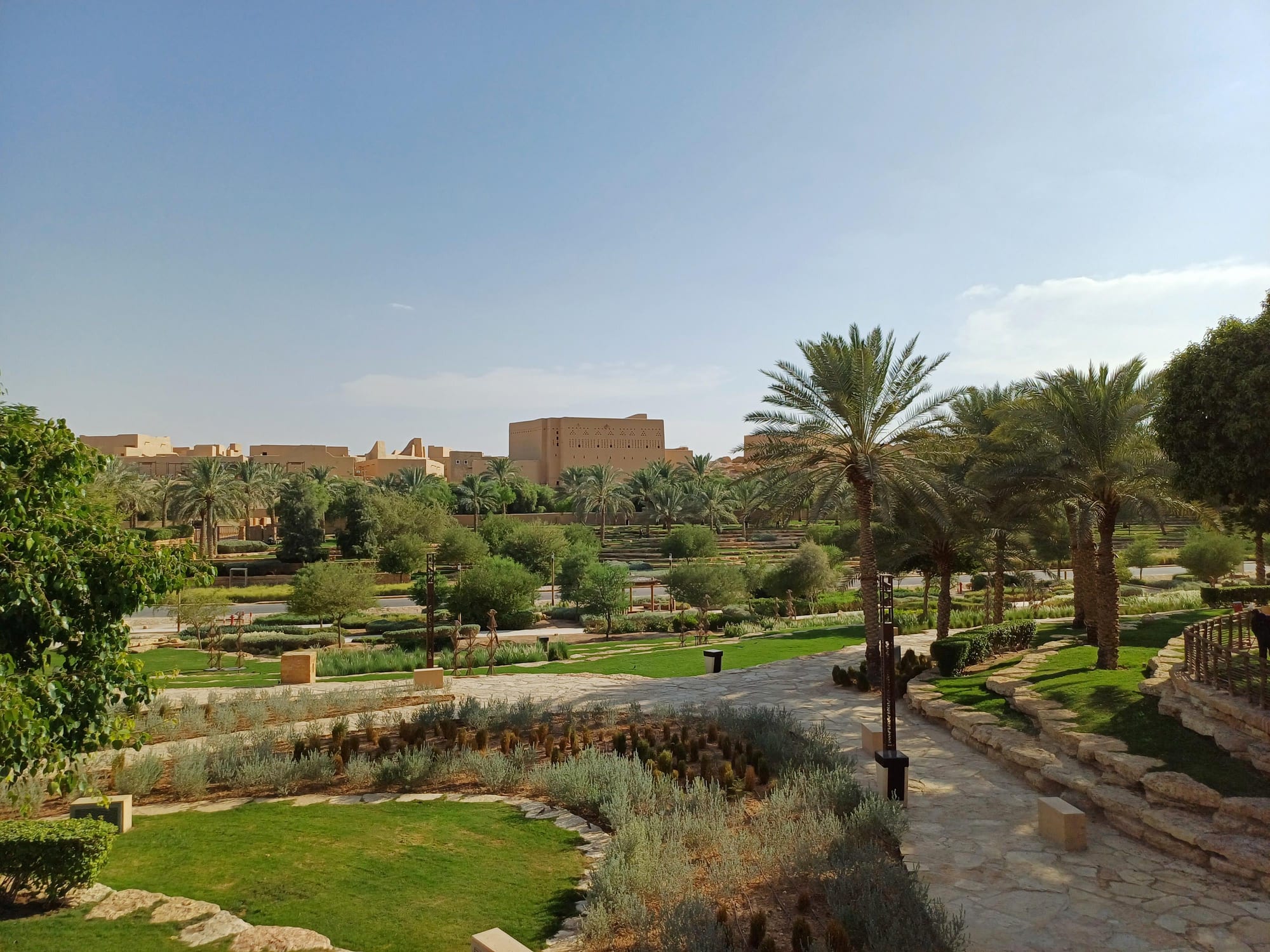
Saudi Arabia occupies most of the Arabian Peninsula — largely desert, with about 37 million people, a third of them foreign workers. It is one of the few countries named after its ruling dynasty, and its history is essentially the story of an alliance struck in 1744 between the House of Saud, a small central-Arabian emirate, and the religious reform movement of Muhammad ibn Abd al-Wahhab. That partnership built a state, lost it, rebuilt it, lost it again, and finally, in the 20th century, created the kingdom that controls Islam's two holiest cities and a large share of the world's oil.
A short history
- 1744
The pact
Muhammad ibn Saud allies with the preacher Ibn Abd al-Wahhab at Diriyah.
- 1744–1818
The first Saudi state
Expands across Arabia; sacks Karbala; is crushed by Egypt for the Ottomans.
- 1824–1891
The second Saudi state
A revived emirate around Riyadh, ended by a rival dynasty.
- 1902
Riyadh retaken
Abd al-Aziz ibn Saud captures the city and begins the third expansion.
- 1925
Conquest of the Hijaz
The Saudis take Mecca and Medina from the Hashemites.
- 1932
The kingdom
Abd al-Aziz proclaims the Kingdom of Saudi Arabia.
- 1938
Oil
Commercial oil is discovered in the Eastern Province.
- 1979
The turning point
The Iranian Revolution, the Grand Mosque seizure, and the Afghan war.
- 1990–1991
The Gulf War
US troops are based in the kingdom to reverse Iraq's invasion of Kuwait.
- 2017–
The MBS era
Mohammed bin Salman consolidates power and launches Vision 2030.
The pact, and the first two states
In 1744 the ruler of the oasis town of Diriyah, Muhammad ibn Saud, gave protection to Muhammad ibn Abd al-Wahhab, a preacher calling for a return to what he held to be the pure monotheism of early Islam, stripped of practices he condemned as idolatry — saint veneration, shrine visitation, and the like. The alliance gave the Saud family religious legitimacy and gave the movement a sword. The first Saudi state expanded across most of the peninsula and into Iraq, where its forces sacked the Shia shrine city of Karbala in 1802. This alarmed the Ottomans, who sent an Egyptian army that destroyed Diriyah in 1818 and executed the Saudi leader. A second, smaller Saudi state around Riyadh rose and fell during the 19th century, finally overwhelmed in the 1890s by the rival Rashidi dynasty, which drove the Sauds into exile in Kuwait.
The third state, and the kingdom
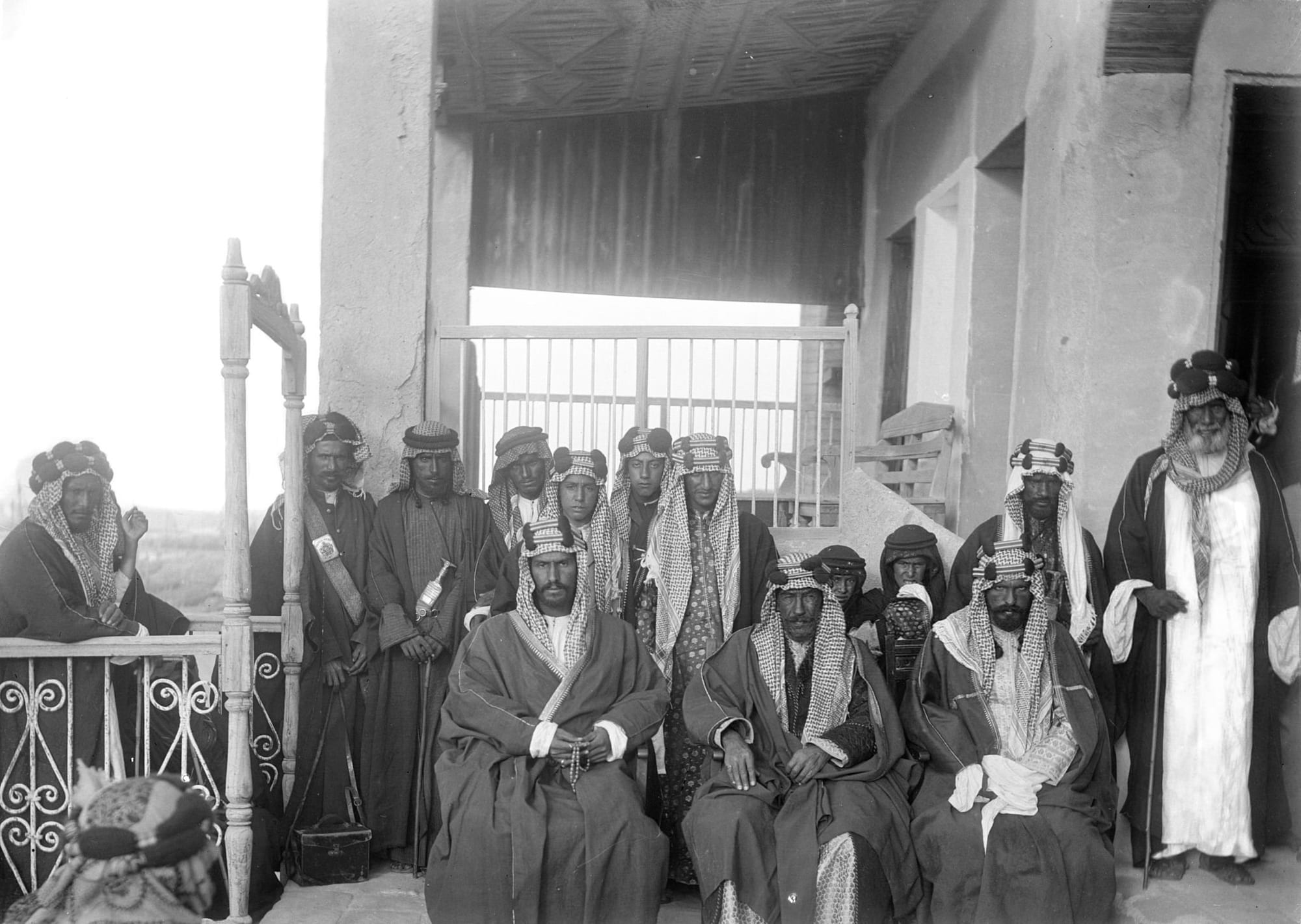
In 1902 the young Abd al-Aziz ibn Saud recaptured Riyadh and, over the next 30 years, subdued central Arabia (the Najd), the eastern oases, and — decisively — the Hijaz on the Red Sea coast, taking Mecca and Medina from the Hashemite Sharif in 1925. He welded these regions together and in 1932 proclaimed the Kingdom of Saudi Arabia, with himself as king and the Wahhabi religious establishment as its partner in law, education and social control. His shock troops, the Ikhwan tribal militia, were themselves crushed by the king in 1930 when they resisted any limit on jihad against Arabia's borders.
Oil and the American connection
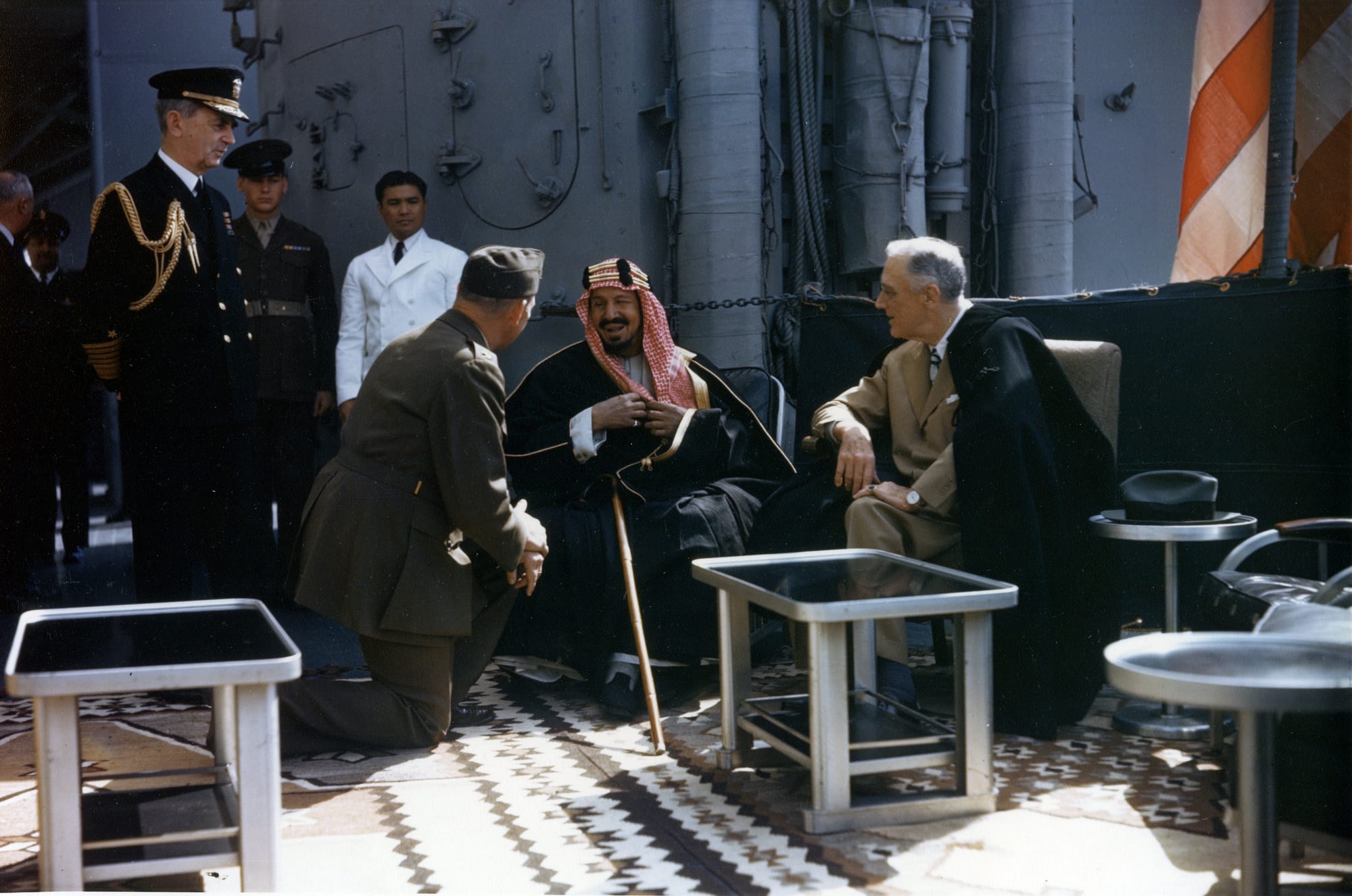
American geologists found oil in the Eastern Province in 1938, and after the Second World War production expanded enormously through the Arabian American Oil Company (Aramco). A 1945 meeting between King Abd al-Aziz and President Franklin Roosevelt aboard a US warship established the enduring bargain: Saudi oil and regional stability in exchange for American security guarantees. Oil revenue, especially after the 1973 price shock, funded a rapid transformation — cities, universities, hospitals, a welfare state for citizens — and made the kingdom a financial power across the Muslim world, funding mosques, charities and religious education abroad.
1979 and its long shadow
Three events in 1979 hardened the kingdom for a generation. The Iranian Revolution produced a rival Islamic state and Shia challenge; armed militants seized the Grand Mosque in Mecca for two weeks, shaking the monarchy's religious credibility; and the Soviet invasion of Afghanistan drew Saudi money and volunteers into a jihad that Riyadh co-financed with the United States. The government responded by giving the clerical establishment more control over social life. The 1990–91 Gulf War, which brought hundreds of thousands of US troops onto Saudi soil to confront Iraq, became a rallying cause for militants — including the Saudi-born Osama bin Laden — and 15 of the 19 hijackers of 11 September 2001 were Saudi nationals.
The MBS era
Since 2015, and openly since a 2017 purge that sidelined rivals, effective power has rested with Crown Prince Mohammed bin Salman. His "Vision 2030" programme aims to diversify the economy away from oil, build new cities and tourism, and loosen social restrictions: women may now drive and travel more freely, cinemas and concerts have returned, and the religious police have been curbed. In parallel, the government has jailed activists, clerics and businesspeople, intervened in Yemen's civil war in a campaign that has caused a major humanitarian crisis, and was found by US intelligence to have approved the 2018 killing of the journalist Jamal Khashoggi in Istanbul — which the Saudi government denies the crown prince ordered.
What Saudi Arabia carries
Saudi Arabia is the product of a single 18th-century bargain between a dynasty and a religious movement, rebuilt into a modern petrostate that guards Mecca and Medina and sits on reserves that let it move the world oil price. The current leadership is trying to keep the family's power while replacing the clerical partnership at the system's core with nationalism, entertainment and economic ambition — the biggest change to the Saudi formula since 1744.