Culture & Customs · Saudi Arabia
Saudi Arabia: Coffee, Dates and a Welcome in the Majlis
The birthplace of Islam, where a greeting wishes peace, a guest is owed the best seat in the majlis, and old codes of honour and hospitality now sit alongside some of the fastest social change anywhere in the region
By Worldlore Editorial · 30 September 2026
A visitor steps into a majlis, the sitting room where a household or a community receives its guests. Carpets cover the floor and cushions line the walls, and in the corner a pot of coffee is warming. The greeting comes first, a wish of peace answered with the same wish in return, then the host offers Arabic coffee and dates, and the conversation begins where it always does: with the health of the family. There is no hurry. Among the Bedouin of the desert, custom held that a traveller must never be refused food and shelter, since in the desert hospitality denied could cost a life. Much has changed in Saudi Arabia in a very short time, but that instinct, that a guest is to be honoured, remains close to the centre of how Saudis see themselves.
Faith, identity and values
Islam is not one part of Saudi life among many; it shapes the calendar, the working week, the law and the language of everyday courtesy. The kingdom is the birthplace of the faith and the site of its two holiest cities, Mecca, home of the Kaaba, and Medina, where the Prophet Muhammad is buried, and the king's formal title is Custodian of the Two Holy Mosques. Millions of pilgrims arrive every year for the Hajj and the lesser pilgrimage, the Umrah. Around nine in ten Saudis are Sunni Muslims, most following the Hanbali school of Islamic law, and around one in ten are Shia, living mainly in the east of the country. Non-Muslims may not enter Mecca or the sacred central area of Medina. Public worship by other faiths is not permitted and proselytising is illegal, although private worship by the large foreign workforce is accepted.
The call to prayer sounds five times a day, and Friday, the day of congregational prayer, falls at the start of the weekend. For decades the religious police urged shops to close and men to attend prayer at the appointed times; since 2016 their powers have been sharply curtailed, and while many people still pause for prayer, public life no longer stops for it in the way it once did.
Beneath the religious framework lies a set of values rooted in family and lineage. Honour, sharaf, is a central idea: a person's conduct is taken as a reflection of their family and upbringing, and the senior man of a household is traditionally held responsible for its reputation. Kinship is traced through the father's line, and tribal identity remains a deep source of pride for many. A broad separation between men and women runs through society and shapes ideas of privacy and space, while age, rank and family connections all bear on status. Communication tends to be indirect, and a reply of "inshallah", "if God wills", can signal real uncertainty rather than a firm yes.
In recent years the state has relaxed many rules of behaviour. Women have been able to drive since 2018, cinemas and concerts have returned, and female visitors are no longer required to wear the abaya or to cover their hair. Observers note that younger Saudis in particular have embraced these changes quickly, while more conservative attitudes remain strong in many families and communities. The pace of change varies from place to place and from household to household.
Greetings and meeting people
The standard greeting is "as-salamu alaykum", a wish of peace, answered with "wa alaykum as-salam", the same wish returned. Handshakes are common, especially in business, and are always made with the right hand. Between men and women who are not related, a spoken greeting with a slight nod is the safer choice; a man should not offer his hand to a woman who is wearing a niqab, and more generally it is wise to wait and see whether a hand is offered. Among friends of the same sex greetings are warmer: men may exchange kisses on the cheek, while women greet one another with hugs and several kisses, if more reservedly in public. Elders are shown particular respect, sometimes with a kiss on the forehead.
Titles matter. People expect to be addressed as Doctor, Professor, or Mr and Mrs where appropriate, and a familiar but respectful way to address a man is as Abu, "father of", followed by the name of his eldest son. Unrelated men and women generally lower their gaze with one another as a sign of respect, and physical contact between unrelated men and women is generally avoided. Among strangers, a distance of around an arm's length is comfortable. Pointing with the index finger and beckoning with a single finger or the left hand are considered rude, and so is showing the soles of the feet. Conversation can be lively and animated, which signals engagement rather than anger.
Hospitality and being a guest
The majlis is the heart of Saudi social life, and it is on UNESCO's list of intangible cultural heritage as a cultural and social space. It is where neighbours and relatives gather to exchange news, receive guests, resolve disputes, offer condolences and hold wedding receptions, and where folk stories, folk songs and Nabati poetry are passed on. Elders hold a place of honour there, and religious sheikhs and judges may be called on to settle disagreements. Women have their own majlis. Young people learn the manners of their community simply by sitting, listening and watching how their elders speak and give way to one another.
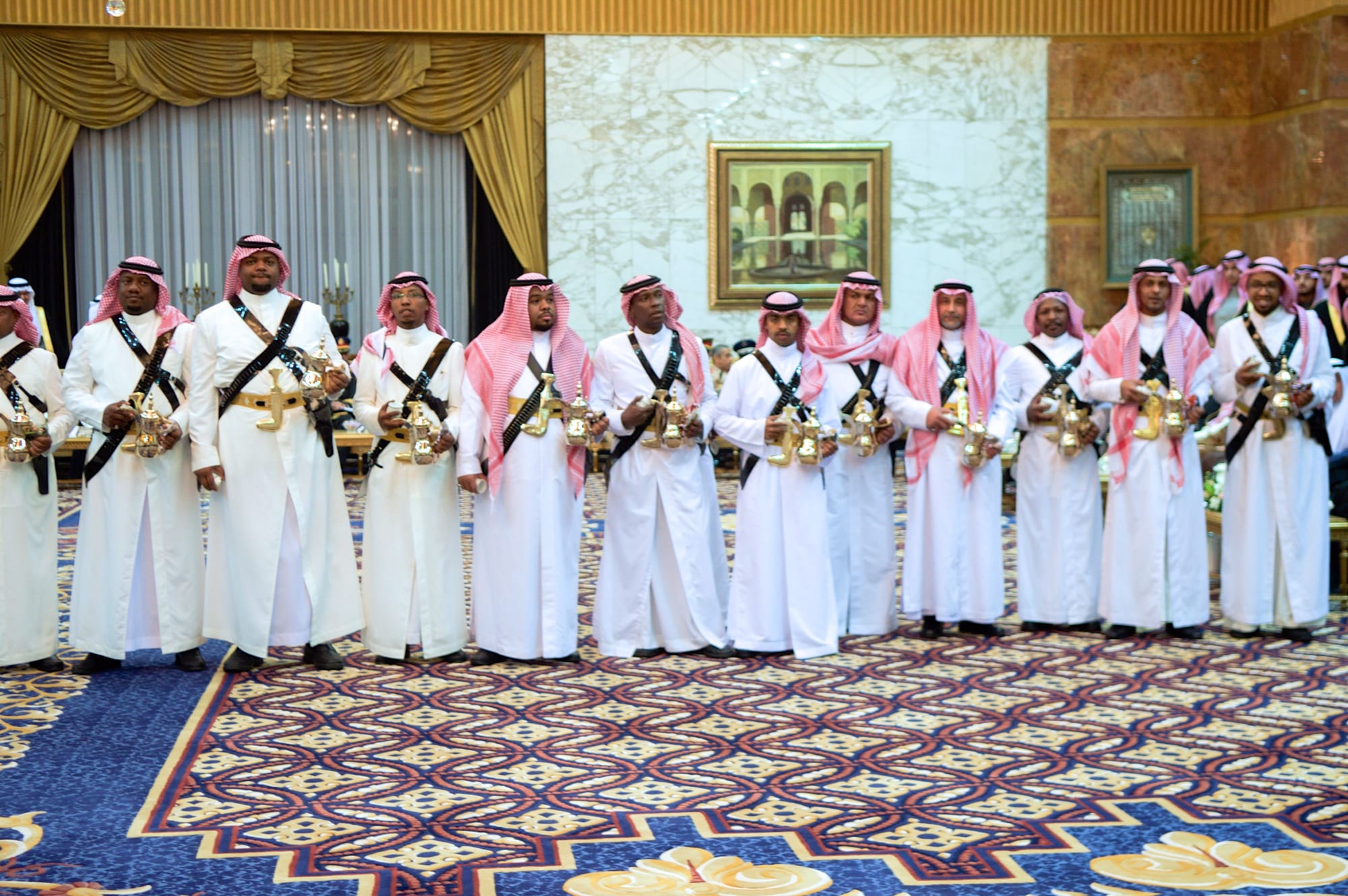
In a private home, shoes usually come off at the door, particularly where the floor is carpeted, and many households keep separate reception rooms for men and women. Arabic coffee and dates are customarily offered on arrival, and accepting a drink is taken as a mark of friendship. Before stepping into a space where women may be present, a man traditionally announces himself with a call of "ya Allah!" so that no one is taken by surprise.
At the table, or more often on a cloth spread on the floor, food is eaten with the right hand, and dishes are served and passed with the right hand too. Guests wait for the eldest or most senior person to begin. When sitting on the floor, it is polite to keep the feet away from the food cloth and to avoid any position that points the sole of a shoe at another person. A small gift is appreciated when invited to someone's home, though an extravagant one can cause embarrassment, and gifts are given with the right hand. Anything containing alcohol or pork, including perfume with alcohol in it, is unsuitable, and a man does not give a gift to a woman who is not part of his family.
Festivals and life's big moments
The Islamic calendar sets the rhythm of the year. Ramadan, the month of fasting from dawn to sunset, changes the pace of everything, including the opening hours of shops and restaurants, and the rules on public conduct tighten for everyone, visitors included. Eating, drinking, smoking or chewing gum in public during daylight hours is not permitted, even inside a car, and neither is playing loud music or dancing. Hotels and restaurants that serve food during fasting hours may screen non-fasting guests from view, and modest dress matters more than ever.
The end of Ramadan is marked by Eid al-Fitr, and the Hajj season by Eid al-Adha, the two great religious holidays, when government offices close and schools usually break up. Two national days sit alongside them. Founding Day, on 22 February, was established by royal order in 2022 to commemorate the founding of the Saudi state, and National Day, on 23 September, marks the unification of the kingdom in 1932.
Weddings follow a sequence of family steps. Traditionally the groom asks the bride's father, or the eldest man of her family, for her hand, and the agreement is sealed by reciting Al-Fatiha, the opening chapter of the Quran. The marriage contract is later signed and witnessed, and the dowry agreed. In many families a henna night brings the bride together with her female relatives and friends to have their hands and feet decorated. The wedding celebration itself is usually held separately for men and women; the men's party features sword dances and drumming, and the newly married couple may be seated in state, side by side, like a king and queen.
Funerals are swift and simple. The body is washed, wrapped in plain white cloth and buried quickly, often on the same day, and under the strict interpretation of Islam that prevails in the kingdom, graves are kept plain and often unmarked; even kings have been buried this way. Public displays of grief are discouraged. For three days the bereaved family receives visits from relatives, neighbours and friends offering condolences, and neighbours help by bringing food.
Arts, crafts and music
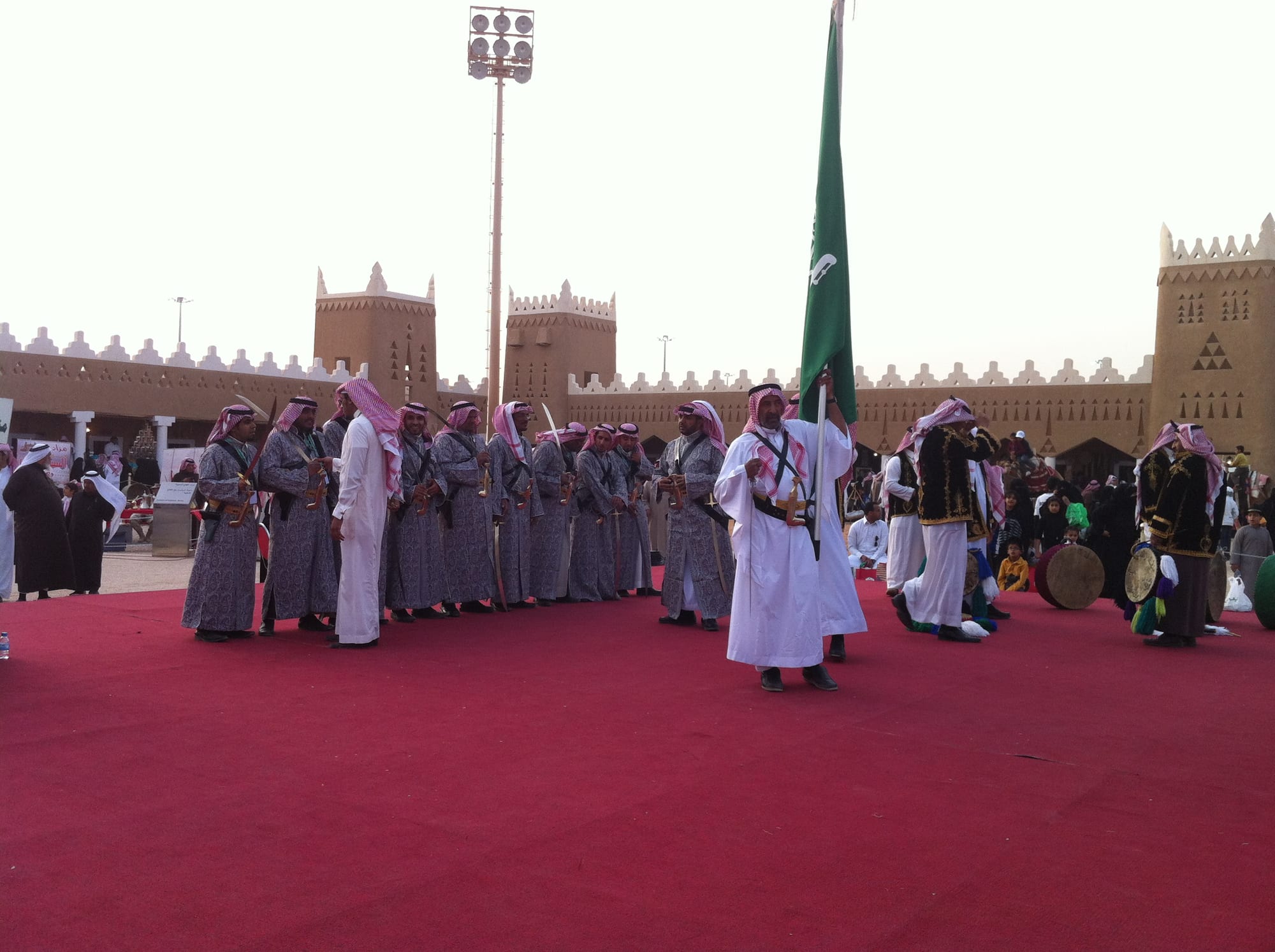
The ardah, the sword dance of central Arabia, is the kingdom's signature performance and is on UNESCO's list. Men stand shoulder to shoulder in two facing rows with light swords, leaving space between them for the drummers, while a poet chants verses composed for the occasion, which the rows sing back in turn. The dancers sway back and forth and raise and lower their swords in time with the drums, and the national flag is often carried at the heart of the performance. It is danced at religious holidays, weddings, births, graduations and national celebrations, and any man may join in, whatever his age or standing. Another UNESCO-listed tradition, almezmar, combines drumming with a dance performed with sticks.
Poetry runs through much of this. In the ardah the verses matter as much as the swords, and in the majlis Nabati poetry is recited and handed down alongside folk stories and songs. Arabic calligraphy, the art of the written word, is also on UNESCO's list.
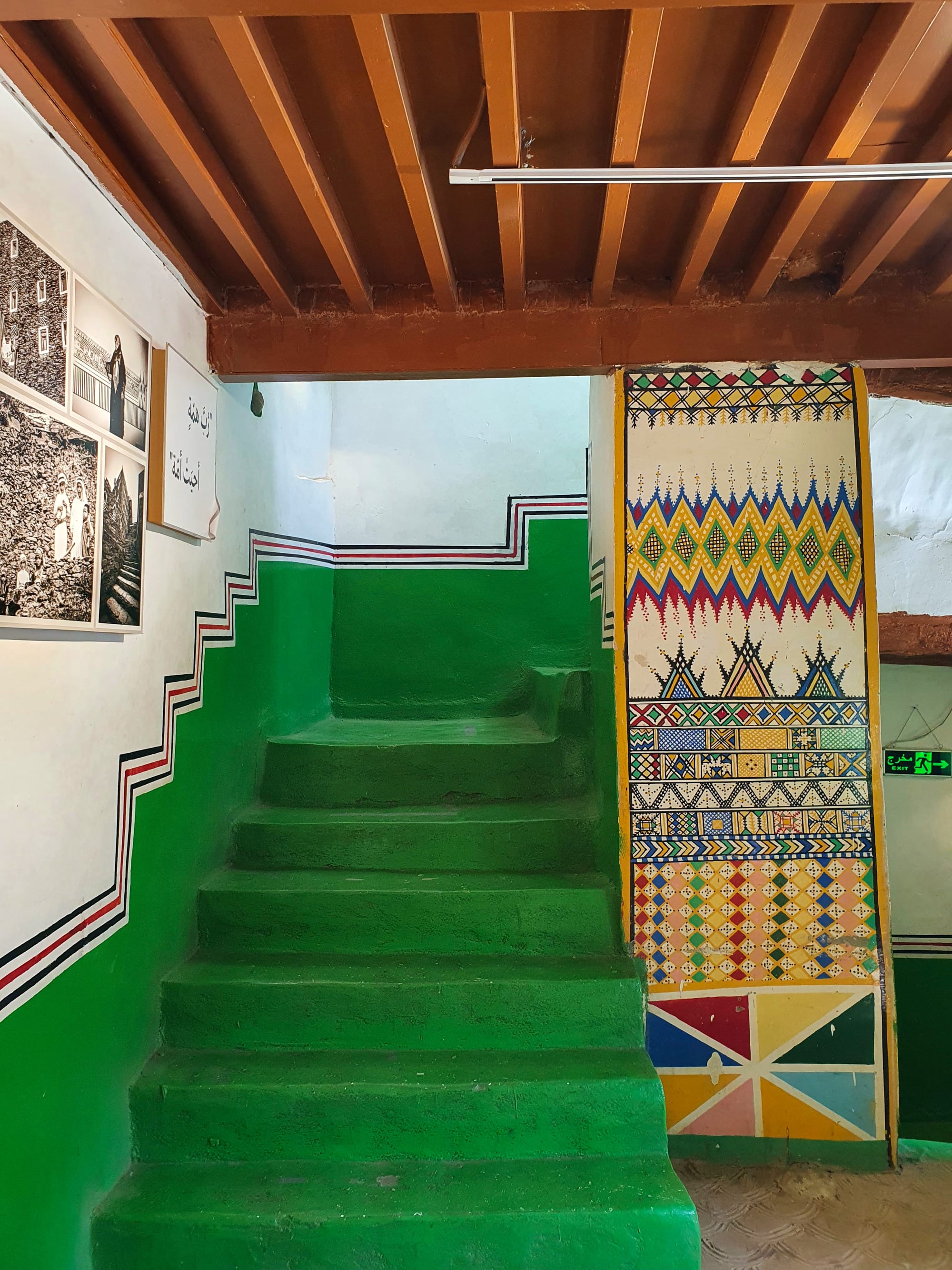
Craft traditions carry a strong sense of place. Al-Qatt Al-Asiri, the wall painting of Asir, was traditionally the work of women, who decorated the guest rooms of their homes with geometric shapes and symbols over a base of white gypsum. The lady of the house would invite female relatives of all ages to help, passing the skill from one generation to the next, and the style is now also taken up by artists, designers and architects. Sadu weaving and falconry, both also on UNESCO's list, remain living traditions, and since cinemas and concerts were permitted again, a newer entertainment culture has grown up alongside them.
Dos and don'ts for visitors
- Do check the latest government travel advice before and during any trip; the kingdom has been caught up in the war with Iran since February 2026, and the UK government advises against all travel within 10 km of the border with Yemen and all but essential travel within 80 km of it.
- Do dress modestly: loose clothing that covers the shoulders, elbows and knees is expected of men and women alike, though visitors are not required to wear the abaya or a headscarf.
- Do greet with "as-salamu alaykum", use the right hand for greeting, eating and giving, and keep the soles of the feet out of sight.
- Do wait for a person of the opposite sex to offer a hand first; a spoken greeting with a slight nod is always acceptable.
- Don't eat, drink, smoke or chew gum in public during daylight in Ramadan, even in a car.
- Don't bring alcohol or drugs into the country; alcohol is banned, drinking or being drunk in public is illegal, and drug offences can carry the death penalty.
- Don't show affection in public, swear, or play loud music, particularly during prayer times; breaches of the public decency rules can bring fines, and same-sex relations are illegal.
- Don't photograph people without their consent, or government buildings, palaces and military sites, and avoid public criticism of the royal family, the government or Islam, including online, where sharing unverified accounts of the war's strikes has also led to prosecutions.
What to take away
Saudi Arabia is changing faster than almost anywhere, yet the courtesies at its core, the greeting of peace, the coffee offered to a guest and the respect paid to elders and to faith, remain the surest guide for any visitor, and those who honour them will find the welcome as generous as the old desert custom promised.