Daily Life · Saudi Arabia
Saudi Arabia: A Day Reshaped in a Decade
Five daily prayers still mark the hours, households still centre on the extended family, and since 2016 a fast, state-led programme of reform has changed what an ordinary day looks like for Saudi women in particular, without dismantling every restriction that shaped it before
By Worldlore Editorial · 30 September 2026
An ordinary day in Saudi Arabia still runs on the five calls to prayer, audible from mosques nationwide and still enough of a rhythm that many people pause briefly around them, even though shops are no longer expected to shut their doors for every prayer as strictly as they once were. Extreme heat for much of the year pushes daily life toward the evening, when streets, markets and cafés genuinely come alive. Under that older rhythm sits a newer one: since 2016, a state-led programme of social and economic change, driven from the top by Crown Prince Mohammed bin Salman's Vision 2030, has altered what an ordinary day looks like for millions of Saudis, women especially, at a speed few expected, even as it has not removed every restriction that shaped daily life before.
Family and home life
The average Saudi household has around five members, and according to the government's own 2024 family statistics, seven in ten households are nuclear families of parents and children, with extended or composite households, often grandparents or other relatives sharing a home, making up about a sixth and people living alone most of the rest. Men head the large majority of households, about five in six. Family life remains organised around the household rather than the individual, and decisions on marriage, housing and major spending are typically made collectively rather than left to one person. Saudi Arabia's first codified Personal Status Law, in force since 2022, has curtailed some elements of male guardianship over women and set out their rights in divorce, custody and financial matters, though a male guardian's consent is still required to contract a marriage, and fathers remain the default legal guardians of their children even where mothers hold custody.
Work, school and the rhythm of the day
The working and school week runs Sunday to Thursday, with Friday and Saturday as the weekend nationwide, Friday being the day of communal prayer. School starts at six, and school and working hours are shortened during Ramadan. Around two in five residents of Saudi Arabia are foreign nationals, and they make up most of the workforce and about four in five private-sector jobs, doing much of the manual, retail and service labour that keeps daily life running; a "Saudization" policy has pushed more citizens into private-sector roles in recent years. The clearest change to the working day has been who is in it: the share of Saudi women in the labour force reached about 35% in 2024, many of them in jobs in retail, hospitality and offices that were closed to them a decade ago, and since June 2018 they have also been able to drive themselves to work rather than depend on a male relative or a hired driver.
Community life and public spaces
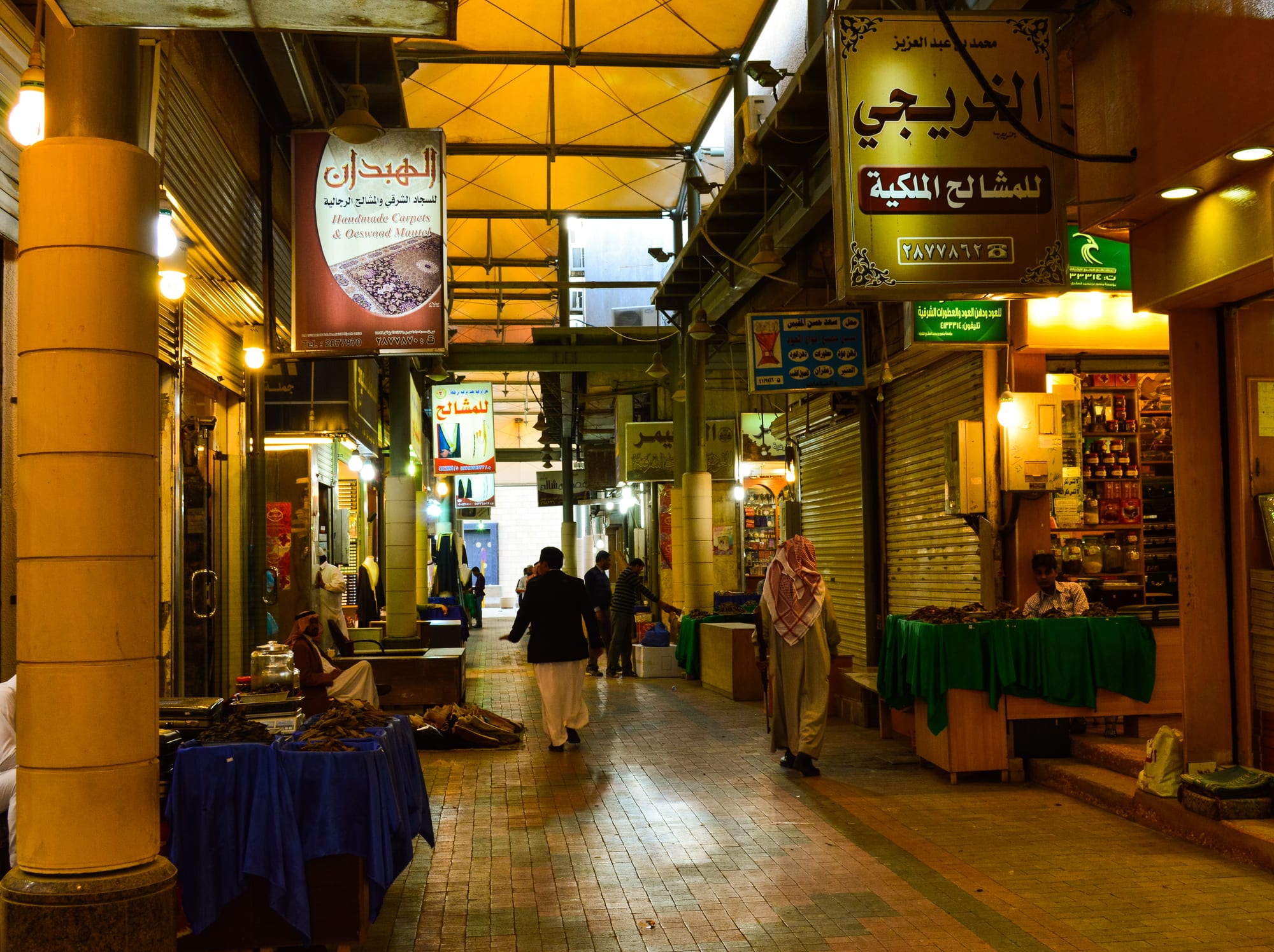
Markets remain a genuine public gathering point nationwide, from produce and date markets to the covered souks of the older city districts, though large supermarkets and shopping malls now handle much of everyday shopping in the cities. Public space has visibly opened up over the past decade: the religious police lost their power to arrest people in 2016, and since 2019 restaurants have no longer been required to keep the separate entrances and family sections that used to keep men and women apart, and mixed-gender seating is now the norm in most cafés and restaurants in the larger cities. Cinemas, closed nationwide for some 35 years, reopened in April 2018, and concerts and public festivals, once unthinkable, now draw large mixed crowds. These changes are most visible in Riyadh, Jeddah and the other big cities; smaller towns and more conservative communities have moved more slowly.
Free time and weekends
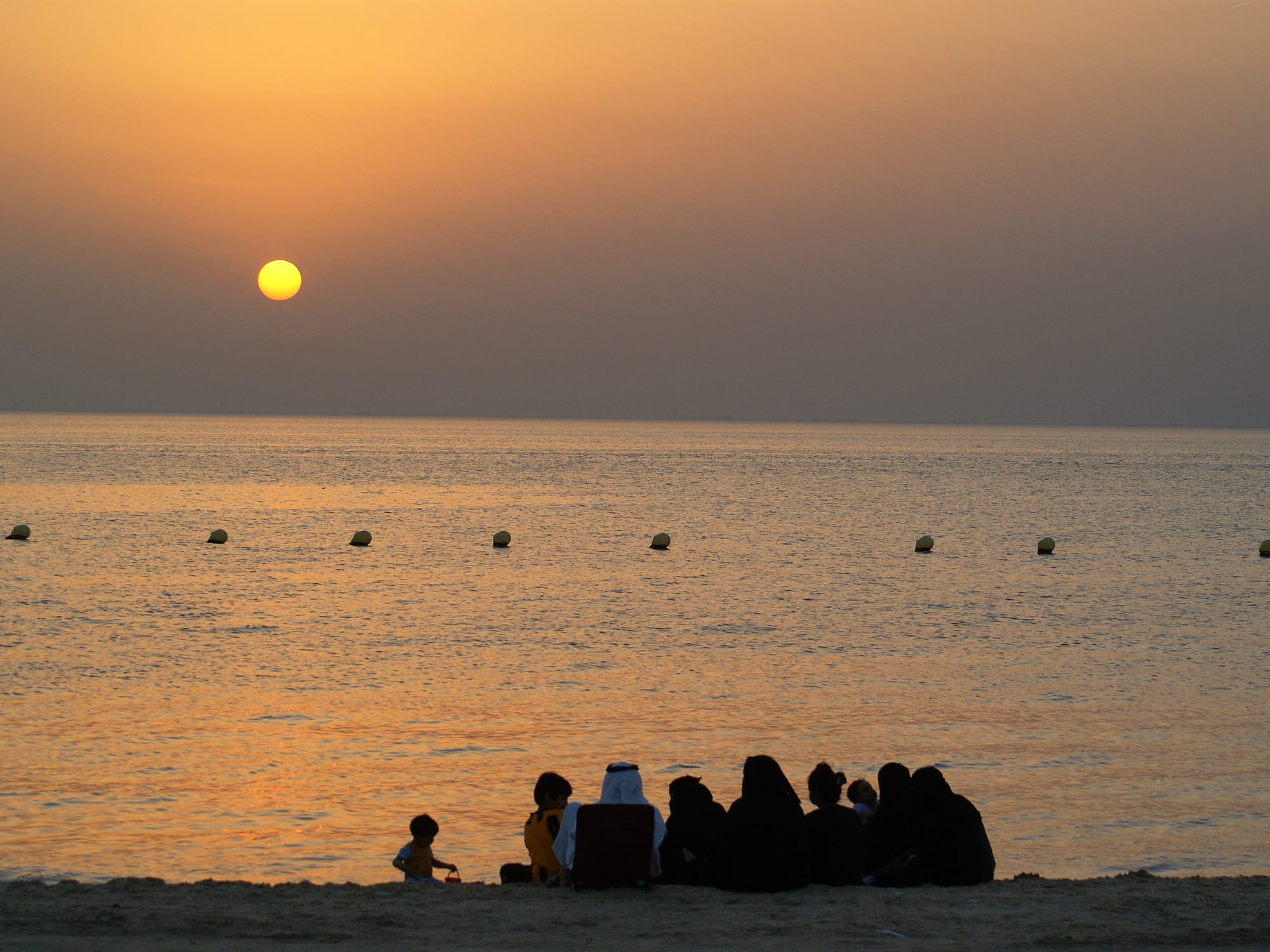
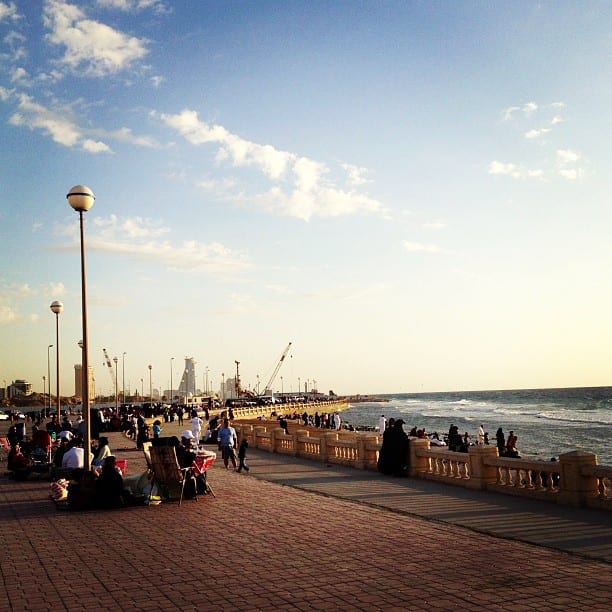
With Friday and Saturday as the weekend, families gather for long lunches, and evenings once the day cools are the main window for being outdoors: beaches, waterfront promenades such as Jeddah's Corniche, and, more recently, purpose-built entertainment districts fill with people after sunset. Riyadh Season, launched in 2019 as part of Vision 2030, and similar events programmes now draw large crowds to concerts, funfairs and sporting events that would not have been licensed a decade ago. Football is followed with real passion nationwide, and traditional pastimes such as falconry and camel racing persist alongside the newer entertainment options, particularly outside the biggest cities.
A visitor's ordinary day
Cards and contactless payment, including phone-based payment, are used almost everywhere in Saudi Arabia, so carrying cash matters far less than it once did, though a little is still useful for markets and small vendors. Alcohol has been banned since 1952, apart from a single outlet for non-Muslim diplomats in Riyadh, and modest dress is expected in public for both men and women, though the abaya is no longer a legal requirement for women and is increasingly worn open over ordinary clothing rather than as a full black covering. Shops and services generally run long hours into the evening rather than closing outright for prayer, though a short pause around prayer times is still common practice in smaller businesses. Distances between cities are large, the highway network is excellent, and ride-hailing apps operate throughout the main cities, making a hire car or ride-hailing the practical way to get around outside the Riyadh metro, which opened in
- Since the war with Iran began in February 2026, flights and events across
the region have been disrupted, and schedules can change at short notice.
What to take away
An ordinary day in Saudi Arabia today sits between two rhythms at once: a much older one set by prayer, heat and family, and a very recent one, still mid-change, that has already remade who is out in public, driving, working and being entertained, without moving at the same pace everywhere or for everyone.