History · São Tomé and Príncipe
São Tomé and Príncipe: The Sugar and Cocoa Islands
Two uninhabited volcanic islands in the Gulf of Guinea that Portugal turned into the world's first plantation colony — a laboratory for the model that would be exported across the Atlantic, and later the world's largest cocoa producer, run on labour that was slavery in all but name
By Worldlore Editorial · 19 September 2026
Two islands, invented by a plantation
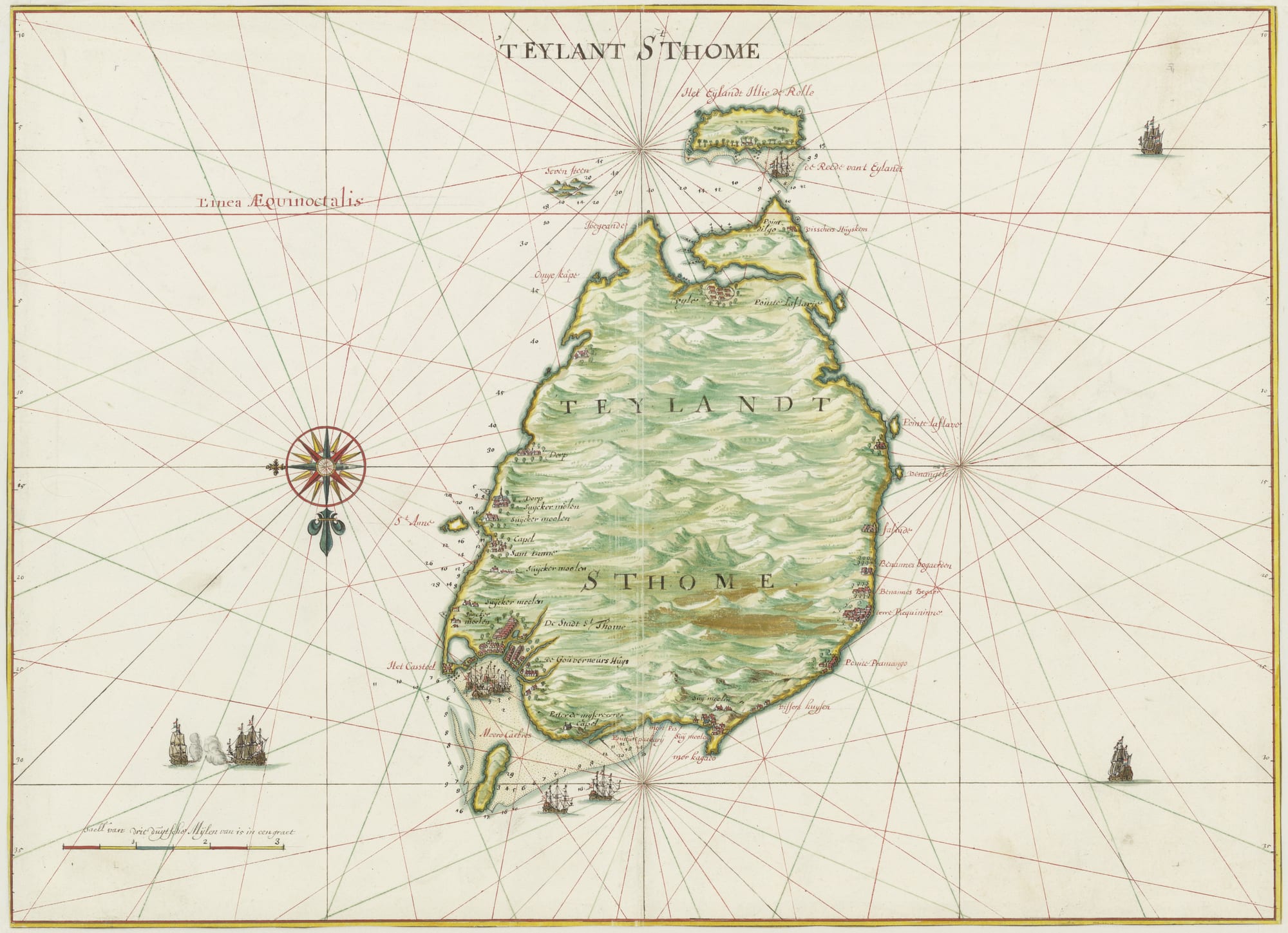
São Tomé and Príncipe is Africa's second-smallest country, two main islands and several islets straddling the equator off the coast of Gabon, with about 230,000 people. Nobody lived there before the Portuguese arrived in the 1470s, which makes the country's history unusually clear-cut: everything about it — its Portuguese language, its Catholic faith, its Creole culture, its population — was produced by a single economic project. On these islands Portugal built the world's first true plantation colony, and the model it refined here — enslaved African labour, a single export crop, absentee owners — was then carried across the Atlantic to Brazil and the Caribbean.
A short history
- c. 1470–1493
Discovery and settlement
Portuguese navigators find empty islands and begin colonising.
- early 1500s
The sugar boom
São Tomé briefly leads the world in sugar exports.
- c. 1550–1600
Decline and revolt
Slave uprisings and Brazilian competition ruin the sugar economy.
- 17th–18th c.
A backwater
The islands serve mainly as a slave-trade transit point.
- 1800s
Cocoa and coffee
New plantation crops revive the economy on forced labour.
- c. 1900–1910
The "chocolate slavery" scandal
Britain exposes the serviçal system; Cadbury boycotts the cocoa.
- 1953
The Batepá massacre
Colonial forces kill hundreds of Forros resisting forced labour.
- 1975
Independence
The MLSTP takes power as a one-party Marxist state.
- 1991
Multiparty democracy
The islands hold free elections.
The first plantation colony
Portuguese ships reached the uninhabited islands around 1470, and settlement of São Tomé began in the 1490s with a mixed population of Portuguese settlers — including convicts and Jewish children forcibly taken from their parents — and enslaved Africans brought from the nearby mainland. The equatorial climate suited sugar cane, and by the 1520s São Tomé was, for a few decades, the largest sugar exporter in the world, worked entirely by enslaved labour on large estates. It was, in effect, the prototype: the combination of tropical island, single cash crop, plantation organisation and African slavery was pioneered here before being scaled up massively in the Americas.
Collapse, and the slave route
By the late 16th century São Tomé's sugar economy was failing: soil exhaustion, competition from Brazil, attacks by Dutch and French raiders, and repeated uprisings by enslaved people, some of whom escaped into the mountainous interior to form free "Angolar" communities. For the next two centuries the islands were a quiet Portuguese possession whose main function was as a staging post in the Atlantic slave trade, transshipping captives from the mainland. A local free-Creole population, the Forros — descendants of freed slaves — became the established island society.
Cocoa, and "chocolate slavery"
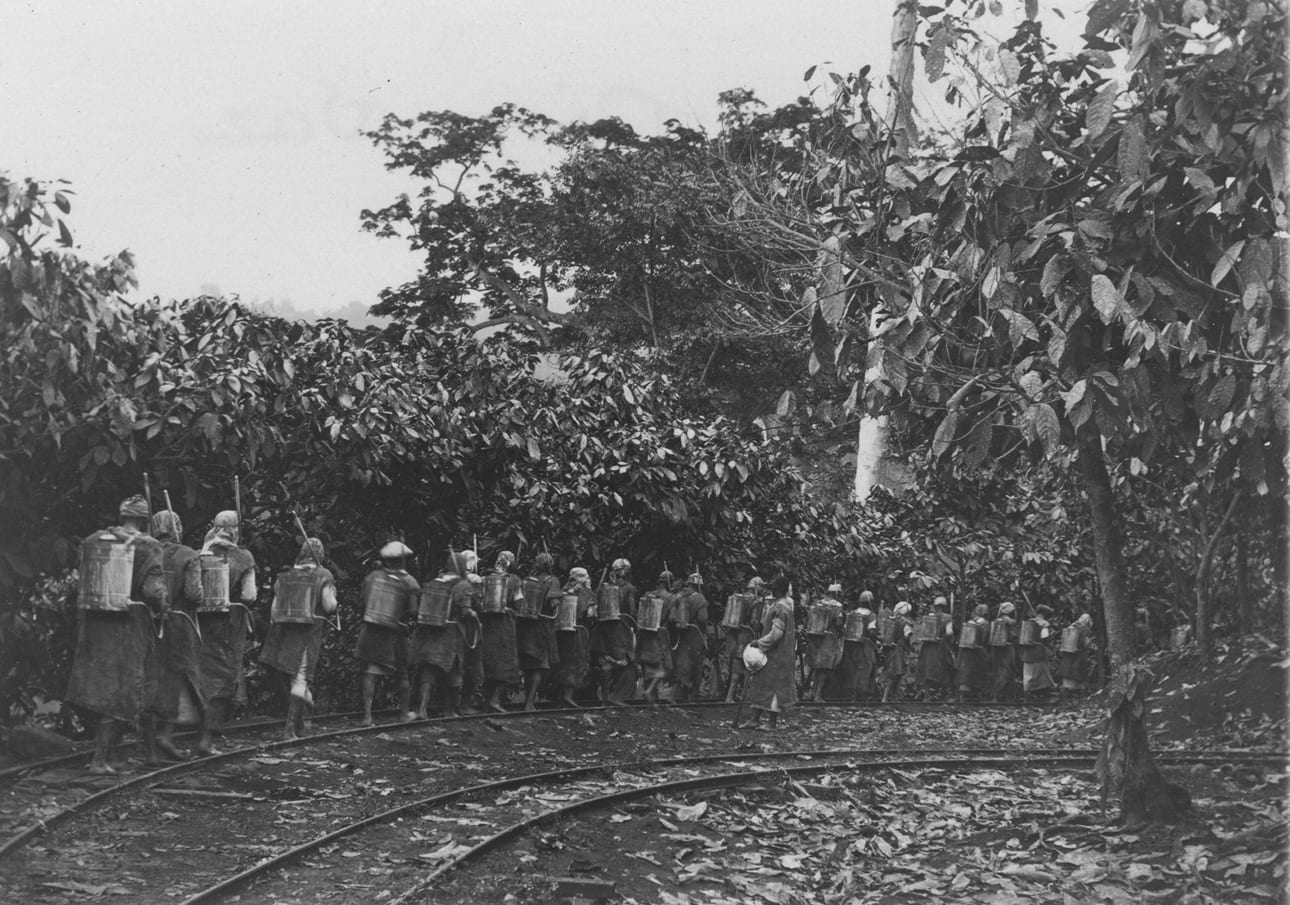
In the 19th century Portugal introduced coffee and then cocoa, and the plantation economy revived spectacularly: by around 1900 São Tomé and Príncipe was the world's largest cocoa producer. But slavery had been formally abolished in 1875, so the plantations ran on "serviçais" — contract labourers recruited, often by force or deception, from Angola, Mozambique and Cape Verde, who were rarely repatriated and whose children were bound to the estates. A British investigation in the 1900s publicised the system, and the chocolate firm Cadbury led a boycott of São Tomé cocoa in 1909. The abuses continued in modified form for decades.
Batepá, and independence
Resentment among the Forros, who resisted being pushed into plantation labour, came to a head in February 1953 when the colonial governor, alleging a plot, unleashed troops and armed settlers in a wave of killings and torture across the island — the Batepá massacre — in which several hundred people died. The date is now the national Martyrs' Day, and the massacre is regarded as the birth of Santomean nationalism. The independence movement, the MLSTP, formed in exile, and when Portugal's dictatorship fell in 1974 the transition was rapid: São Tomé and Príncipe became independent on 12 July 1975 as a one-party Marxist-Leninist state, with the plantations nationalised and most Portuguese residents gone.
Since 1990
Economic failure and the end of the Cold War pushed the MLSTP to accept multiparty democracy in a 1990 constitution, and since 1991 the country has held regular, competitive elections and peaceful transfers of power, interrupted by two short-lived coups (1995 and 2003) that were quickly reversed. Príncipe gained autonomy in 1995. The economy remains small and aid-dependent, based on cocoa — now often organic and premium-grade — tourism, and fishing; large offshore oil reserves discovered in the Gulf of Guinea have so far produced more corruption controversy than revenue.
What São Tomé and Príncipe carries
São Tomé and Príncipe is the plantation colony in its purest form — two empty islands remade entirely by sugar, then cocoa, and by the enslaved and coerced labour that worked them. The model tested here shaped the whole Atlantic world. Batepá in 1953 gave the islands a founding national trauma, and the democracy built after 1990 has held, even as the economy that once led the world in cocoa has never recovered its former weight.