Culture & Customs · San Marino
San Marino: Two Regents and a Crossbow
A small Catholic republic that installs two heads of state every six months with medieval ceremony, honours its founding saint with a crossbow tournament, and shares its everyday manners with the Italy that surrounds it
By Worldlore Editorial · 30 September 2026
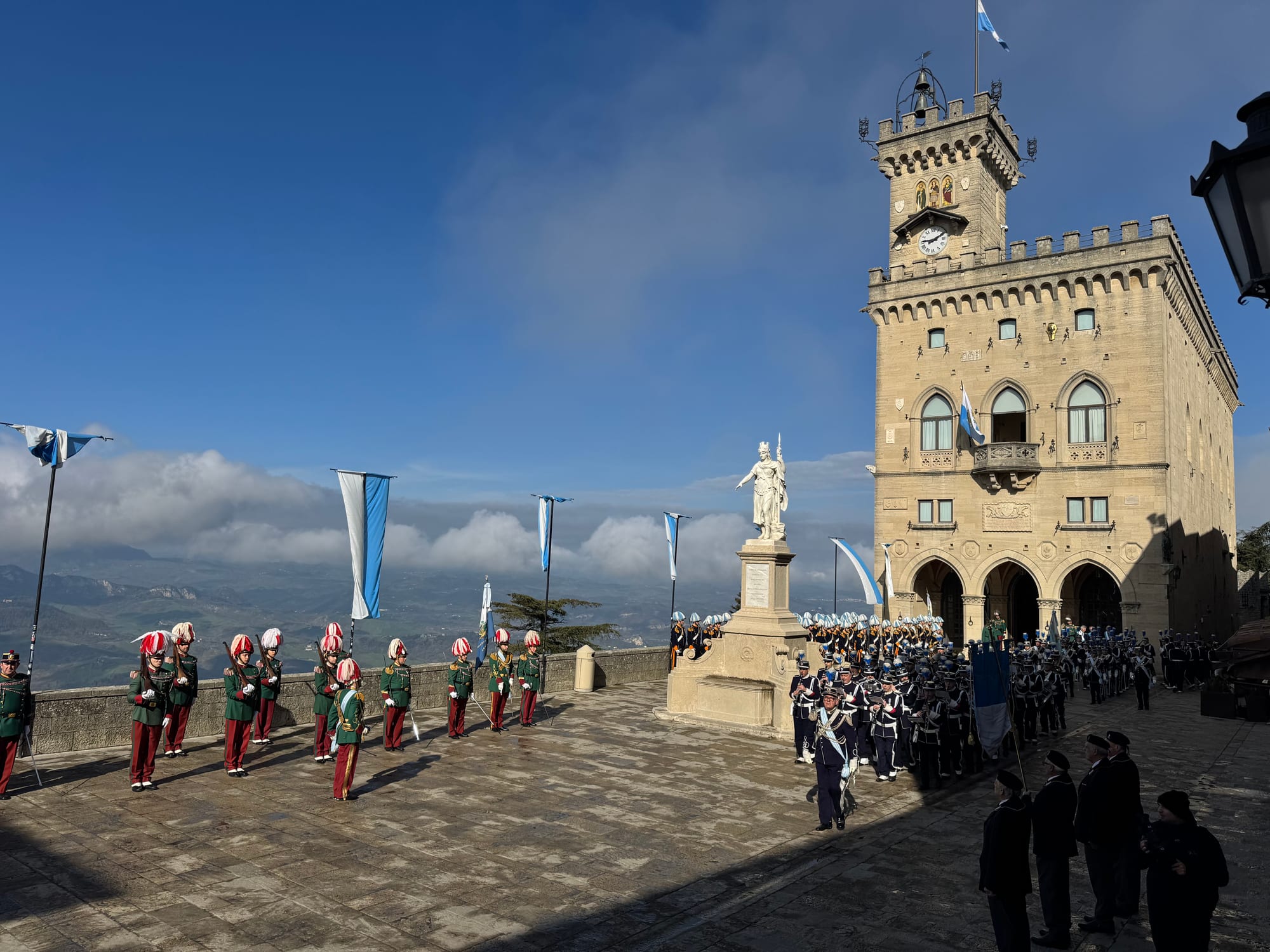
On the first morning of April, and again on the first of October, the square in front of San Marino's government palace fills with uniforms. The military corps line up for the raising of the flag, and later a procession forms: the Council Guard, the military band and the militia, followed by members of the government, foreign diplomats and guests of the republic, escorting two newly elected citizens through the old town. The pair are the Captains Regent, the joint heads of state, and they are about to be installed for a term of just six months. They attend Mass, return to the palace, swear their oath and hear the national anthem, much as their predecessors have done under rules laid down in the republic's statutes of 1600. Anyone may watch from the streets and squares. It is a ceremony that sums up San Marino: devout, deeply proud of its liberty, attached to its rituals, and remarkably open about them.
Faith, identity and values
San Marino is a Catholic country. The government reports that the great majority of residents are Roman Catholic, and a 2021 report on religious freedom put the Christian share of the population at just over 90 per cent. Small communities of Jehovah's Witnesses, Baha'is, Muslims, Jews, Orthodox Christians and Waldensians also live there, and freedom of religion is protected by law. Church and state are closely entwined in practice. A concordat with the Holy See, signed in 1992, provides for Catholic chaplains in hospitals, care homes and prisons, and taxpayers may direct a small share of their income tax to the Church or to another recognised religious or secular body.
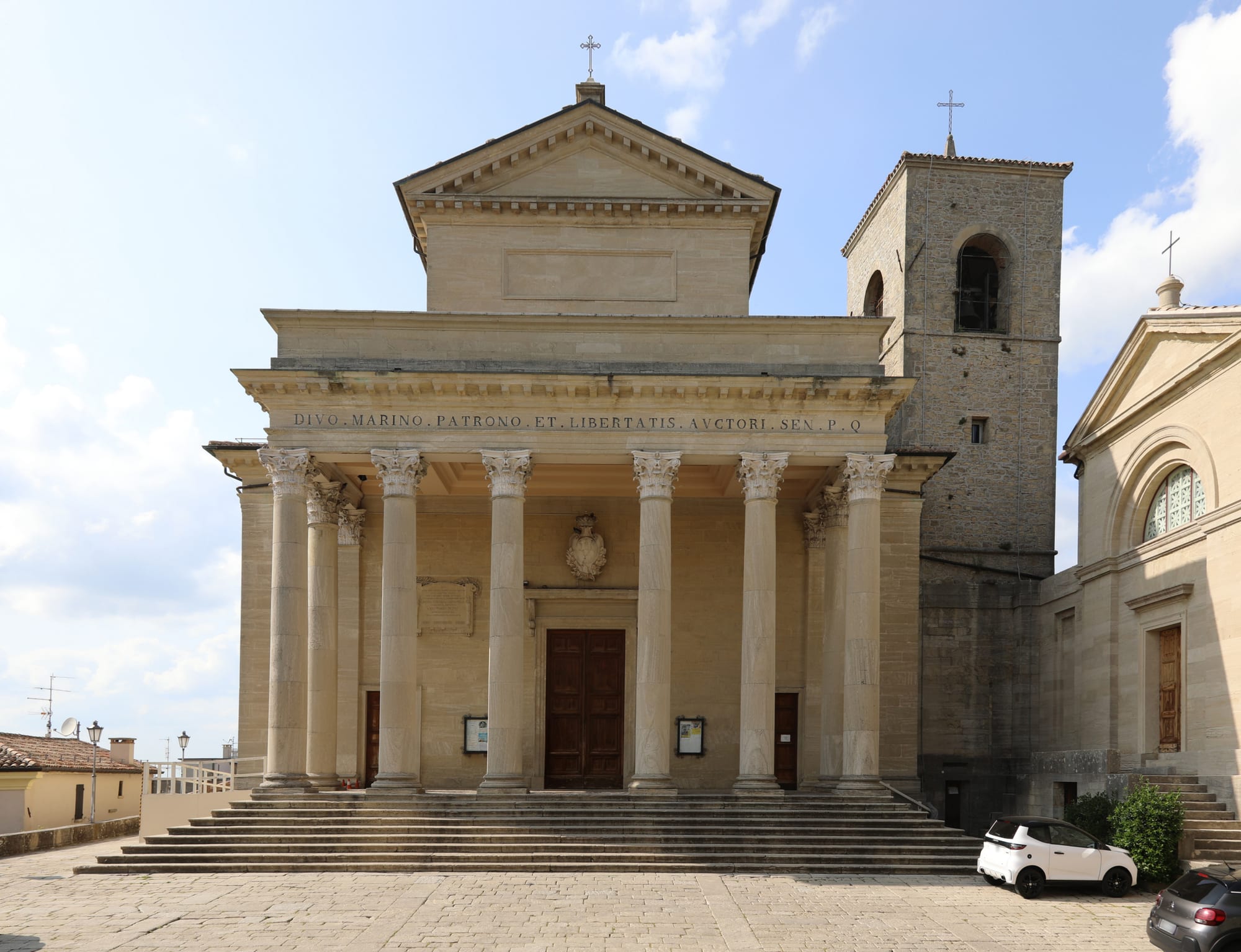
The faith is bound up with the story of the nation itself. By tradition, the republic was founded in 301 by Marinus, a Christian stonemason who took refuge on Monte Titano, and he remains its patron saint. The principal church is the Basilica of Saint Marinus, where official ceremonies are blessed with Mass, and much of the national calendar follows the Catholic year, from Epiphany and Corpus Christi to the Assumption, All Saints and the Immaculate Conception.
Alongside faith sits an intense civic pride. San Marino regards itself as the world's oldest surviving republic, and its institutions are treated as part of its culture rather than mere machinery of government. The office of Captain Regent dates back to 1243 and follows a custom of the Roman Republic: two heads of state are elected together from among the members of the Great and General Council, always act jointly and each has a veto over the other, so that power never rests in one person's hands. The Arengo, the old assembly of the heads of families, is remembered for its meeting in 1906, when it decided that the Great and General Council should be elected by the people. Everyday social life reflects the same openness and friendliness found in the neighbouring Italian regions, and respect for older people is an important part of family and community life.
Greetings and meeting people
Italian is the official language, and the everyday courtesies are those San Marino shares with the Italy that surrounds it. The usual greeting is a handshake with direct eye contact and a smile. "Buongiorno" is used for good day and "buonasera" from the afternoon on, while "ciao", which serves as both hello and goodbye, is kept for friends and people of the same age. Friends and relatives commonly greet each other with a kiss on both cheeks.
A degree of formality is expected on first meeting. People are addressed by their title and surname until they suggest moving to first names, and older people in particular appreciate being called "signore" or "signora".
Clothing is modern and Western. The costumes that visitors notice are ceremonial: the brightly coloured tights, black boots and loose shirts of the flag-bearers, and the formal uniforms of the honour guards, trimmed in gold, that appear at national festivals and state occasions.
Hospitality and being a guest
An invitation to a home follows the pattern familiar from central Italy. Guests usually bring a bottle of wine, chocolates or flowers, taking care to avoid chrysanthemums, which are associated with funerals, and gifts wrapped in black or purple, colours linked to mourning. Yellow flowers are also sometimes avoided.
At the table, nobody starts until the host or the head of the table wishes everyone "buon appetito". Hands are kept visible, resting on the table rather than in the lap, though elbows on the table are considered poor manners. Bread is not a starter to fill up on but is used at the end of a course to mop up the sauce, and water or wine are the usual drinks with a meal. It is polite to stay at the table until everyone has finished. Outside the home, much socialising happens in cafés, and at concerts, plays and the cinema, all of which are popular pastimes.
Festivals and life's big moments
The national year is marked by holidays that mix religion and civic memory. On 5 February, the feast of Saint Agatha, the republic celebrates its liberation, recalling the day in 1740 when Pope Clement XII restored its independence after a brief occupation by Cardinal Alberoni; an effigy of the saint is carried in procession up to the Basilica. On 25 March the Arengo anniversary is also the feast of the military corps, who are reviewed in full uniform, lay a laurel wreath in honour of Sammarinese volunteers and the fallen of all wars, and parade to the Basilica for Mass. The investitures of 1 April and 1 October follow, and 28 July marks the fall of fascism and the restoration of freedom. Late July also brings the Medieval Days, when the old town fills with knights, jesters, minstrels and craftspeople, with demonstrations of old crafts and medieval games.
The most important day of all is 3 September, the feast of Saint Marinus and the traditional anniversary of the republic's foundation. It begins with a solemn Mass at the Basilica attended by the Captains Regent and the Pope's representative, followed by a procession carrying the relic of the saint through the streets. In the afternoon comes the Palio delle Balestre Grandi, the great crossbow tournament, which the tourist board traces back to the republic's medieval statutes. Crossbowmen representing each of the nine castelli, the country's municipalities, compete in historical costume for the title of national champion. The day ends with concerts and fireworks over the old town.
Personal milestones are shaped by the Church. Many of the rites of passage young Sammarinese go through are religious ceremonies: baptism, first communion, confirmation and marriage. Families also mark educational milestones, such as graduation, with parties. Remembrance of the dead has its own place in the calendar, with All Saints' Day on 1 November followed by the Day of the Departed on 2 November, both public holidays.
Arts, crafts and music
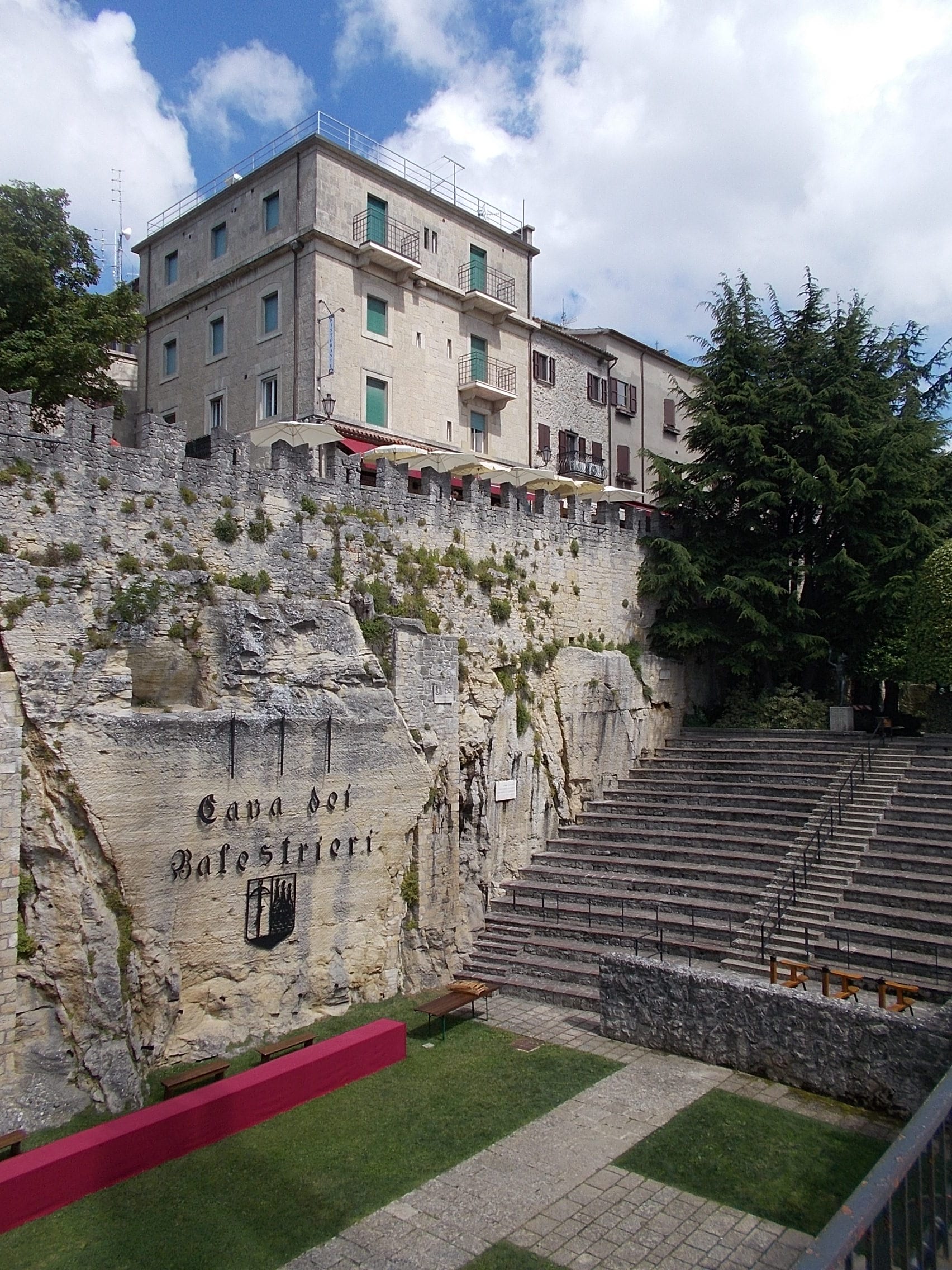
San Marino's most distinctive living tradition is the crossbow. Archery is often described as the traditional national sport, and the Sammarinese Crossbowmen's Federation, founded in 1956, practises the Italian-style great crossbow alongside historic companies from towns in central Italy. Since 1971 the Cava dei Balestrieri, a former quarry below the city walls, has served as the home of this historic shooting, and the crossbowmen, drummers, trumpeters and flag-bearers who accompany them turn out in costume for national festivals.
Postage stamps are an art form here in a way they are almost nowhere else. San Marino has issued its own stamps since 1877 and its own coins since the nineteenth century, and both have long been designed by respected artists and collected worldwide, bringing the republic a significant income as well as a certain renown. A museum in the country is devoted to them.
Traditional crafts include pottery and ceramics, often hand-painted, as well as carving in the local sandstone, jewellery and textiles. Music is closely tied to ceremony: military bands lead the processions of the great state occasions, and the national anthem, composed by Federico Consolo and adopted in 1894, accompanies the republic's most solemn moments.
Dos and don'ts for visitors
- Do greet people with "buongiorno" or "buonasera", and a handshake on first meeting.
- Do use titles and surnames, or "signore" and "signora", until invited to use first names.
- Do bring wine, chocolates or flowers when invited to a home, but avoid chrysanthemums, which are associated with funerals.
- Do wait for "buon appetito" before starting a meal, and keep hands resting on the table rather than in the lap.
- Do watch the investiture of the Captains Regent on 1 April or 1 October, which the public can follow from the streets and squares.
- Do plan a visit around 3 September to see the procession of Saint Marinus and the crossbow tournament.
- Don't carry or use illegal drugs; there is a zero-tolerance policy, with prison sentences or heavy fines.
What to take away
San Marino wears its long history lightly in everyday life but proudly on its feast days, and visitors who bring Italian good manners and a little curiosity about its saints, regents and crossbowmen will find a republic very happy to show itself off.