History · Samoa
Samoa: The Heart of Polynesia
One of Polynesia's oldest societies and a cradle of its culture — carved up by Germany, Britain and the United States, ruled harshly from New Zealand, and the first Pacific island nation to win back its independence
By Worldlore Editorial · 10 September 2026
An old society at the centre
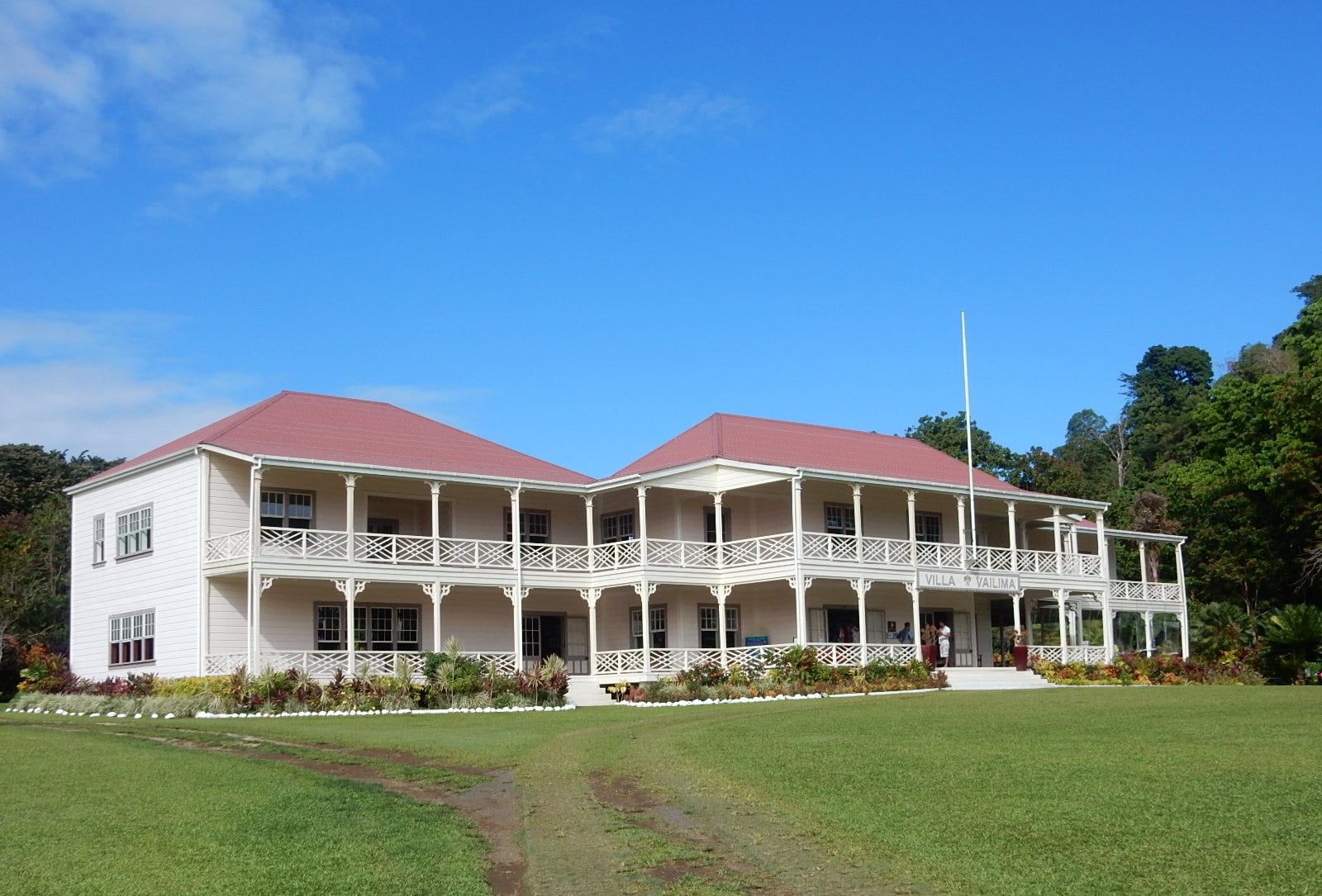
Samoa is an archipelago in the central South Pacific — two large islands, Upolu and Savai'i, and several smaller ones — with about 220,000 people. Its neighbour to the east, American Samoa, is a separate US territory, the result of a colonial partition. Samoa was settled around 3,000 years ago and is one of the oldest continuous societies in Polynesia; its language, its chiefly system and its customs radiated outward to Tonga, the Cook Islands and beyond, and Samoans often call their country the heart of Polynesia. It was also the first Pacific colony to regain full independence, in 1962.
A short history
- c. 1000 BCE
Settlement
Lapita voyagers reach Samoa; a distinct Polynesian culture forms.
- c. 1250–1600
Regional power
The Tui Manu'a and later the Malietoa titles; ties across western Polynesia.
- 1722–1830s
European contact
Dutch, then French navigators; missionaries arrive in 1830.
- 1870s–1899
Civil wars and rivalry
Germany, Britain and the US back rival chiefs.
- 1899
Partition
Germany takes the western islands; the US takes the east.
- 1914
New Zealand occupation
New Zealand seizes German Samoa at the war's outbreak.
- 1918
The influenza
A ship from New Zealand brings a flu that kills about a fifth of Samoans.
- 1929
Black Saturday
Police kill the Mau leader Tupua Tamasese and others at a peaceful march.
- 1962
Independence
Western Samoa becomes the first independent Pacific island state.
Fa'a Samoa
Samoan society is organised around the fa'amatai — a system of matai (chiefly title-holders) chosen by extended families (aiga) to hold authority over land and represent the family in the village council (fono). This structure, together with customary land tenure covering most of the country, has proved remarkably durable and still underpins Samoan politics: for decades only matai could vote or stand for parliament. European contact began with Dutch and French navigators in the 18th century, and the London Missionary Society arrived in 1830; Samoa converted to Christianity quickly and thoroughly, and the church became central to village life.
The partition
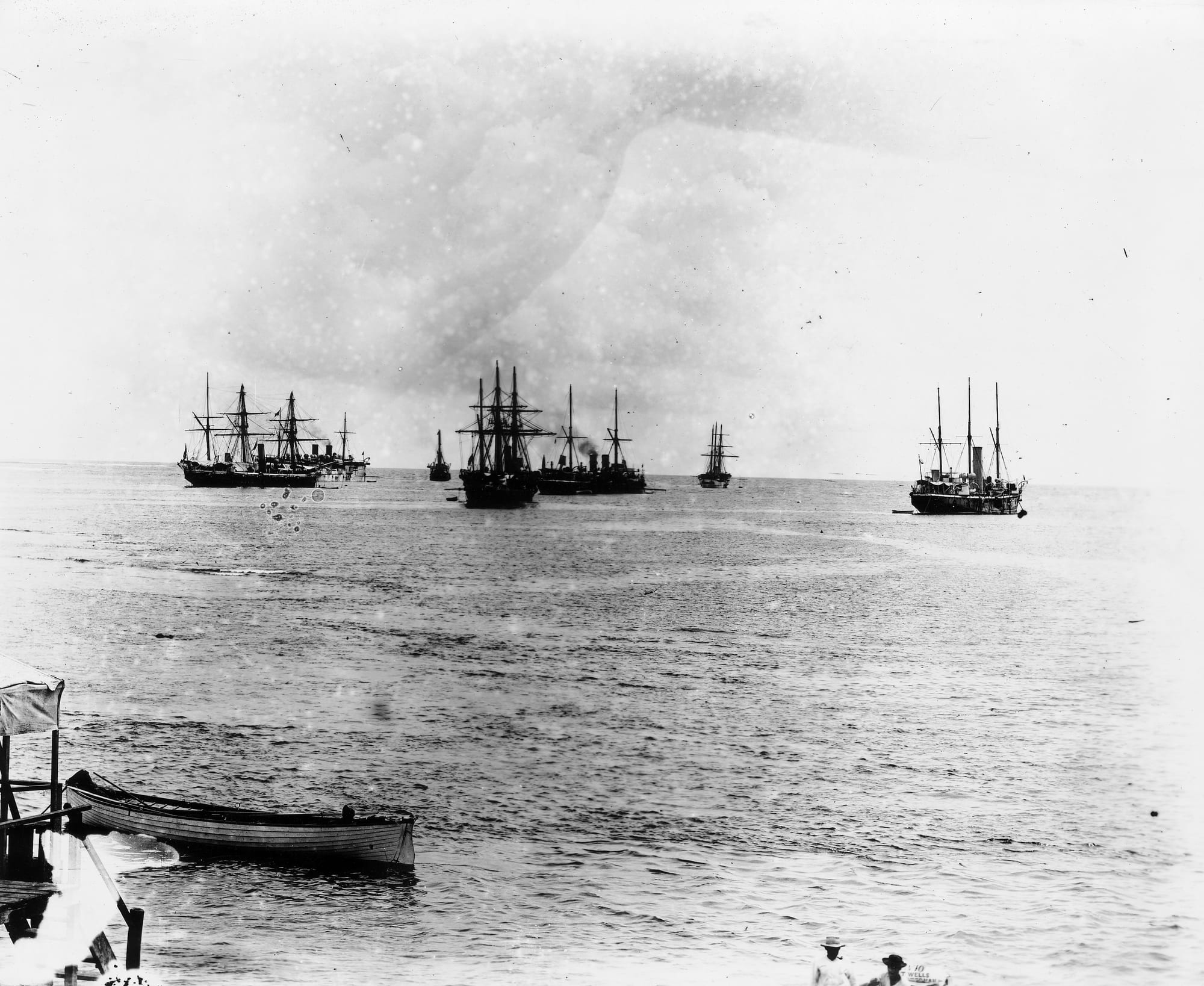
Through the 19th century Samoa was riven by wars between rival holders of the great titles, and Germany, Britain and the United States each backed a faction while building trading and naval interests — the standoff at Apia in 1889, when warships of all three powers were wrecked by a cyclone, nearly brought them to blows. In 1899 the powers settled the matter over Samoan heads: Germany annexed the western islands (Upolu and Savai'i), the United States took the eastern islands (Tutuila and Manu'a) as American Samoa, and Britain withdrew in exchange for concessions elsewhere. German rule imported Chinese and Melanesian plantation labour and deposed uncooperative chiefs.
New Zealand, the flu, and the Mau
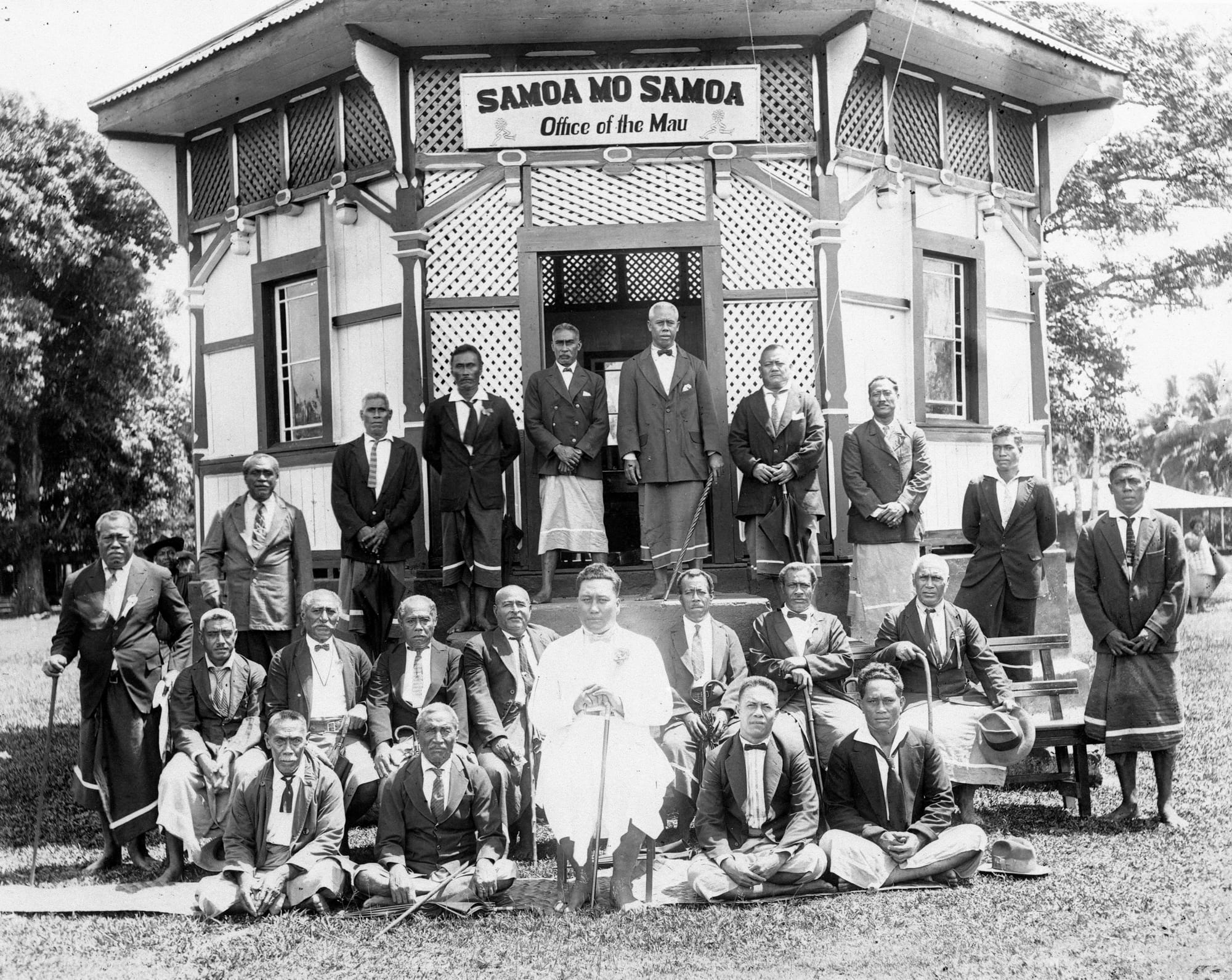
At the outbreak of the First World War in 1914, a New Zealand expeditionary force occupied German Samoa without a fight, and New Zealand governed it thereafter, under a League of Nations mandate from 1920. The administration's early record was disastrous: in November 1918 it allowed the ship Talune to dock despite influenza aboard, and the epidemic that followed killed around 8,500 Samoans — roughly a fifth of the population — while American Samoa, which imposed a quarantine, lost almost no one. Resentment fed the Mau, a broad movement for self-rule that organised boycotts and peaceful demonstrations. On 28 December 1929 — "Black Saturday" — New Zealand police fired on an unarmed Mau procession in Apia, killing eleven, including Tupua Tamasese Lealofi III, who told his followers to keep the peace as he died.
Independence
New Zealand's approach softened after the Second World War, and under United Nations trusteeship Samoa moved steadily toward self-government, drafting a constitution that blended the Westminster system with the fa'amatai. Following a UN-supervised plebiscite, Western Samoa became independent on 1 January 1962 — the first Pacific island nation to do so — with two paramount chiefs as joint heads of state. New Zealand issued a formal apology for the colonial period in 2002. The country dropped "Western" from its name in 1997, introduced universal adult suffrage in 1990 (candidacy remained restricted to matai), and in 2009 switched from driving on the right to the left to align with New Zealand and Australia.
Samoa now
Samoa is a stable parliamentary democracy that was governed by a single party, the HRPP, from 1982 until 2021, when a constitutional crisis followed a near-tied election: the courts ultimately confirmed the opposition FAST party's narrow victory and Fiamē Naomi Mataʻafa became the country's first woman prime minister, after the incumbent initially refused to cede power. The economy relies on agriculture, fishing, tourism, and remittances from the large Samoan populations in New Zealand, Australia and the United States. A 2019 measles outbreak, worsened by low vaccination rates, killed 83 people, mostly children.
What Samoa carries
Samoa entered the colonial era as one of Polynesia's founding cultures and left it as the region's first independent state, having kept its chiefly system, its land and its language largely intact. The influenza of 1918 and Black Saturday in 1929 are the events that defined its relationship with New Zealand, and the memory of the Mau — mass, disciplined, non-violent — is the founding story of the modern nation.