Daily Life · Samoa
Samoa: An Economy Kept Running from Abroad
Extended aiga households on land that can't be sold, a Sunday to'ona'i feast that gathers the whole family after church, and a diaspora larger than the country itself, sending home the money much of everyday life runs on
By Worldlore Editorial · 30 September 2026
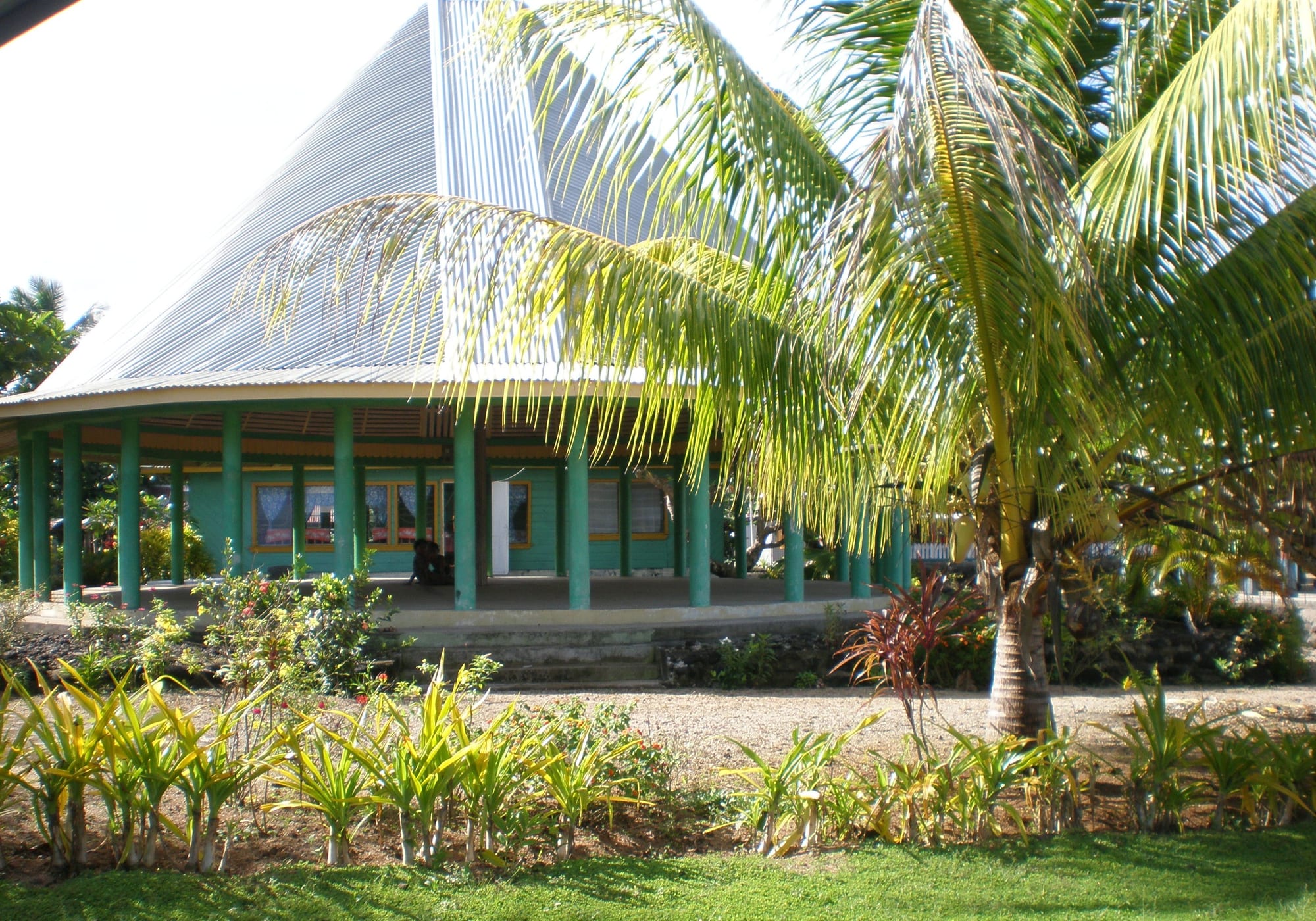
Samoa's roughly 200,000 residents share the islands with a diaspora, chiefly in New Zealand, Australia and the United States, that is larger still, and that fact shapes an ordinary day more than almost anything else: remittances sent home from overseas relatives make up more than a quarter of the country's entire economy. On the ground, life still runs on fa'a Samoa, the Samoan way, built around the aiga, the extended family, and the matai, the titled chiefs who hold family land and represent it in the village fono council. Around four-fifths of all land in Samoa is customary land, held by families rather than owned outright by individuals, which shapes where and how most people actually live.
Family and home life
An aiga typically spans several generations and branches of a family living on and working the same customary land, with one or more matai responsible for allocating that land, funding family obligations and representing the family's interests in the village. Traditional fale, open-sided houses with no walls, are still built and lived in, especially on Savai'i and in rural Upolu, though concrete block housing with proper doors and windows has become common alongside them, particularly in and around Apia. Sunday brings the wider aiga together for to'ona'i, a family lunch after church that is one of the week's fixed points, cooked in the umu, an earth oven of heated stones, and shared among as many relatives as can attend.
Work, school and the rhythm of the day
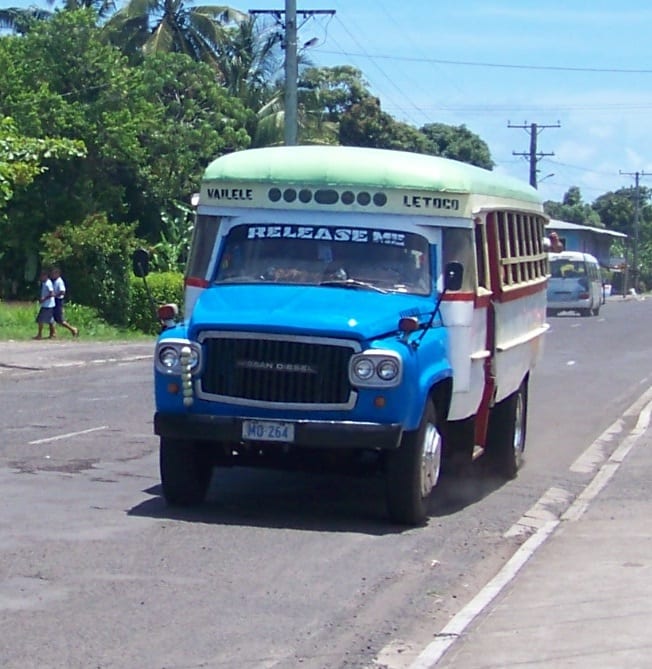
Agriculture and fishing, mostly small-scale and for household use rather than sale, still occupy a large share of the workforce, growing taro, coconut, cocoa and bananas on family land. Government jobs, tourism and a small light-manufacturing sector provide most of the formal, salaried work, concentrated in and around Apia. Getting to work or school for many people means catching one of Samoa's privately owned local buses, brightly painted wooden or steel-bodied vehicles that run fixed routes without a fixed timetable, leaving when full rather than on the hour.
Community life and public spaces
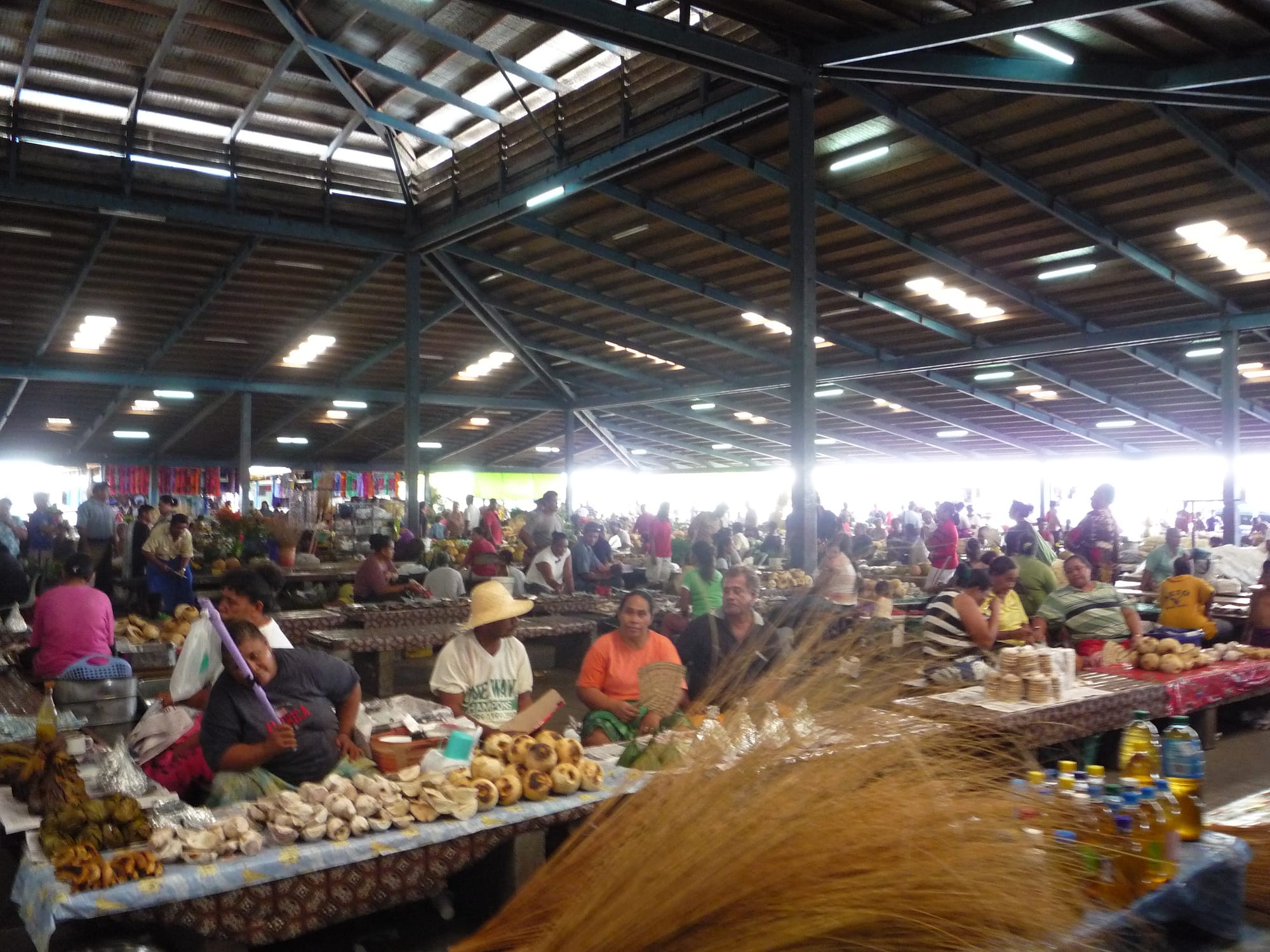
Markets are the everyday centre of commerce and conversation, above all the market in Apia, where produce, woven goods and prepared food are sold from stalls and mats spread on the ground, and where sellers often sit with their goods for hours at a stretch rather than making a quick transaction. The village fono, the council of matai, still governs a great deal of local life beyond the household, from communal work days to local rules that can carry real weight. With customary land covering most of the country, villages remain the basic unit of everyday geography in a way that is less true in Apia itself, where a more conventional town centre has grown up around the harbour.
Free time and weekends
Sunday is set aside almost entirely for church and family: services in the morning, the to'ona'i feast afterward, and rest for the remainder of the day, with very little commercial activity taking place. Outside Sunday, weekends bring family gatherings, church-related events and, on the coasts, swimming and fishing. Rugby union is followed closely nationwide, and village-level and national matches draw strong crowds. The ferry crossing between Upolu and Savai'i is itself a regular part of life for anyone with family split between the two islands, a routine rather than an occasion.
A visitor's ordinary day
The Samoan tālā is the currency, and while cards work in Apia hotels and larger businesses, cash is needed for local buses, markets, beach fales and the small entry fees charged at many natural sites. Local buses are cheap and a genuine slice of everyday life, caught by waving one down rather than waiting at a marked stop, though a hire car gives more flexibility for reaching the south coast or Savai'i. Expect most commercial activity to stop on Sunday, and expect an evening prayer curfew, signalled by a bell in villages that observe it, during which visitors are expected to be quiet and respectful and not to linger in the village.
What to take away
An ordinary day in Samoa runs on two overlapping systems at once: the aiga, the matai and the village fono governing life on the ground, and a much larger, invisible network of relatives overseas whose remittances quietly keep a good part of that ground-level life running.